Homemade cordials: how to make citrus cordial step by step
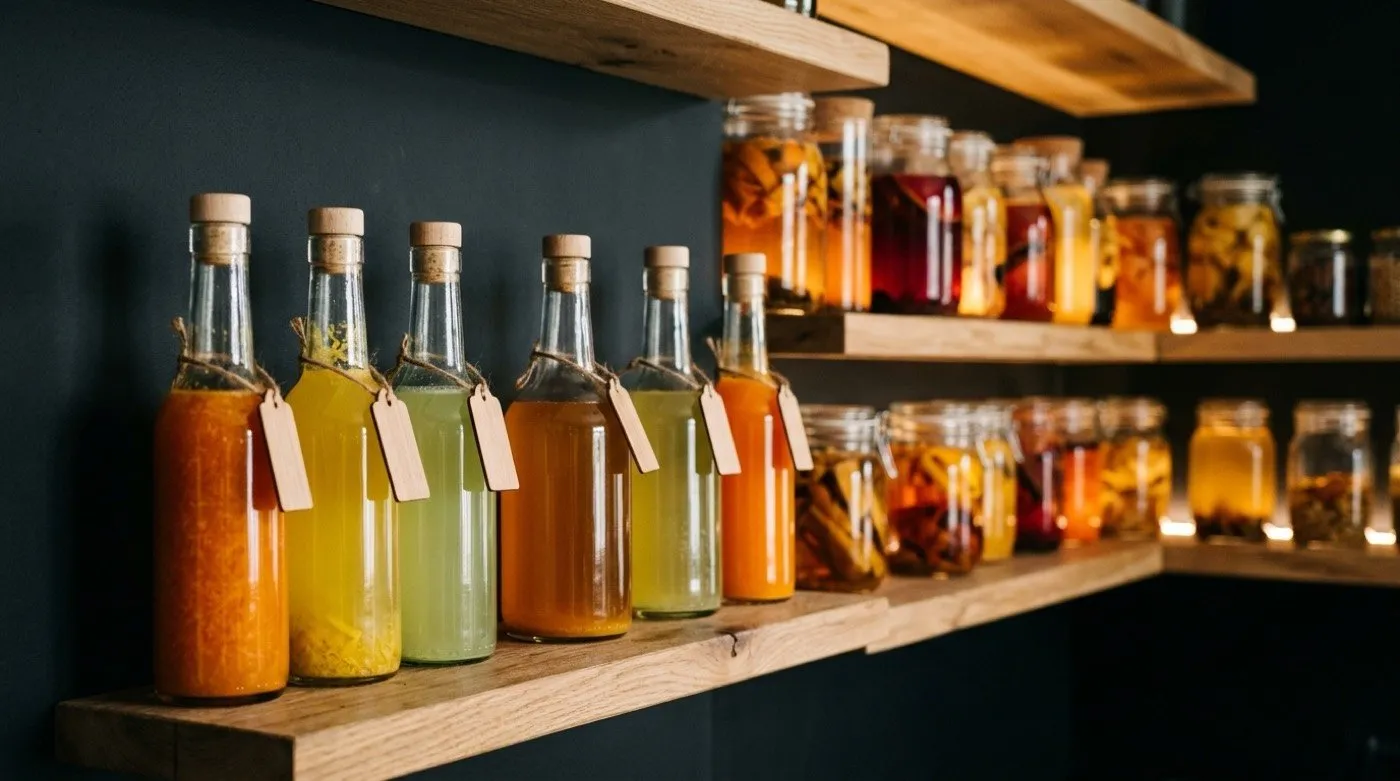
A homemade citrus cordial is essentially a liquid concentrate that combines juice, sugar and a touch of additional acid to achieve a perfect balance of sweetness, acidity and aroma. At STILLROOM we prepare it daily using three different methods — oleo saccharum, gentle cooking and super juice — and each one gives a different flavour profile and shelf life. If you want to understand exactly what a cordial is and why it has become a staple of signature cocktail making, you will find the full definition at that link; here we go straight to the step-by-step process so you can make them at home with a bartender’s precision.
What you need to make a cordial at home
Before you get to work on any recipe, there are four elements that never fail in a well-balanced cordial: the star citrus fruit, sugar, a complementary acid and water. The classic ratio we start from at STILLROOM is 1:1 between strained juice and white sugar, though we later adjust according to the fruit and the method chosen. Further on you will see that super juice bends that rule slightly, but for cordials made by cooking or by oleo saccharum, that reference will save your life.
As for equipment, you do not need a professional laboratory. All you need is:
- A sharp knife and a clean chopping board.
- A peeler or a microplane if you are working with peel (the oleo saccharum method).
- A manual or electric juicer.
- A fine strainer or a coffee filter to remove pulp and solids.
- A kitchen scale, because in cocktail making volume deceives and the gram rules.
- A small saucepan if you choose the gentle cooking method.
- Glass jars or sterilised bottles to store the cordial.
And one last note before getting down to business: powdered acid (citric, malic, tartaric or lactic) is not optional if you want a cordial that keeps for weeks in the fridge and shines on the palate. In the ratios section we tell you which one to use and why.
The 3 methods for making a cordial
At STILLROOM we do not tie ourselves to a single technique, because every citrus fruit calls for a different path. Orange rewards the slow draw of its essential oils; lime explodes with super juice; lemon works beautifully with a brief cooking that tames its acidity without losing freshness. Here are the three methods, summed up in a table we use every day to decide on the fly.
| Method | How it works | Advantage | Time |
|---|---|---|---|
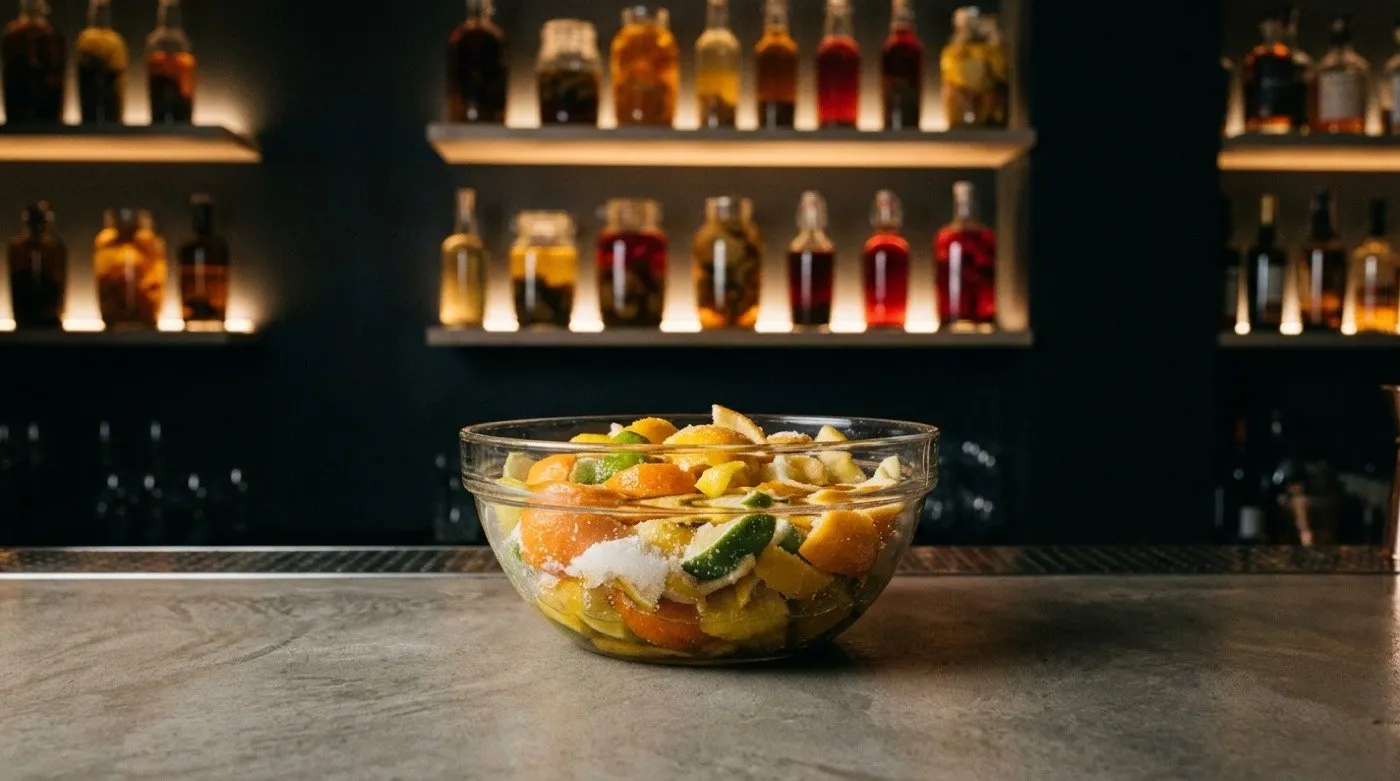
| Oleo saccharum | The citrus peel is mixed with sugar and left to rest. The sugar draws out the essential oils by osmosis, forming an aromatic syrup that is then combined with the juice. | Deep, complex aromatic profile, ideal for cocktails where citrus is the protagonist. | 4-6 hours of passive maceration |
| Gentle cooking | The strained juice is heated with the sugar over low heat (without reaching a hard boil) until fully dissolved and slightly reduced. The acid is added at the end, off the heat. | Fast, stable and easy to scale up. Silky texture and rounded flavour. | 15-20 minutes |
| Super juice | The citrus peel is weighed, mixed with citric acid (and malic acid if applicable) and left to rest for an hour. Water is then added and everything is blended. The result is strained and sweetened. | Maximum yield from very little fruit. Sustainable, economical and with a vibrant acidity. | 1 hour resting plus 10 minutes of preparation |
Oleo saccharum is almost a ritual of patience that rewards you with a deeply perfumed cordial; if you want to master it, we have the full guide to oleo saccharum that we use at the bar. Super juice, on the other hand, is pure contemporary efficiency: with two limes you get half a litre of technical juice. You will find all the calculations and ratios in our article on super juice in cocktail making.
Ratios and acids: the balance of a cordial
A cordial is not a simple syrup of juice and sugar. The difference lies in the extra acid you add, which performs three functions: it boosts liveliness on the palate, balances the sweetness and acts as a natural preservative. At STILLROOM we work with four different acids depending on the profile we are after.
| Acid | What it brings | When to use it |
|---|---|---|
| Citric acid | Clean, bright, direct acidity. It is the standard for citrus fruits. | In lemon, lime, grapefruit and orange cordials. Works with everything. |
| Malic acid | Rounder, more lingering acidity, with a fruity edge reminiscent of green apple. | Perfect for stone-fruit cordials or for rounding off lemon and lime when you want a less aggressive attack. |
| Lactic acid | Soft, milky, almost creamy acidity. It cushions the peaks without taking away freshness. | In orange or yuzu cordials, or preparations that will later go into cocktails with dairy or egg. |
| Tartaric acid | Dry, astringent acidity, very present in grapes. It brings structure. | In lime or grapefruit cordials when you want a drier, more complex profile, like an artisan soda. |
In practice, the ratio of sugar to juice we use at STILLROOM is 1:1 by weight (for example, 500 g of strained juice to 500 g of white sugar). The powdered acid usually sits at around 0.2%-0.5% of the finished cordial’s total weight, depending on the natural acidity of the fruit. For a cordial with 500 g of juice and 500 g of sugar, adding about 2-3 g of citric acid is a safe starting point. Try it, adjust and take notes: every batch teaches you something new.
This balance between sweetness, acidity and aroma is a close cousin of what we achieve with maceration, another extraction technique we apply to fruit, herbs and spices to build the bases of our signature cocktails.
Cordial recipes by fruit
Once you understand the theory, what really turns you into a home bartender is repeating the recipes until you know them by heart. At STILLROOM we have developed a specific cordial for each main citrus fruit, adjusting the method, ratio and acid to its personality. Here are the three recipes we use most at the bar, with the detailed step by step so you do not have to improvise.
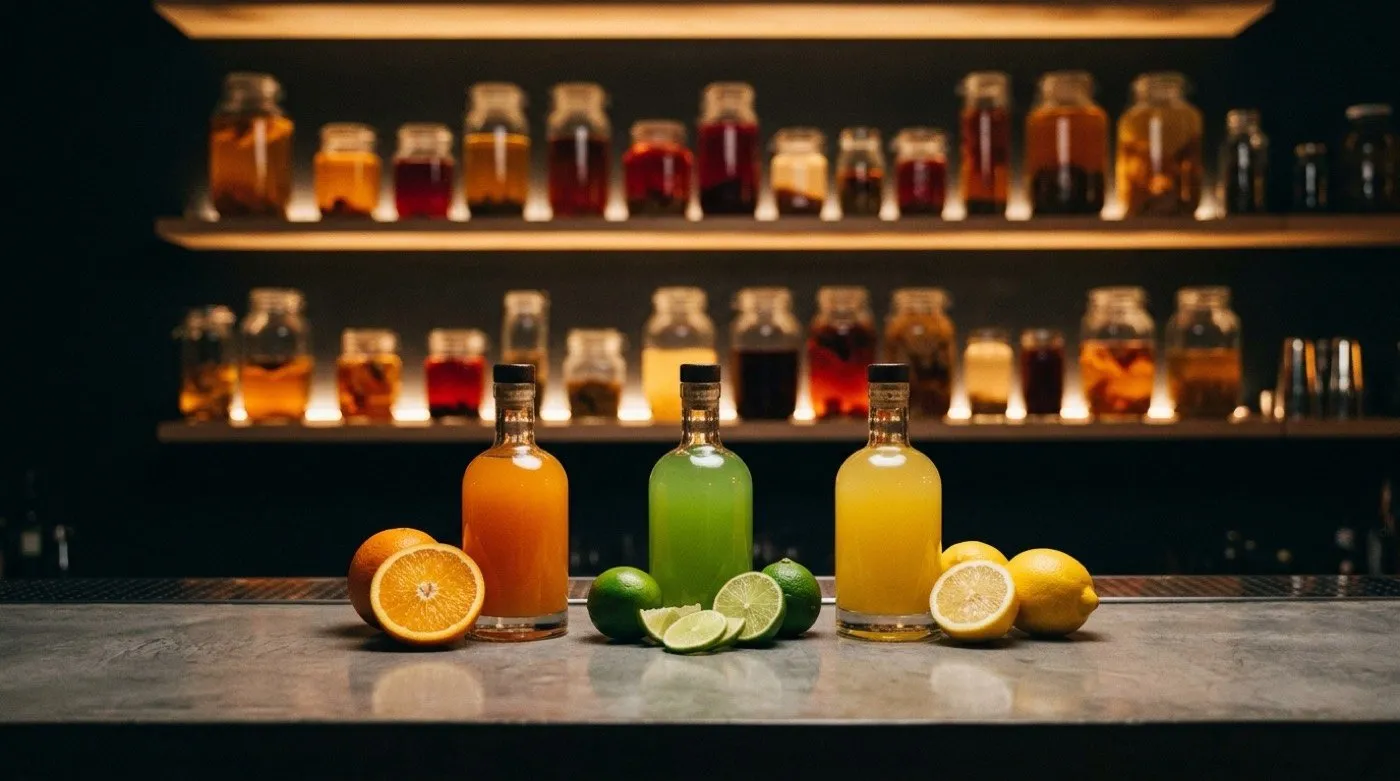
- Orange cordial: our favourite for winter cocktails and for giving a citrus twist to dark spirits. We use oleo saccharum with navel orange peel and a touch of citric acid to fix the acidity.
- Lime cordial: vibrant, perfect for Daiquiris, Mojitos and any drink that calls for instant freshness. Here the balance of acids does the work, with citric and malic in a 4:1 ratio.
- Lemon cordial: the most versatile, made by gentle cooking with pure citric acid. It works for a Tom Collins, a premium lemonade or for correcting any cocktail that needs a boost of acidity.
We will soon be adding grapefruit and yuzu cordials to this collection, two citrus fruits that have us completely obsessed in the STILLROOM laboratory. If you drop by the bar on Calle Moreto 9, in Los Jerónimos, you may well come across a test version that has not yet made it out of the recipe notebook.
Storage and common mistakes
A well-made homemade cordial will keep for 3 to 4 weeks in the fridge without losing its qualities, as long as you store it in a glass jar or a previously sterilised bottle (boiling it for 10 minutes and leaving it to dry upside down is enough). If you want to extend its shelf life to several months, you can freeze it in ice-cube trays and take out portions as you need them; the texture does not change on thawing, because the sugar acts as a natural antifreeze.
At STILLROOM we have seen it all in workshops and tastings with guests. These are the most common mistakes when someone is starting out with homemade cordials:
- Not straining the juice properly before mixing with the sugar. Pulp left in suspension speeds up oxidation, clouds the cordial and can bring on bitterness within days. A fine, patient strain makes all the difference.
- Too much pith (the white part of the peel). If you peel the citrus fruit and leave too much pith on, the cordial picks up an unpleasant bitterness that more sugar will not fix. Only the coloured peel, with no white, for oleo saccharum.
- Not enough acid. Cutting back on or leaving out the powdered acid because you think the juice is already acidic enough is the most repeated mistake. Without that extra boost, the cordial tastes flat and spoils sooner.
- Sugar that has not fully dissolved. If you use the cold method and do not stir until it is completely dissolved, the cordial separates into layers and dosing it in cocktails becomes unpredictable. Patience and a spoon, or a minute with a blender.
Frequently asked questions
How do you make a homemade cordial?
A homemade cordial is made by mixing strained citrus juice with sugar in a 1:1 ratio by weight and adding a small proportion of citric acid (around 2-3 g per 500 ml of juice, or another food-grade acid). You can extract the aromas from the peel with sugar (oleo saccharum), apply gentle heat to dissolve and integrate everything (cooking), or use the super juice technique to multiply the yield from very little fruit. It is bottled hot or cold in sterilised bottles and kept in the fridge.
What is the ratio of sugar to juice in a cordial?
The reference ratio is 1:1 by weight: for every gram of strained juice, one gram of white sugar. In cordials made by the super juice method, the amount of water added slightly modifies this rule, but the final sweetness balance stays close to that 50% sugar in the finished product.
What is the difference between a cordial and a syrup?
A syrup is basically sugar dissolved in water (or in juice, in the case of fruit syrups), without a precise acidity adjustment. A cordial, on the other hand, always includes an additional acid that balances the sweetness, lifts the citrus aromas and acts as a natural preservative. In cocktail making, a cordial adds structure and brightness; a syrup only sweetens.
How long does a homemade cordial keep?
Well kept in the fridge and in a sterilised container, a homemade cordial keeps in perfect condition for 3 to 4 weeks. If you freeze it in portions, you can extend its shelf life to several months without any loss of quality. The key lies in the acidity and in hygiene during preparation and bottling.
Which citrus fruits work best for making cordial?
Lemon, lime and orange are the three most forgiving citrus fruits to start with. Lemon gives a very versatile cordial; lime is the most vibrant for tropical cocktails; orange gives a sweeter, more aromatic profile that works wonderfully with dark spirits. Grapefruit and yuzu are excellent for a second level of complexity, but need a finer adjustment of acids and sugar. If you would like more technical precision, STILLROOM’s cocktail glossary defines every term we use at the bar, from cordial to maceration, super juice and oleo saccharum. And if you fancy tasting how these cordials taste when made by a bartender who prepares them every day, take a look at our cocktail menu and book a table at Calle Moreto 9. We promise that the lime Daiquiri made with our super juice cordial is like nothing you have tried before.