Cordial in cocktail making: the citrus secret behind the best cocktails
· Updated
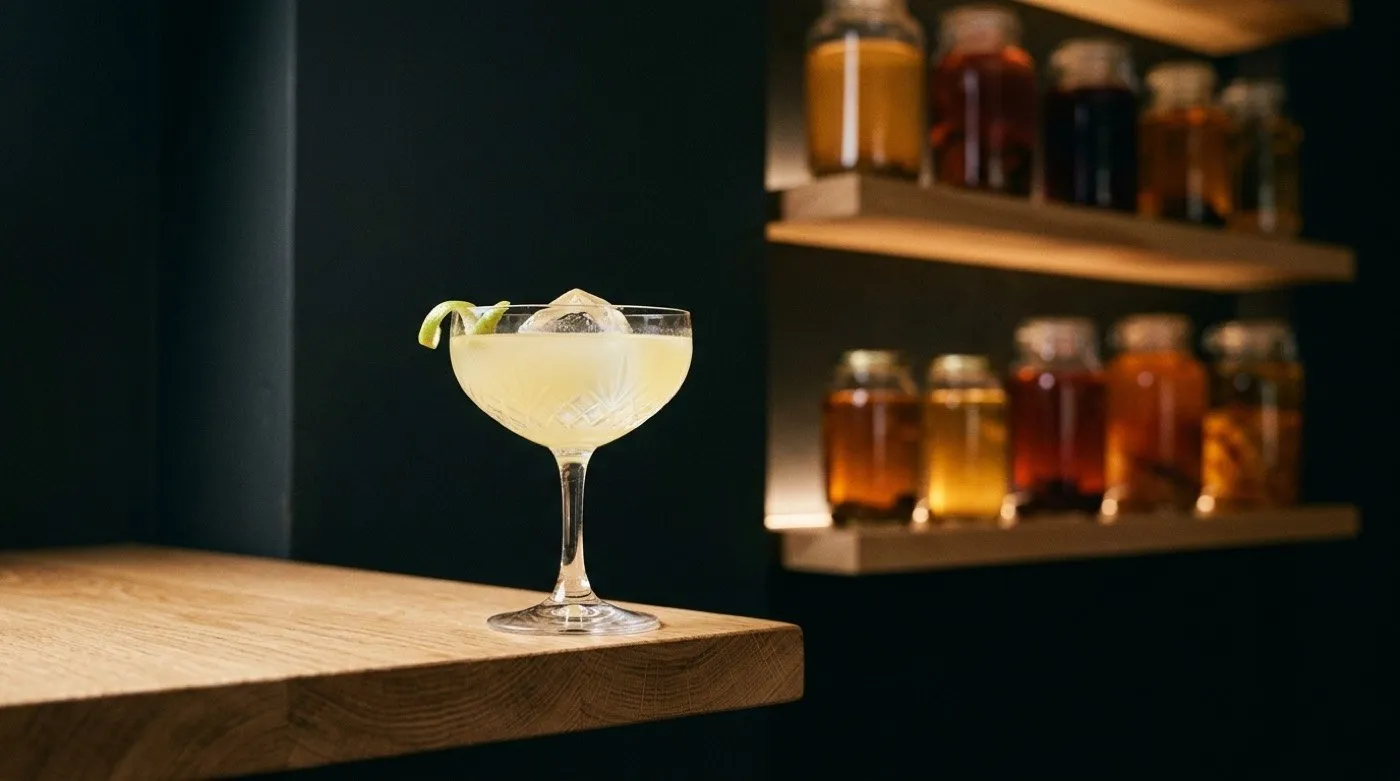
A cordial in cocktail making is a concentrated preparation that combines the juice and essential oils of a citrus fruit with sugar (and often added acids) to achieve a stable, aromatic, long-lasting source of acidity. At STILLROOM we think of it as a laboratory ingredient that goes beyond simple juice: it lets us control the acid profile and the aromatic brightness of every cocktail without depending on fruit that oxidises within hours. Essentially, cordial is the technical evolution of squeezing a lemon.
What a cordial is and how it works
Cordial in cocktail making draws on a centuries-old idea — the shrubs and macerated spirits of the apothecary — but takes shape as a technical ingredient in today’s bartending world. At its core, we blend three pillars: fresh juice, the oils from the peel and sugar, often boosted with citric or malic acid to fix the acidity and extend shelf life. When we work in the STILLROOM laboratory, we are not talking about a simple acidic syrup; we are talking about a concentrate that captures the whole personality of the citrus fruit.
The secret lies in extracting the essential oils held in the peel. Through the oleo saccharum technique (literally “oil of sugar”) we macerate the peels with the sugar for several hours so the sugar absorbs the oils and forms an aromatic paste. That perfumed sugar is then diluted with the juice and adjusted with an extra acid. The result is a liquid that smells far more of lime, lemon or grapefruit than the freshly squeezed juice itself and, unlike juice, stays alive in the fridge for weeks without losing its brightness.
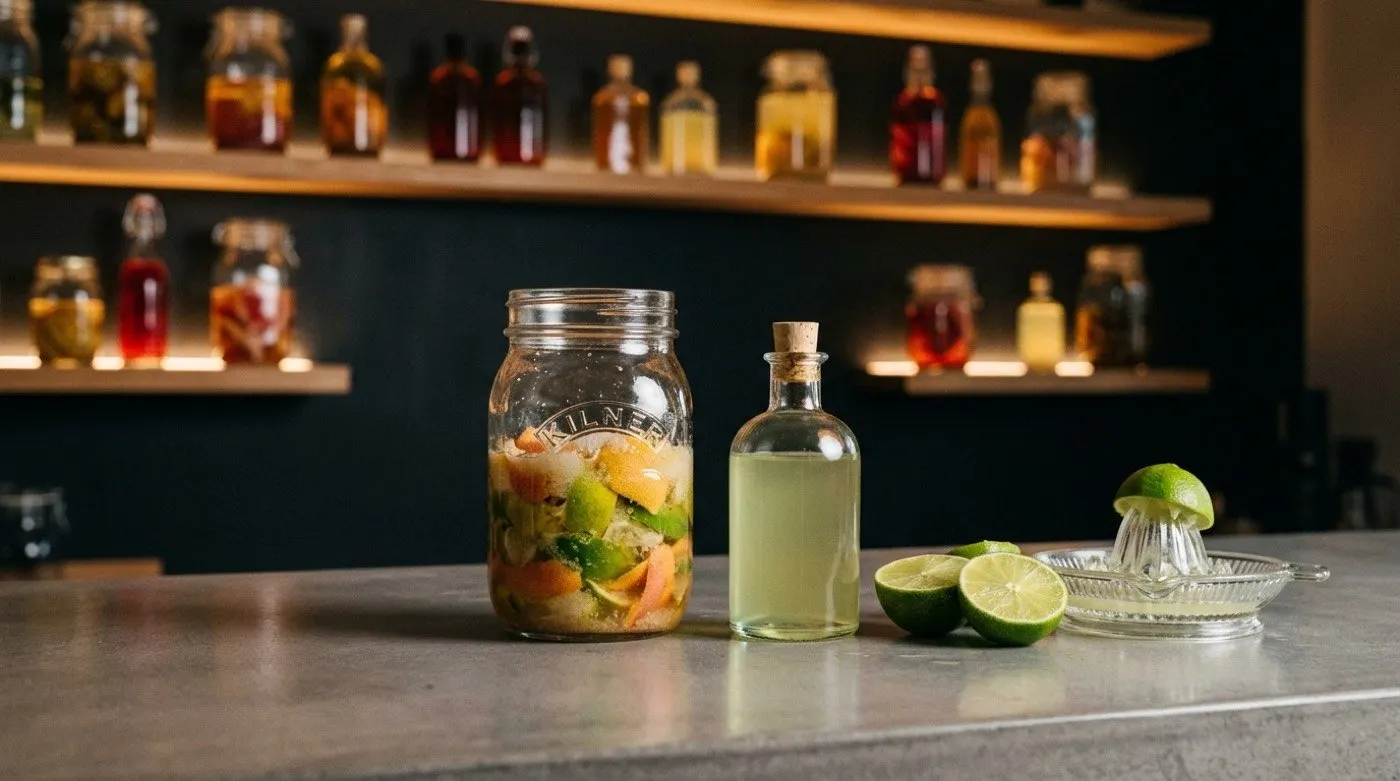
The differences from fresh juice are stark and explain why the homemade cocktail cordial has become a staple for the modern bartender:
- Shelf life: a lime juice oxidises and turns bitter within 4-6 hours; a cordial lasts refrigerated for 3 to 4 weeks without altering its profile.
- Aromatic intensity: by extracting the oils from the peel, the cordial multiplies the citrus presence in nose and mouth.
- Acid stability: you no longer depend on the variability of the fruit; you can calibrate exactly the pH and titratable acidity of each drink.
- Sustainability: you make use of the whole fruit: juice, peel and even part of the pith if you work it with acid.
Alongside super juice and oleo saccharum itself, cordial completes the family of laboratory citrus techniques that let us forget about the juicer during service and create rounder cocktails.
Anatomy of a cordial: the basic lime recipe
Lime cordial is the ABC of this technique and the perfect way in. Below is a table with each ingredient, its function in the preparation and a guideline proportion to obtain roughly a litre of cordial:
| Ingredient | Function | Guideline proportion |
|---|---|---|
| Fresh lime juice | Provides the main acidity and the citrus character. | 500 ml (about 12-15 limes) |
| Lime peel (no white pith) | Contains the essential oils that give the deep aroma. | Peel of 8-10 limes |
| White sugar | Sweetens, balances and helps extract the oils from the peel (oleo saccharum). | 200 g |
| Citric acid | Stabilises the acidity, extends shelf life and refines the brightness. | 4 g (a level teaspoon) |
| Salt (optional) | Rounds out the flavour and reduces residual bitterness. | A pinch |
The process deserves an article of its own, but suffice it to say that the peels are mixed with the sugar, left to rest for 4 to 12 hours so the oils migrate, the juice and citric acid are added, it is emulsified, strained and bottled. In the fridge, this cordial reigns supreme for three to four weeks.
Citrus variations and their star cocktails
The concept of cordial in cocktail making is not limited to lime; any citrus fruit with character can become the soul of a cocktail. Here are five cordials with their base citrus and the classic or creation where each one shines brightest:
| Cordial | Base citrus | Cocktail where it shines |
|---|---|---|
| Lime cordial | Sour lime (Citrus aurantifolia) | Gimlet, Daiquiri |
| Lemon cordial | Yellow lemon (Citrus limon) | Lemon Drop Martini, Tom Collins |
| Grapefruit cordial | Pink or white grapefruit | Paloma, Hemingway Daiquiri |
| Blood orange cordial | Blood orange | Blood & Sand, seasonal Sour |
| Yuzu cordial | Yuzu (Japanese citrus) | Yuzu Sour, cocktails with sake or gin |
Each one calls for its own recipe (the sugar is adjusted according to the fruit’s natural sweetness, and the citric acid can be combined with malic acid for milder citrus fruits), but the principle is identical: immerse the palate in the pure essence of the fruit.
How we use it at STILLROOM
At STILLROOM, cordials are not an occasional resource; they form the backbone of our cocktail laboratory. We prepare them daily, combining techniques such as oleo saccharum maceration, cold and sous-vide infusions and, when the cocktail calls for it, agar clarification to achieve absolute transparency. We use them both in our signature cocktails and in the tuning of classics, because we know a well-tuned cordial beats any freshly squeezed juice hands down.
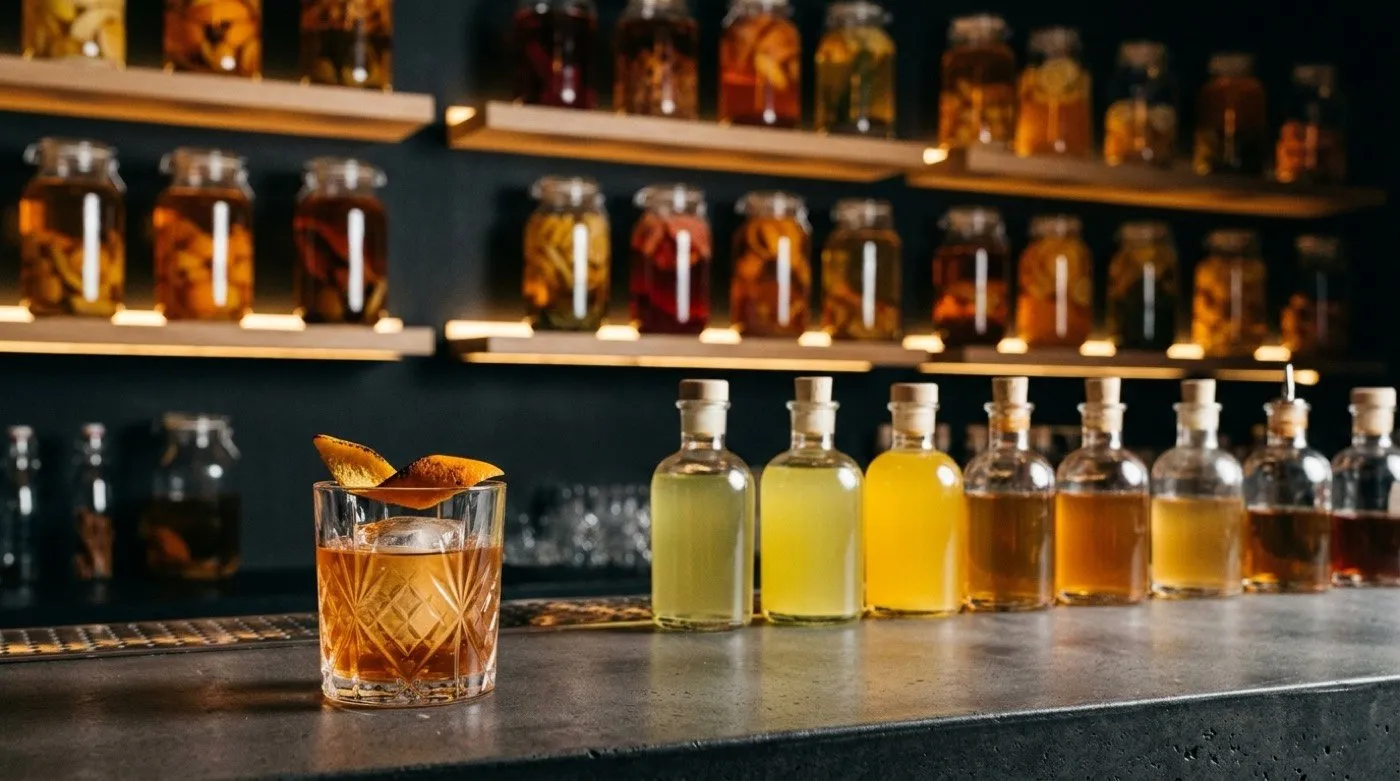
Thanks to our work with sous-vide infusions, we manage to extract the oils from the peel without degrading them through heat, preserving the full aromatic spectrum. When a drink calls for visual clarity — for example, a crystal-clear citrus-based cocktail — we turn to agar clarification to remove cloudiness without losing the soul of the cordial. These tools, together with other advanced cocktail techniques, let us work citrus fruit with the precision of a laboratory and the sensibility of a signature kitchen. And if you want to keep exploring the vocabulary of cocktail making — from oleo saccharum to super juice — we break it down term by term in our cocktail glossary.
You can see the result in the glass: from a Gimlet that has customers coming back every week to white lime and yuzu spirits that look like water but explode on the palate, or pink grapefruit drinks with a silky texture that is impossible to achieve with fresh juice. Cordial is the key, and at STILLROOM we give it the care it deserves.
And when the celebration is yours, those same cordials leave the bar: we take them to your event through our cocktail catering.
Three ideas for starting to create with cordials
Gimlet with lime cordial
The classic comes to life: 60 ml of London Dry gin, 30 ml of homemade lime cordial and a scoop of ice. Stir with a spoon, strain into a chilled glass and garnish with a lime peel. The aroma transports you to a tropical garden, and because the acidity is stable, every sip is identical to the first.
Yuzu citrus highball
A long drink that breaks with the usual: 45 ml of yuzu cordial, 15 ml of mild sake, top up with well-chilled soda in a highball glass with ice. Finish with a slice of fresh ginger or a shiso leaf. The spark of the yuzu and its perfume make it an addictive highball.
Pink grapefruit sour with egg white
Choose an aromatic pisco or a citrus gin: 45 ml of spirit, 30 ml of pink grapefruit cordial, 15 ml of pasteurised egg white. Dry shake (without ice) first to build the foam, add ice and shake again, double strain into a coupe. The creaminess and the round bitterness of the grapefruit will make you rethink traditional juice.
Frequently asked questions
What is a cordial in cocktail making?
A cordial in cocktail making is a citrus concentrate that blends the juice, the oils from the peel, sugar and, often, an additional acid to stabilise the acidity and boost the aroma. It keeps far longer than fresh juice and is used as an acid base in classic and signature cocktails.
How is a cordial different from a juice?
A juice is perishable (it oxidises within hours) and its flavour varies with every batch of fruit. A cordial, by contrast, thanks to the extracted oils and the added acid, keeps a constant aromatic and acidic profile for weeks under refrigeration, and its intensity is far greater because it captures the essence of the peel.
How long does a homemade cordial keep?
Prepared hygienically and stored in an airtight jar in the fridge, a lime cordial or any citrus cordial keeps for 3 to 4 weeks without losing its freshness. It is important to use clean utensils and prevent water or remnants of other food from getting in.
How do you make a lime cordial?
The basic process: peel 8-10 limes avoiding the white pith, mix the peel with about 200 g of sugar and leave to rest for 4 to 12 hours so the essential oils migrate into the sugar (oleo saccharum). Then add 500 ml of fresh lime juice and about 4 g of citric acid, stir until dissolved, strain and bottle. Stored cold in an airtight jar it keeps for 3 to 4 weeks. Ready to make it? Check out our guide to homemade cordials: step-by-step recipes.