Maceration in Cocktail Making: Extracting Flavour with Time and Patience
· Updated
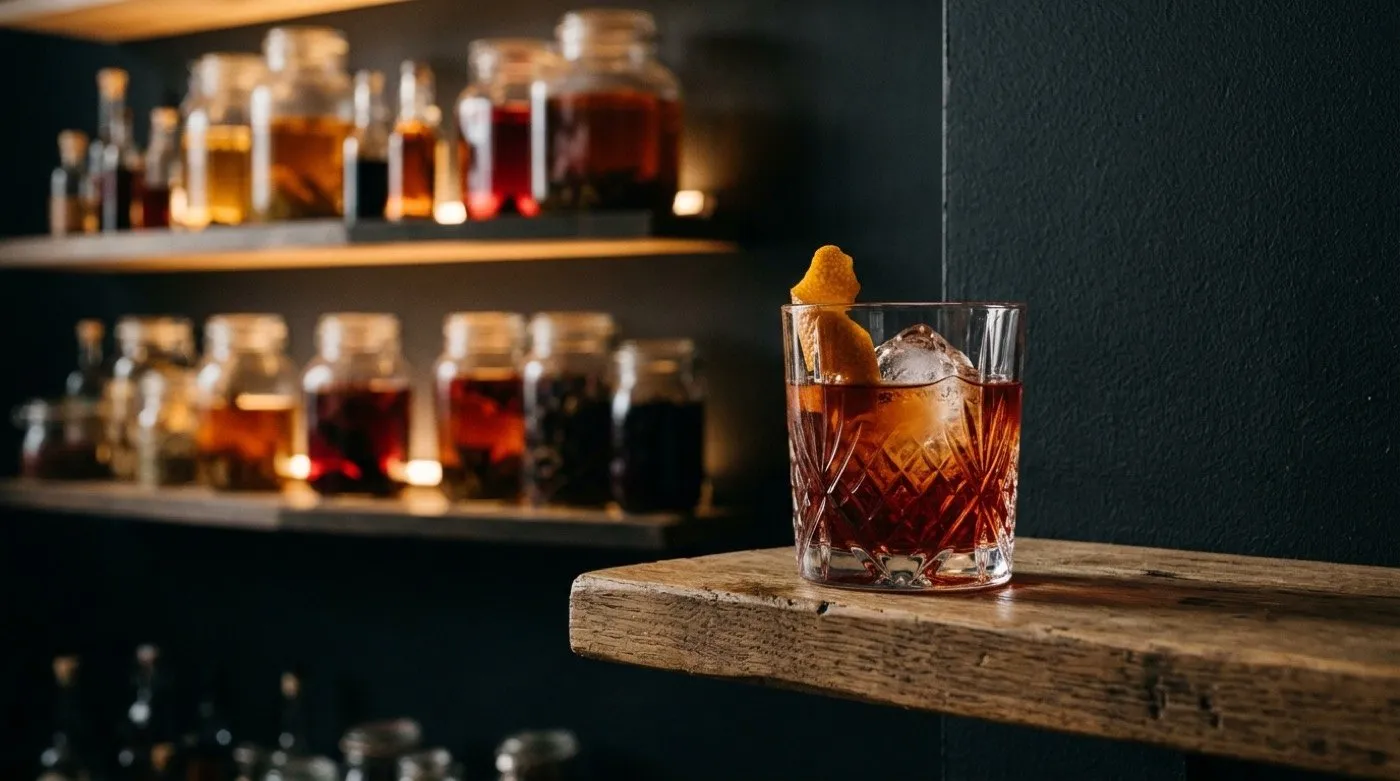
Maceration in cocktail making is a slow extraction technique that involves submerging an ingredient — fruit, herb, spice or even coffee — in a liquid, usually alcohol or syrup, so it releases its aromas, flavours and colour over hours or days at room temperature. At STILLROOM we consider it the foundation of liquid alchemy, the most direct and democratic way of transforming a neutral spirit into a cocktail with a signature of its own.
What Maceration in Cocktail Making Is and How It Works
We talk about maceration in cocktail making when we bring a solid into contact with a cold liquid medium — almost always alcohol, but also syrups or vinegars — and let time do its work. Unlike other techniques that apply heat or mechanical agitation, maceration respects the original structure of the ingredients and extracts the compounds gradually. The aromatic molecules, pigments and essential oils dissolve slowly into the maceration liquid, generating a much rounder and more complex integration of flavours than the one obtained through quicker methods.
The mechanism is purely osmotic: the liquid penetrates the ingredient’s cells and draws out the soluble compounds with it. The greater the contact surface — for example, if we chop the fruit or lightly crush the spices — the faster and more complete the extraction will be. The alcohol content also has an influence: a higher-proof spirit will extract certain compounds faster, but can be harsh on delicate notes. That’s why macerating fruit in alcohol requires a balance between ethanol percentage, time and temperature.
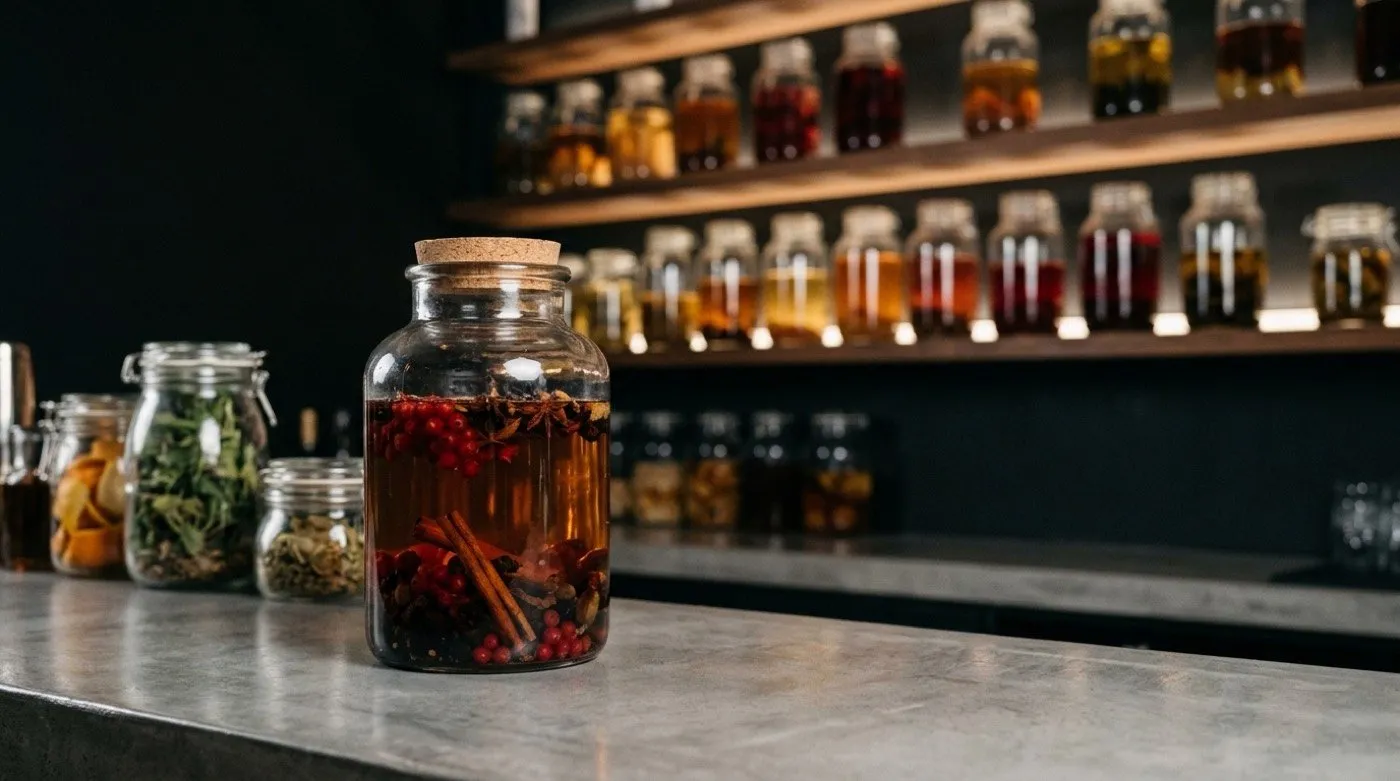
When we compare spirit maceration with sous-vide infusions or fermentations, we see that each one occupies a different place in the bartender’s toolbox. Maceration is the most accessible technique: it needs no special equipment, just an airtight jar, patience and good ingredients. That’s why it’s usually the first step for anyone who wants to experiment at home before jumping into the cocktail laboratory. At STILLROOM we use it to create everything from citrus oleo saccharum cordials to custom gins that later go through other processes such as fat washing or clarification.
Practical Examples of Maceration in Cocktail Making
The versatility of maceration lets us work with very different media. This table gathers five classic combinations that serve as a starting point for your own tests, with the timings we usually work with in our workshop.
| Ingredient | Medium | Approximate time | Result |
|---|---|---|---|
| Red berries (raspberries, blueberries) | Gin | 3-5 days | Intense ruby colour, fruity and slightly tart flavour, ideal for gin and tonics and summer cocktails. |
| Spices (cinnamon, vanilla, clove) | Aged rum | 5-7 days | Spiced, warm profile, perfect for an old-fashioned-style rum or for tiki drinks. |
| Fresh herbs (basil, rosemary) | Vodka | 24-48 hours | A green, aromatic and subtle extraction that keeps its volatile notes without turning bitter if the time is controlled. |
| Citrus (lemon, orange peel) | Sugar (oleo saccharum) | 6-12 hours | A dense, glossy syrup with all the essential oil of the peel, the base for cordials and complex citrus cocktails. |
| Coffee beans | Red vermouth | 1-2 days | Toasted, bitter notes that enhance the herbaceous profile of the vermouth, for Negronis and Americanos with character. |
Maceration vs Sous-Vide Infusion: How to Choose the Right Method
The infusion vs maceration question comes up often when we design a cocktail. Although both aim to transfer flavour, the main difference is the use of heat and precise control. In this table we set the two techniques side by side so you can judge which suits each recipe best.
| Criterion | Maceration | Sous-vide infusion |
|---|---|---|
| Time | Hours to weeks | Minutes to hours |
| Temperature control | Room temperature; cannot be precisely adjusted | Temperature controlled to the exact degree via immersion circulator |
| Flavour intensity | Gradual, rounded extraction, with greater depth | Fast, direct and bright extraction that preserves vibrancy |
| Delicate aromas | Can oxidise or lose freshness in long macerations | The vacuum and low temperature protect the most fragile volatile compounds |
| Equipment needed | Airtight jar, no special apparatus | Vacuum sealer and immersion circulator |
At STILLROOM we combine both: an initial maceration can serve as the base for a later sous-vide infusion, making the most of both worlds. If you want to dig deeper into the heat-accelerated technique, we explain every secret in our guide to sous-vide infusions.
How We Use It at STILLROOM
At our gastro cocktail bar in the Los Jerónimos neighbourhood, maceration is a quiet but fundamental stage of the creative process. It’s often behind cocktails that seem simple but hide days of patient work: spirit bases flavoured with seasonal fruit, custom vermouths with toasted spices, or cordials born from a rested oleo saccharum. Maceration lets us capture the essence of an ingredient and fix it in time, even before we think about the final glass.
Those same macerated bases travel when the celebration is not at our bar but at yours: they are the backbone of our cocktail catering.
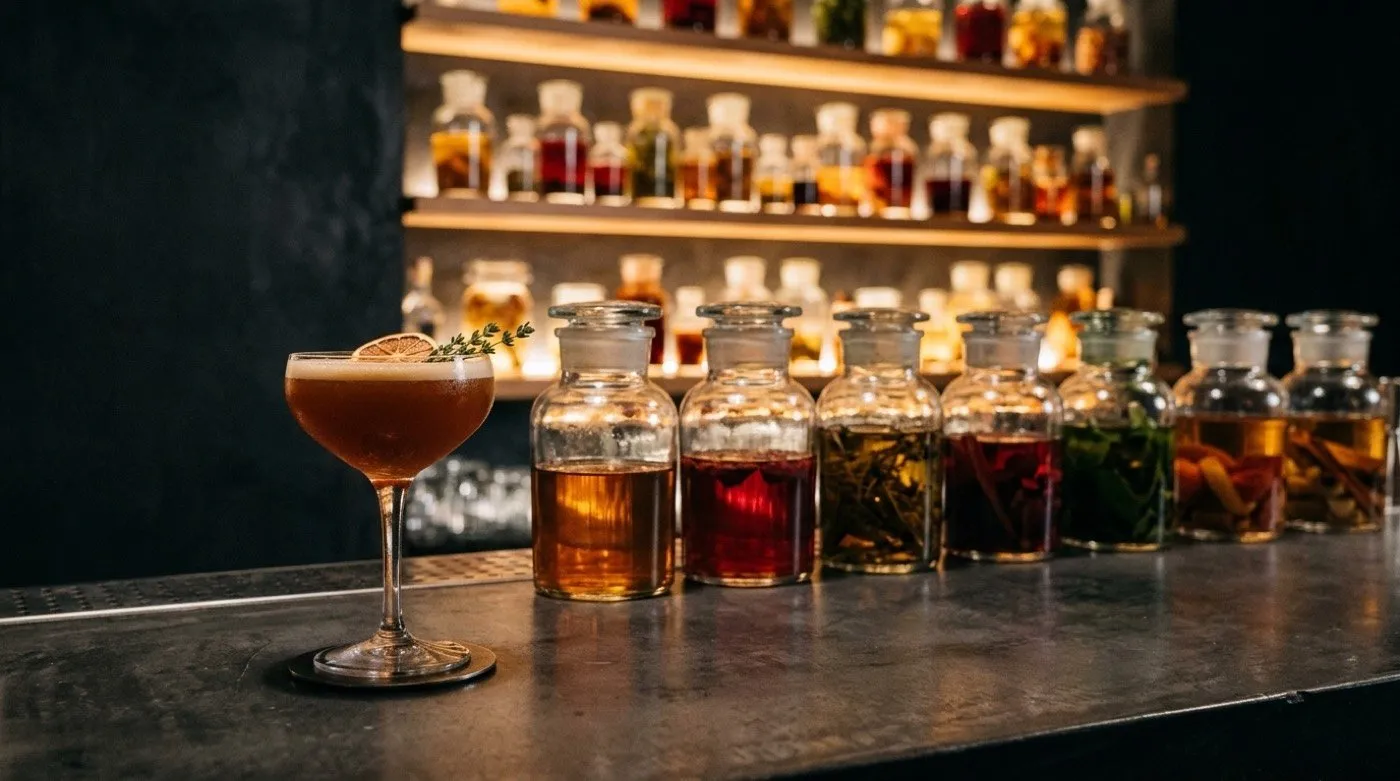
The beauty of maceration is that it doesn’t compete with other techniques, but complements them. In fact, many of our more advanced preparations start with a prior maceration. A clear example is when we macerate rum with coconut and then put it through a butter fat washing process; the result is a silkiness impossible to achieve with a single method. Or when we turn a macerated fruit syrup into an apple cider vinegar shrub, adding acidity and complexity. Mastering maceration is the essential step before moving comfortably into more complex techniques, which is why we always recommend starting here before diving into the laboratory. You can discover our whole arsenal of methods on the advanced cocktail-making techniques page.
Three Ideas to Start Macerating at Home
You don’t need laboratory equipment to create macerations that raise the level of your homemade mixed drinks. With a well-cleaned jar, quality alcohol and a willingness to experiment, you can achieve surprising results. Here are three simple, very rewarding ideas to help you lose your fear of macerating fruit in alcohol.
Red Berry Gin
Mix 400ml of London Dry gin with a generous handful of fresh raspberries and blueberries, lightly crushed. Seal it all in an airtight jar and leave it to rest at room temperature, away from direct light, for 4 days. Strain through a coffee filter and you’ll get a deep ruby-coloured, fruity and floral gin, perfect for a Mediterranean gin and tonic or a berry cocktail.
Homemade Spiced Rum
Put a cinnamon stick, a split vanilla pod and two cloves into 500ml of aged rum. Cover and leave to macerate for a week, gently shaking the jar each day. The result is a rum with character, warm and balanced, ideal for drinking neat over an ice cube or for making a spiced daiquiri that will surprise your guests.
Fresh Herb Vodka
Fill a jar with fresh basil and mint leaves and a pinch of rosemary. Cover with 500ml of neutral vodka and macerate at room temperature for between 24 and 36 hours. Don’t overdo the time or the herbs will start releasing a vegetal bitterness. Filter well and you’ll have an aromatic vodka that shines in citrus cocktails or mixed with a neutral tonic.
Frequently asked questions
What is maceration in cocktail making?
It’s the process of extracting flavour, aroma and colour that takes place when a solid ingredient (fruit, spices, herbs) is submerged in a liquid medium — usually alcohol or syrup — for hours or days, with no heat applied. It’s a basic and accessible technique within maceration in cocktail making, which is distinguished from rapid infusions by the absence of heat and by a gentler, more gradual extraction.
How long should you macerate for?
It depends on the ingredient and the result you’re after. Fresh herbs need between 24 and 48 hours to extract their aroma without turning bitter; soft fruit, such as red berries, reach their optimal point at 3-5 days; hard spices (cinnamon, vanilla) may need a week or more. In spirit maceration time is an adjustment variable: bear in mind that too much can lead to bitter or unbalanced notes.
What’s the difference between macerating and infusing?
The main difference is temperature. Maceration is carried out at room temperature over an extended period; infusion, especially sous-vide, uses controlled heat to speed up the transfer of flavour within minutes or hours. In the infusion vs maceration comparison, infusion better preserves volatile aromas, while maceration develops a rounder complexity thanks to the resting time.
Can you macerate in alcohol at home?
Yes, and it’s one of the most rewarding practices for getting started in craft cocktail making. You only need an airtight glass jar, alcohol of a suitable strength and the ingredients you want to extract. That said, to macerate fruit in alcohol safely, always work with clean utensils and keep your macerations away from heat sources or direct light.
Which STILLROOM cocktails use macerations?
Many of the recipes on our menu incorporate a macerated element: from cordials created using citrus macerated in sugar to spirit bases that have rested with stone fruit or native spices. At STILLROOM we understand maceration as a creative step that lets us build cocktails with a unique identity that’s hard to copy. If you’d like to explore how we bring these methods to the glass, check out our cocktail menu and choose your next discovery. To experience it live at our venue at number 9 Calle Moreto, with the calm of the Los Jerónimos neighbourhood and the green lungs of El Retiro just a stroll away, book a table whenever suits you best. And if you still have any terminology questions, take a look at our cocktail glossary, where we break down every concept with the same patience we apply to our macerations.