Lemon cordial: step-by-step recipe for cocktail making
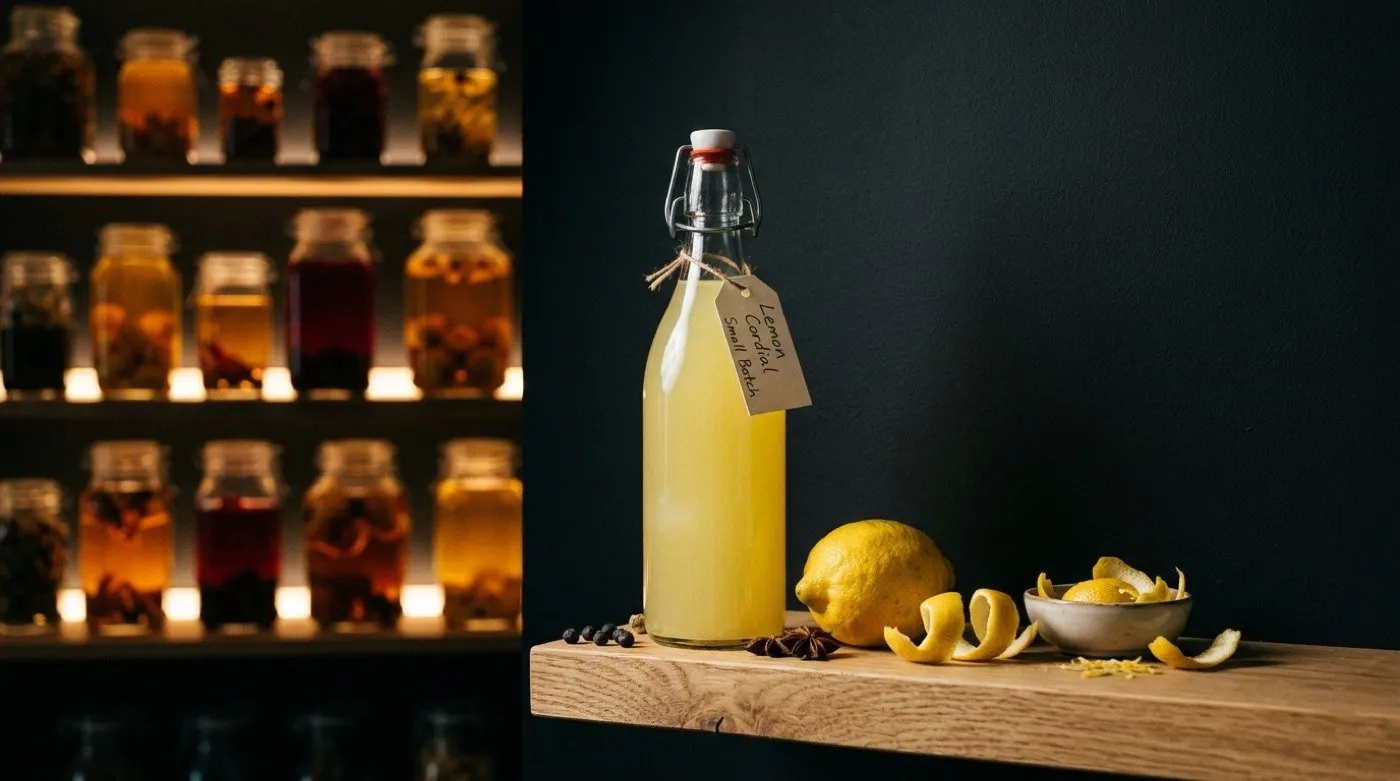
At STILLROOM we make our lemon cordial by macerating the peel with sugar to extract all its essential oils — the oleo saccharum technique — and then dissolving that flavoured sugar with freshly squeezed juice. The result is a bright citrus elixir, with body and a balanced acidity, that works as a base to bring depth to classic and signature cocktails.
Ingredients for lemon cordial
Before we get down to work, we gather everything we need. The quality of the lemons makes all the difference: we look for thick-skinned, highly aromatic ones with no surface treatments. Here are the exact quantities we use at our bar:
- 500 ml of freshly squeezed lemon juice
- 500 g of white sugar
- The peel of 3 lemons (with no white pith)
- 2 g of citric acid (optional)
How to make lemon cordial step by step
The process is simple but has its technical subtleties. The key is to respect the maceration times and avoid taking any of the white pith along with the peel, which would make the result bitter. Let’s go step by step:
- Peel the lemons with no white pith and mix the peel with the sugar; macerate for 1-2 hours (oleo saccharum).
- Squeeze the lemons and set aside 500 ml of strained juice.
- Mix the juice with the flavoured sugar until fully dissolved.
- Adjust the acidity with citric acid if you like and stir.
- Strain and bottle in a sterilised container. Store in the fridge.
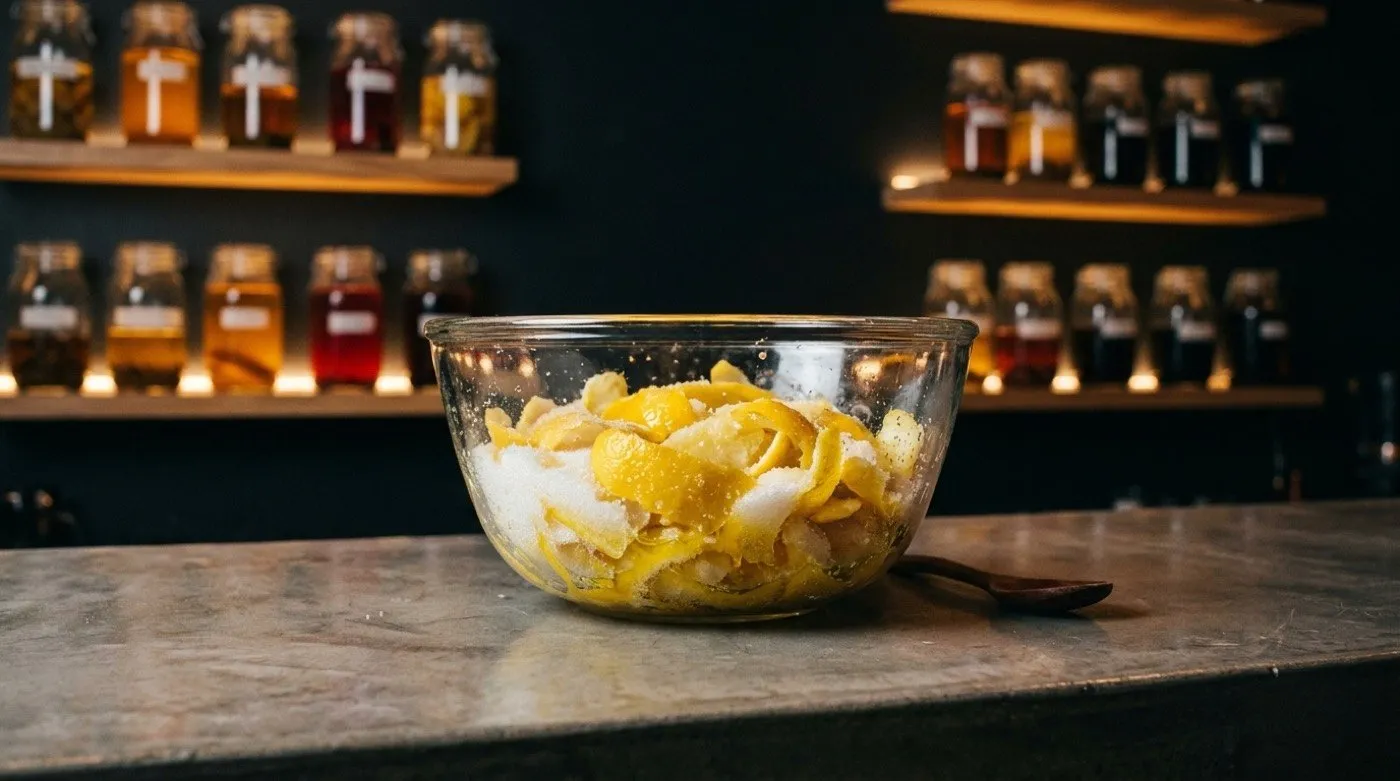
During maceration, the sugar absorbs the essential oils from the peel and turns into a moist, fragrant sand. When we add the juice, that perfumed sugar dissolves and gives us a cordial with an aromatic dimension that a simple lemon syrup will never achieve.
Ratios, acidity and tricks
The starting ratio is 1:1 between juice and sugar. That’s no accident: that balance between sweetness and acidity makes the cordial versatile enough to replace both juice and syrup with a single measure. In cocktails such as the Tom Collins or the Whisky Sour, where you would normally add lemon juice and syrup separately, the cordial lets you unify the step and gain consistency in every service.
What about the role of acids? Lemon contains mostly citric acid, but also small amounts of malic acid (the one found in green apples) that give it that characteristic liveliness. By adding 2 grams of citric acid we compensate for the dilution the juice undergoes when mixed with the sugar, and give the cordial back that sharp spark we look for in cocktail making. If you prefer a rounder profile, you can leave it out; if you want to experiment, try swapping half a gram for malic acid and you will notice a different brightness. At our bar we constantly play with these ratios depending on the destination cocktail, and we also encourage you to explore the super juice technique to understand how acids transform any citrus. If you want to go deeper into the maceration process that gives this recipe its soul, we have a full guide on oleo saccharum.
Storage
Once bottled, lemon cordial keeps for 3 to 4 weeks in the fridge, as long as the container is well sterilised. At STILLROOM we boil the jars and lids for ten minutes before bottling, and let the cordial cool before sealing. This avoids condensation that could shorten its shelf life.
If you make more than you will use in a month, you can freeze it without any problem. We usually portion it into airtight 250 ml bags, which is just the right amount for a home cocktail session. When defrosting, shake it well, as the essential oils tend to separate slightly.
Cocktails with lemon cordial
Having a jar of lemon cordial in the fridge is like having half a bar already set up. Here are three ideas we prepare constantly at our bar on Calle Moreto 9:
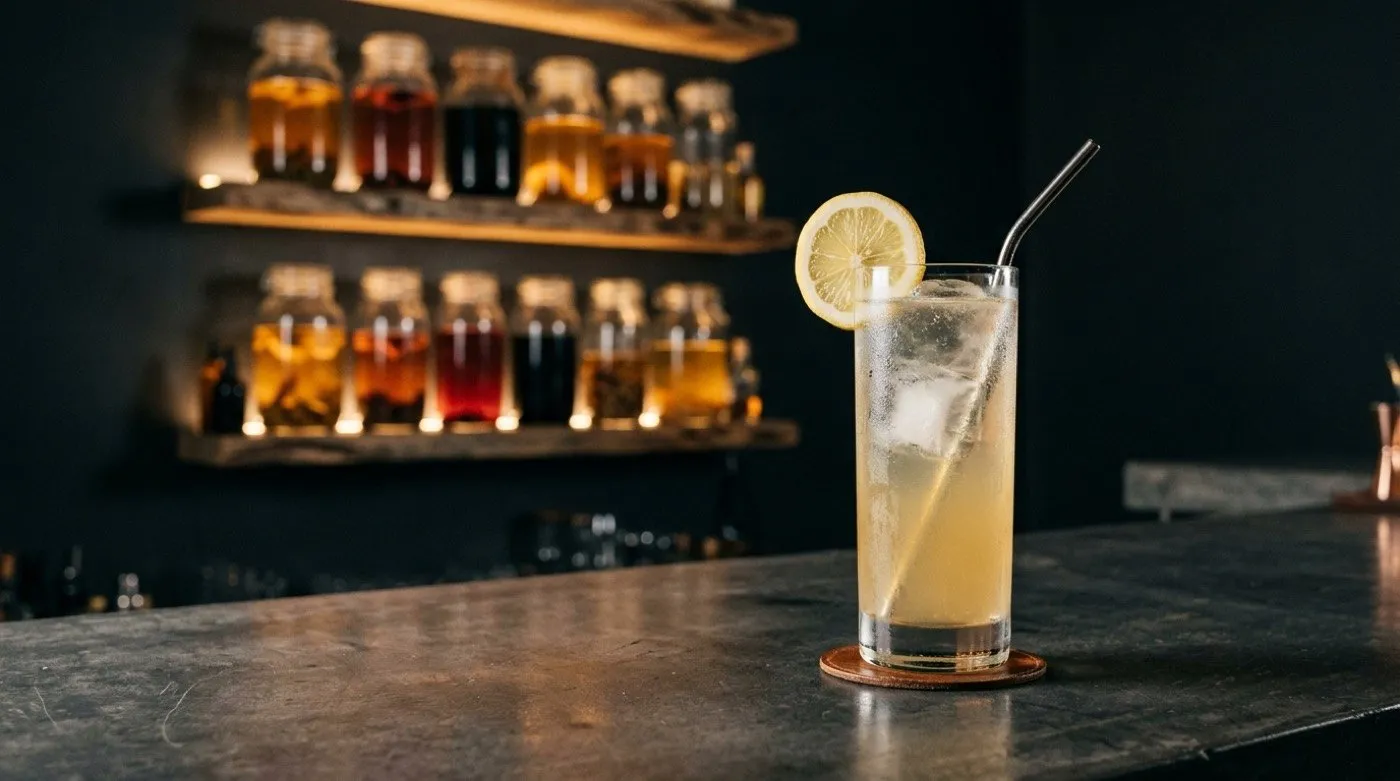
- Neighbourhood Tom Collins: 50 ml of London Dry gin, 30 ml of lemon cordial, top up with soda and ice. We garnish with a slice of lemon and a touch of juniper. The cordial provides the sweetness and the acidity in a single pour, and the result is silkier than with juice and syrup added separately.
- Signature Whisky Sour: 60 ml of bourbon, 25 ml of lemon cordial, 15 ml of egg white. We dry-shake, add ice and shake again. Served in a rocks glass with a dash of angostura over the foam. The cordial gives it a velvety texture and a citrus brightness that holds up better to dilution.
- Lemon and soda refresher: 40 ml of cordial, 150 ml of well-chilled soda, ice and a sprig of mint. The most refreshing alcohol-free version there is, and the perfect bar trick for when you fancy something delicious with no fuss.
These preparations are just the tip of the iceberg. If you want to see how we apply the cordial and other laboratory techniques in our signature cocktails, we look forward to seeing you at our cocktail menu.
Frequently asked questions
How do you make a lemon cordial?
The lemon peel is macerated with sugar to obtain an oleo saccharum, then mixed with strained lemon juice until the sugar dissolves, the acidity is adjusted with citric acid if desired, and it is strained and bottled. The result is a sweet, aromatic citrus concentrate ready for cocktail making.
How long does lemon cordial keep?
In the fridge, in a well-sterilised container, it keeps for 3 to 4 weeks without losing quality. It can also be frozen in portions and will keep for several months.
What is the difference between a cordial and a syrup?
Syrup is a solution of sugar and water, sometimes flavoured. Cordial starts from fruit juice and sugar, and usually includes a step of macerating the peel to capture the essential oils. It has more body, more acidity and an aromatic complexity that syrup cannot match.
Can I make lemon cordial without citric acid?
Yes, you can leave it out. The cordial will be a little sweeter and less sharp, but still perfectly good for cocktails. If you are after that extra brightness on the palate, we recommend adding it.
What is lemon cordial used for in cocktail making?
It is used to replace both lemon juice and syrup with a single ingredient, which speeds up service and gives a silkier texture. It is the base of cocktails such as the Tom Collins, the Whisky Sour or any drink that needs balanced acidity and sweetness. If you enjoyed this recipe, we have a complete guide to homemade cordials: every recipe, where you will find everything from the classics to combinations we have developed in our laboratory. Don’t miss the sister recipes for orange cordial and lime cordial, which complete the holy trinity of citrus in cocktail making. And if you want to try what we do with these cordials live, book a table at STILLROOM and come and see us in Los Jerónimos. We have a seat at the bar waiting for you.