Oleo Saccharum: the aromatic sugar that transforms your cocktails
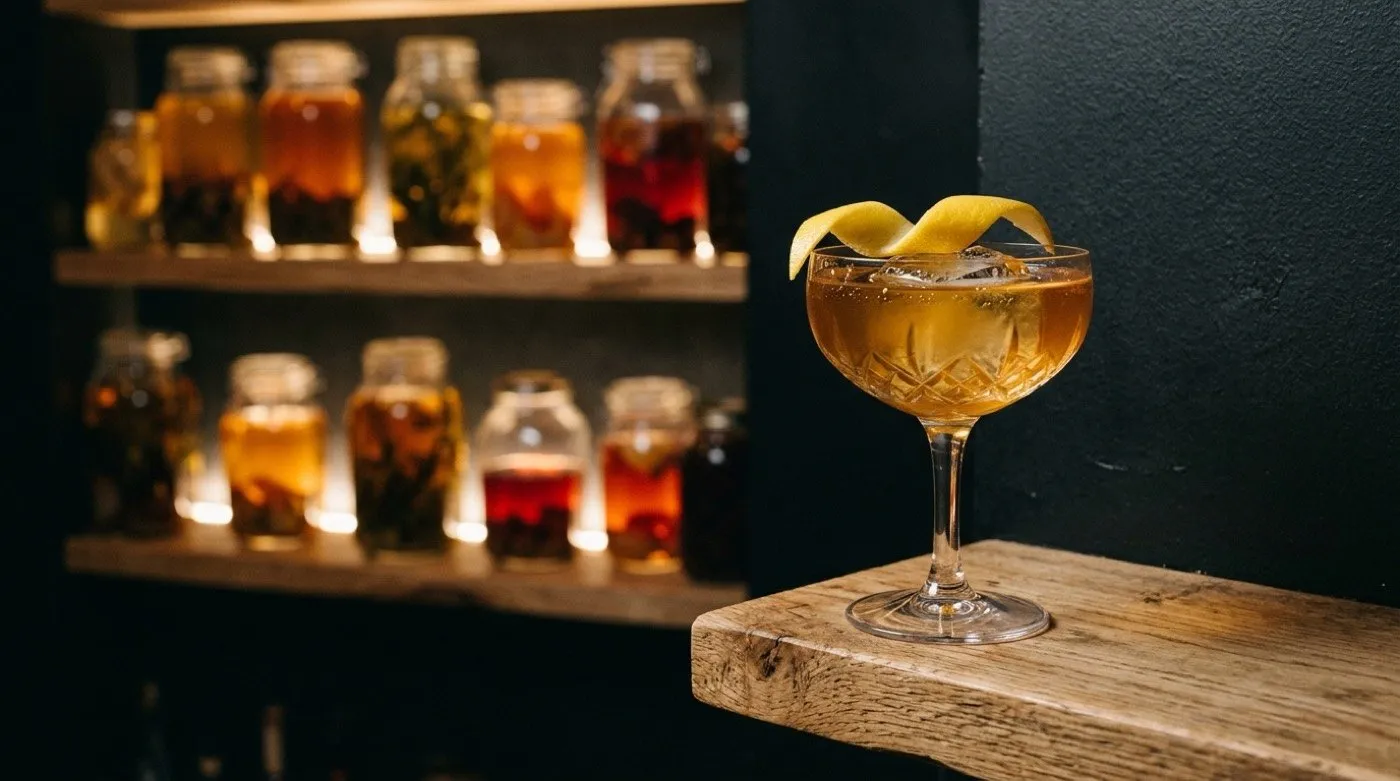
Oleo saccharum, literally “oil sugar” in Latin, is an intensely aromatic citrus syrup we obtain by macerating citrus peel with sugar to extract its essential oils. At STILLROOM we consider it one of the most elegant natural flavour boosters in signature cocktail making, because it concentrates the pure perfume of the fruit without a single drop of added water. If you are looking for a way to give soul to your punches, round off a sour or perfume a highball without diluting it, oleo saccharum is your next laboratory staple.
What oleo saccharum is and how it works
Oleo saccharum is an old pastry-making and cocktail technique that bartenders rescued from eighteenth-century punch recipe books. It is based on a simple physical principle: sugar, through osmosis, extracts the essential oils from citrus peel (the flavedo) without dissolving the bitter compounds in the white part (the pith). By mixing the peel with granulated white sugar and leaving it to rest, the sugar “steals” the moisture and oil from the cells of the rind, forming a silky syrup loaded with volatile aromas.
The magic lies in what it does not contain: no water, no juice, no heat. This avoids diluting the aromas or altering them through oxidation, so the result is a pure hit of citrus essence. Oleo saccharum smells like what you get when you dig your nail into a freshly picked lemon peel, multiplied by ten. By sweetening your mixes with it, you add perfume rather than just sweetness, which transforms the perception of the drink without adding extra acidity or volume.
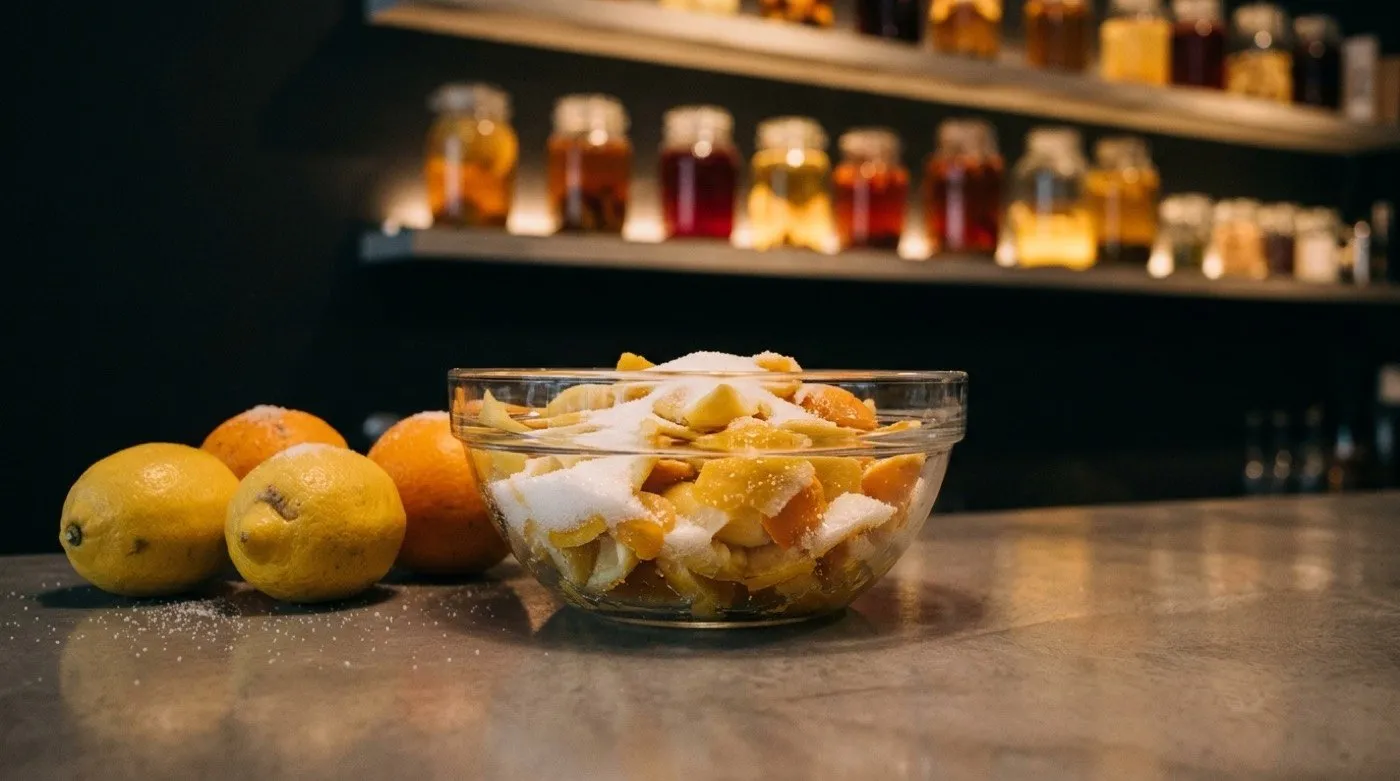
In practice, this syrup is the aromatic base of the cordial and super juice family: it shares with them the philosophy of making the most of citrus raw material, but oleo saccharum focuses exclusively on the peel and sugar, with no added acids or dilution with water. Once made, it can be added to cocktails as an aromatic sweetener, or combined with fresh juice to make homemade cordials.
Basic oleo saccharum recipe: step by step
The technique is surprisingly simple, but requires care in the peeling and patience during maceration. Here are the steps we follow at STILLROOM to get a clean, glossy and stable oleo saccharum:
| Step | What to do | Time |
|---|---|---|
| 1. Peel the citrus fruit | Choose thick-skinned, unwaxed citrus fruit. With a sharp peeler, remove only the coloured part (flavedo), avoiding the white part (pith) as much as possible, which brings bitterness. | 10-15 minutes |
| 2. Cover with sugar | Weigh the peel and place it in a bowl. Add an equivalent amount of granulated white sugar (1:1 ratio). Mix well and press lightly to start the contact. | 2 minutes |
| 3. Macerate cold | Cover the bowl with cling film and leave it to rest at room temperature (20-22°C) or in the fridge if it is hot. The sugar will start to dissolve in the oils, forming a dense syrup. | From 1 to 4 hours, or even overnight for very aromatic citrus fruits such as grapefruit or bergamot. |
| 4. Press and strain | Drain the contents through a fine sieve or cheesecloth, pressing the peel to extract all the syrup. Discard the spent peel. | 5 minutes |
| 5. Store | Keep the oleo saccharum in an airtight glass jar in the fridge. For more fluidity, you can add 10% warm water and dissolve gently. | Keeps for up to 2 weeks refrigerated. |
A house trick: if you are after an even more intense oleo saccharum recipe, add 5% powdered citric acid to the sugar; it will stabilise the colour and enhance the aromatic shine, though it moves away from the historic method.
Guide to citrus fruits and their aromas for oleo saccharum
Each citrus fruit brings a completely different profile. This table will help you choose according to the cocktail you have in mind:
| Citrus fruit | Aroma it brings | Cocktail or punch where it shines |
|---|---|---|
| Lemon | Bright, acidic and herbaceous notes. The most versatile and classic. | Classic oleo saccharum punch, Tom Collins, French 75, generic sour. |
| Orange | Indulgent sweetness, warm embrace, marmalade-like memories. | Old Fashioned, winter punch, cocktails with brandy or aged rum. |
| Grapefruit | Floral bitterness, dry complexity and very elegant sulphurous notes. | Paloma, Hemingway Daiquiri, spritz with Italian bitters. |
| Lime | Green, sharp freshness, tropical memories. | Mojito, Daiquiri, Moscow Mule, summer punches. |
| Bergamot | Perfumed, citrus-floral with a hint of spice. Laboratory-grade intensity. | Cocktails with black tea, sour with mezcal, signature highballs. |
You can combine several citrus fruits in the same oleo saccharum: a lemon base with 20% grapefruit peel creates a citrus symphony that lifts any punch. Imagination is the only limit, but remember that essential oils are potent: start with small amounts and adjust.
How we use it at STILLROOM: from maceration to the laboratory
In our signature bar, oleo saccharum is not just a pantry ingredient; it is a starting point for developing more complex flavours. We use it as an aromatic base for our homemade citrus cordials, where we mix the syrup with fresh juice and a pinch of malic acid to get a lively sweetener that also adjusts the cocktail’s acidity.
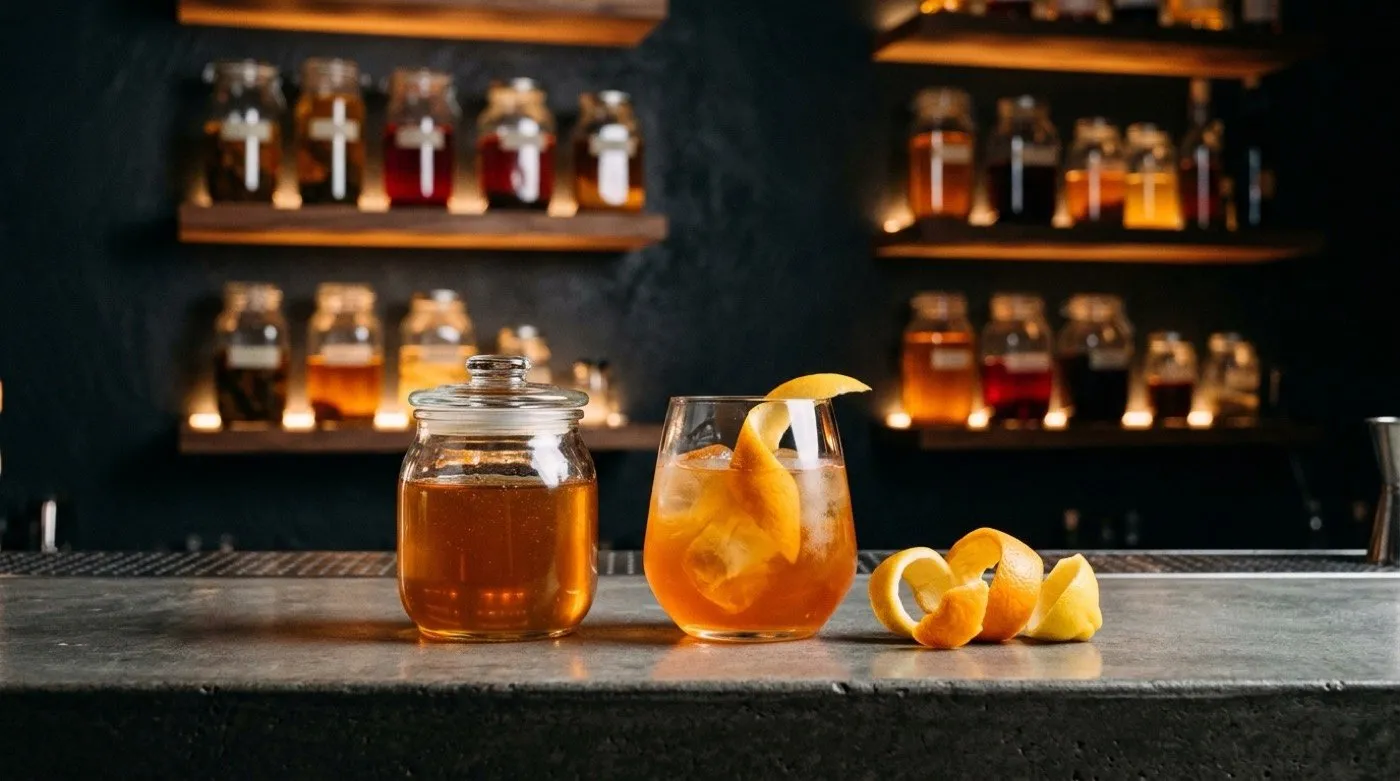
When we want to push extraction to the extreme, we combine oleo saccharum with sous-vide infusions: we vacuum-seal the peel and sugar and submerge them at 40°C for an hour. The pressure and temperature speed up the osmosis and capture aromas that would take days to appear in the cold, especially in hard citrus fruits such as bergamot or yuzu. This technique, together with others we explore in our section on advanced cocktail techniques, lets us create variants of oleo saccharum with almost laboratory-grade precision, adjusting body, sweetness and aromatic persistence for each cocktail on our menu.
What we never do: boil the oleo saccharum. Heat volatilises the most delicate aromatic compounds and turns a subtle perfume into flat caramel. We prefer patience, or other tools such as a rotary evaporator, to concentrate it without losing its spark.
Three ideas for starting to play with oleo saccharum
1. A lemon punch that revives any after-dinner gathering
Mix 60 ml of lemon oleo saccharum, 90 ml of aged rum, 30 ml of fresh lemon juice, 100 ml of cold water and 50 ml of cold-brewed black tea. Stir with large ice and garnish with lemon slices and nutmeg. It is a full-bodied punch, where the oleo brings the citrus nose without dulling the rum. For a lighter version, replace the rum with a dry white wine.
2. A rounder, more elegant sour
Swap the simple syrup in your recipe for orange oleo saccharum in a classic Daiquiri or a Pisco Sour. Use 15 ml of oleo saccharum for every 60 ml of spirit and 25 ml of citrus juice (lime or lemon). The result gains in perfume without losing dryness; you will notice the finish is more persistent and silky thanks to the emulsified oils.
3. An aromatic highball, with no visible sugar
Add 10 ml of grapefruit oleo saccharum to a gin and tonic highball. The carbonation lifts the essential oils and creates an intoxicating nose before the first sip. For an alcohol-free option, combine it with sparkling water and a touch of angostura bitters; you have a sophisticated soft drink ready in seconds.
These examples are just the way in. Oleo saccharum lends itself to pairing with ferments such as kombucha, with sparkling wine instead of the sugar in a Kir Royale, or even as a glaze over ceviche to bring citrus-indulgent contrast. At STILLROOM we investigate it constantly because its simplicity unlocks enormous creativity.
Frequently asked questions
What is oleo saccharum?
Oleo saccharum is an aromatic syrup obtained by macerating citrus peel with sugar, which extracts the essential oils from the rind without using water or heat. It literally means “oil sugar” and is used as a highly aromatic sweetener in cocktails and punches.
How do you make oleo saccharum?
You peel citrus fruit avoiding the white part, mix it with an equal weight of white sugar and leave it to macerate until the sugar dissolves in the released oils, forming a dense syrup. It is then strained by pressing the peel and kept in the fridge. The classic ratio is 1:1, though it can be adjusted to taste.
How long do you leave oleo saccharum to macerate?
It depends on the citrus fruit and the room temperature: with lemon, 2-4 hours at 20-22°C is enough; with grapefruit or bergamot it is best to leave it for 6 to 12 hours, even overnight in the fridge, to extract all its oils. In the fridge the osmosis slows down, but the volatile aromas are better preserved.
What cocktails is oleo saccharum used for?
It works for any cocktail that includes sugar or syrup and where you want to boost the citrus aroma: punches, sours, highballs, fizzes and classic cocktails such as the Old Fashioned or the French 75. It also works in non-alcoholic preparations, such as aromatic lemonades or signature soft drinks.
How long does oleo saccharum keep?
Stored in an airtight container in the fridge, oleo saccharum keeps perfectly for 10 to 14 days. If you add a small amount of citric acid or 10% neutral alcohol, it can be extended to 3 weeks. Always check the smell and texture before using it; a vinegary aroma or the presence of mould are signs it has gone off. Oleo saccharum is one of those techniques every passionate bartender should master. Its simplicity hides an aromatic depth that turns any mix into a more complex and elegant experience. If you want to try it live and discover how we bring it to the table at STILLROOM, we invite you to explore our cocktail menu or book a table at our bar in Los Jerónimos, next to Retiro Park. And if you’re curious to learn more, don’t miss the rest of the entries in our cocktail glossary; there we keep sharing technique, science and liquid passion, without pretension.