Orange cordial: step-by-step recipe for cocktail making
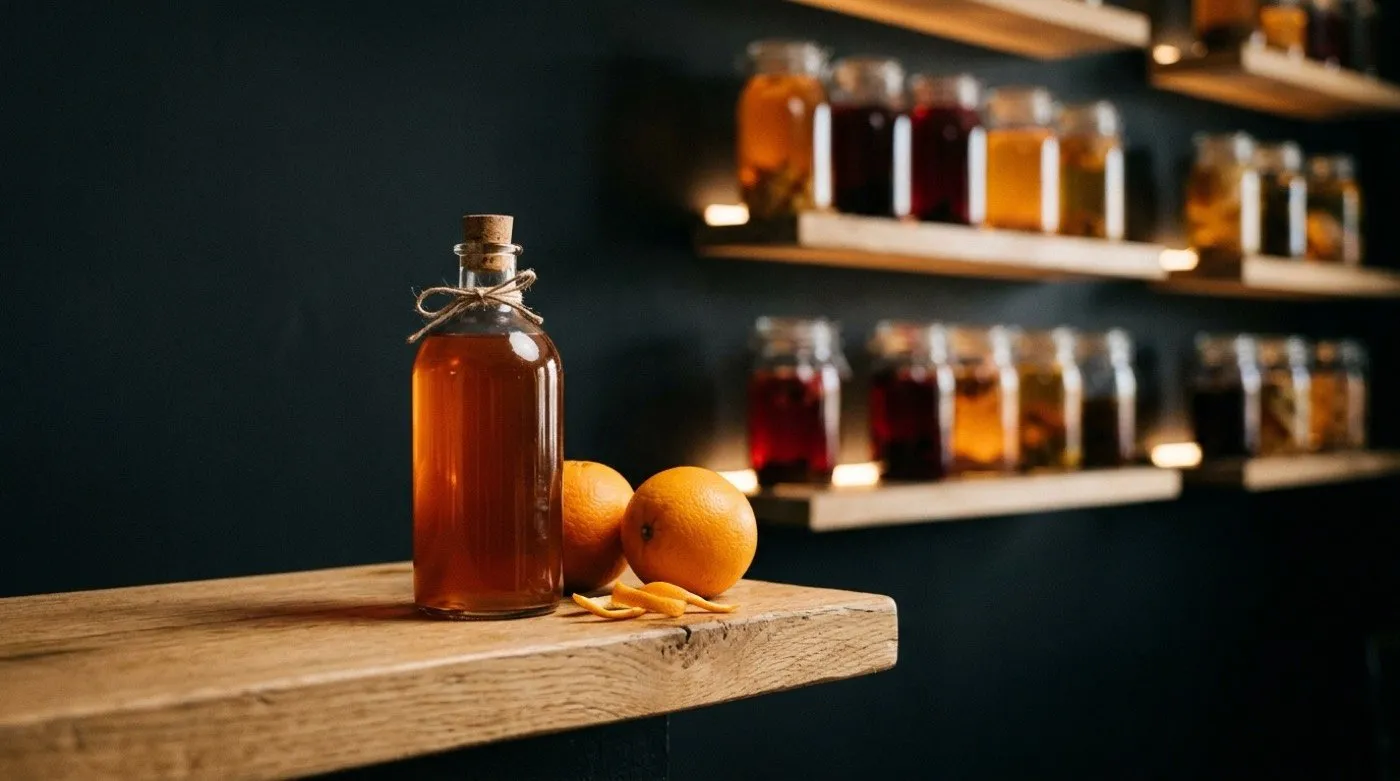
At STILLROOM we make our orange cordial by making the most of the essential oils in the peel through a laboratory technique we apply constantly at the bar: oleo saccharum. Essentially, it’s a concentrated citrus syrup, far more aromatic and with a balanced acidity that lifts any cocktail without overpowering it. If you want to dig deeper into the concept, we have a full guide on what a cordial is, but today we’re going straight to the stove: here is the exact recipe we use in-house.
Ingredients for orange cordial
The list is short and precise. In our laboratory we measure every gram to guarantee repeatability, but at home, with a digital scale and a good juicer, you have more than enough. The key is not to treat the peel as waste: it is the main source of aroma.
- 500 ml of freshly squeezed orange juice
- 500 g of white sugar
- The peel of 2 oranges (only the orange part, without the white pith)
- 2 g of citric acid (or the juice of half a lemon)
How to make orange cordial step by step
The process is simple, but there is one bar trick that makes the difference: macerating the peel with the sugar before heating the juice. This way we extract the essential oils without needing long infusions or excessive heat. Follow these steps and you will get a glossy, silky cordial with an intense citrus nose.
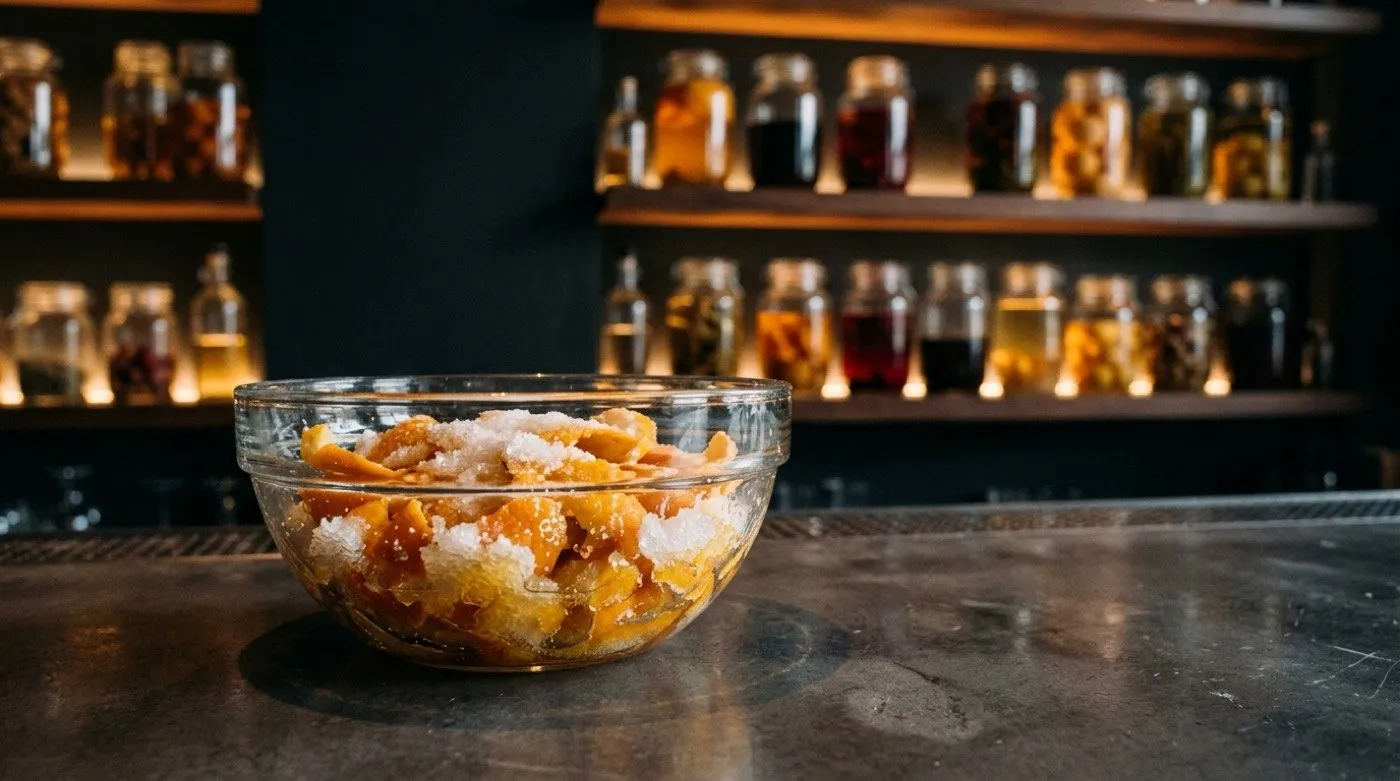
- Peel 2 oranges avoiding the white part and mix the peel with the sugar (oleo saccharum). Leave to macerate for 1-2 hours until the sugar absorbs the essential oils.
- Squeeze the oranges and set aside 500 ml of strained juice.
- Heat the juice over low heat (without letting it boil) and add the aromatised sugar; stir until dissolved.
- Add the citric acid, mix and remove from the heat.
- Leave to cool, strain out the peel and bottle in a sterilised container.
Ratios, acidity and tricks
The 1:1 ratio between juice and sugar is the classic starting point in cocktail making. It’s no coincidence: that balance guarantees just the right density to blend into a cocktail without being cloying or disappearing. At STILLROOM we adjust the acidity with pure citric acid (2 grams for every 500 ml of juice) because we are after a clean liveliness, with no lactic or fermented notes. If you prefer a rounder, more complex profile, you can replace part of the citric acid with malic acid — the one found in green apples — and you will get a different shine, rounder and with a fruity edge.
Another house trick: if you squeeze a large amount and have leftover juice, don’t throw it away. You can apply the super juice technique to stabilise fresh juice with the peel and acids, tripling the yield and reducing waste. And if you want to take oil extraction to the extreme, we recommend reading our dedicated guide to oleo saccharum, where we explain how we use it with citrus, herbs and even edible flowers.
Storage
A well-made cordial keeps perfectly for 3 to 4 weeks in the fridge, as long as you store it in a sterilised glass bottle with an airtight seal. The high sugar content and the acidity act as natural preservatives, but they are not eternal: after that time, the aromatic profile starts to degrade and loses the spark we look for at the bar. If you are not going to use it up within a month, you can freeze it in ice-cube trays or vacuum bags; on thawing it keeps the flavour intact and only loses a little texture, something you won’t even notice in a shaken cocktail.
Cocktails with orange cordial
This cordial is a bar all-rounder. Its profile — sweet, acidic and with a deep fresh orange nose — makes it the ideal partner for white spirits, vermouths and sparkling wines. Here are three ideas we serve at STILLROOM that you can easily replicate at home.
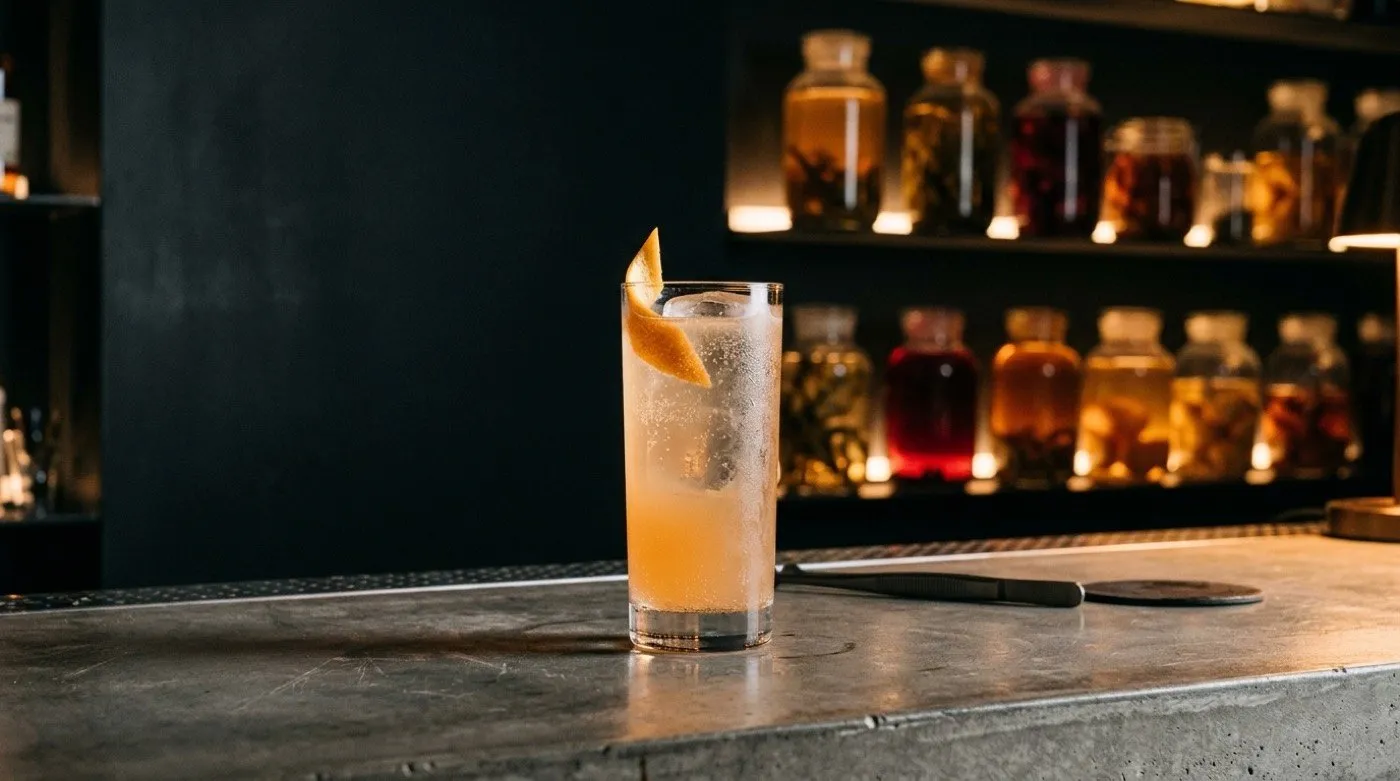
- Citrus orange spritz: 45 ml of orange cordial, 60 ml of cava brut nature and a splash of soda. Served in a balloon glass with ice and a thin slice of dehydrated orange.
- White vermouth & tonic: 30 ml of cordial, 60 ml of dry white vermouth and 100 ml of tonic water. Garnished with a sprig of fresh rosemary and a grapefruit twist.
- Orange and soda highball: 40 ml of cordial, 120 ml of well-chilled sparkling water, a spear of ice and a Moroccan mint leaf. Refreshing, straightforward and alcohol-free.
If you want to see how we build this kind of preparation into a complete bar experience, we invite you to explore our cocktail menu. There you will find everything from signature cocktails to revisited classics made with our own cordials.
Frequently asked questions
How do you make an orange cordial?
You make it by mixing orange peel with sugar to extract its essential oils (oleo saccharum), then adding that aromatised sugar to hot orange juice, adding citric acid, dissolving it and bottling it. The result is a concentrated citrus syrup, bright and highly aromatic.
How long does orange cordial keep?
In the fridge, inside a sterilised bottle, it keeps for 3 to 4 weeks without losing its organoleptic properties. You can also freeze it in portions to extend its shelf life by several months.
What is the difference between a cordial and a syrup?
A syrup is basically sugar dissolved in water, with or without flavouring. A cordial, on the other hand, starts from fresh juice and carries a higher proportion of citrus, as well as incorporating acids (citric, malic or tartaric) to balance the sweetness and boost the liveliness of the cocktail.
Can I make orange cordial without citric acid?
Yes, you can replace it with lemon juice (roughly half a lemon for every 500 ml of orange juice). The result will be less precise and more perishable, but it will work. Powdered citric acid simply gives us total control over acidity without adding extra liquid or secondary flavours.
What is orange cordial used for in cocktail making?
It is used as an acidic, aromatic base for cocktails, as a sweetener with character in spritzes and highballs, or as an acidity corrector in drinks with strong spirits. Its concentration allows you to dose it in small amounts without watering down the cocktail. If you liked this recipe, our guide to homemade cordials: all the recipes has many more formulas for setting up your own laboratory at home. Also don’t miss the sibling versions of lime cordial and lemon cordial, each with its own personality and specific tricks. And if you ever want to taste what these cordials are like in the hands of a bartender, book a table at STILLROOM. We are at Calle Moreto 9, in Los Jerónimos, Madrid, with the bar lit up and the citrus always fresh.