Super Juice: the modern trick for not wasting a single citrus fruit
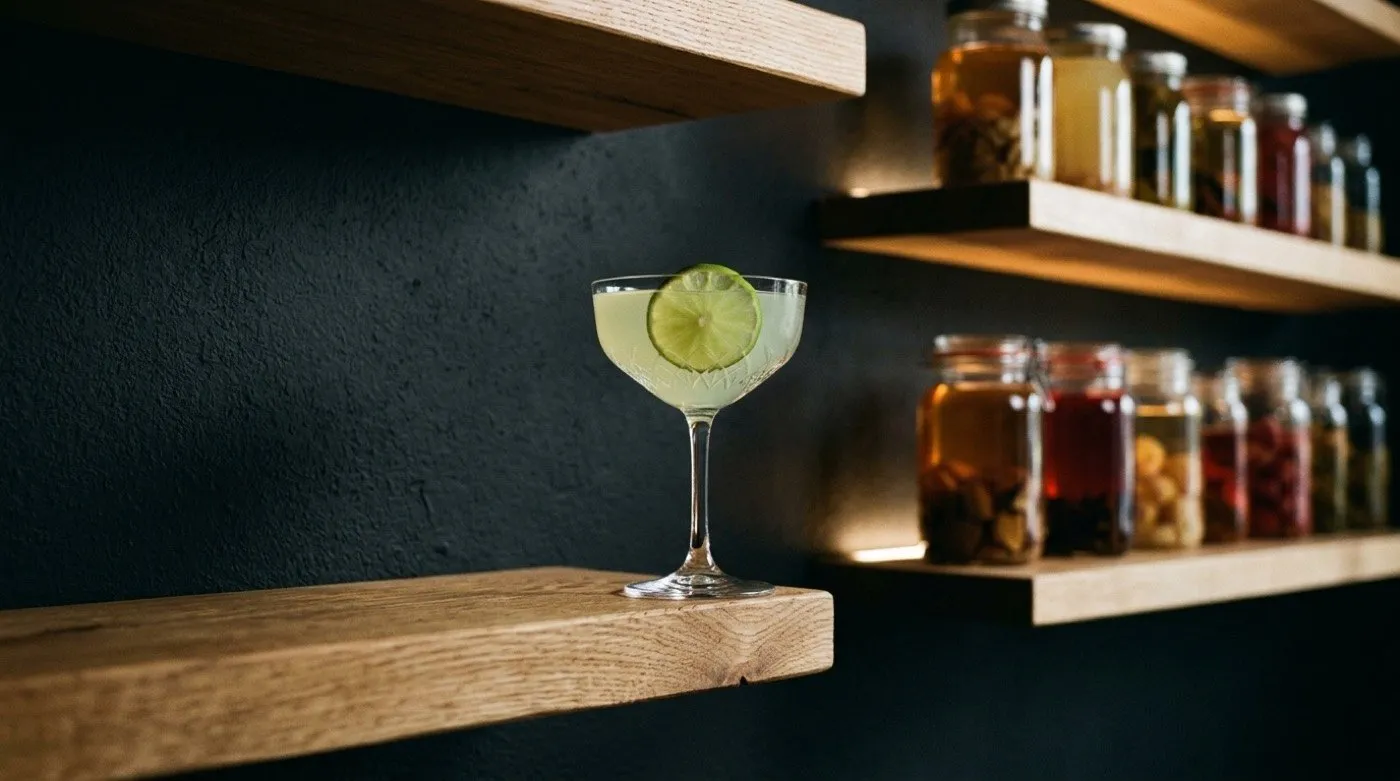
Super juice in cocktail making is a technique that stretches the juice of a citrus fruit up to five times without losing freshness, using its own peel macerated with food-grade acids. At STILLROOM we apply it to cut down on waste, keep a predictable acidity in every service, and create signature cocktails with the same liveliness as a freshly squeezed juice, but more stable and more responsible with the produce.
What super juice is and how it works
Super juice was born from a concern as practical as it is sustainable: getting the maximum flavour out of every citrus fruit. In essence, it consists of extracting the essential oils and the aromatic character of the peel with a mix of citric acid and malic acid powder. That paste, known in technical jargon as oleo-citrate, is then combined with a small amount of the original juice and with filtered water. The result is a bright liquid, with adjusted acidity, that multiplies the volume of freshly squeezed juice by four to six times.
The key lies in the chemistry. Citric and malic acid not only extract the volatile compounds from the peel more effectively; they also offset the dilution with water without the flavour turning watery. This gives a stretched juice that keeps a low, stable pH, which slows oxidation and lets it be kept in the fridge for up to two weeks without losing its liveliness. For a high-volume bar like ours, where every gram of fruit counts and consistency is sacred, this technique changes the rules of the game.
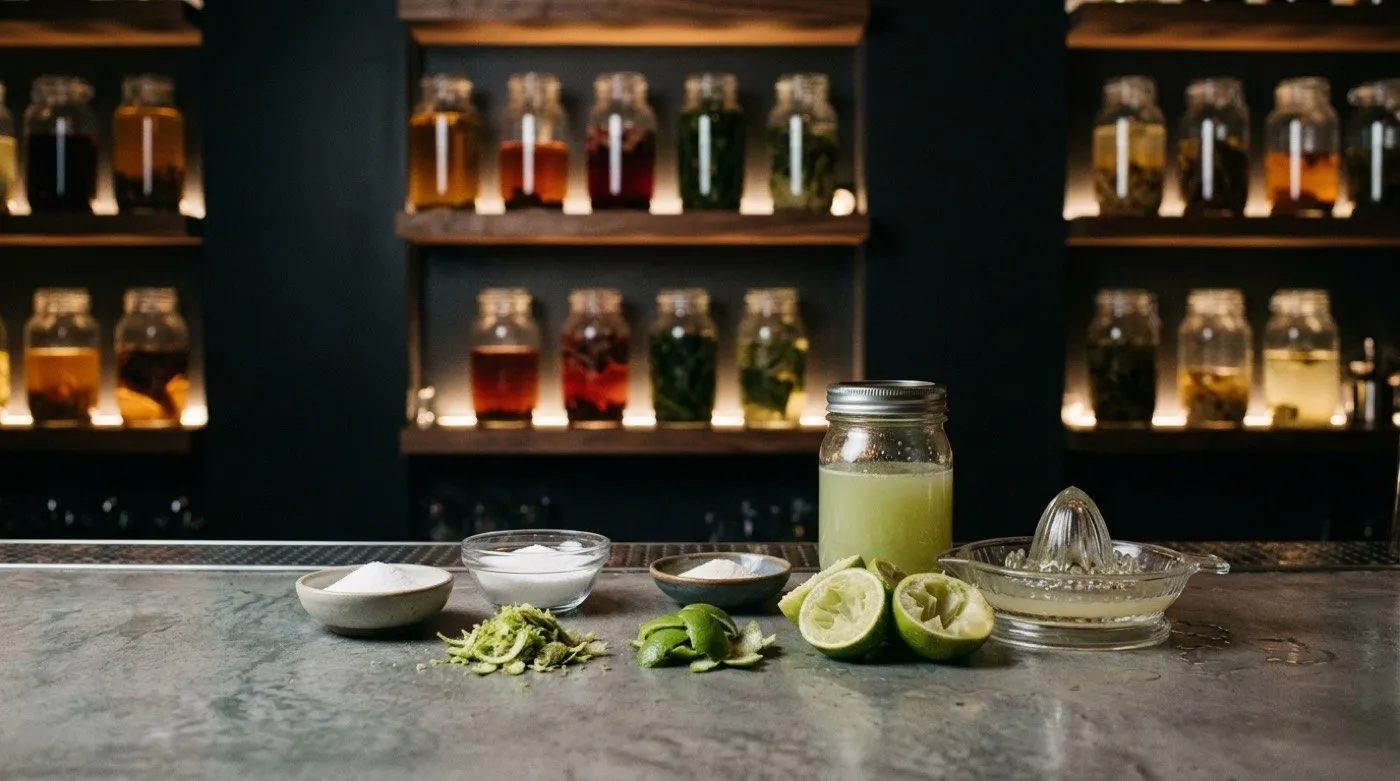
Recipe and ratios: lime super juice
The version we use most in the laboratory is lime super juice, because its acidic, aromatic profile works in countless combinations. This table sums up the basic components and their exact function within the mix.
| Ingredient | Function | Ratio (per 1 lime) |
|---|---|---|
| Lime peel (green part only) | Provides the essential citrus oils | 1 whole unit |
| Citric acid powder | Bright acidity, the juice’s main structure | 6 grams |
| Malic acid powder | Depth, roundness, softer and fruitier acidity | 3 grams |
| Fresh lime juice | Live flavour, genuine freshness | 30 ml (roughly the juice of the same lime) |
| Filtered water | Dilution medium that stretches the yield | 120 ml |
Super juice versus fresh juice: why it changes service
To understand the value of this technique, nothing beats putting it side by side with traditional juice. We have put together a comparison with the criteria that matter most inside a gastro cocktail bar.
| Criterion | Fresh juice | Super juice |
|---|---|---|
| Yield per fruit | 1 lime = about 30 ml | 1 lime = between 120 and 180 ml |
| Fridge storage | 24 hours before oxidising | 7 to 14 days with no noticeable loss |
| Acidity stability | Variable (ripeness, season, batch) | Controlled and reproducible every batch |
| Waste | The peel is discarded; often the whole fruit if not used in time | The peel and the juice are used in full, almost zero waste |
| Flavour | Immediate freshness, natural acidity peaks | Very similar, with rounder notes and an intense aromatic profile |
How we use it at STILLROOM
At our bar on Calle Moreto, super juice has become a cross-cutting tool: it does not replace freshly squeezed juice in every circumstance, but it does let us work with volumes that used to mean either a sacrifice in quality or a mountain of peels by the end of the night. We use it in our regular cocktails and also in limited runs where precise acidity is critical. In fact, we treat it as a bridge between the cordial and the oleo saccharum: here there is no sugar, only peel, acids and water, but the aromatic principle is a sibling of both techniques. If you are interested in the background of these preparations, we recommend reading our article on advanced cocktail techniques.
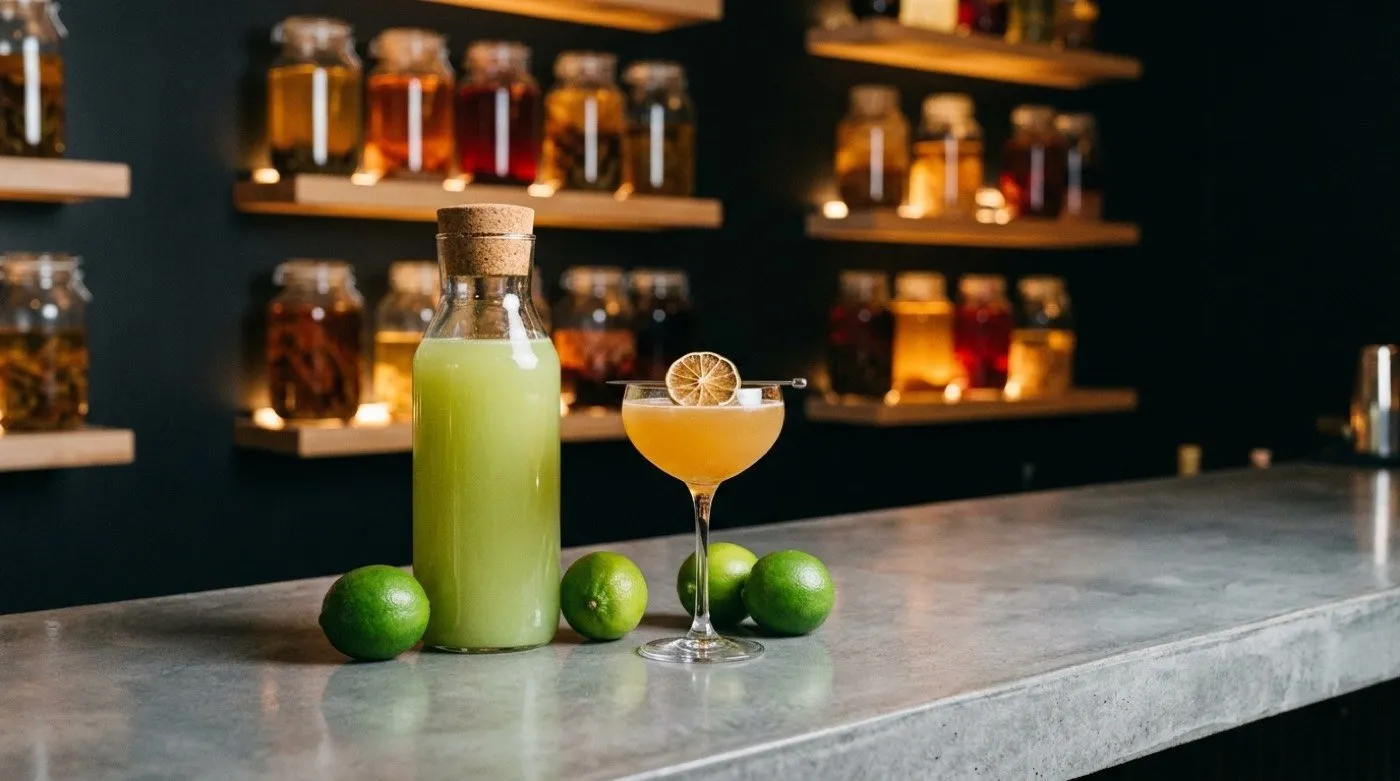
Three ideas for getting started
Daiquiri with lime super juice
The Daiquiri is the perfect testing ground. Swapping fresh lime juice for super juice in a classic 6:2:1 (white rum, super juice, simple syrup), you will notice a more harmonious citrus profile and a drink just as dry, but without the sharp acidic edge that sometimes throws it off balance. Shake well, double strain, and a chilled glass.
Zero-waste margarita
Make use of the peels of five limes to make your own homemade super juice and use it instead of natural juice. While the oleo-citrate paste rests, dehydrate the leftover peels and grind them with salt to make a citrus rim that closes the loop. Tequila, triple sec, super juice and a lime salt rim: a circular, sensible Margarita.
High-yield citrus highball
When you have an event or a full house, super juice lets you offer a long, refreshing drink without ruining your fruit supply. In a tall glass with ice, add 30 ml of gin, 25 ml of lime super juice, 10 ml of light cordial and top up with soda. Aromatic, fizzy and economical on citrus.
Frequently asked questions
What is super juice in cocktail making?
It is a technique that multiplies the yield of a citrus fruit by combining its peel, macerated with citric and malic acid, a small amount of fresh juice and water. The result is a stretched, stable juice with a balanced acidity that can last up to two weeks in the fridge. At STILLROOM we use it to cut down on waste and keep consistency in every cocktail.
How do you make lime super juice?
You mix the peel of one lime (just the green part) with 6 grams of citric acid and 3 grams of malic acid powder. Leave it to rest for 30 to 60 minutes so the acids draw out the essential oils. Then add the juice of that same lime — about 30 ml — and 120 ml of filtered water. Blend, strain, and it is ready to use.
How long does super juice keep?
Thanks to its low pH and the absence of pulp that would speed up oxidation, super juice keeps well for 7 to 14 days in an airtight container in the fridge. The flavour barely changes during the first week; after that it may lose a little aromatic brightness, though its acidity stays perfectly intact.
How is super juice different from a cordial?
Although they share the approach of making use of the citrus peel, a cordial includes sugar in its formula — usually in the form of oleo saccharum — while super juice is made exclusively with acids and water, giving a drier, more purely citrus profile. The cordial is sweeter and denser; super juice is closer to a stretched fresh juice.
Why is super juice said to be sustainable?
Because it drastically reduces citrus waste in hospitality. A single fruit yields the equivalent of four to six squeezed limes, and it also makes use of the peel, which would normally be thrown away. Less fruit for the same number of cocktails means a smaller water footprint, lower costs and a bar that is more respectful of the produce. If you want to try a cocktail where super juice makes the difference, we invite you to discover our cocktail menu in person. You can book a table at our gastro cocktail bar by the Retiro and see how we apply these techniques without giving up flavour or warmth. And if you are still hungry for knowledge, remember we have much more in our cocktail glossary. Cheers and good sipping.