Green apple cordial: step-by-step recipe for cocktail making
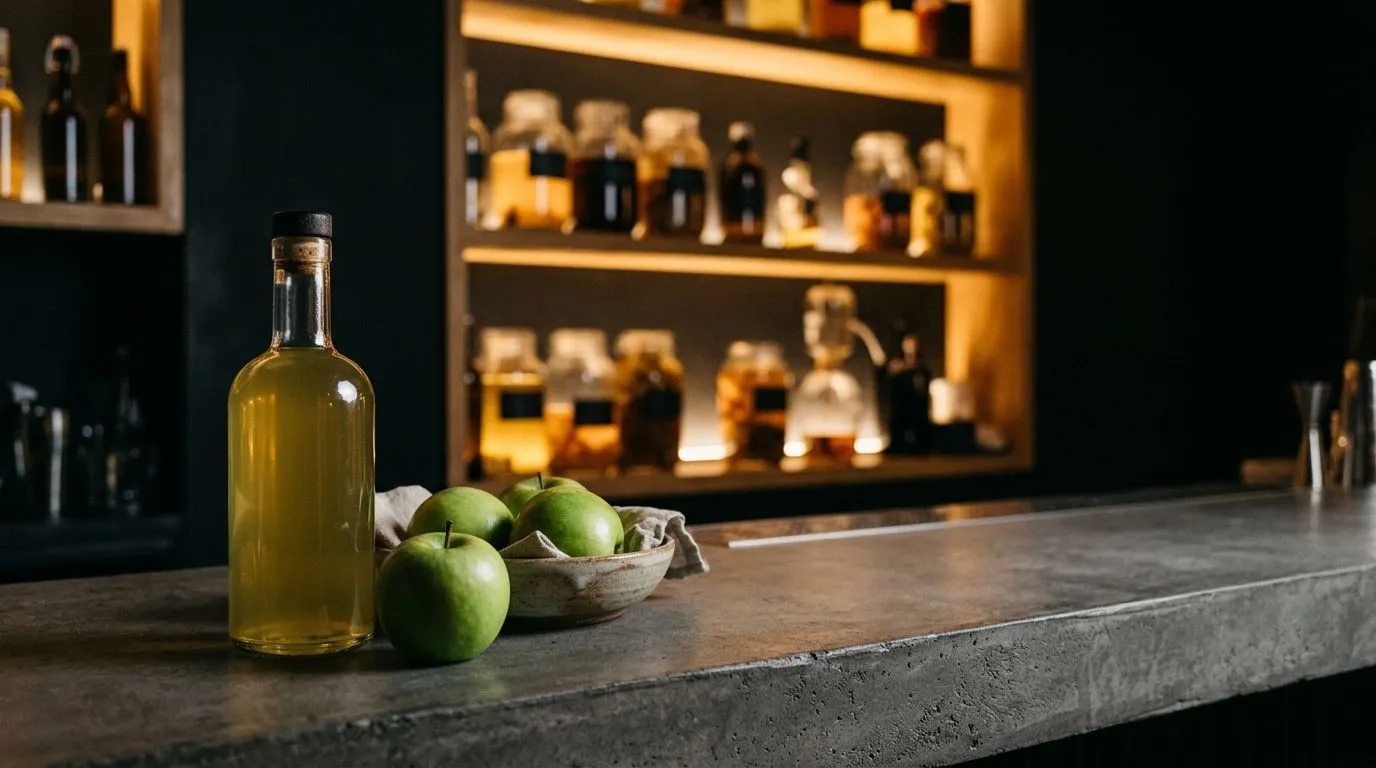
Green apple is the flavour everyone recognises and almost nobody manages to get into a cocktail properly. The juice oxidises within minutes, apple liqueurs taste of toffee and syrups end up reminding you of stewed fruit. At STILLROOM we solve that problem with a green apple cordial made cold, using the acid the fruit itself carries inside: malic acid. The result is a pale green concentrate, tart, crisp on the nose and stable for weeks in the fridge.
If this is your first time exploring this family of preparations, start with our guide to what a cordial is in cocktail making. Here we go straight to the recipe we use in-house, with its weights and the two technical details that set it apart from its citrus siblings.
What apple cordial is and why green apples
A cordial is a concentrate of fruit juice, sugar and acids that provides, in a single ingredient, the sweetness and acidity a cocktail needs. With citrus the route is well known: first the essential oils are extracted from the peel with sugar, and then the juice is added. Apple forces us to change the script.
We choose green apples, and specifically the Granny Smith variety, for three reasons:
- High acidity as standard. It is one of the most acidic apples you will find on the market, and that acidity is the backbone of the cordial.
- Clean, green aroma. Notes of freshly cut grass and crisp fruit that, in cocktail making, read as freshness rather than dessert.
- Firm, juicy flesh. It performs well in the juicer and releases a juice with fewer solids than the mealy varieties.
You can try other tart apples, but the profile that cocktail making calls “green apple” comes from this fruit.
Why the classic oleo saccharum doesn’t apply here
In the lemon cordial, the lime cordial or the orange cordial, the peel is the star: it is loaded with essential oils that sugar extracts without water or heat. That is the oleo saccharum technique, and we use it daily at the bar.
Apple peel doesn’t work that way. It has no oil glands like a citrus fruit, so however long you macerated it with sugar, you would never get that moist, perfumed sand. The apple’s aroma is in the juice and the flesh, and it is very volatile. That is why the method changes: all the work goes into extracting an impeccable juice, protecting it from oxidation and giving back its acidity with the acid that belongs to it.
Ingredients for apple cordial
We keep the same skeleton as the rest of the family: a 1:1 ratio of juice to sugar. What changes is the chapter on acids, which weighs more here than with citrus, because apple starts with less acidity than a lemon.
| Ingredient | Amount | Role |
|---|---|---|
| Freshly juiced and strained green apple juice | 500 ml (from 1 to 1.2 kg of fruit, about 6-7 apples) | Flavour, aroma and liquid base |
| White sugar | 500 g | Sweetness, body and preservation |
| Citric acid | 4 g | Clean, bright acidity |
| Malic acid | 2 g | The apple’s own green “bite” |
| Ascorbic acid (vitamin C) | 0.5 g, a pinch (optional) | Slows the browning of the juice |
You will also need a juicer (or a powerful blender and a sieve), a coffee filter or a cocktail superbag, precision scales and sterilised glass bottles.
How to make apple cordial step by step
There is just one golden rule: cold and speed. From the moment the apple is cut until the cordial is in the bottle, the clock is running against you. Have the acids weighed out and the sugar ready before you switch on the juicer.
- Chill the fruit. Put the apples in the fridge a few hours beforehand. A cold juice oxidises more slowly.
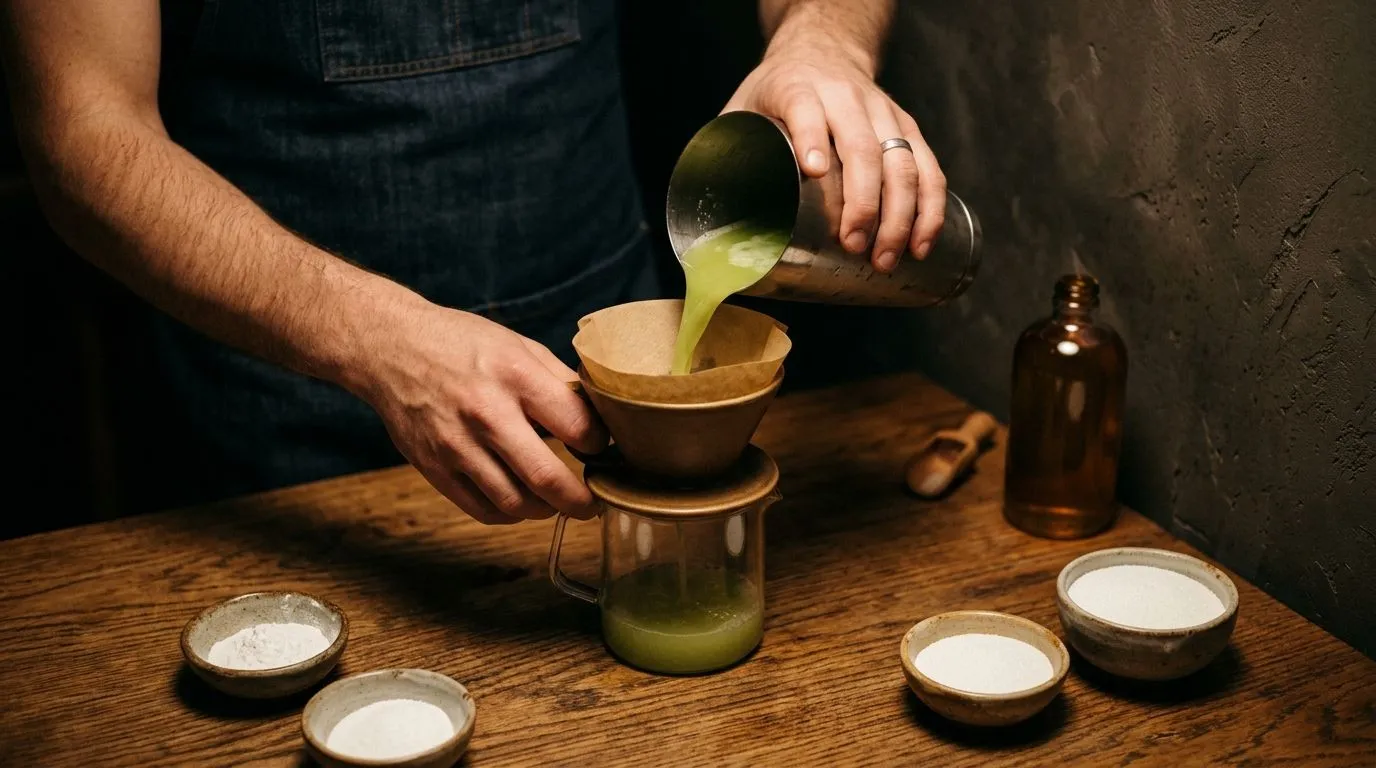
- Prepare the collecting bowl. Put the citric and malic acids and, if you are using it, the ascorbic acid in the container where the juice will fall. That way the juice is in contact with them from the very first drop.
- Juice without peeling. Wash, core and juice with the skin on: it adds a touch of colour and greenness, though not oils. Stir to dissolve the acids as the juice falls.
- Strain very finely. Pass the juice through a superbag or a coffee filter. If you want a cleaner cordial, let it rest for 15-20 minutes in the fridge so the solids settle, and strain only the clear part.
- Dissolve the sugar cold. Measure 500 ml of strained juice, add the 500 g of sugar and stir (or use a whisk attachment at low speed) until not a single grain is left. No heat: heat turns green apple into compote.
- Taste and adjust. It should taste of green apple, with a firm sweetness and a long, tart finish. If you feel it lacks tension, add another half a gram of malic acid.
- Bottle straight away. Fill sterilised bottles almost to the top, to leave little air, seal them and put them in the fridge.
Acids, oxidation and tricks
The citric-malic interplay
When you mix juice and sugar in equal parts, the juice’s acidity is diluted and the whole turns flat. Acids restore the balance, but they don’t all taste the same. Citric is direct and bright, like a lemon; malic is juicier and more persistent, and it is exactly the acid that gives green apple its character. In the lime cordial we use malic as an accent; here it is the lead. Our suggestion is a 2:1 mix of citric and malic, which keeps the freshness without the cordial drifting towards lemonade.
| Acid mix (per 500 ml of juice) | Resulting profile | When to use it |
|---|---|---|
| 6 g citric only | Bright but “lemony”; the apple blurs | If you can’t find malic |
| 4 g citric + 2 g malic (2:1) | Recognisable green apple, long, juicy finish | Our house reference |
| 3 g citric + 3 g malic (1:1) | Rounder, more “toffee apple” | Sours with dark spirits |
If you want to understand in depth how acids transform a juice, we recommend reading about the super juice technique, where we apply the same logic to stabilise citrus.
How to slow down oxidation
The browning of apple juice is an enzymatic reaction: as soon as the flesh meets the air, the colour turns brown and the fresh aroma fades. Three defences, from most to least important:
- Low temperature. Fruit, containers and juice, all cold.
- Immediate acidity. The acids in the collecting bowl stop the reaction from the start.
- Ascorbic acid. A pinch is a valid and common bar trick. It is optional: without it the cordial will darken somewhat sooner, but it will taste just as good.
Uses of apple cordial in cocktail making
Green apple cordial is an autumn ingredient, but it works all year round. Its great advantage is the same as the whole family’s: it replaces the juice and the sugar in a single pour, with the same result in the first glass and the last. A few ideas for home:
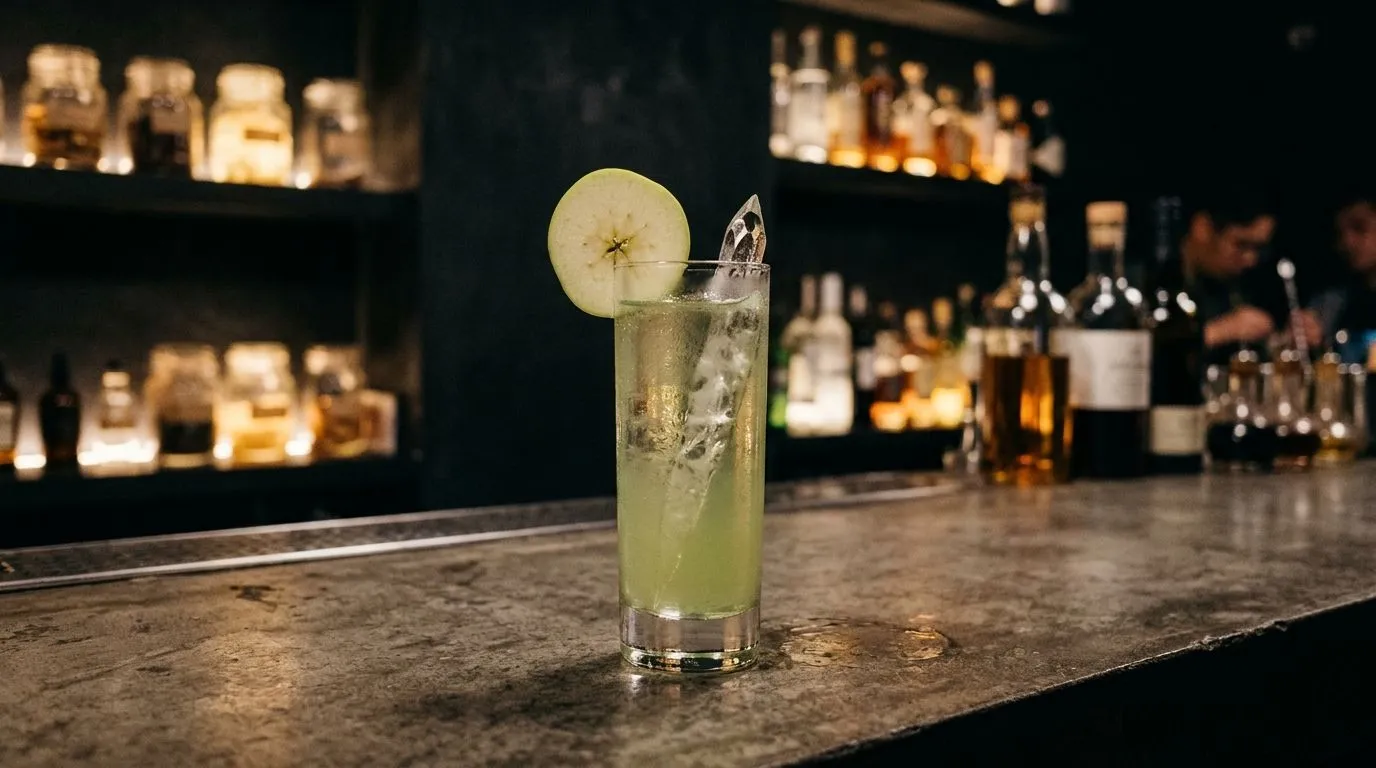
- Alcohol-free highball: 40 ml of cordial, 140 ml of well-chilled soda or tonic, a spear of ice and a thin slice of green apple. Fresh, straightforward and very aromatic.
- Alcohol-free green spritz: 40 ml of cordial, 60 ml of a dry alcohol-free sparkling drink and a splash of soda, in a balloon glass with ice.
- Autumn sour: 50 ml of calvados or whisky, 25 ml of cordial and 15 ml of pasteurised egg white. Dry-shaken, then shaken with ice, and double-strained into a rocks glass.
- Gin and apple highball: 45 ml of dry gin, 25 ml of cordial and soda to top up. Malic acid pairs wonderfully with juniper.
Storage
Bottled in sterilised glass and kept in the fridge, apple cordial keeps for 3 to 4 weeks, just like its citrus siblings. The sugar and the acidity work as natural preservatives; even so, it is normal for the colour to darken slightly as the days pass. If the aroma stays fresh, the cordial is in perfect condition.
To keep it for longer, freeze it in portions: airtight 250 ml bags or ice-cube trays. When defrosting, shake the bottle well before using. And a bar tip: open one bottle at a time, because each opening lets in air and speeds up oxidation.
An apple that doesn’t oxidise
This cordial closes the circle of a family that began with citrus and now opens up to other fruits. If you want more, the grapefruit cordial is its bitter, elegant counterpoint, and in our guide to homemade cordials: every recipe you will find the complete map. To clear up any technical term, see our glossary of cocktail making and mixology.
At our bar, cordials are a daily tool for bringing precision to every glass. Have a look at our cocktail menu to get a feel for the house style and, when you fancy trying it, book a table at STILLROOM: Calle Moreto 9, in Los Jerónimos, a step from the Prado.
Frequently asked questions
How do you make an apple cordial?
Green apples are juiced cold, the acid mix (citric and malic) is added straight away to stop oxidation, the juice is strained very finely and the same amount of sugar is dissolved in it, with no heat. It is then bottled in sterilised glass and kept in the fridge. The result is a green, tart, fragrant concentrate, ready for cocktails.
How long does apple cordial keep?
In the fridge, in a well-sterilised bottle, it keeps for 3 to 4 weeks. It is normal for the colour to darken a little as the days go by, but the flavour holds if you worked quickly and cold. If you make more than you will use in a month, freeze it in portions: it keeps for several months without losing character.
What is the difference between an apple cordial and an apple syrup?
Apple syrup is usually flavoured sugar and water, often cooked, with a profile closer to stewed apple. Cordial starts from fresh green apple juice, is not heated and contains added acids, so it provides sweetness and acidity at the same time. That is why a single ingredient replaces both the juice and the sugar in a cocktail.
Why is malic acid used in apple cordial?
Because malic acid is the apple’s natural acid: it is what gives a Granny Smith its juicy, green bite. When you mix juice and sugar in equal parts, the acidity is diluted; topping it up with citric alone leaves a lemonade-like profile. With a 2:1 citric-to-malic mix, the cordial still tastes of freshly cut green apple.
What cocktails is apple cordial good for?
It shines in highballs and alcohol-free spritzes with soda or tonic, in autumn sours and in drinks with calvados, whisky or gin. It replaces the juice and the sugar in a single pour, with identical results in every glass. You will find more ideas in our guide to homemade cordials and in this recipe’s bitter sibling, the grapefruit cordial.