Grapefruit cordial: step-by-step recipe for cocktail making
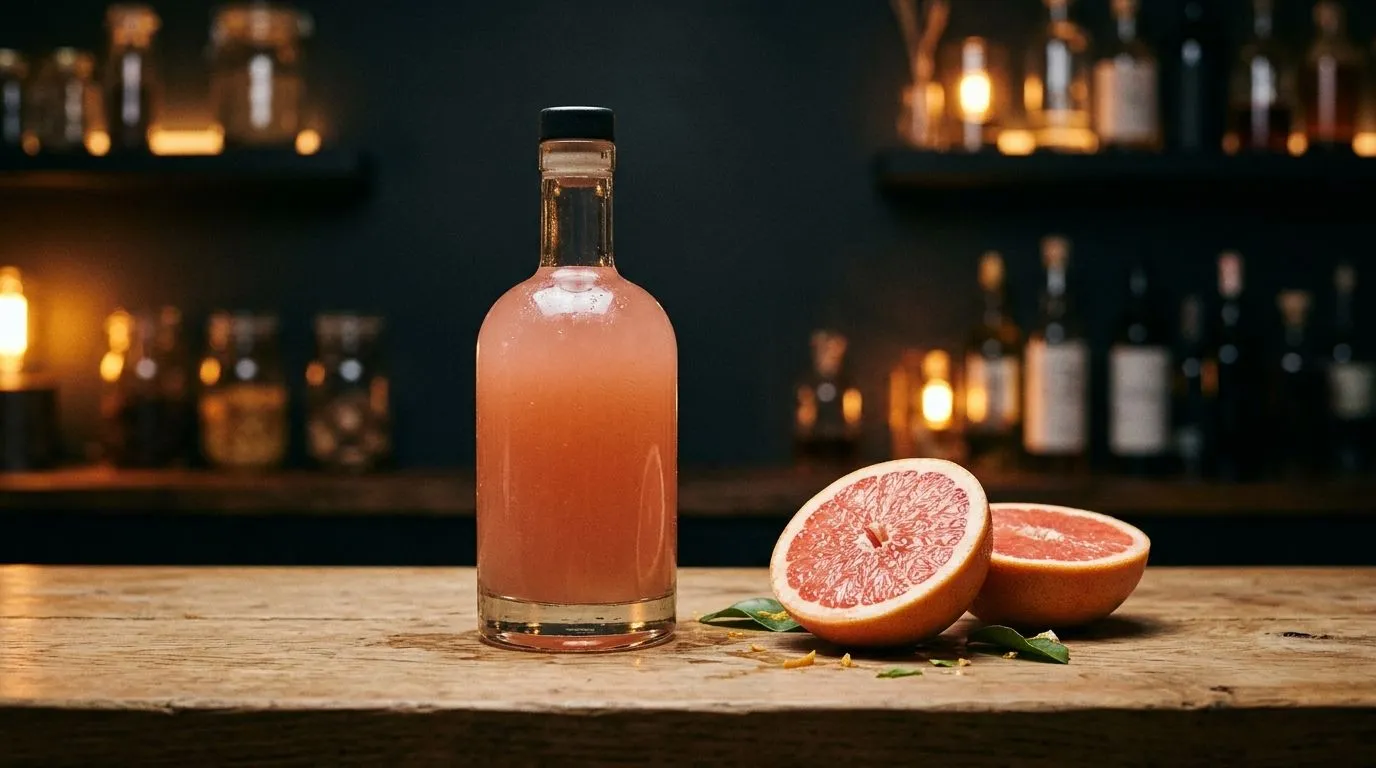
Grapefruit is the citrus fruit that divides people: some fall in love with its bitterness and others push it away at the first sip. In cocktail making, that bitterness is precisely what makes it valuable. Well tamed, it gives a long drink a grown-up tension that no other citrus fruit can match. At STILLROOM we prepare our pink grapefruit cordial using the house technique: the essential oils of the peel extracted with sugar, the juice added cold and the acidity adjusted to the gram. The result is a pink, perfumed concentrate with a bitter finish that stays exactly where it should.
If this is your first time exploring this family of preparations, start with our guide to what a cordial is in cocktail making. Here we go straight to the recipe, with its weights and the great lesson of grapefruit: bitterness is not eliminated, it is managed.
What grapefruit cordial is and why pink grapefruit
A cordial is a concentrate of juice, sugar and acids that provides, in a single ingredient, the sweetness and acidity of a cocktail. With grapefruit a third dimension is added: bitterness. That bitterness comes from natural compounds in the fruit that are concentrated in the white part of the peel (the albedo), in the membranes and, to a lesser extent, in the juice.
We choose pink grapefruit as our reference for three reasons:
- Gentler bitterness. It is sweeter and less sharp than white grapefruit, so balance comes with less effort.
- Colour. It tints the cordial a lovely pale pink that looks great in a highball.
- Very aromatic peel. Thick, generous and loaded with essential oils, ideal for the oleo saccharum.
If you prefer a drier, more grown-up profile, you can use white grapefruit or mix both; you will just have to be even more careful with the albedo.
The peel: here the oleo saccharum rules
Unlike fruits such as apple, whose peel has hardly any oils (which is why the apple cordial is made in a different way), grapefruit is a citrus fruit with a noble peel. That lets us apply the same method as in the lemon cordial, the lime cordial and the orange cordial: the oleo saccharum, which consists of macerating the peels with sugar, without water or heat, until the sugar absorbs their oils and turns into a moist, fragrant sand.
Ingredients for grapefruit cordial
We keep the family skeleton: a 1:1 ratio of juice to sugar. Grapefruit is less acidic than lemon, so we give it a little more citric acid so the cordial doesn’t turn out cloying.
| Ingredient | Amount | Role |
|---|---|---|
| Freshly squeezed and strained pink grapefruit juice | 500 ml (2-3 grapefruits, depending on size) | Flavour, acidity and bitterness |
| White sugar | 500 g | Sweetness, body and preservation |
| Peel of 1 large pink grapefruit | Only the coloured layer, no albedo | Essential oils and aroma |
| Citric acid | 3 g | Restores the tension the sugar dilutes |
| Fine salt | A pinch (optional) | Softens the perception of bitterness |
You will also need a vegetable peeler or a well-sharpened knife, a glass bowl with a lid, a juicer, a fine sieve and sterilised glass bottles.
How to make grapefruit cordial step by step
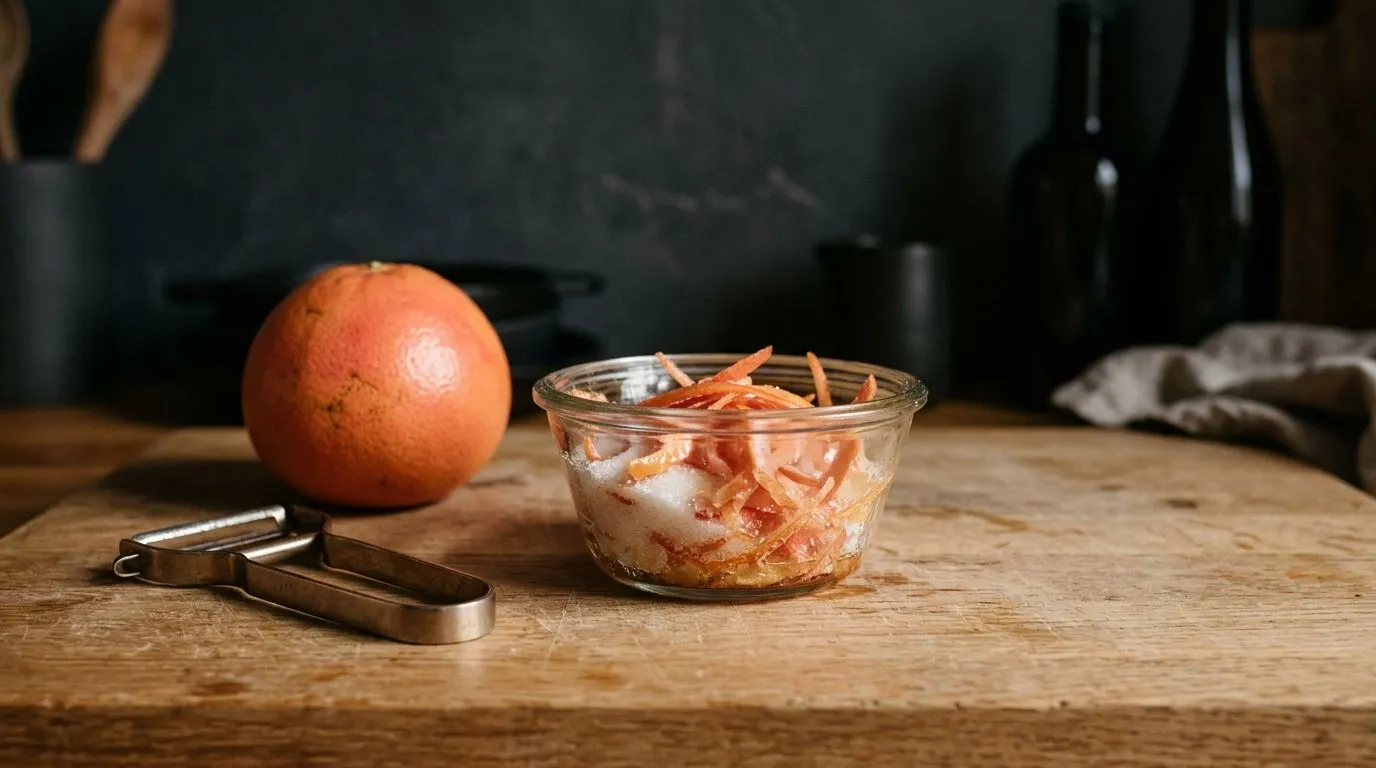
- Peel with precision. Wash the grapefruit and remove the peel in strips with a peeler, taking only the pink or yellow layer. If any strip brings some white with it, scrape it off with the knife: it is the main source of harsh bitterness.
- Prepare the oleo saccharum. Mix the peels with the 500 g of sugar in the bowl, rub them a little with your fingers or with a mortar, cover and leave to macerate for about 2 hours at room temperature. Grapefruit peel is thick and appreciates the full 2 hours.
- Squeeze without pressing too hard. Squeeze the grapefruits without crushing down to the membrane and strain the juice. Set aside 500 ml.
- Combine cold. Pour the juice over the flavoured sugar and stir until fully dissolved. No heat: heat dulls the oils and hardens the bitterness.
- Adjust. Add the citric acid and, if you are using it, the pinch of salt. Stir and taste: sweet on entry, tart in the middle and a clean bitter finish.
- Strain and bottle. Remove the peels with a fine sieve, bottle in sterilised glass and store in the fridge.
Bitterness, acidity and tricks
Managing bitterness, not eliminating it
The charm of grapefruit lies in its bitterness. A cordial without it would be just another citrus syrup; with too much, a harsh drink. These are the levers we use to fine-tune it:
| Lever | Effect on bitterness | How to apply it |
|---|---|---|
| Variety | Pink, gentler; white, drier | Pink grapefruit as the base |
| Albedo | The main source of harsh bitterness | Peel only the coloured layer |
| Squeezing | Pressing the membrane releases hard bitterness | Squeeze gently and strain |
| Contact time | Peels in the liquid = more bitter extraction | Strain out the peels as soon as the sugar dissolves |
| Salt | Reduces the perception of bitterness | A pinch at the end, optional |
| Citric acid | More acidity balances the bitterness | 3 to 4 g per 500 ml, to taste |
Just the right acidity
When you mix juice and sugar in equal parts, the acidity is diluted. With lemon, 2 g of citric is enough because the juice is already very acidic; grapefruit starts with less acidity, which is why we go up to 3 g. If you like a tauter cordial, go as high as 4 g. We don’t recommend malic acid here: its green, juicy profile belongs to apple and blurs the character of grapefruit.
Uses of grapefruit cordial in cocktail making
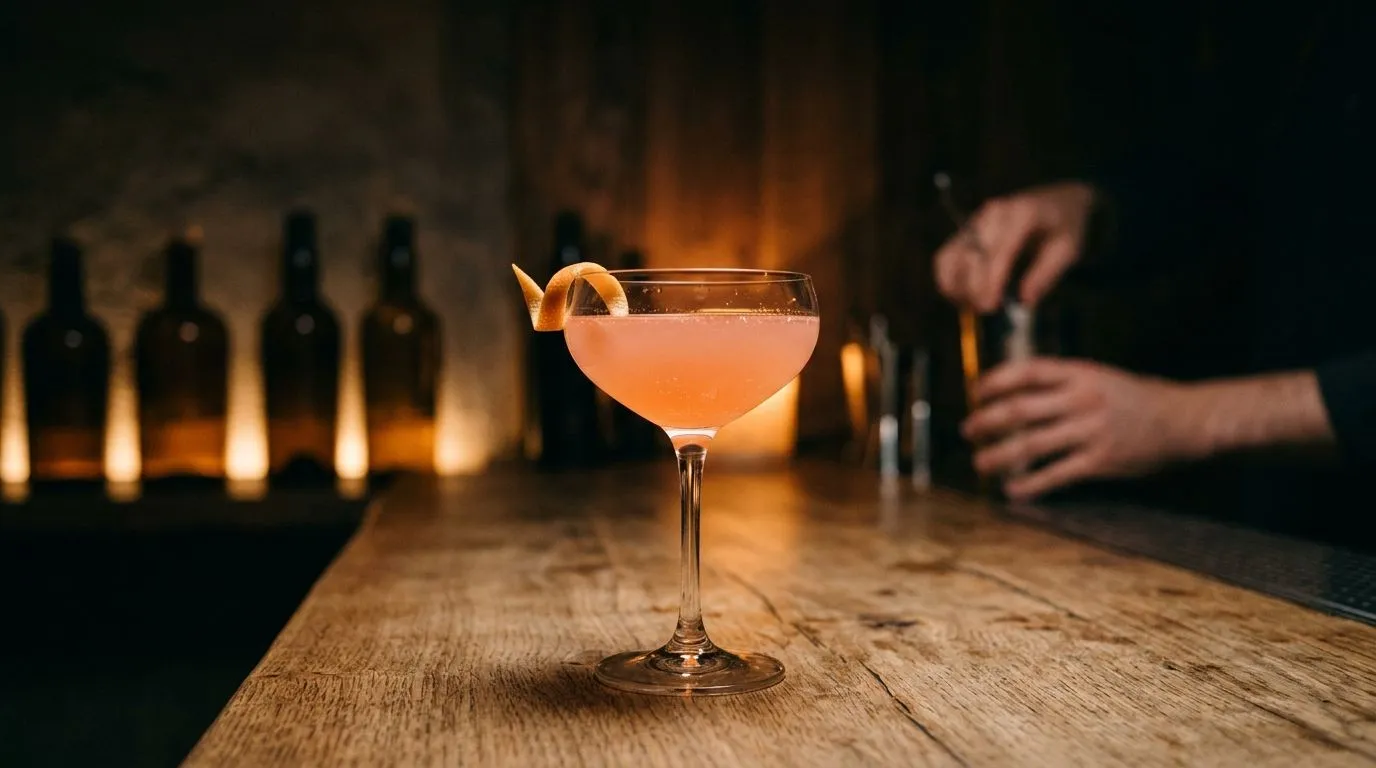
Grapefruit cordial is one of the most rewarding in the family for long drinks. Like all its siblings, it replaces the juice and the sugar in a single pour, and gives you the same glass every time. A few ideas for home:
- Paloma: 50 ml of blanco tequila, 30 ml of grapefruit cordial, a pinch of salt and soda to top up, in a tall glass with ice.
- Alcohol-free grapefruit highball: 40 ml of cordial and 140 ml of well-chilled soda or tonic, with a strip of grapefruit peel.
- Grapefruit gin and tonic: 50 ml of dry gin, 20 ml of cordial and tonic. The bitterness of grapefruit and that of quinine understand each other wonderfully.
- Bitter-citrus aperitif: 30 ml of white vermouth, 30 ml of a bitter aperitif, 20 ml of cordial and a splash of soda, in a balloon glass with ice.
Storage
Bottled in sterilised glass and kept in the fridge, grapefruit cordial keeps for 3 to 4 weeks, like the rest of the family. The sugar and the acidity act as natural preservatives, but the essential oils of the peel are the first thing to fade over time: if you notice the aroma losing strength, it is time to make a new batch.
If you make more than you will use in a month, freeze it in portions of 250 ml or in ice-cube trays. When defrosting, shake the bottle well, because the oils tend to separate slightly.
A bitterness to enjoy
Grapefruit extends the family of cordials towards a more grown-up register. If you want the fruity counterpoint, the green apple cordial works with acids instead of peels, and in our guide to homemade cordials: every recipe you will find the complete map. For any technical term, see our glossary of cocktail making and mixology.
At our bar, cordials are a daily tool for bringing precision to every glass. Have a look at our cocktail menu to get a feel for the house style and, when you fancy trying it, book a table at STILLROOM: Calle Moreto 9, in Los Jerónimos, a step from the Prado.
Frequently asked questions
How do you make a grapefruit cordial?
The grapefruit is peeled without the white pith and the peels are macerated with the sugar for 2 hours to obtain an oleo saccharum. The juice is then squeezed and strained, and mixed cold in equal parts with that flavoured sugar, adjusted with citric acid, strained again and bottled in sterilised glass.
How long does grapefruit cordial keep?
In the fridge, in a well-sterilised bottle, it keeps for 3 to 4 weeks without losing aroma. After that, the oils from the peel begin to fade. If you make more than you will use in a month, freeze it in 250 ml portions: it keeps for several months and you only need to shake it after defrosting.
What is the difference between a grapefruit cordial and a grapefruit syrup?
A syrup is sugar dissolved in water with a grapefruit flavour, often cooked. Cordial starts from fresh juice, brings in the essential oils of the peel through the oleo saccharum and contains added acid. It has more body, more acidity and that elegant bitterness that syrup loses. That is why it replaces the juice and the sugar at the same time.
How do I stop grapefruit cordial from being too bitter?
The bitterness comes mainly from the white albedo and the membranes. Peel only the coloured layer, squeeze without pressing down to the membrane and strain the juice well. Choose pink grapefruit, which is gentler than white, and don’t leave the peels in contact with the liquid for longer than necessary. A pinch of salt also softens the perception of bitterness.
What cocktails is grapefruit cordial good for?
It is perfect for palomas and highballs with soda, for gin and tonics with a citrus twist and for any bitter-citrus cocktail with vermouth or aperitifs. It provides juice and sugar in a single pour. You will find more formulas in our guide to homemade cordials and a fruity counterpoint in the green apple cordial.