

5 Advanced Mixology Techniques You Should Know
The art of mixology has long since moved beyond the image of simply mixing drinks. Over the past fifteen years, we have witnessed a radical transformation that has turned the art of cocktail-making into a discipline where science, creativity, and precision come together to create unprecedented sensory experiences. At STILLROOM, our signature gastro cocktail bar in the heart of the Jerónimos neighborhood, every creation that leaves our bar is the result of a rigorous process where advanced techniques are not merely an aesthetic device, but the foundation upon which we build memorable flavors.
If you've ever wondered what goes into a cocktail that surprises you—one that makes you close your eyes and think of combinations you never knew were possible—the answer lies in these five techniques that have redefined what's possible in mixology. These aren’t tricks or passing fads: they’re tools that the world’s best bartenders use to elevate mixology to a level that, a decade ago, would have seemed like science fiction.
En este artículo vamos a explorar en profundidad cada uno de estos métodos de coctelería, también llamados métodos de elaboración de cócteles, explicando no solo qué hacen, sino cómo funcionan y por qué producen resultados tan extraordinarios. Si quieres profundizar en el vocabulario técnico que rodea a este fascinante mundo, no dejes de consultar nuestro glosario de coctelería y mixología.
—
The technical evolution of modern mixology: from mixing to transforming—applied science
To understand where we are today, we must understand where we came from. Classic mixology in the 19th and early 20th centuries was based on precise proportions, high-quality ingredients, and relatively simple mixing techniques: shaking, stirring, and whisking. The goal was to harmoniously blend flavors, extract essential oils from citrus fruits, and dilute the cocktail with the right mixer.
However, starting in the 2000s—and especially with the signature cocktail movement that exploded in the 2010s—a new era began. Bartenders began to ask themselves not only how to mix ingredients, but how to transform the ingredients themselves to create something that didn’t exist in nature. Could we capture the essence of bacon in a bourbon? Could we turn milk into a clarifying agent? Could we ferment fruits to achieve bold flavor profiles?
The answer to all these questions was yes, and the path to achieving this involved disciplines that traditionally had nothing to do with bars: chemistry, microbiology, and fluid dynamics. Techniques such as centrifugation, sous-vide infusion, controlled carbonation, and freeze-drying have found their way into the world’s most innovative bars.
What is fascinating about this evolution is that it has not meant abandoning the classic principles of mixology, but rather expanding upon them. A cocktail remains, at its core, a matter of balance between sweetness, acidity, bitterness, and structure. What has changed is the range of tools available to achieve those balances and, above all, the ability to create flavors that were previously impossible to achieve.
At STILLROOM, we remain at the forefront of this evolution. Every technique we use serves a purpose: to intensify a flavor, soften a texture, or add complexity where there was once only simplicity. And in this article, we’ll share with you the five techniques we consider essential.
—
Fat Washing: Infusing Distillates with Fats
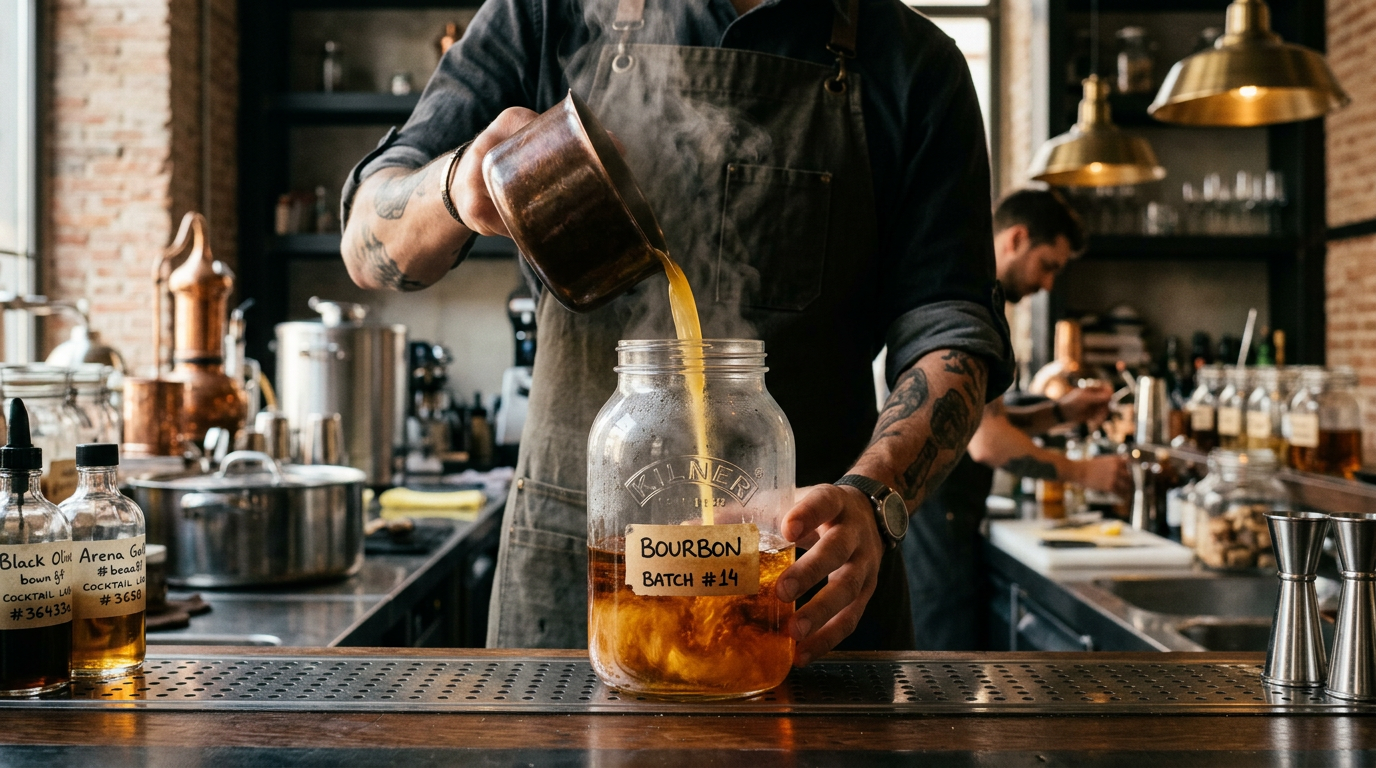
Fat washing is perhaps one of the most visually striking techniques, and certainly one of the ones that has the greatest impact on a cocktail’s final flavor. The concept is elegant in its simplicity: it involves infusing fats into a spirit to capture flavors that would otherwise be impossible to extract.
What it is and how it works
The basic principle is as follows: fats are soluble in alcohol but not in water. This means that when you add a fat to a high-proof spirit (vodka, rum, bourbon, gin), that fat partially dissolves, releasing the aromatic and flavor compounds it contains. Then, through a cooling process, the fat solidifies and can be separated from the liquid, leaving behind a spirit that has absorbed all that flavor complexity.
The result is extraordinary. Think about the flavor of bacon: that deep umami, that smokiness that seems impossible to capture in a clear liquid. Through fat washing, we can infuse that flavor profile into bourbon and create an Old Fashioned with a whole new dimension. Or we can use butter to create a vodka with a subtle creaminess that adds body to the cocktail without making it feel heavy.
Step by step
The technical process of fat washing involves the following steps:
1. Selection of the distillate: It must contain at least 40% alcohol to ensure proper extraction of fatty compounds. The most common options are vodka, white rum, and bourbon.
2. Choosing the fat: From crispy bacon to salted butter, shredded coconut, peanut butter, or even truffle oil. Each fat brings its own flavor profile.
3. Infusion: Add the fat to the distillate in an airtight container. The typical ratio is about 30–50 grams of fat per liter of alcohol. Shake vigorously and let it sit for 12 to 48 hours, depending on the desired intensity.
4. Freezing: The critical step. Place the container in the freezer for at least 4 hours. The fat will solidify on the surface.
5. Filtration: Using a coffee filter or cheesecloth, separate the clear liquid from the solid mixture. The result is a clear liquid infused with the flavor of the fat.
Types of fats and results
The possibilities are virtually endless. Bourbon-infused bacon creates that smoky, salty profile that has given rise to iconic cocktails. Salted butter adds creaminess and a touch of umami that works wonderfully in cocktails with citrus. Shredded coconut, infused in white rum, transports cocktails to tropical climes with an authenticity that syrups could never achieve.
At STILLROOM, we’ve experimented with some unexpected ingredients: olive oil in gin for a Martinez with an oily depth, hazelnut butter in vodka for dessert cocktails, and even crispy bacon infused in rye whiskey for a cocktail that redefines the concept of a breakfast cocktail.
If you'd like to learn more about this technique and discover how we use it in our creations, we have an in-depth article on fat washing in mixology that I highly recommend.
—
Lacto-fermentation: The Science of Umami in Cocktails
If fat washing is eye-catching, lacto-fermentation is almost magical. This technique, used for millennia in food preparation (sauerkraut, kimchi, miss in Korea, yogurt around the world), has found its place in modern mixology as one of the most powerful tools for creating flavor complexity.
The biological process
Lactic fermentation is a natural metabolic process in which certain bacteria, specifically lactic acid bacteria (LAB), convert the sugars present in a food or beverage into lactic acid. This acid is responsible for the characteristic tart and complex flavor of fermented foods, but also for something more subtle and extraordinary: umami.
Umami, the fifth basic taste that we perceive as "savory" or "meaty," develops naturally during fermentation. As the bacteria work, they not only produce lactic acid but also break down proteins and other compounds, releasing glutamates that dramatically enhance the perception of flavor.
Ingredients and Uses
In mixology, lacto-fermentation is primarily used for fruits, vegetables, and other ingredients that contain fermentable sugars. The most popular include:
– Berries: Fermented strawberries, blackberries, and raspberries develop a complex acidity that goes far beyond natural citric acid. The result is a fruity yet deep flavor profile, with earthy notes that bring the cocktail to life.
– Vegetables: Celery, cucumbers, and even bell peppers can be fermented to create syrups and cordials with extraordinary vegetable complexity.
– Herbs and spices: Fermenting ginger or lemongrass produces flavor profiles that are completely different from their fresh counterparts, with softer, more rounded notes.
Fermentation typically takes between 24 hours and 7 days, depending on the desired result. An oxygen-free environment is required (bartenders often use vacuum chambers or sealable bags) to prevent the growth of unwanted microorganisms.
Complex acidity
What makes lacto-fermentation in cocktails special is that the acidity it produces isn’t one-dimensional. While lemon or lime provide pure citric acid, fermentation produces a blend of lactic acid, acetic acid (vinegar), and other organic acids that create a much more interesting mouthfeel. That complexity is what sets a “good” cocktail apart from one that leaves you speechless.
At STILLROOM, we use lacto-fermentation to create our own shrubs (a type of fermented beverage that we’ll explain later) and to add depth to cocktails that would otherwise be too simple. It’s a technique that requires patience and attention, but the results are well worth the effort.
—
Clarification with milk: clarity and elegance
Clarification with milk, also known as milk punch, is a technique that seems almost paradoxical: how can milk—an opaque, milky liquid—help create a crystal-clear cocktail? The answer lies in the chemistry of milk proteins and how they react to acids.

Traditional milk punch
Milk punch has a long history in mixology. As early as the 18th century, London bartenders were making punches clarified with milk, resulting in drinks of striking clarity. The technique fell out of favor for much of the 20th century, but it was revived and perfected by modern bartenders such as Dave Arnold and Brad Farran.
The basic process is as follows: milk is added to a mixture that already contains acids (lemon juice, lime juice, wine, etc.). Casein, the main protein in milk, reacts with these acids and coagulates, forming small clumps that trap solid particles and suspended lipids. When this mixture is filtered, the curds remain in the filter and the liquid that comes out the other side is perfectly clear.
How casein traps particles
The magic lies in the structure of casein. This protein is amphiphilic, meaning it has parts that attract water and parts that repel it. When exposed to an acidic environment, casein loses its stability and forms aggregates that act like tiny sponges, trapping any solid particles in the liquid: fruit fragments, pulp, and even citrus essential oils.
The result is a cocktail that retains all its flavor and aromatic complexity, yet has a visually flawless texture. When you look at it in the glass, it seems almost unnaturally clear, but as soon as it touches your lips, the flavors explode.
Crystalline product and applications
Clarifying with milk not only improves the presentation; it also smooths out the cocktail’s harsher edges. Acids that might previously have been too sharp are rounded out, the flavors blend better, and the mouthfeel becomes silkier without adding any creamy ingredients.
In practice, milk clarification is used for cocktails containing cloudy ingredients: fruit juices, homemade infusions, and even certain liqueurs. It is particularly effective in cocktails with citrus fruits, where the natural cloudiness of the juice can be visually unappealing.
At STILLROOM, we’ve experimented with clarification in a variety of creations. A clarified tea-and-lemon milk punch becomes a drink that looks like mineral water but has the complexity of a fermented tea. Cocktails featuring exotic fruits—which were once impossible to present elegantly—now shine in the glass with a clarity that makes you want to drink them even before you taste them.
—
Homemade cordials: capturing the essence of each ingredient
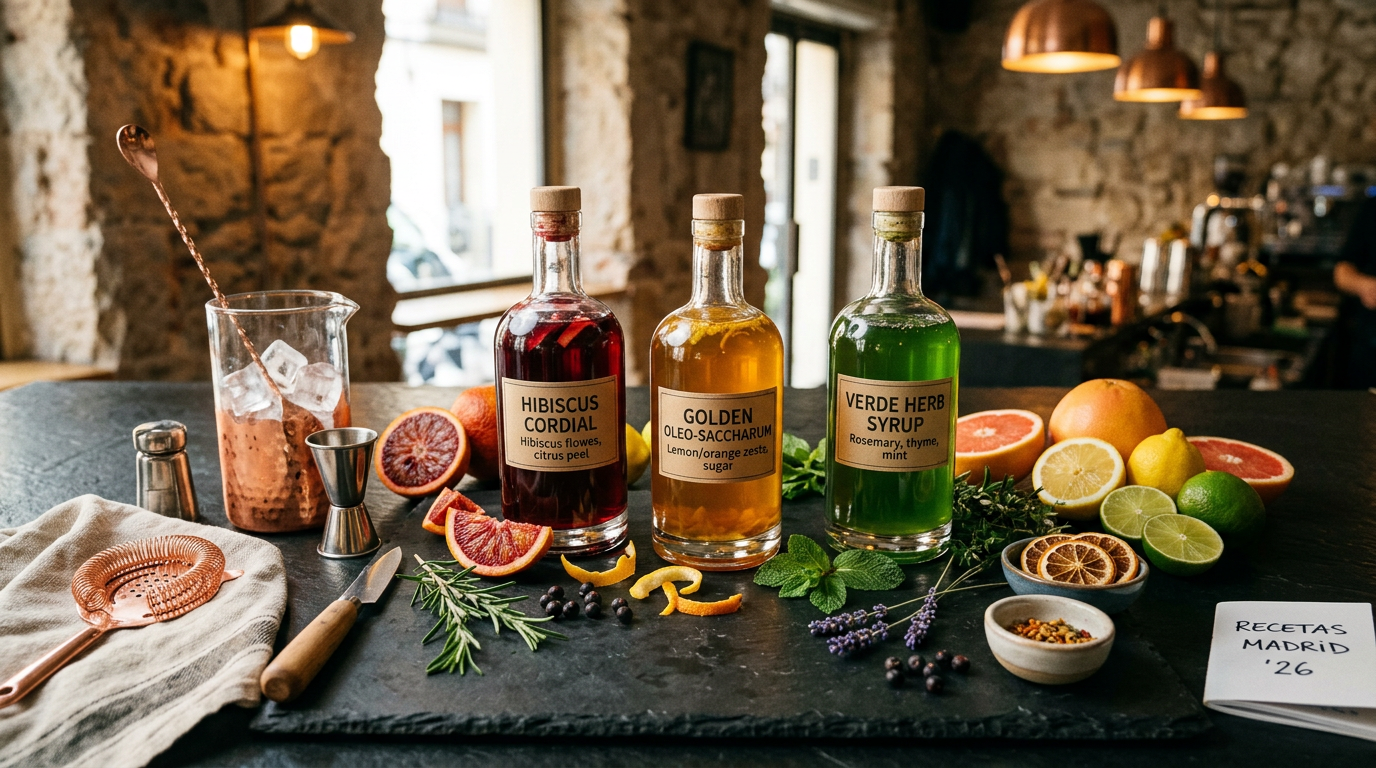
Homemade cordials are one of the most versatile and fundamental techniques in advanced mixology. Unlike simple syrups, which are little more than water and sugar, cordials are preparations designed to capture the full essence of an ingredient, including its aromatic nuances, natural bitterness, and texture.
Difference from syrups
A simple syrup, whether made from cane sugar or fructose, adds sweetness and perhaps a subtle aroma from the ingredient it’s infused with (lavender, mint, rose). But a cordial goes far beyond that.
Cordials are made using extraction techniques designed to bring out multiple layers of flavor. Some are made through prolonged maceration, in which the ingredients are steeped in alcohol before the syrup is added. Others use the oleo-saccharum method, a traditional technique that extracts essential oils from citrus fruits using sugar. Still others are shrubs, which combine fermentation with preservation in vinegar.
Extraction techniques
Extraction is the process of obtaining flavor compounds from a solid ingredient (fruit, herb, spice) and transferring them to a liquid that can be used in cocktails. The most common techniques include:
– Maceration: The ingredient is steeped in alcohol (vodka, rum, brandy) for days or weeks, allowing the alcohol to extract essential oils, pigments, and aromatic compounds. It is then filtered and mixed with syrup.
– Hot infusion: Similar to maceration, but heat is applied to speed up the extraction process. Care must be taken not to damage the delicate compounds.
– Sous-vide: Sous-vide extraction allows for precise temperature control, which maximizes extraction without damaging the ingredients. It is an increasingly popular technique in high-end bars.
– Oleo-saccharum: This traditional technique involves covering citrus slices with sugar and letting them sit. The sugar extracts the essential oils from the peel, creating an extraordinarily aromatic syrup that captures the essence of the citrus without the need for alcohol.
Oleo-saccharum and shrubs
Oleo-saccharum is particularly magical when used with citrus fruits. Oranges, grapefruits, lemons, and limes reveal layers of flavor in oleo-saccharum that you’ll never find in a simple juice. Those essential oils from the peel—which are so difficult to extract by other means—are captured in the resulting syrup.
Shrubs, on the other hand, combine fermentation with pickling. The result is a cordial that has the acidic complexity of vinegar, but with the sweetness of fruit and the depth of fermentation. Strawberry, cucumber, and ordale shrubs have found their place in cocktails that seek that spark of complex acidity.
At STILLROOM, we make our own cordials for each season. Every cordial is a unique creation that captures the ingredient at the peak of its freshness. And when you try a cocktail made with a homemade cordial, the difference is immediately noticeable: there’s depth, there are layers, there’s something you can’t quite put your finger on but you know it’s there.
—
Natural carbonation: bubbles with character
Carbonation is perhaps the most intimidating technique of all, mainly because it involves working with pressure and requires specialized equipment. But the results are well worth the investment in knowledge and materials.
Natural fermentation vs. CO2
There are two main ways to carbonate a cocktail: by injecting industrial CO2 (the soda-maker method) or through natural fermentation. The first method is quick, controlled, and produces consistent bubbles. The second is more complex but yields completely different flavor profiles.
Natural carbonation, also known as the bottle-fermentation method, uses the yeast’s own activity to produce carbon dioxide within the liquid. The yeast consumes sugars and produces alcohol and CO2 as byproducts. If the process is properly controlled, the CO2 is trapped in the liquid, creating natural bubbles.
The problem with this method is that it also produces extra alcohol, which can throw the cocktail off balance. For this reason, bartenders often use an intermediate carbonation technique: adding a small amount of sugar and yeast to a prepared cocktail, allowing it to ferment for a controlled period (usually 24–48 hours), and then stopping the fermentation by chilling it.
Texture and Applications
Natural carbonation produces bubbles that differ from those created by industrial CO2. They are smaller, more persistent, and have a creamier texture on the palate. In addition, fermentation contributes its own flavors: notes of bread, yeast, and even slightly earthy undertones that enrich the cocktail.
In practice, carbonation is used to create sparkling versions of classic cocktails, to add a refreshing touch to otherwise flat drinks, or to create light textures that contrast with the richness of spirits.
At STILLROOM, we’ve experimented with carbonation in cocktails ranging from sparkling versions of the Negroni to floral drinks that look like champagne but have the complexity of a signature cocktail. It’s a technique that takes practice, but one that opens up immense creative possibilities.
—
Check out our menu
Check out our signature cocktail menu and our appetizer menu.
Where to try these techniques in Madrid
Now that you know the techniques, you’re probably eager to try them out. And what better place to do so than STILLROOM, our signature gastro cocktail bar at 9 Moreto Street, in Madrid’s charming Jerónimos neighborhood.
At STILLROOM, every cocktail on our menu showcases these techniques applied with precision and creativity. Our team of bartenders has mastered fat washing, lacto-fermentation, milk clarification, and the preparation of homemade cordials
Visit us at Stillroom
9 Moreto Street, Los Jerónimos neighborhood, Madrid. A 2-minute walk from the Prado Museum.
Reserve a table
View cocktail menu
View the food menu
Mié-Ju 18:30-01:30 | Vie-Sáb 11:00-01:30 | Dom 11:00-23:00 | Lun-Mar cerrado | Tel: 619 21 36 16
Related Articles
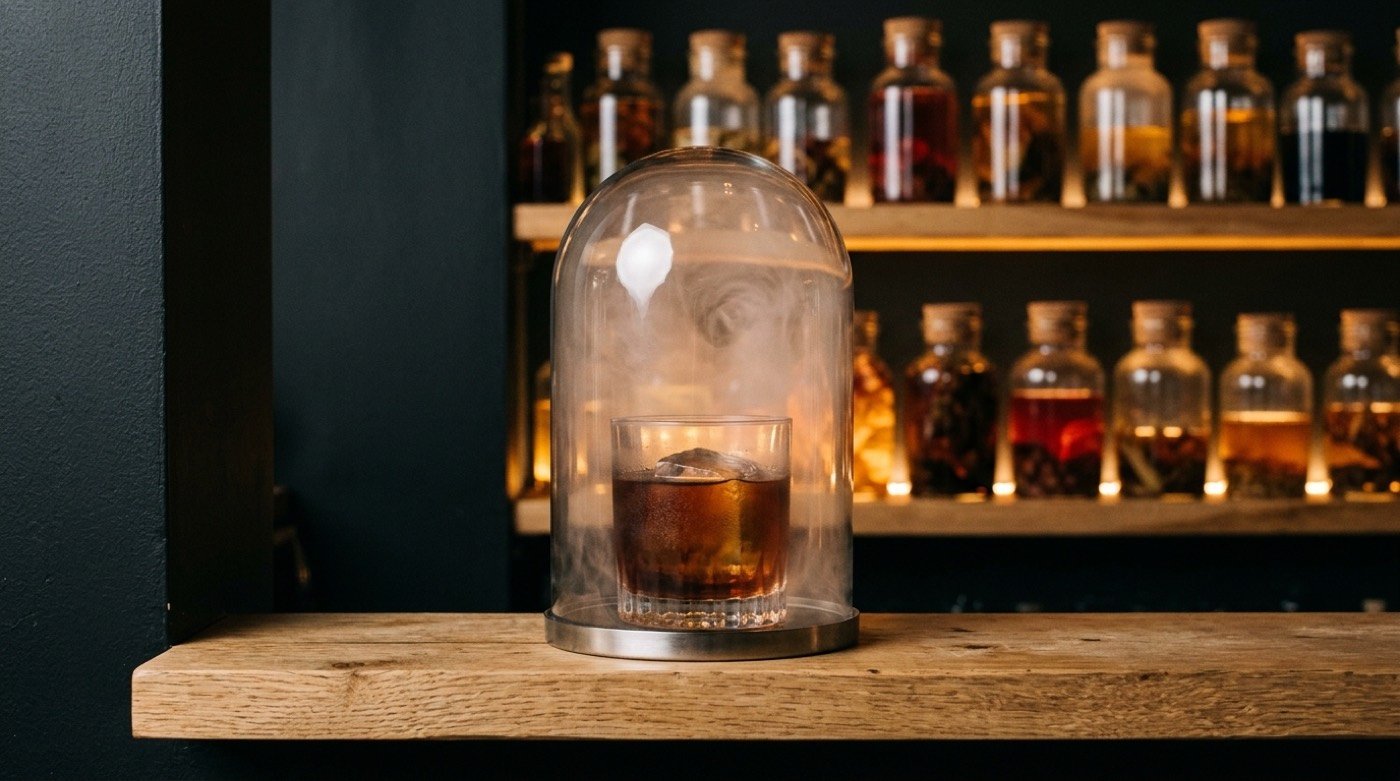
Cócteles ahumados: la técnica del ahumado en coctelería
En STILLROOM entendemos el ahumado de un cóctel como la adición controlada de una capa aromática

La Milla de Oro de la Coctelería en Madrid: Ruta por los Mejores Bares
Madrid ha dejado de ser una ciudad de tapeo y vermú para convertirse en uno de los epicentros europ


Pingback: Fat Washing in Mixology: What It Is and How to Do It — Stillroom Madrid