Tepache in cocktail making: the pineapple ferment conquering the bar
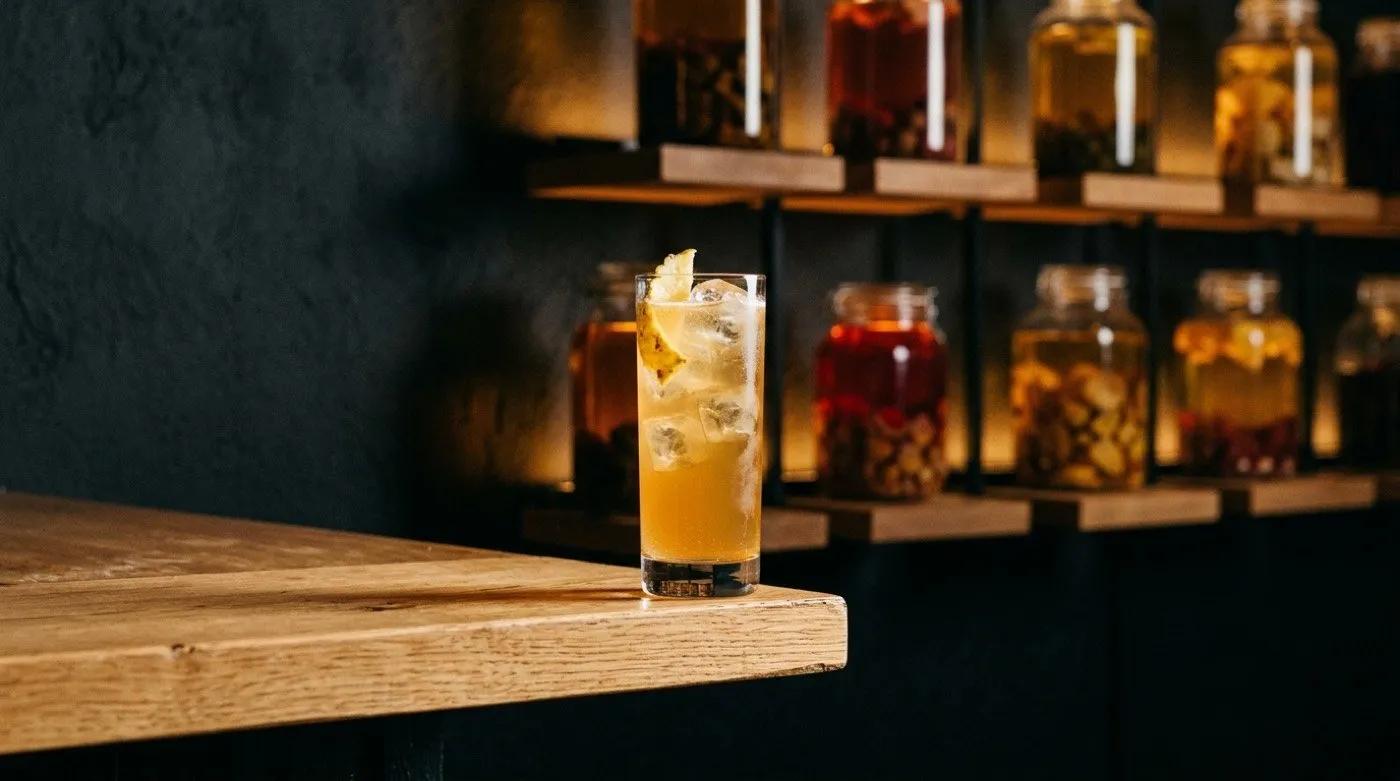
Tepache in cocktail making is a live pineapple-rind ferment that we use as a modifier to bring natural acidity, a subtle fizz and a complex tropical profile without needing to add citrus or industrial soft drinks. At STILLROOM we work with it as a bar tool that converses with our laboratory techniques — lacto-fermentation, clarification or cordials — and lets us build signature cocktails with a probiotic dimension and a controlled alcohol content. If you are after a versatile, sustainable ferment with character, tepache is much more than a passing trend: it is a Mexican classic that has found its place in contemporary technical cocktail making.
What tepache is and how it works behind the bar
Tepache is a traditional Mexican fermented drink obtained from pineapple rind, piloncillo (unrefined cane sugar) and spices such as cinnamon and clove. The magic happens when the natural sugars in the piloncillo and the pulp remnants clinging to the rind come into contact with the wild yeasts present on the surface of the fruit. In a controlled anaerobic environment at room temperature, those yeasts transform the sugars into alcohol and carbon dioxide over a period we work with behind the bar of between 24 and 72 hours. The result is a slightly cloudy drink, low in alcohol — rarely above 2% vol. — with a lactic acidity and a natural fizz reminiscent of a mild cider or a kombucha without the tea.
In cocktail making, tepache interests us precisely because of that triple function: acidity, fizz and aromatic complexity. It is not a simple substitute for lemon juice or a pineapple soft drink; it is a living ingredient that keeps evolving inside the shaker and brings tropical, spiced and lactic notes that are hard to replicate with pasteurised products. What is more, being a short-lived ferment, we can adjust its sweetness profile and its carbonation depending on the cocktail we are building, something we make the most of at STILLROOM to fine-tune the structure of every drink.
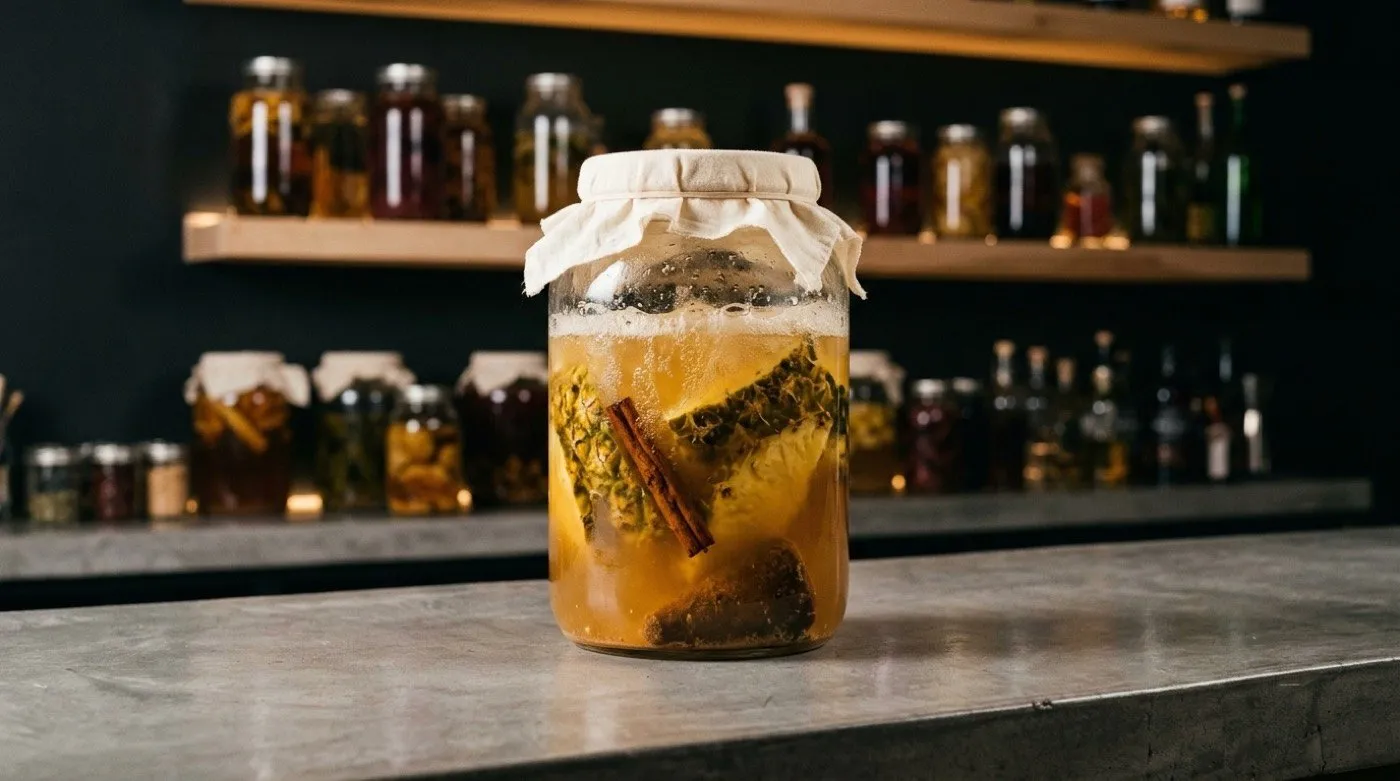
The organoleptic profile of tepache is unmistakable: on the nose, ripe pineapple dominates over a warm background of cinnamon and clove; on the palate, the acidity is gentle, closer to lactic acid than to sharp citrus, with a residual sweetness we can control by shortening the fermentation or adjusting the amount of piloncillo. That rounded acidity makes it an ideal companion for agave spirits — mezcal, tequila — aged rums, grain whiskies and even gins with a tropical botanical load. And as a non-alcoholic or low-proof base, it lets us build mocktails and spritzes with a complexity that goes far beyond a simple fruit blend.
How to make a base tepache for cocktail making
At the STILLROOM bar we prepare a mother tepache that we can then modify with secondary fermentations, clarifications or acidity adjustments depending on the destination cocktail. The base recipe is surprisingly simple, but demands technical rigour in the fermentation times and hygiene to avoid unwanted contamination. Here is the protocol we follow at home:
| Ingredient / Step | Detail | Time |
|---|---|---|
| Pineapple rind | From a ripe pineapple, washed well to remove any dirt but without stripping away the surface wild yeasts. We keep some pulp attached without reaching the core. | Initial preparation |
| Piloncillo or panela | 200 g per litre of water. Contributes fermentable sugars and molasses notes that define the character of the tepache. It can be partly replaced with brown sugar if needed. | Dissolving in warm water |
| Cinnamon and clove | One stick of Ceylon cinnamon and 2-3 cloves per litre. Do not overdo the clove, as it masks the lactic nuances. | Cold infusion during fermentation |
| Fermentation | We put all the ingredients into an airtight jar with an air valve or covered with muslin. We keep it at room temperature (20-25°C) and protected from direct light. We taste from 24 hours onwards: we are looking for a balance between sweetness and acidity, with a light fizz when stirred. | 24-72 hours |
| Filtering | We strain through a fine sieve and then through a filter bag or coffee filter to remove spice and pulp residue. The resulting liquid should be cloudy but with no noticeable solids in suspension. | 15-20 minutes |
| Refrigeration | We bottle it in airtight glass bottles and store it in the fridge at 4°C. Fermentation slows drastically and the tepache stays at its optimal point for 3-5 days. We always label it with the filtering date. | Keeps up to 5 days |
One crucial detail: we never pasteurise the base tepache, because we want to keep the yeasts alive and the ability to keep evolving in the bottle. That said, in service we control the carbonation by opening and closing the containers on a set schedule to avoid overpressure or excessively sour flavours.
Tepache, kombucha and shrub: three ferments that are often confused
At the bar we work with all three, but each occupies a different place in the architecture of a cocktail. The confusion is understandable: all three bring acidity, all three can go through a fermentation process, and they share a certain artisanal aura. From a technical standpoint, however, they are completely different products. This comparison table will help you understand where each one fits:
| Drink | Base | Fermentation / Fizz | Use behind the bar |
|---|---|---|---|
| Tepache | Pineapple rind and piloncillo | Spontaneous alcoholic and lactic fermentation (wild yeasts, 24-72 h). Fine natural fizz, low proof (≤ 2% vol.). | Acidic, carbonated modifier, low-proof base, tropical lengthener in highballs, citrus substitute in agave cocktails. |
| Kombucha | Sweetened tea (Camellia sinensis) and SCOBY | Acetic fermentation with a symbiotic culture of bacteria and yeast. Variable carbonation depending on second fermentation. Can reach up to 1-1.5% vol. | Acidic modifier with tea notes, base for spritzes and mocktails, pairing with botanical spirits. At STILLROOM we use it in clarified cocktails. |
| Shrub | Vinegar, sugar and fruit | Does not ferment on its own: it is an acidic preserve made with vinegar. Fizz is absent or added artificially. 0% vol. unless combined afterwards with spirits. | Brings aggressive acidity and a fruit punch with no fermentation needed. Ideal for cordials, instant soda refreshers and intensely flavoured cocktails. |
The big difference between tepache and kombucha is that it does not start from tea and needs no external SCOBY: the fermentation is entirely spontaneous and depends on the microbiota of the pineapple and its environment. And compared with shrub, tepache does involve active fermentation by yeasts that generates alcohol and natural carbonation, whereas shrub is a cold acidic extraction made with vinegar. In short: tepache is a live ferment; kombucha, a tea ferment; and shrub, an unfermented acidic preserve.
How we use it at STILLROOM
At our bar on Calle Moreto 9, right in the heart of Los Jerónimos, tepache has become a cross-cutting ingredient that converses with many of the advanced cocktail techniques that define our style. We do not use it as a simple exotic add-on, but as a structural modifier that lets us rethink classics and create signatures of our own with a rounder acidity and controlled fizz. Sometimes we put it through a second fermentation with selected yeasts — similar to what we do with our lacto-fermentation preparations — to boost lactic notes or modulate the sweetness without losing the liveliness of the natural fizz.
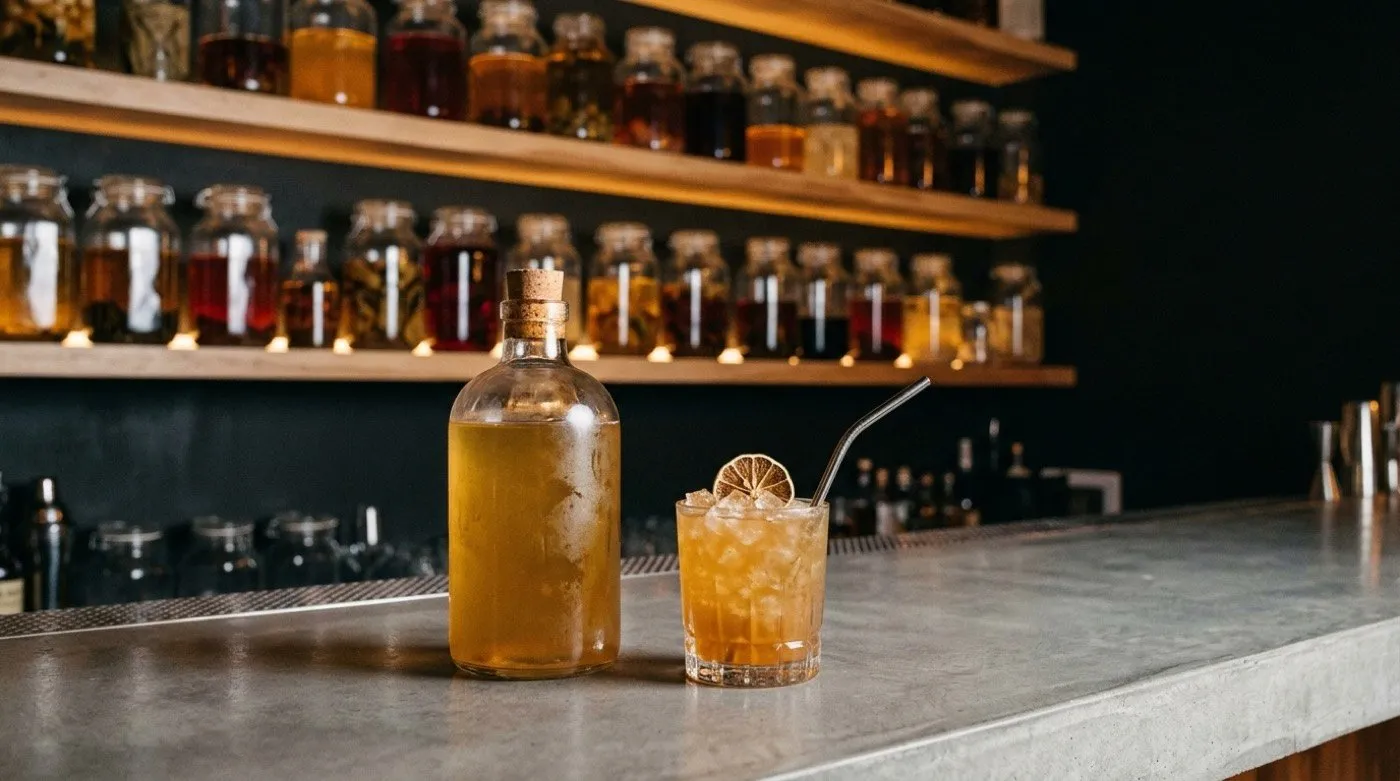
Tepache also serves as a counterpoint in cocktails where we would traditionally reach for a shrub or an acidified kombucha. For example, in a fermented riff on the Garibaldi, that Italian classic that blends Campari and fluffy orange juice, pineapple tepache replaces part of the citrus and brings a fine fizz that lightens the drink without taking away its body. If your curiosity is piqued, you can see how we work with this idea in our reinterpretation of the fermented Garibaldi. The result is a cocktail with a silky texture, a balanced citrus bitterness and a tropical nose that surprises with its cleanliness.
Besides the Garibaldi, tepache appears in seasonal creations such as a mezcal highball with clarified tepache and a touch of hoja santa, or in a low-proof spritz we put together with tepache, white vermouth and a homemade ginger cordial. In every case, the key lies in treating tepache as a living ingredient: we produce it in small batches, taste it daily and adjust the proportion in the cocktail according to the stage of fermentation it is at.
Three ideas to get started with tepache at home
If reading this has inspired you to ferment your own tepache, here are three cocktail proposals that require no laboratory equipment and that show off the versatility of this ferment. These are recipes we have refined at the bar and that you can replicate with a well-made homemade tepache.
Tepache and mezcal highball
A long, smoky, refreshing drink that works as a gateway to pairing ferments with agave spirits. In a tall glass with a block of ice, combine 45 ml of joven mezcal — we like an espadín with medium smokiness, so it does not overpower the tepache — 90 ml of well-chilled, fizzy tepache, and a touch of fresh lime juice (about 10 ml) to boost the acidity. Stir gently so as not to lose the carbonation and garnish with a slice of roasted pineapple or a toasted cinnamon stick. The result is a complex highball, with layers of flavour running from smoke to fermented fruit through to a spiced finish.
Tropical tepache and vermouth spritz
A low-proof alternative perfect for long afternoons. In a wine glass with ice, pour 60 ml of tepache, 40 ml of citrus-forward white vermouth and top up with 30 ml of well-chilled soda or sparkling water. The natural carbonation of the tepache adds to that of the soda, creating a very playful fizz on the palate. To finish the aroma, a lime twist and a Thai basil leaf bring an unexpected herbal contrast. If you want to make it drier, you can add a dash of grapefruit or cardamom bitters.
Tepache and ginger mocktail
An alcohol-free drink with the complexity of a real cocktail and the probiotic edge of the ferment. In a shaker with ice, mix 100 ml of tepache, 20 ml of ginger cordial — you can make it by reducing ginger juice with a touch of sugar and citric acid — and 10 ml of lemon juice. Shake briefly to combine without killing the fizz and strain into a rocks glass over crushed ice. Finish with a splash of ginger ale and a grating of lime zest. The heat of the ginger and the acidity of the tepache create a mocktail that does not miss the alcohol.
Frequently asked questions
What is tepache?
Tepache is a traditional Mexican fermented drink made from pineapple rind, piloncillo (unrefined cane sugar) and spices such as cinnamon and clove. Its spontaneous fermentation, driven by wild yeasts, produces a slightly alcoholic, acidic drink with a natural fizz that is highly prized in cocktail making.
Does tepache contain alcohol?
Yes, but in very low amounts. Homemade tepache generally reaches between 0.5% and 2% alcohol by volume, depending on the fermentation time and the amount of available sugar. That is a similar level to a water kefir or an unpasteurised kombucha, and it can be reduced even further by shortening the fermentation.
How is tepache different from kombucha?
Although both are slightly alcoholic, effervescent ferments, tepache starts from pineapple rind and piloncillo, while kombucha is made with sweetened tea and a symbiotic culture of bacteria and yeast (SCOBY). Tepache needs no mother culture or external starter and develops a far more tropical, lactic profile, without the astringent notes of tea.
How is tepache used in cocktail making?
Tepache is used as an acidic, carbonated modifier: it can fully or partially replace citrus, act as a lengthener in highball or spritz formats, or serve as a non-alcoholic base in complex mocktails. Its versatility makes it an excellent tool for balancing powerful spirits such as mezcal or aged rum, and for adding texture and fizz without resorting to industrial soft drinks.
How long does tepache keep once fermented?
Once filtered and refrigerated at 4°C, tepache stays at its optimal drinking point for 3 to 5 days. From the fifth day onwards, the acidity keeps increasing and the fizz can become excessive or, conversely, be lost if the container is not fully airtight. Behind the bar, the ideal approach is to produce small batches every two or three days so as always to be working with a fresh, controlled ferment. If you have got the itch to try a cocktail with live ferments and see how we apply tepache in signature creations, we invite you to discover our cocktail menu or book a table at STILLROOM, Calle Moreto 9, in the heart of Madrid’s Retiro. And if you want to keep exploring terms, techniques and ingredients, do not miss our cocktail glossary: it is designed for the curious and for professionals who want to go one step further without getting lost in empty jargon.