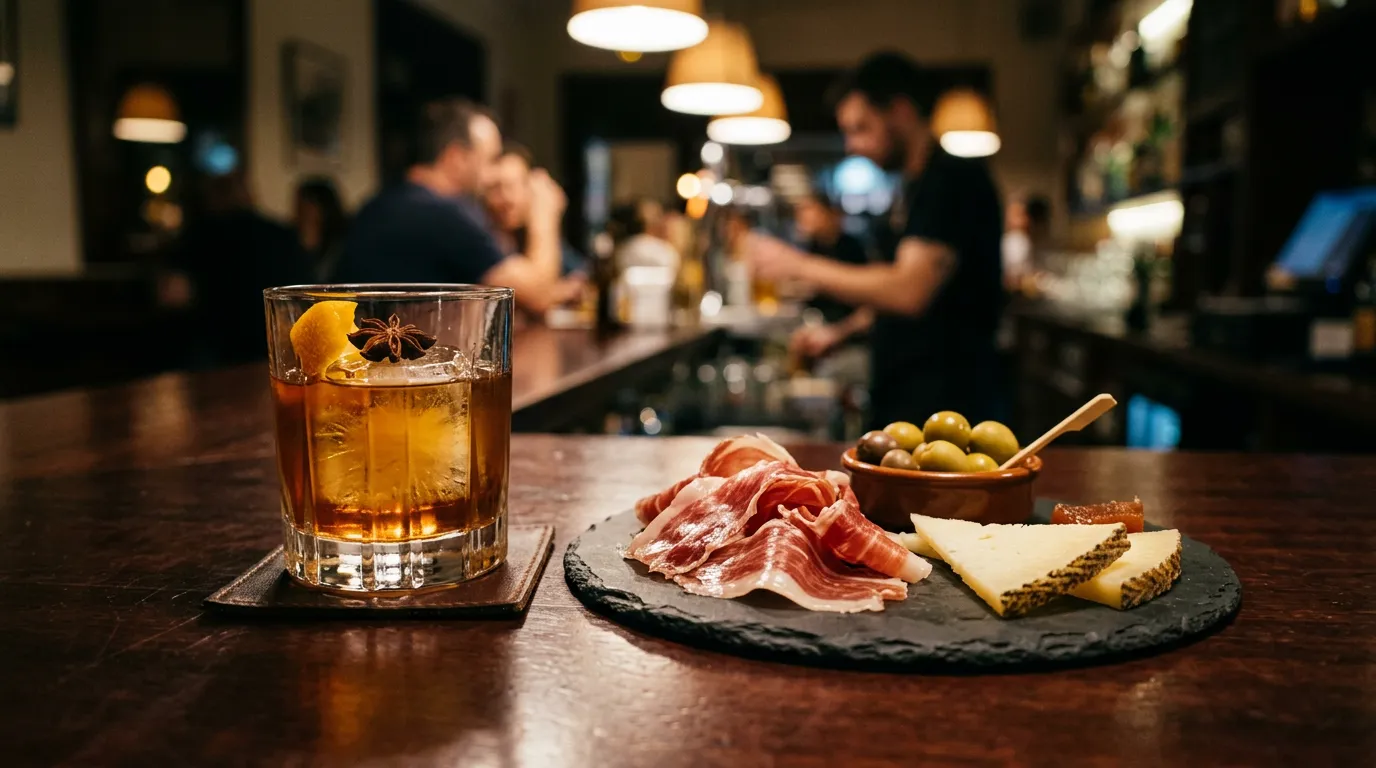
On today’s gastronomic scene, cocktail and tapas pairing has stopped being a mere curiosity and become a culinary discipline as sophisticated as traditional wine pairing. At STILLROOM, our signature gastro cocktail bar in the heart of the Los Jerónimos neighbourhood, we have made this practice the central pillar of our proposal: every cocktail is designed to converse with our small plates menu, creating a sensory experience that goes far beyond a simple drink served alongside food.
The concept of pairing cocktails with tapas responds to an undeniable gastronomic reality: signature cocktail making has reached a level of complexity and refinement that makes it a worthy companion at the table. High-end spirits, infusion techniques such as fat washing, homemade reductions and craft bitters deserve an accompaniment to match. And what better way to honour that complexity than pairing them with small portions of considered gastronomy, where every bite can highlight the cocktail’s nuances and vice versa.
Unlike wine pairing, where the general rule is limited to balancing the body of the wine with the body of the food, cocktail and tapas pairing opens up a universe of possibilities thanks to the diversity of spirits, flavours and textures found in a signature cocktail menu. From the richness of a bourbon fat-washed with bacon fat to the vibrant acidity of a cocktail with a red wine reduction, every combination offers a unique dialogue between drink and food.
What Pairing Means in Cocktail Making
Pairing in cocktail making is the art of combining cocktails with food so both elements enhance one another, creating a gastronomic experience greater than the sum of its parts. While traditional wine pairing has been governed for centuries by more or less strict rules — white with fish, red with meat —, cocktail and tapas pairing operates under a more fluid, experimental logic.
This fundamental difference lies in the very nature of the drinks. Wine is a fermentation product with a relatively stable organoleptic profile, whereas a cocktail is a handcrafted creation in which the bartender has total control over every component: the base spirit, the botanicals, the sweetening agents, the bitters and the techniques used. That creative freedom allows for much more precise, personalised pairings.
In a gastro cocktail bar like STILLROOM, pairing becomes an integral part of the creative process. When our bar team designs a cocktail, they think not only about its flavour on its own, but about how it will interact with the dishes on our menu. In fact, many of our cocktails are born from that inspiration: we first conceive a dish with defined organoleptic characteristics and then create the drink that complements or contrasts with it.
The importance of pairing in cocktail making also responds to a practical matter. Alcohol, especially when presented in the complex-flavoured form of a cocktail, has the ability to cleanse the palate between bites, preparing the tongue to appreciate nuances that would otherwise go unnoticed. A well-paired cocktail acts as a genuine flavour enhancer, making both the food and the drink richer and more memorable.
Pairing Principles: Complement and Contrast
Every cocktail and tapas pairing that works is based on two fundamental principles: complement and contrast. Mastering these two strategies will let you create memorable combinations and understand why certain pairings work better than others.
Pairing by Complement
The complement principle looks for pairs in which the flavours of the cocktail and the food share similar characteristics, creating a harmonious expansion of nuance. It is like adding two plus two and getting five: both elements move in the same sensory direction and reinforce each other.
A classic example of complement would be pairing a cocktail with smoky notes — such as an Old Fashioned fat-washed with bacon — with food that also brings smoky notes, such as smoked cod croquettes or smoke-cured meat. The smoky flavour amplifies on the palate and creates a deep, satisfying experience.
We can also find complement in terms of texture: a creamy, rich cocktail — perhaps one with egg white or coconut cream — pairs wonderfully with foods of a similar texture, such as a spiced hummus or an artichoke cream.
Pairing by Contrast
Contrast is perhaps the most fascinating principle of pairing, because it consists of joining seemingly opposite elements that, together, reveal new dimensions of flavour. This is where the real magic happens.
Acidity is a powerful tool for contrast. An acidic cocktail — with lemon, lime or wine — can perfectly cut through the richness of tapas such as ham croquettes or a Spanish omelette. The acidity cleanses the palate and prepares it for the next bite, while the fat in the food softens the cocktail’s hard edges, creating a perfect balance.
Sweet and salty make up another classic contrasting pair. A cocktail with sweet notes — a Manhattan with a brown sugar reduction, for example — pairs beautifully with salty tapas such as acorn-fed Iberian ham or dressed olives. The salt heightens the sweetness of the cocktail, while the sweetness tones down the perception of the salt, and the result is a more complex, satisfying flavour.
Umami, that fifth basic taste we perceive as savoury and deep, also plays a crucial role. Foods rich in umami — aged cheeses, soy sauce, mushrooms, sun-dried tomatoes — can pair extraordinarily well with cocktails that bring saline or yeasty notes, such as a gin and tonic with olives or a cocktail with red vermouth.
Classic Pairings That Always Work
Some combinations have proven their worth generation after generation. These classic pairings are an excellent starting point for anyone wanting to explore the world of cocktail and tapas pairing.
Negroni and Cured Meats
The Negroni, with its perfect balance between the bitterness of Campari, the sweetness of red vermouth and the strength of gin, is an extraordinarily gastronomic cocktail. Its bitter, herbal profile makes it the ideal companion for cured meats such as chorizo, salchichón or Serrano ham. The fat in the cured meat softens the cocktail’s intense flavours, while the Negroni’s bitter edge cleanses the palate between bites, preparing the tongue for the next slice of charcuterie.
Old Fashioned and Cured Cheeses
The Old Fashioned, made with bourbon, sugar, Angostura bitters and an orange twist, is a full-bodied cocktail that calls for company to match. Cured cheeses, with their intensity and complexity, are the perfect pair. An aged Manchego or a smoked Idiazábal find their ideal companion in this cocktail: the sweetness of the bourbon complements the cheese’s animal notes, while the aromatic bitterness brings freshness to the whole.
Gimlet and Seafood
The Gimlet, that classic combination of gin, lime cordial and sugar, is one of the most refreshing cocktails there is. Its vibrant acidity and citrus profile make it the definitive companion to seafood. Griddled prawns, fried squid, goose barnacles or a fresh ceviche find in the Gimlet the cocktail that enhances their flavours without competing with them. The lime in the cocktail cuts through the richness of fried seafood and complements the natural sweetness of the prawns.
Mojito and Ceviches
The Mojito, with its mix of rum, mint, lime, sugar and soda, brings a herbal freshness that pairs extraordinarily well with raw seafood cuisine. A hake or gilt-head bream ceviche, with its lemon acidity and spicy touch, converses perfectly with the mint and lime of the Mojito. The soda’s carbonation also helps cleanse the palate of the ceviche’s leche de tigre and prepares it for each new spoonful.
Signature Pairings at STILLROOM
At STILLROOM we have developed a cocktail menu in which every creation is born with a gastronomic purpose and finds a natural counterpart in the small plates menu. It is not about accompanying, but about building dialogues: textures, fats, acidities and spices that respond to each other. These four signature pairings sum up our way of understanding the bar: technical precision, Iberian produce and gestures that awaken the palate.
Super Fashion: Fat Washing and Cured Cheeses
The Super Fashion is an exercise in balancing fat and freshness. Its base starts from a brandy fat-washed with clarified salted caramel, which brings a silky texture and a sweet echo that never cloys. Red wine adds structure and a touch of tannin, while the tamarind cordial introduces that sweet-and-sour acidity that cleanses the mouth. Alongside the Quesos Ibéricos Selección Stillroom, the cocktail finds its best version: the milky fat melts into the caramel and the tannin trims back the power of the cured cheeses.
Our cheese selection brings together pieces with their own personality, from the creamiest to the firmest. With them, the Super Fashion unfolds an arc that runs from the salted sweetness of the caramel to the liveliness of the tamarind. The fat washing is not a decoration: it is the bridge that joins the richness of the cheese with the warmth of the brandy. In the end, every sip invites another bite, because the red wine leaves a slight astringent sensation that calls for fat. A well-rounded pairing, made for anyone who enjoys exploring nuance.
Floreal: Bubbles and Acidity That Cut Through Fat
Floreal plays with the delicacy of a sake infused with flowers and maraschino cherry, joined by yuzu and a sparkling wine finish. The result is an aromatic glass, with fine bubbles and a very marked citrus acidity. That combination is perfect for taking on the Tortilla Vaga: Sacha Style, a rich small plate where free-range eggs, potato crisps, morcilla crumbs and caramelised onion bring depth. The bubbles cleanse the palate between bites and the yuzu cuts through the fat without erasing the flavour of the morcilla.
With the Patatas Baby Bravas, Floreal strikes up a different kind of conversation. The smoked brava foam with pimentón de la Vera and the aioli bring richness and a spicy edge that the yuzu’s acidity tempers. The floral sake does not compete with the pimentón: it wraps around it, while the maraschino cherry adds a sweet touch that rounds off the whole. The sparkling wine, meanwhile, lengthens the finish and leaves a refreshing sensation. It is a pairing that shows how a light glass can stand up to hearty dishes without losing elegance.
Mediterráneo: Herbal and Vegetal
Mediterráneo is a tribute to the aromas of the Mediterranean basin. Its gin is infused with bay leaf and Cameroonian white pepper, and the lemon oregano cordial brings a nuance that is herbal and citrusy at once. Alongside the Hummus Stillroom, with its chickpea creaminess, the tahini, the yuzu and the miso edamame, the cocktail acts as a refreshing counterpoint. The notes of bay leaf and oregano intertwine with the toasted sesame, while the white pepper awakens the palate and prepares it for the next bite.
The Coliflor Asada, Tahína y Cítrica finds in Mediterráneo a natural ally. The ras el hanout on the cauliflower, the pomegranate and the fresh herbs call for a glass that will not overshadow their nuances, and the gin with bay leaf and lemon oregano underlines them. With the “Lomito” de Berenjena — torched and baked, with its almond vegetable beurre blanc and mild romesco —, the cocktail brings freshness and a spiced touch that converses with the romesco. The Cameroonian white pepper, moreover, highlights the vegetal flavours without dominating them. A pairing that celebrates the kitchen garden.
Volumen 2: Spice and Iberian Intensity
Volumen 2 is a statement of intent: rum and fernet as a base, rosemary cordial, cinnamon and vanilla, and a siphon Coca-Cola foam crowning the glass. The result is a deep cocktail, with bitterness, spiced sweetness and its own fizz. Alongside the Embutidos Ibéricos Selección Stillroom, this mix finds a perfect mirror. The marbled fat of the cured meat is balanced by the bitterness of the fernet, while the cinnamon and vanilla wrap around the palate and the rosemary brings a balsamic nuance reminiscent of the dehesa.
With the Jamón Ibérico de Bellota, Volumen 2 unfolds all its complexity. The siphon Coca-Cola foam adds a touch of freshness and fizz that cuts through the fat of the ham, while the rum brings warmth and the fernet that bitterness which lengthens the aftertaste. The cinnamon and vanilla round off the sweet notes of the acorn-fed pork, and the rosemary connects with the Mediterranean aromas of the product itself. It is an intense pairing, made for anyone seeking strong emotions without giving up elegance: every sip and every slice enhance each other.
How to Create Your Own Pairing Experience
Now that you know the principles and have seen some examples, it is time to create your own pairings. Here is a practical guide to designing memorable cocktail and tapas pairing experiences at home.
Step 1: Choose Your Base Cocktail
Start by deciding which cocktail you want to serve. It can be one from our menu if you visit us, or one you make yourself at home. Look at its characteristics: is it sweet or dry? Acidic or bitter? Light or full-bodied? Does it have smoky, herbal or fruity notes? Those clues will guide you towards the perfect food pairing.
Step 2: Identify the Food’s Profile
Just as with the cocktail, analyse the food you are going to serve. A prawn tapa has a very different profile from cod croquettes. Consider not only the main flavour, but also the texture, the temperature and the cooking method.
Step 3: Apply the Principles
Remember the two fundamental principles:
- Complement: look for similarities. A smoky cocktail calls for smoky food. A sweet one, for sweet food.
- Contrast: look for opposites that balance each other. Acidity cuts through fat. Sweetness softens salt.
Step 4: The Tasting Order
The order in which you present the pairings matters. A general rule is to start with the lightest cocktails and progress towards the most intense ones. That way the palate builds up gradually, without getting stuck on flavours that are too strong from the outset.
If you are serving several courses, cleanse the palate between one combination and the next with sparkling water or a little plain bread. That lets you appreciate each pairing clearly.
Step 5: Experiment and Adjust
Do not be afraid to try unusual combinations. Pairing is an experimental art and, sometimes, the most unexpected couples turn out to be the most memorable. If something does not work, make a note of it and try something else. The key lies in curiosity and a willingness to learn.
The Complete Gastronomic Experience in Los Jerónimos
Visiting STILLROOM in the Los Jerónimos neighbourhood is much more than having a drink. It means stepping into a gastronomic proposal where signature cocktail making and small plates cooking merge into a coherent, memorable experience.
Our gastro cocktail bar is located on Calle Moreto 9, right in the heart of Madrid’s most aristocratic and cultural neighbourhood. A few steps from the Prado Museum and the Jerónimos church, our location allows us to welcome guests seeking a refined experience after a cultural day out in the area.
STILLROOM’s small plates menu is designed specifically to converse with our cocktails. Every dish, from the most classic to the most contemporary, has been tested and adjusted until finding its perfect pairing. We work with seasonal produce and trusted suppliers, prioritising quality above everything else.
If you want the full experience, there is Signature Night: Liquid Pairing, one of the formats we schedule throughout the year at the venue: a journey, guided by our bar team, through a selection of signature cocktails paired with the dishes chosen for each one. You can check out the rest of our house experiences and ask about the next date. It is the ideal way to discover how cocktail and tapas pairing can elevate a simple meal into an unforgettable gastronomic experience.
Whether you are a cocktail lover in search of new flavours, a curious foodie ready to explore innovative combinations, or simply someone who enjoys a good table in good company, STILLROOM awaits you in Los Jerónimos to show you that cocktail and tapas pairing is, without doubt, an art worth exploring.
At STILLROOM, every cocktail tells a story and every dish is a chapter. Pairing is the bridge that joins the two and creates something greater than the sum of its parts.
Frequently asked questions
What is cocktail and tapas pairing?
It is the art of combining a cocktail and a small plate so both are enhanced and create an experience greater than the sum of their parts. Unlike wine, a cocktail offers an almost infinite range of flavours, textures and techniques — such as fat washing or homemade cordials — that allow for a much more precise dialogue with the food. At STILLROOM we design every creation with its ideal companion from the small plates menu in mind, aiming for the sip to cleanse the palate and the bite to highlight the nuances of the glass. It is not a side order: it is a conversation.
How do you pair cocktails with tapas?
The key lies in observing the intensity and flavour profile of both. A light, citrusy cocktail, such as a Gimlet, works with seafood or fried dishes because the lime cuts through the fat. A bolder one, such as a Negroni, stands up to cured meats thanks to its bitterness. In our house we apply two strategies: complement — pairing kindred flavours, such as a smoky cocktail with a smoked cod croquette — and contrast — pitting acidity against richness, or sweetness against saltiness. What matters is tasting, adjusting and letting your palate guide you.
What are the basic principles of cocktail and tapas pairing?
Two principles underpin every pairing that works: complement and contrast. Complement looks for pairs that share notes — for example, a cocktail with herbal nuances alongside a dish with rosemary — and this amplifies the sensation. Contrast joins opposites that balance each other out: the acidity of a lime cocktail cuts through the richness of a tortilla or croquettes, while the sweetness of a Manhattan with brown sugar heightens the saltiness of olives or ham. Mastering these two ideas lets you create memorable combinations, both at home and on our cocktail menu.
What is a gourmet appetiser and how does it pair with cocktails?
A gourmet appetiser is a small preparation designed to whet the appetite, but elevated to fine-dining standards: quality produce, precise technique and careful presentation. At STILLROOM, our small plates are gourmet appetisers that combine with signature cocktails to form a complete pairing. The “Lomito” de Berenjena, torched and baked, with its almond vegetable beurre blanc and mild romesco, finds in a gin with bay leaf and lemon oregano a refreshing counterpoint that underlines its vegetal nuances without overshadowing them. That way, the appetiser stops being a side order and becomes the star.
Which cocktail pairs best with Iberian ham or cured cheeses?
With Jamón Ibérico de Bellota, our Volumen 2 — rum, fernet, rosemary cordial, cinnamon and vanilla, topped with Coca-Cola foam — is an intense, elegant choice: the bubbles cut through the fat of the ham, the fernet’s bitterness lengthens the aftertaste, and the cinnamon connects with the sweet notes of the acorn-fed pork. For cured cheeses we recommend the Super Fashion, a fat-washed brandy with salted caramel that melts into the milky fat of the cheese, while the tamarind adds liveliness. You will find them all on the small plates menu.
How do you pair cocktails with food at home?
Start simple: pick a cocktail you like and analyse its dominant flavour — citrusy, sweet, bitter, smoky. Then look for a bite that complements or contrasts with it. If you are serving several dishes, arrange them from the lightest cocktails to the most intense, so the palate builds up gradually. Do not be afraid to experiment: a Negroni with chorizo, a Gimlet with prawns, a Mojito with ceviche. At home the rule is the same one we apply behind our bar: taste, adjust and enjoy the process.