Fat Washing: What It Is, How It’s Done and Why We Use It in Our Cocktails
· Updated
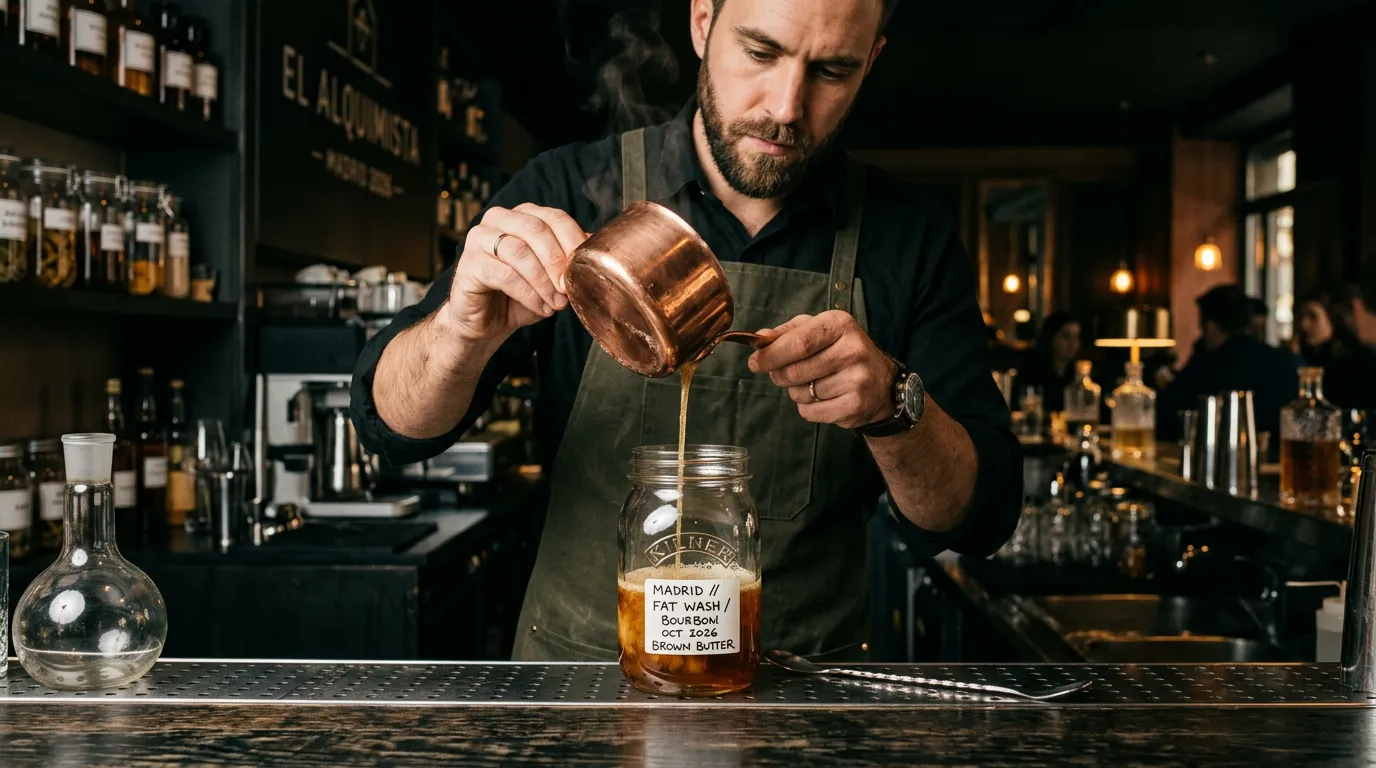
In the world of contemporary mixology there is a technique that operates in the shadows of flavour: invisible to the eye, indelible on the palate. Fat washing — known in Spanish as “lavado graso”, though we prefer to keep its original name — allows bartenders to transform a conventional spirit into a completely new sensory experience. We’re not talking about a simple infusion or traditional maceration. We’re talking about a chemical-tactile process in which fat becomes a vehicle for flavour and texture, leaving behind only its trace: an enveloping silkiness that the guest perceives without being able to explain its origin. At Stillroom we believe this technique represents the fullest expression of our philosophy: The Art of the Invisible. The guest savours the complexity but never sees the 24 hours of work behind each glass.
What Fat Washing Is
Fat washing is a mixology technique that involves infusing a spirit with a food-grade fat — butter, oil or animal fat — to transfer aromatic compounds and flavour, before later separating the fatty phase by freezing. The process makes use of fats’ ability to dissolve lipophilic molecules that alcohol cannot extract on its own: carotenoids, fat-soluble vitamins, phenolic compounds and aroma molecules present in ingredients such as bacon, browned butter or olive oil.
The magic lies in the thermal contrast. When the fat is heated together with the spirit, the volatile compounds are released and dissolve into the fatty phase. When we later freeze the mixture, the fat — which has a higher melting point than water — solidifies into a layer we can separate with surgical precision. The resulting liquid has absorbed the essence of the fat without retaining its visible oily texture. The guest gets a cocktail with body and depth, but with no perceptible fatty residue. It is, literally, the art of the invisible applied to cocktail making.
How It’s Done: the Step-by-Step Process
Fat washing is technically accessible but requires precision and patience. Below is the complete process we follow at Stillroom:
- Step 1 – Choose the base spirit: The fundamental rule is to use a high-quality spirit that can withstand the transformation. Bourbon, vodka, white rum or gin work especially well. We avoid overly aromatic spirits that might compete with the flavour of the fat.
- Step 2 – Select the fat: The fat should be fresh and of premium quality. The most commonly used are unsalted butter, toasted sesame oil, bacon fat, extra virgin olive oil, cocoa butter or coconut oil. The standard ratio is 30ml of fat per 750ml of spirit.
- Step 3 – Heat the fat: In a stainless-steel container, we heat the fat over medium-low heat until it fully liquefies and reaches a temperature of around 50-60°C. We must avoid overheating it so it doesn’t burn.
- Step 4 – Mix with the spirit: We pour the spirit over the hot fat and stir vigorously for 2-3 minutes to create an unstable emulsion that aids the transfer of aromatic compounds.
- Step 5 – Rest: We seal the container and leave the mixture to rest at room temperature for 4-6 hours. This time allows the fatty compounds to fully integrate with the alcohol.
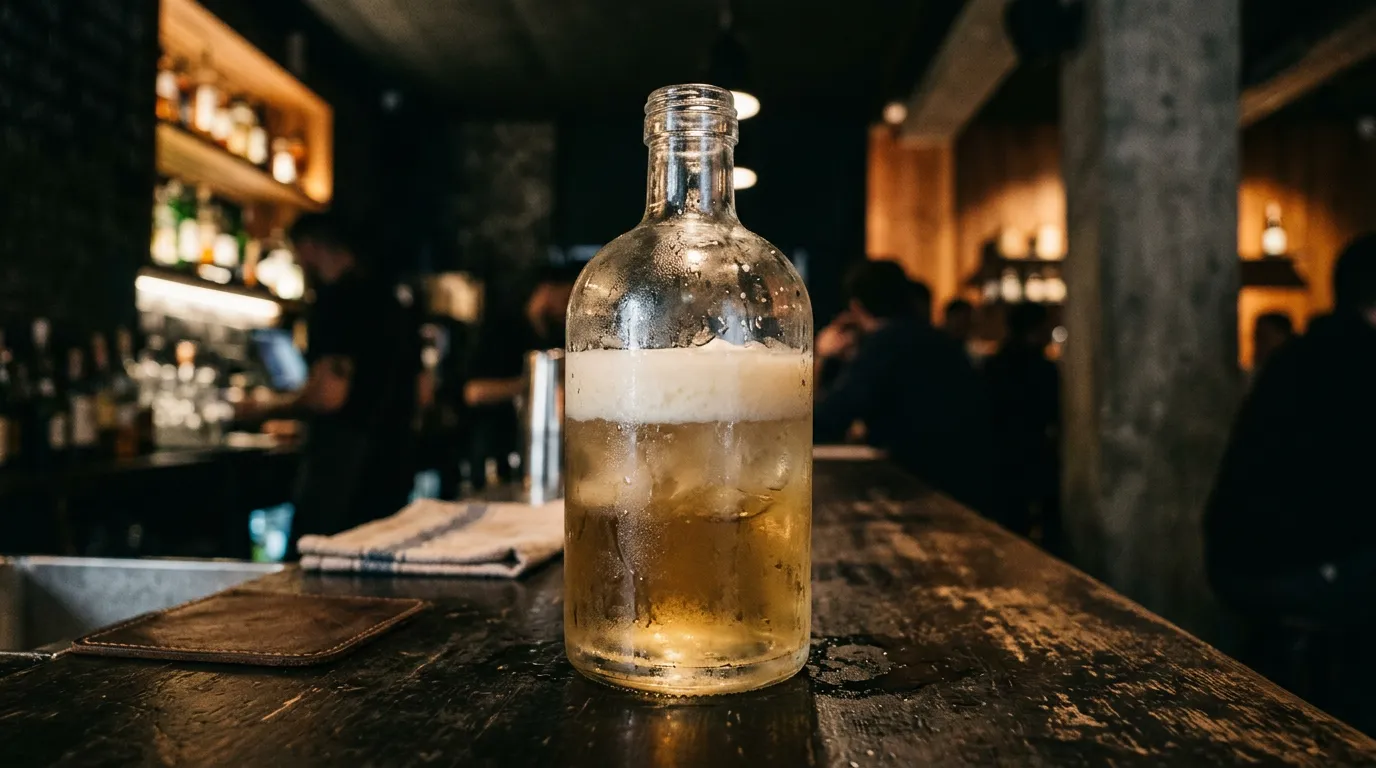
- Step 6 – Freeze and filter: We put the mixture in the freezer for 12-24 hours. The fat will solidify into a visible layer on the surface. We filter it carefully using a fine strainer lined with muslin or a coffee filter to separate the solidified fat from the infused liquid.
The result is a spirit with aromatic complexity and a silky texture, ready to be used in signature cocktails. At Stillroom we repeat this process up to three times with different fats to create increasingly elaborate profiles.
The Most Commonly Used Fats in Fat Washing
The choice of fat determines the final profile of the cocktail. Each one lends unique nuances that pair better with certain spirits:
- Browned butter: Ideal for bourbon and American whiskey. It lends notes of hazelnut and caramel and a subtle sweetness that rounds off the grain’s rough edges. It’s our favourite for our signature Old Fashioned.
- Toasted sesame oil: Perfect for vodka and gin. It brings umami depth, toasted notes and an oriental aroma that elevates citrus-based cocktails. Excellent in Martini variations.
- Bacon fat: The favourite of the boldest bartenders. It pairs extraordinarily well with bourbon and rye whiskey, lending smoky, salty notes and a meaty touch that defies cocktail-making conventions.
- Extra virgin olive oil: Especially the Arbequina variety. It brings herbaceousness, vegetal notes and an incredibly silky texture. It transforms a vodka into a cocktail with the body of olive oil, perfect for a reinvented Dirty Martini.
- Cocoa butter: Rum’s perfect ally. It lends notes of chocolate, vanilla and a creamy touch that elevates the Daiquiri into liquid-dessert territory.
- Coconut oil: Works with vodka and white rum. It brings tropical sweetness, coconut notes and a slightly denser texture that comes through on the palate.
Why It Works: the Science Behind the Technique
Fat washing isn’t magic: it’s chemistry applied to mixology. Fats are exceptional solvents for lipophilic aromatic compounds — molecules that don’t dissolve in water but do dissolve in fats. When we heat the fat together with the spirit, the aroma molecules are released from their original matrix and dissolve into the fatty phase.
Alcohol acts as a catalyst for this extraction, breaking down the cellular barriers of the ingredients and helping the compounds pass into solution. Freezing then makes use of a fundamental physical property: fat is less dense than water and has a higher melting point. As it solidifies, it forms a coherent layer that we can separate effortlessly.
The resulting spirit retains the aromatic compounds dissolved in the fat, but loses most of the fat itself. The result is a liquid that has absorbed the flavour complexity — toasted sesame notes, buttery sweetness, smoky bacon — without retaining any perceptible fatty texture. It is precisely this paradox — the flavour of fat without the texture of fat — that makes fat washing so fascinating.
Fat Washing at Stillroom: Our Philosophy
At Stillroom, fat washing isn’t just another technique: it’s a statement of principles. Enzo Ruiz, our Head Bartender and Creative Director, has developed a fat-washing programme that represents the fullest expression of our philosophy, The Art of the Invisible. Every spirit we infuse with fat goes through a 24-hour process the guest never sees, but experiences in every sip.
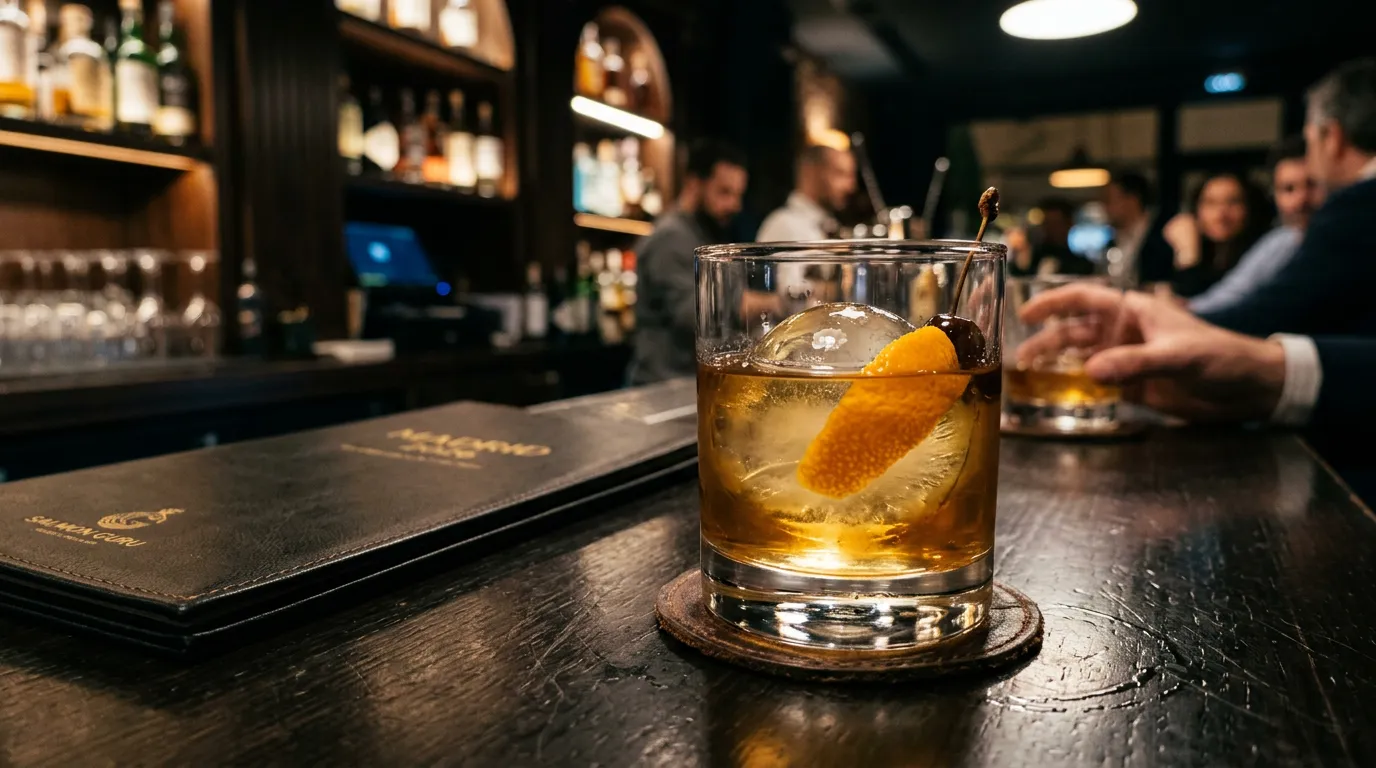
Our bourbon infused with hazelnut browned butter — repeated three times to achieve maximum complexity — becomes the base of a signature Old Fashioned that redefines this classic. The guest perceives a creamy texture, caramel notes and a finish that no syrup or bitters could replicate. There are no signs of the process: only the flavour.
For our version of the Dirty Martini, we use vodka infused with Arbequina olive oil. The result is a cocktail that displays the silky texture of olive oil — herbaceous notes, subtle bitterness, enveloping body — with no visible fatty residue. It’s a Martini that has kissed the oil but doesn’t show it.
And our cocktail menu couldn’t be without a reinvented Daiquiri: white rum infused with pure cocoa butter, lending notes of chocolate, vanilla and a creamy finish that transforms the experience. This Daiquiri exists in a territory between cocktail and dessert, without being either.
Each of these cocktails represents hours of invisible work. The guest doesn’t see the butter browning, doesn’t watch the mixture resting, doesn’t witness the separation by freezing. They only taste the result. And in that invisibility lies exactly our philosophy: excellence is proven in what is felt, not in what is explained.
Recipes to Try at Home
Although at Stillroom we take fat washing to levels that require professional equipment, it’s possible to experiment with this technique at home with satisfying results. Below is an accessible recipe for an Old Fashioned with fat-washed bourbon:
Old Fashioned with Browned Butter
For the fat-washed bourbon (prepare 24 hours in advance):
- 750ml good-quality bourbon
- 30ml unsalted butter
For the cocktail:
- 60ml fat-washed bourbon
- 10ml sugar syrup (1:1)
- 2 dashes orange bitters
- Orange peel for garnish
Method:
First, we prepare the bourbon: melt the butter over medium-low heat until it turns golden and smells of toasted nuts. Pour in the warm bourbon (you can briefly warm it through), stir vigorously and leave to rest for 4-6 hours at room temperature. Freeze for 12 hours, remove the solidified butter layer and filter through muslin. Done.
For the cocktail, stir the infused bourbon with the syrup and the bitters in a mixing glass with ice. Stir for 30 seconds and serve in a rocks glass with a large ice cube. Garnish with an orange peel expressed over the surface to release its essential oils.
The result: an Old Fashioned with a silky body, browned-butter notes and a finish that no traditional ingredient could offer.
Come and Discover the Invisible
Fat washing represents everything we believe in at Stillroom: excellence isn’t seen, it’s experienced. Every cocktail on our menu hides hours of invisible work, techniques that operate beneath the surface of flavour. We invite you to visit us at Calle Moreto 9, in the heart of Los Jerónimos, Madrid. Come and discover what it really means to savour the difference. The process is our secret; the pleasure is yours.
History of Fat Washing: from PDT to Contemporary Mixology
In 2007, Don Lee, a bartender at Please Don’t Tell (PDT) in New York’s East Village, revolutionised cocktail making with a technique that would change forever the way we understand cocktails: fat washing. His most iconic creation, the Benton’s Old Fashioned, combined Four Roses bourbon with Benton’s bacon fat, an artisanal cure from Tennessee. The inspiration came from the modernist experiments David Arnold was carrying out at Booker and Dax, applying gastronomic chemistry to the world of bars.
The technique quickly spread to legendary venues such as Empellón and Death & Co, reaching Madrid in the years that followed. Fat washing marked a turning point: untamed cocktail making versus molecular cuisine, textures and flavours that once seemed impossible in a glass. At STILLROOM, we have built this technique into the foundation of our philosophy “The Art of the Invisible”, where every element of the cocktail works silently to create memorable experiences.
2026 Trends: Fat Washing in Spanish Signature Cocktail Making
The year 2026 marks the consolidation of “liquid umami” as the dominant trend in signature mixology. If a decade ago bacon ruled the bars, today vegetable fats take centre stage: avocado oils, cocoa butter and pistachio paste redefine the limits of flavour. In Spain, this evolution intersects with our rich charcuterie tradition, incorporating fats such as Colonnata lardo, Mallorcan sobrasada or Iberian pork belly. Fat washing now coexists with lacto-fermentation and sous-vide at the most prestigious bars.
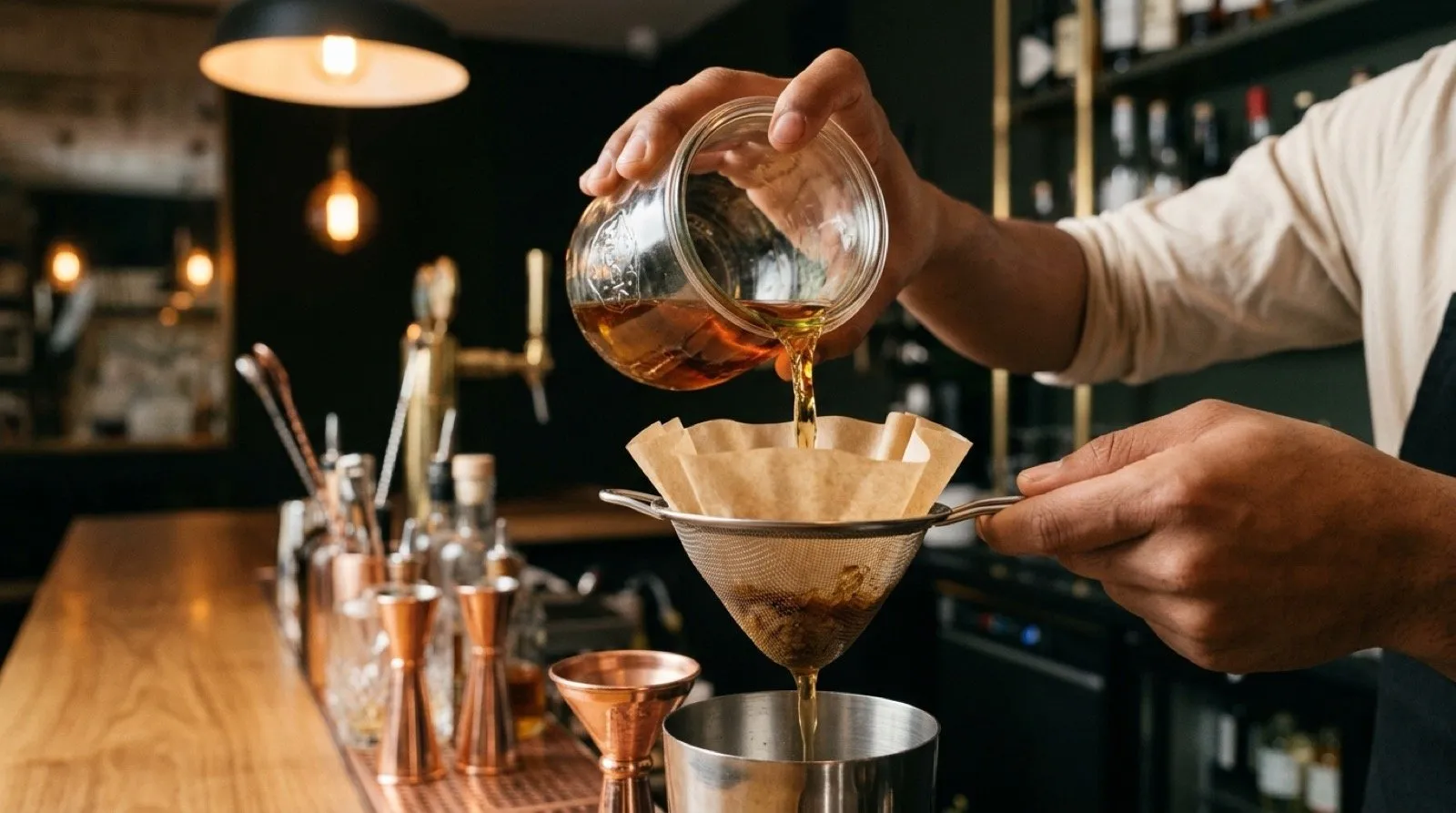
At STILLROOM we’ve spent years exploring these techniques: browned butter, sesame, pistachio and Iberian pork belly become infusers of flavour depth. To dig deeper into these methodologies, discover our advanced techniques section and check out our mixology glossary.
Frequently asked questions
Is it safe to drink a cocktail made with fat washing?
Yes, completely safe. The fat washing process involves mixing the fat with the spirit, gently heating it and then chilling it. Separating out the solid phase removes impurities and most unwanted components. The result is a liquid with a unique texture and flavour, but no risk to health. That said, it should always be made with quality ingredients and stored correctly.
How long does a fat-washed spirit keep before it spoils?
A fat-washed spirit can keep for several weeks refrigerated, provided it is stored in an airtight container. Because it has been through heating and subsequent filtering, the risk of bacterial growth is significantly reduced. That said, we recommend drinking it within the first 3-4 weeks to appreciate its aromatic nuances at their very best.
Can I do fat washing at home without professional equipment?
Absolutely. Home fat washing only needs a spirit (whisky, rum, brandy), your chosen fat (butter, coconut oil, bacon), a glass container, a fine strainer and patience. The basic process is mixing, heating in a bain-marie, chilling and filtering. With basic ingredients and the correct proportions, any cocktail lover can experiment in their own kitchen.
Which cocktails on the STILLROOM menu use fat washing?
In our cocktail menu you’ll find several creations that use this technique. The Super Fashion is a brandy Old Fashioned with tamarind fat washing that balances sweetness and depth. The Green Margarita incorporates coriander fat washing for a vibrant, herbal experience. We also serve a house Old Fashioned with browned butter, where the fat lends a uniquely creamy texture that envelops the bourbon.
Can fat washing be done with vegetable fats, or only animal ones?
Fat washing accepts practically any type of fat, both animal and vegetable. The most popular vegetable options include olive oil, avocado, coconut, cacao, sesame and pistachio. Each lends a different flavour profile: avocado oil offers a creamy subtlety, coconut brings tropical sweetness, and sesame, a toasted, nutty touch. The choice depends on the profile of the cocktail you want to create and the guest’s dietary preferences.