Agar clarification in cocktail making: crystal-clear juices and cocktails
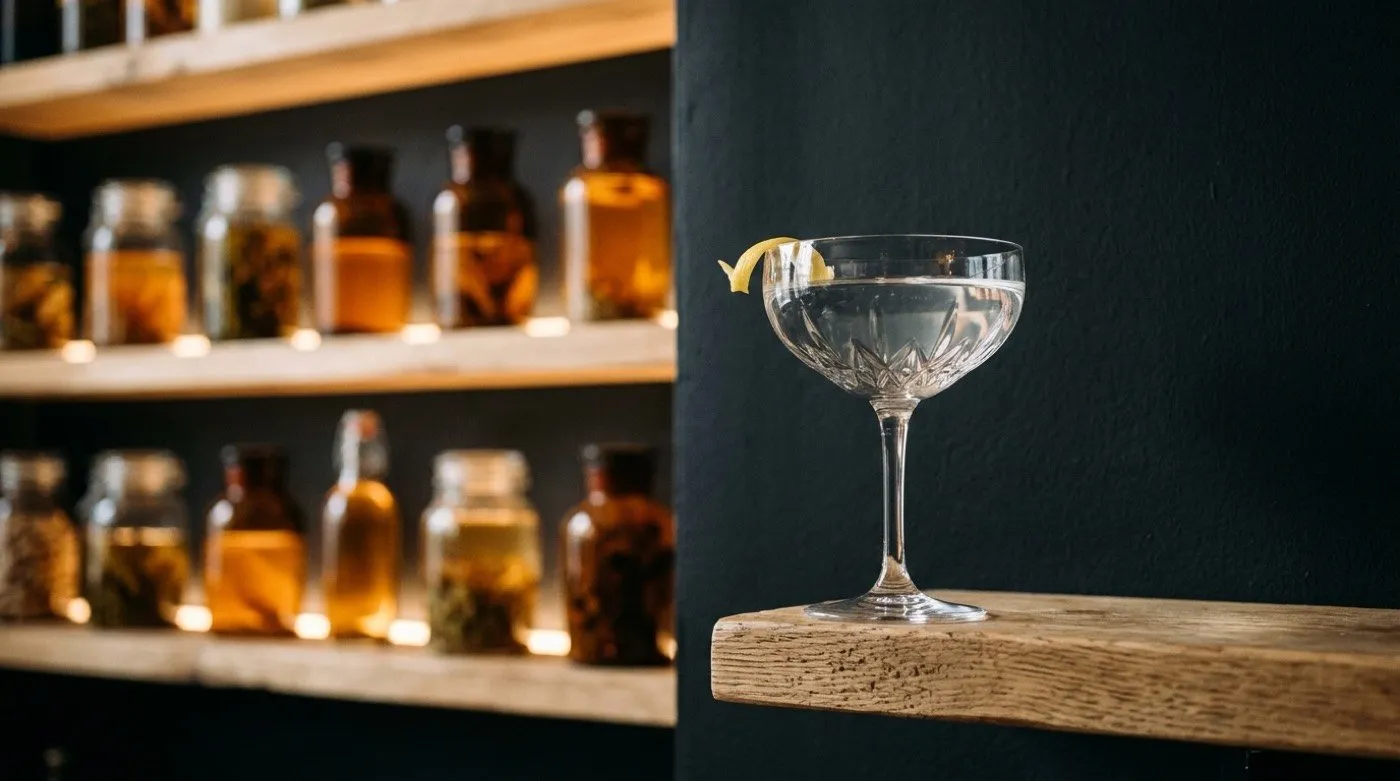
Clarification with agar is a cutting-edge cocktail technique that allows us to obtain absolutely crystal-clear juices and cocktails without losing a scrap of flavour. At STILLROOM, we use agar-agar — a 100% vegetable gelling agent extracted from red algae — at a ratio of 0.2% of the liquid’s weight: first we gel it, then we break the gel with a whisk and finally we filter it through muslin, achieving a transparency similar to consommé while preserving intact the aromatic intensity of ingredients as fragile as lime or pineapple.
How it works: gel, break and filter
Agar-agar dissolved in hot liquid forms a three-dimensional network of microscopic fibres which, on cooling, traps within it all the suspended particles, the denatured proteins and the leftover pulp that cloud a juice or a cocktail. This ability to encapsulate cloudiness is the heart of clarification with agar. Unlike animal gelatine, agar sets at room temperature — below 35-40°C — and needs no extreme cold, which makes it a far more practical tool for working at the bar.
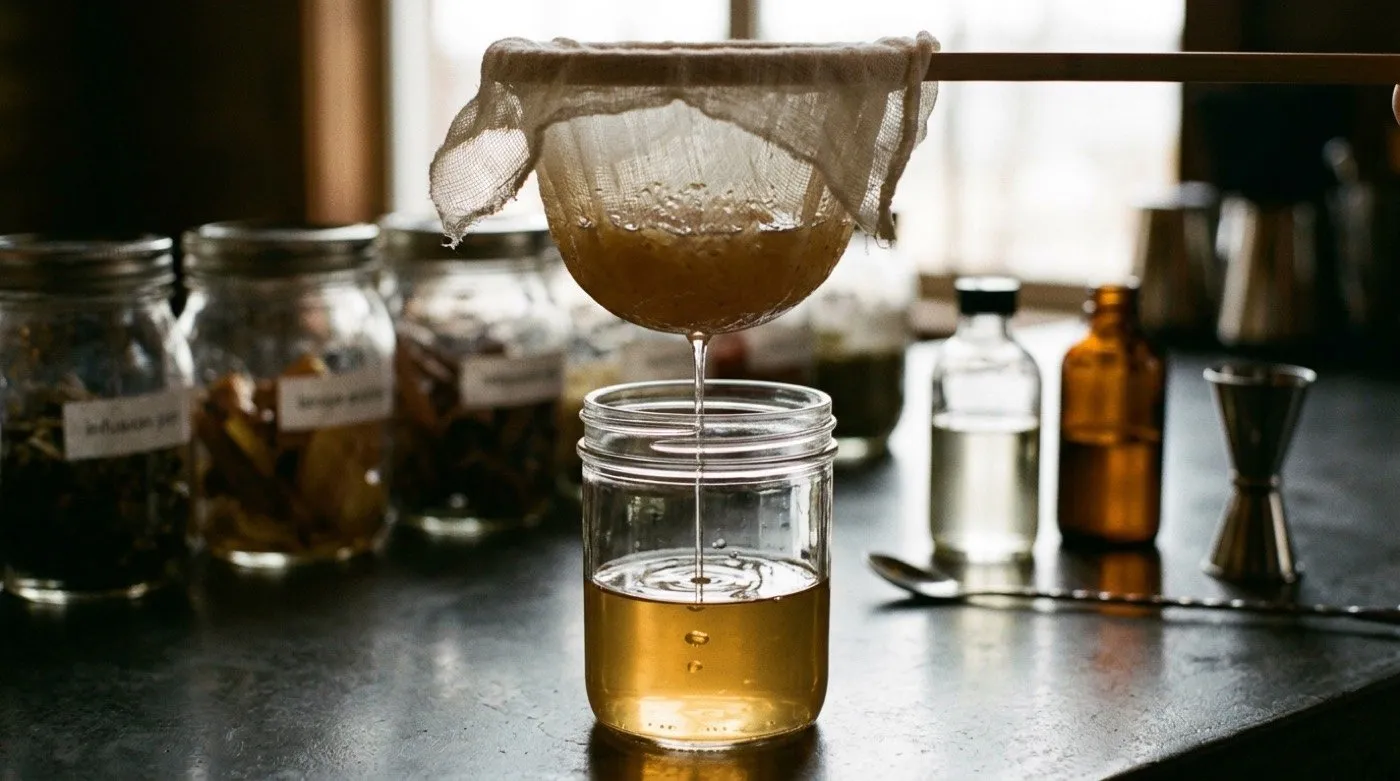
When we mechanically break the gel — by whisking it or passing it through a coarse sieve — we destroy that network, but the impurities remain trapped in the fragments of gel. When we pour everything over muslin or a fine cloth filter, the liquid falls by gravity, clean and bright, while the solid remains stay in the cloth. We apply no pressure; it is the slow flow that guarantees an ultra-transparent result. It is an almost magical process, but on a purely physical basis.
Step-by-step process
The methodology is meticulous but straightforward provided you respect weights, temperatures and timings. At our bar, every step is timed and weighed to the gram. Here we break down the complete process for clarifying any juice or cocktail with agar-agar.
| Step | What to do | Detail / temperature |
|---|---|---|
| 1. Calculate and weigh | Weigh the liquid to be clarified and add 0.2% of powdered agar-agar (2 g per litre). | Precision scale for the agar; the juice or cocktail must be cold before starting. |
| 2. Hydrate and dissolve | Separate 10-15% of the cold liquid, add the agar and whisk to disperse it. Bring that portion to the boil while stirring continuously. | Heat to 90-95°C and keep a gentle simmer for exactly 5 minutes, until every lump disappears. |
| 3. Mix in the rest | Pour the hot mixture over the remaining cold liquid in a large container, stirring for 30 seconds to homogenise. | The thermal shock accelerates the dispersion of the agar but the mixture must not drop below 35°C until it sets. |
| 4. Gel | Leave it to rest at room temperature (or in an ice bath if you are in a hurry) until it solidifies completely. | The gel will be firm to the touch in about 20-40 minutes depending on volume and room temperature. |
| 5. Break and filter | Crumble the gel with a whisk or a fork. Pour the fragments over a muslin or a cloth filter placed over a fine sieve. Let the liquid drip on its own, without pressing. | Complete filtration can take 2-4 hours; the result will be a crystal-clear liquid with the same original aromatic profile. |
Agar vs. milk and gelatine
Each clarification method has its own personality. Milk clarification lends a velvety texture and a subtle dairy character; gelatine is a cocktail classic that requires refrigeration and does not always achieve absolute transparency. Agar-agar holds a privileged place when we are looking for an impeccably translucent liquid, adding no extra aroma and suitable for any guest. This table sums up the key differences:
| Criterion | Agar-agar | Milk (milk wash) | Gelatine |
|---|---|---|---|
| Origin | 100% vegetable (red algae) | Dairy (casein) | Animal (collagen) |
| Clarity of result | Extreme, like consommé | Opalescent and silky | High, though it may retain a slight veil |
| Suitability for delicate juices (lime, pineapple) | Excellent; preserves all the acidity and citrus aromas. | Not advisable: lime curdles milk in an unpredictable way. | Good, though it may need cold to maintain its structure. |
| Residual flavour | Neutral; it does not alter the cocktail’s profile. | A subtle dairy note; it rounds out the tannins. | It can leave a faint animal undertone if high-quality gelatine is not used. |
| Difficulty and time | Medium; it depends on the slow filtration (2-4 h). | High; it requires resting and curdling the milk with acids. | Low; quick process but requires refrigeration and unmoulding. |
How we use it at STILLROOM
At our bar on Calle Moreto, agar clarification is one of the red carpets we roll out for the most ethereal ingredients. We use it above all with freshly centrifuged juices — lime, pineapple, cucumber — which we want to present as crystal-clear water without losing a single note of their freshness. We then integrate those transparent liquids into cocktails where the aesthetic of the empty glass or the diaphanous coupe is part of the sensory narrative we tell each guest.
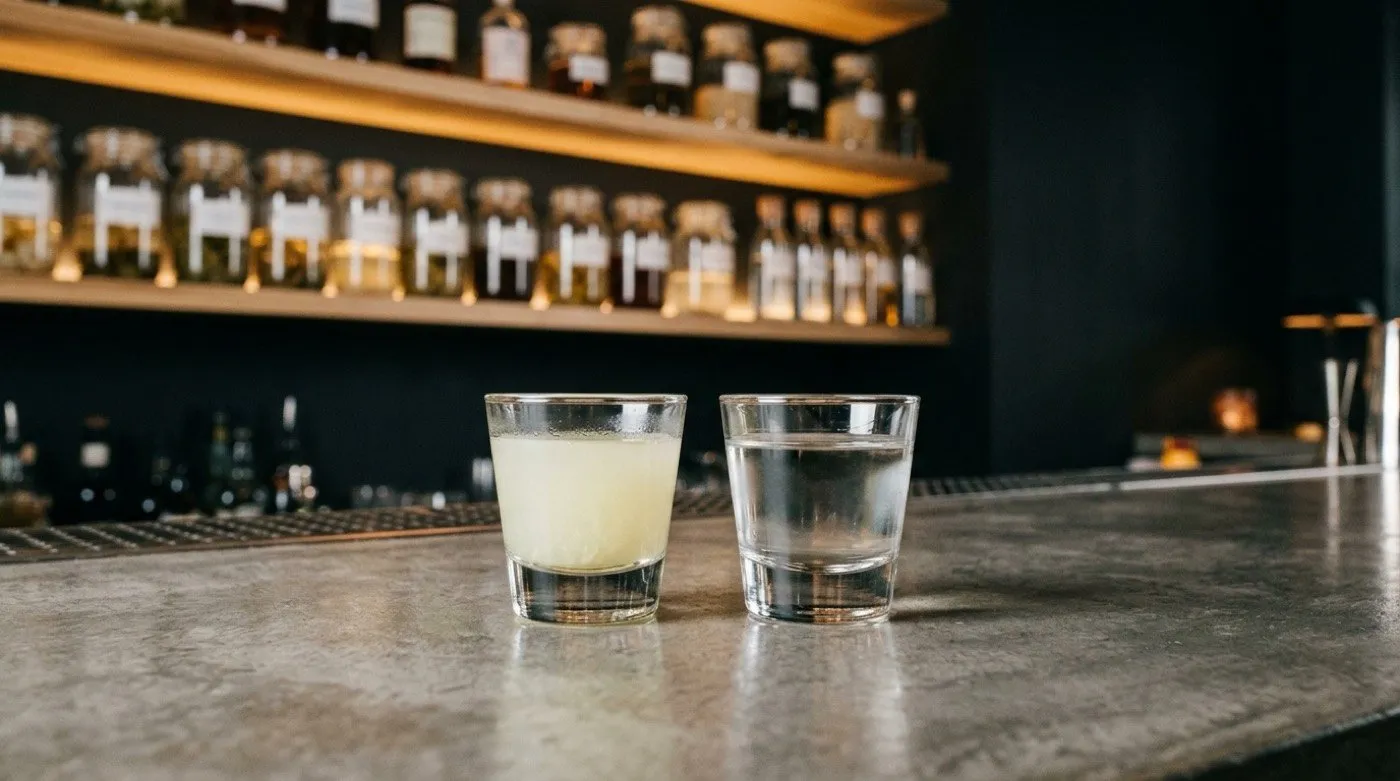
The technique is even better understood when it crosses paths with other tools from our laboratory. While milk clarification gives us that silky texture ideal for punches or milk punches, agar allows us to create vegan, ultra-transparent mixtures that we then subject to fat washing to add fatty notes — for example, a crystal-clear daiquiri washed with coconut oil — or combine with the lactic acids from our lacto-fermentation. We even accelerate prior infusions with sous-vide infusions before passing the liquid through the agar process, ensuring that every flavour molecule is extracted in a controlled way. This methodology is part of our catalogue of advanced cocktail techniques, with which we pursue excitement through precision.
Three ideas to get you started
Crystal-clear lime daiquiri
Clarify freshly squeezed lime juice with 0.2% agar. Once filtered, mix 40 ml of the clear juice with 60 ml of white rum, 15 ml of sugar syrup and shake with ice. The result is a completely colourless and bright daiquiri, where the lime’s acidity dances without a trace of cloudiness. It surprises when served in a chilled coupe, almost like spring water with a Caribbean soul.
Deconstructed and transparent piña colada
Centrifuge ripe pineapple pulp and clarify the juice with agar. Add 40 ml of that crystal-clear juice to 50 ml of aged rum infused with coconut (you can use a light fat washing with coconut oil) and a pinch of saline solution. Shake and serve in a martini glass: you have a piña colada that looks like water but tastes like the beach.
“Clear Mary”, a reinvented Bloody Mary
Blend very ripe tomatoes, strain them, add 0.2% agar and clarify. You will get a translucent “tomato water” with a pale golden colour. Combine 60 ml of that liquid with 40 ml of vodka, 15 ml of lemon juice and a dash of Worcestershire sauce. Garnish with a celery stalk and a paper-thin slice of radish: the flavour is 100% Bloody Mary, but its appearance deceives and fascinates.
Frequently asked questions
What is agar clarification in cocktails?
It is a technique that uses agar-agar, a vegetable gelling agent, to trap the particles that cloud a juice or a cocktail. After the liquid gels, the gel is broken and filtered through a muslin cloth, obtaining a crystal-clear result without altering the flavour.
How much agar is used to clarify a juice or cocktail?
The standard proportion is 0.2% by weight. For one litre of liquid, exactly 2 grams of agar powder are used. It should never exceed 0.25% to avoid a gel that is too rigid and makes filtering difficult.
What is the difference between clarifying with agar and with milk?
Milk clarification (milk wash) uses casein as a flocculating agent and imparts a subtle dairy flavour with an opalescent transparency. Agar, on the other hand, produces a perfectly translucent, palate-neutral liquid, ideal for delicate juices and vegan options. Both methods complement each other; you can read more about the other in our guide to milk clarification.
Can lime juice be clarified with agar?
Absolutely. Agar is the preferred choice for very acidic juices such as lime, because, unlike milk, there is no risk of curdling or off-flavours. Lime juice clarified with agar keeps its acidity and aromatic punch completely intact, but becomes entirely transparent.
Does agar clarification change the flavour of the cocktail?
No. Agar-agar is tasteless and colourless; it contributes no organoleptic character. The resulting liquid tastes exactly like the original, with the same intensity and complexity. Only the visual experience changes: you serve a liquid that looks as though it contains nothing, yet it is packed with nuance. At STILLROOM we believe that cocktail making is a serious game in which technique amplifies emotion. Agar clarification allows us to create liquid illusions that astonish before the first sip. If you would like to see — and taste — these flavoured crystals in person, we invite you to browse our cocktail menu and book a table at our house on Calle Moreto, beside El Retiro. And if you fancy continuing to explore the terminology of our craft, everything is gathered in the cocktail and mixology glossary at STILLROOM.