Highball: the format that celebrates the bubble
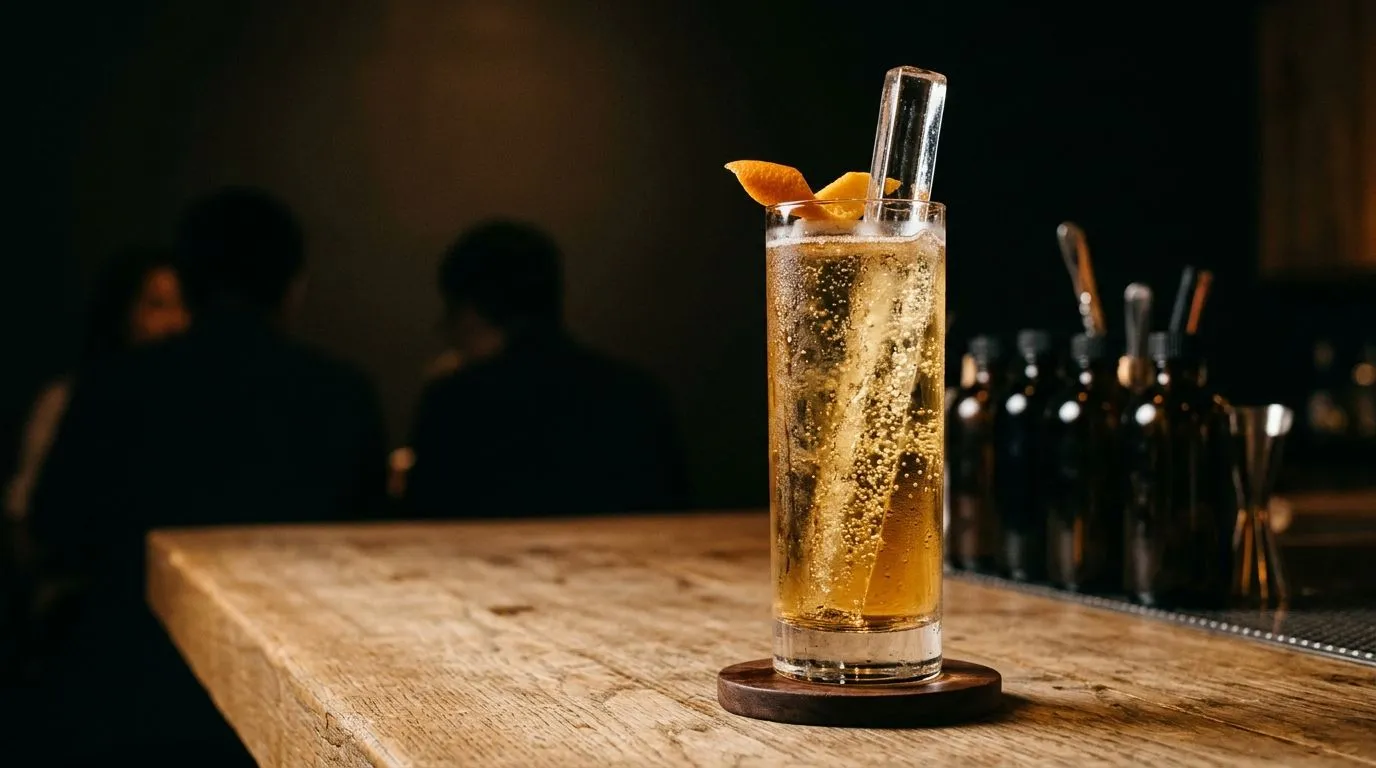
At STILLROOM we have a weakness for drinks that look simple and are not. The highball is the best example: a spirit, a mixer with bubbles, a tall glass and plenty of ice. Nothing more. But behind that apparent simplicity lies a precise technique — ratio, temperature, ice and pouring — that turns two ingredients into a vibrant, fresh cocktail with a bubble that stays with you to the last sip.
What a highball is and why it is a category
The highball is a family of long cocktails defined by its structure: spirit + carbonated mixer, served in a tall glass with plenty of ice. Soda, tonic, ginger ale or any bubbly mixer with character can take the second place. The name also refers to the straight tall glass in which it is served.
That something so simple is a category in its own right, and not just “a mixed drink”, has to do with four variables that the highball treats with rigour:
- Ratio. Between one part of spirit to three of mixer (1:3) and one to four (1:4). Long enough to refresh, short enough for the spirit to keep speaking.
- Lively carbonation. The mixer freshly opened and poured with care. The bubble is not decoration: it is the texture and the vehicle for the aromas.
- Extreme cold. Frozen glass, cold spirit, very cold mixer. CO₂ stays dissolved far better at low temperatures, as we explain in our article on carbonating cocktails.
- Ice spear. A bar of clear ice that fills the column of the glass, reduces the gaps and melts slowly.
When all four are met, the result is a clean, cold, effervescent drink. When one fails, the bubble dies within minutes and the spirit ends up watery.
The Japanese highball: when simple becomes ritual
If one culture has raised this format to the level of ceremony, it is the Japanese one. In many bars in Japan, the whisky highball is prepared with almost obsessive attention: a glass kept in the freezer, a hand-carved ice spear, a good Japanese whisky measured to the millilitre, very cold soda with a fine bubble and a single turn of the spoon to combine without breaking the gas.
What interests us about that tradition is not the aesthetics but the lesson: with two ingredients, every detail counts double. The Japanese highball showed that technique, not complexity, is what separates an ordinary drink from a memorable one. That same philosophy runs through all well-understood classic cocktail making.
Variations: from the whisky highball to the gin and tonic and ferments
The structure of spirit + bubbles allows for many readings. These are the most representative:
| Variation | Base | Mixer | Approximate ratio | Distinctive trait |
|---|---|---|---|---|
| Whisky highball | Malt or blended whisky, delicate | Very cold soda | 1:3 to 1:4 | Fine bubble that opens up the whisky’s aromas |
| Gin and tonic | Gin | Tonic | 1:3 to 1:4 | The bitterness of the quinine converses with the botanicals |
| Ginger ale highball | Whisky, rum or brandy | Ginger ale | 1:3 | Gentle sweetness and the mild spice of ginger |
| Ferment highball | Spirit or alcohol-free | Bubbly ferment, such as tepache | 1:2.5 to 1:3 | Natural acidity, fruity notes and living complexity |
| Alcohol-free highball | Homemade cordial or concentrated infusion | Soda | 1:3.5 to 1:5 | The whole structure of the format, without the alcohol |
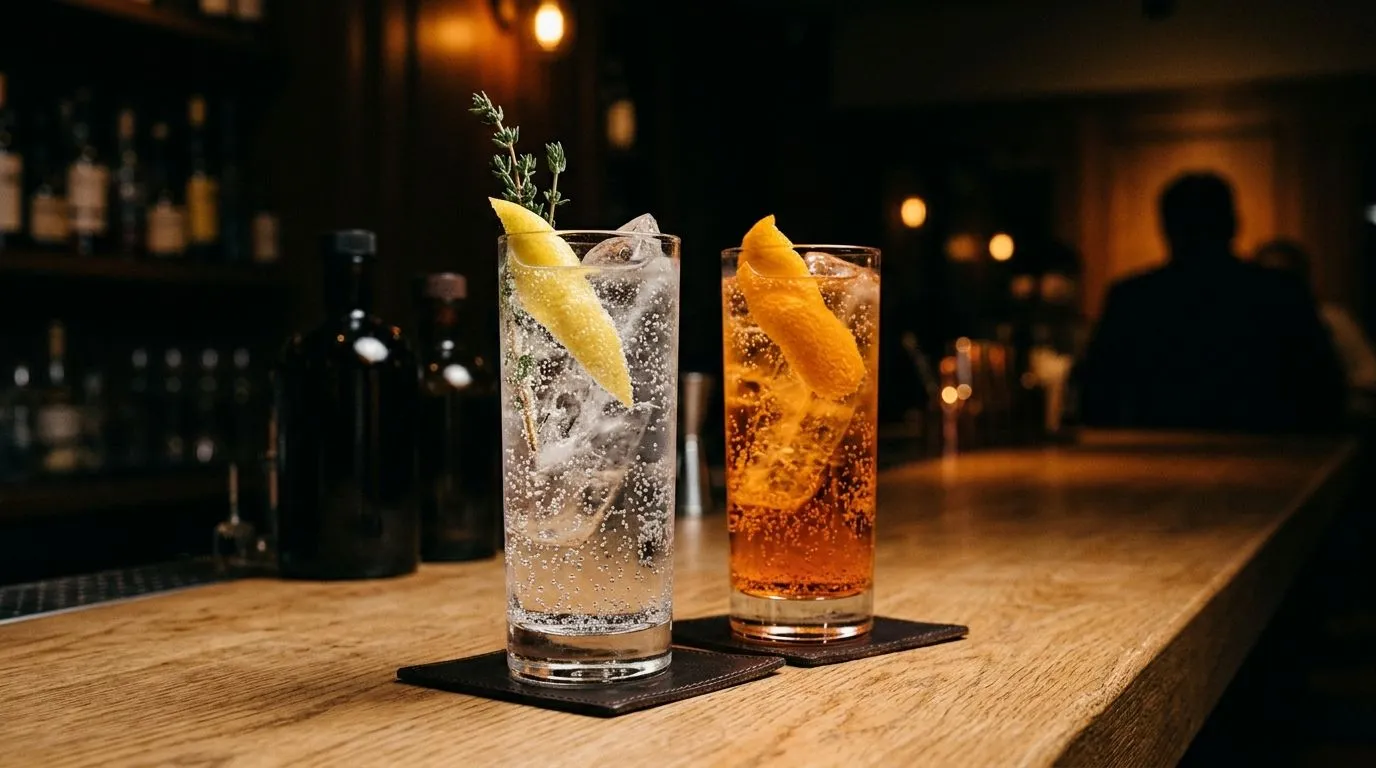
The gin and tonic is, in fact, the most popular highball in Spain, although it is rarely called that. It shares exactly the same logic: spirit, carbonated mixer, tall glass, plenty of ice and a pour that respects the bubble.
It is worth refining a distinction that often causes doubt. The mojito is served in a tall glass, with ice and a touch of soda, but it is not a highball in the strict sense. Its structure is different: spirit, citrus, sweetener and mint, that is, a sour built directly in the glass and lengthened with soda. It belongs to the family of collins and built drinks (build), where the soda lengthens an already complete sour-sweet balance. In the classic highball, on the other hand, there is no added citrus or sugar: the mixer is the spirit’s only companion.
How to build a highball step by step
The build is short, but every step has a reason. This is how to do it well, step by step:
| Step | What we do | Why |
|---|---|---|
| 1. Chill the glass | Tall glass in the freezer or filled with ice for a few minutes | A lukewarm glass melts the ice and warms the mixer, which loses gas |
| 2. Place the ice | Clear ice spear or large cubes up to the top | Fills the column, reduces gaps and slows dilution |
| 3. Measure the spirit | With a jigger, directly over the ice | The ratio is the recipe; measuring guarantees the balance |
| 4. Stir the spirit | A few turns of the barspoon before the mixer | Chills the spirit so it does not punish the bubble |
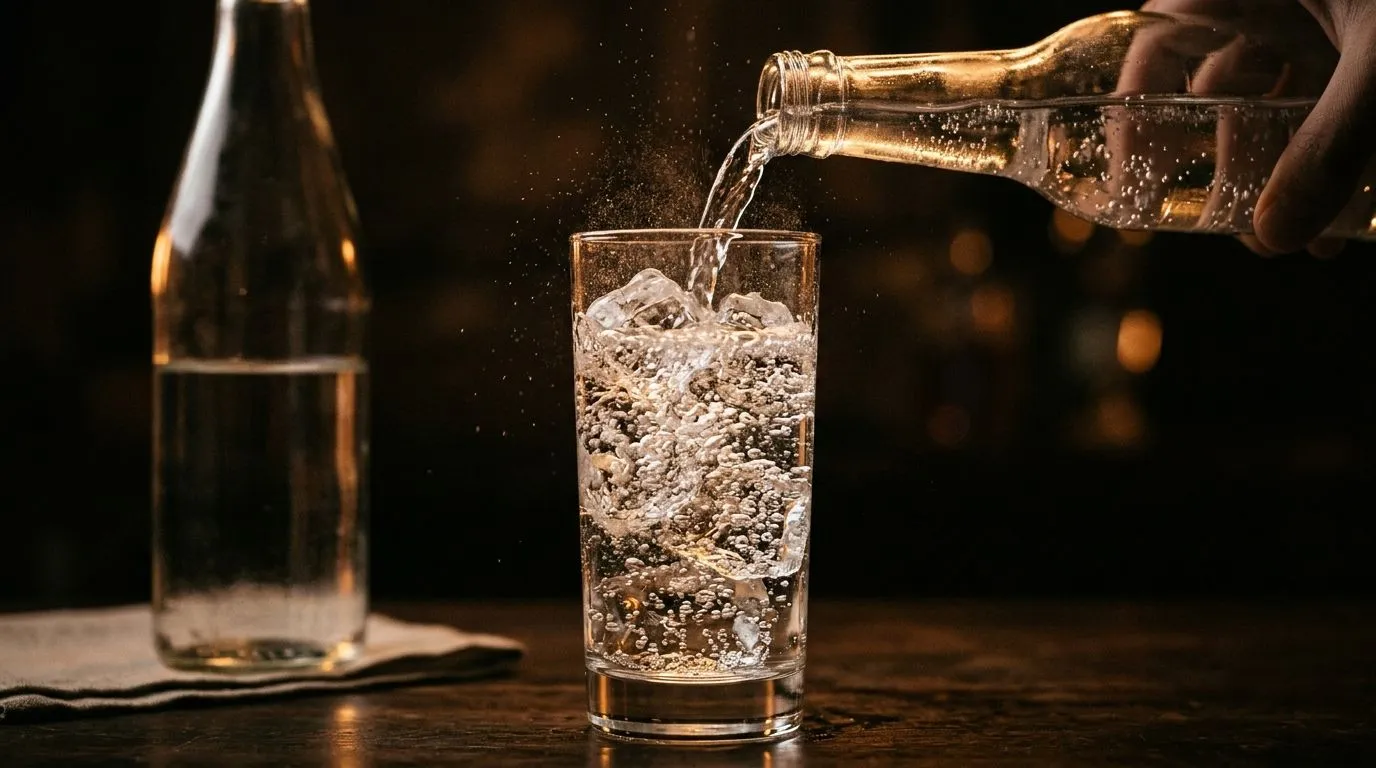
| 5. Pour the mixer | Slowly, letting it run down the spear, not onto the spirit | The ice cushions the fall and the gas is preserved |
| 6. Combine | A single gentle lift with the barspoon, from the bottom up | Mixes without shaking; every extra turn releases bubbles |
| 7. Aromatise | A citrus peel squeezed over the surface | The essential oils add to the aroma without adding acidity |
The most important step is the fifth. If the mixer falls in a stream onto the spirit, the turbulence releases a good part of the CO₂ before the drink reaches the table. If it slides down the ice spear, it enters the glass almost without agitation and keeps the bubble intact. That is why the clear ice spear is not a whim: it is the ramp the bubble travels down.
The mistakes that put a highball out
With so few ingredients, faults show straight away. These are the most frequent, and almost all of them have to do with temperature or with gas.
Too little ice. It seems contradictory, but a glass with three cubes dilutes more than one filled to the top. When there is little ice, each cube works harder, melts sooner and the drink warms up. The rule is simple: the glass, filled with ice to the rim.
A lukewarm mixer, or one opened a while ago. A room-temperature soda retains far less CO₂, and a bottle opened hours ago has already lost a good part of its spark. Small formats, which are opened and finished in a single serve, are always a better option than a big bottle that slowly goes flat.
Over-stirring. Every turn of the spoon releases bubbles. The right gesture is a single gentle lift from the bottom, enough to combine the spirit, which tends to stay at the bottom, without beating the gas.
Ratio by eye. A generous glug of spirit turns a fresh drink into a heavy one; a scant one leaves it soulless. Measuring with a jigger, here too, is what guarantees that today’s highball is the same as tomorrow’s.
A garnish that gets in the way. Thick slices of fruit inside the glass take the place of ice, create spots where gas escapes and add an acidity the format does not ask for. A citrus peel squeezed over the top perfumes without interfering.
How we use it at STILLROOM
At our bar on Moreto 9 the highball is a format that lets us show off what we do in-house. The structure is so clean that any preparation of our own comes through clearly: a homemade cordial, a spirit worked with fat washing or a bubbly ferment.
Tepache, for example, is a natural ally of the format. Its gentle acidity, its pineapple notes and its natural carbonation bring a complexity that no industrial soft drink can offer, in versions both with and without alcohol. The same goes for our cordials: lengthened with very cold soda, over an ice spear and with a citrus peel, they become alcohol-free highballs with all the structure and technical respect of a classic.
Three ideas for your first highball at home
1. The two-ingredient classic
Chill a tall glass in the freezer, fill it with large ice, measure 50ml of a spirit you like and top up with 150-200ml of very cold soda poured over the ice. A single turn of the spoon and a lemon peel.
2. Gin and tonic with a highball mindset
Treat your gin and tonic like a strict highball: frozen glass, ice up to the top, 1:4 measured with a jigger, freshly opened tonic and a slow pour. You will notice the difference in the bubble from the very first sip.
3. Alcohol-free highball with cordial
Prepare a simple citrus cordial, serve it in a 1:4 ratio with very cold soda over an ice spear and finish with an orange peel. All of the ritual, none of the alcohol.
Frequently asked questions
What exactly is a highball?
A highball is a long cocktail made of two elements: a spirit and a carbonated mixer, such as soda, tonic or ginger ale, served in a tall glass with plenty of ice. It is the simplest formula in cocktail making, and precisely for that reason the most demanding: with only two ingredients there is nowhere to hide a mistake. The ratio, the temperature, the quality of the ice and the way of pouring decide whether the result is a vibrant drink or a flat mixed drink. The name also refers to the tall, straight glass it is served in.
What ratio does a highball use?
The usual reference runs from one part of spirit to three of mixer (1:3) up to one to four (1:4). With 50ml of spirit, that means between 150 and 200ml of soda or tonic. Delicate or very aromatic spirits, such as a good Japanese whisky, usually ask for the long end so that the bubble opens up the aromas; more intense or fuller-bodied ones allow somewhat shorter ratios, towards 1:2.5. There is no single figure: the right ratio is the one that lets both ingredients express themselves without one masking the other.
What is the difference between a highball and a simple spirit and mixer?
On paper, both are a spirit with a soft drink. The difference lies in the method and the intention. In a highball we measure the ratio with a jigger, the glass is cold, the ice is dense and clear, the mixer is freshly opened and ice-cold, and we pour it carefully to keep the carbonation. The result is a very cold drink, with a lively bubble and a ratio that respects the spirit. A mixed drink served by eye, with cloudy ice and a room-temperature soft drink, loses its gas within minutes and dilutes straight away. Same ingredients, very different drinks.
What ice is used in a highball?
Ideally, a clear ice spear: a long bar that fills almost the whole height of the glass. By filling the column, it reduces the gaps where gas escapes, chills evenly and melts slowly. If you do not have spears, use large cubes, dense and very cold, and fill the glass to the top: the more ice, the less each cube melts and the less the drink dilutes. What is best avoided is crushed or small ice, which dilutes quickly and, with its edges, makes the bubble release all at once.
Can you make a highball without alcohol?
Yes, and it is one of the most interesting ways of drinking without alcohol. The logic of the format stays the same: a base with character, plenty of bubbles, extreme cold and an ice spear. Instead of the spirit, the base can be a homemade cordial, a ferment such as tepache or a concentrated infusion, lengthened with soda. At STILLROOM we work with house ferments and cordials with bubbles that follow exactly this philosophy. If you would like to try them, take a look at our cocktail menu and, if you want to secure a spot at the bar on Calle Moreto 9, book your table. And to keep sharpening your vocabulary, drop by our cocktail and mixology glossary.