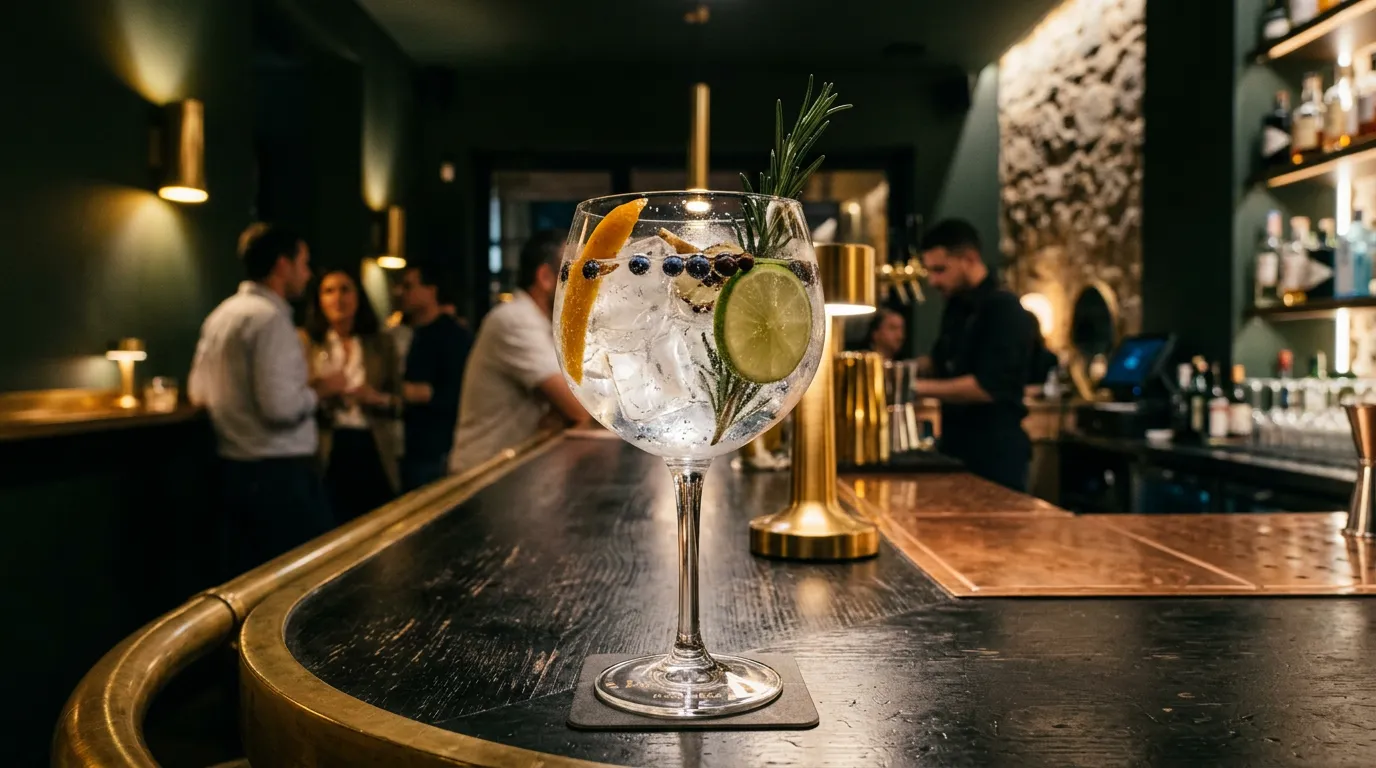
The gin and tonic is far more than a simple combination of gin and tonic water. Born in India under British rule, when colonists discovered that the quinine in tonic water fought off malaria, this drink evolved into one of the most sophisticated cocktails in modern mixology. Yet it was in Spain that the concept was truly reinvented. From the 2000s onwards, bars in Barcelona and Madrid transformed gin and tonic into a complete sensory experience, introducing balloon glasses, premium tonics and a botanical garnish that turned every preparation into a ritual. At STILLROOM we have inherited that philosophy: precision, quality ingredients and respect for technique.
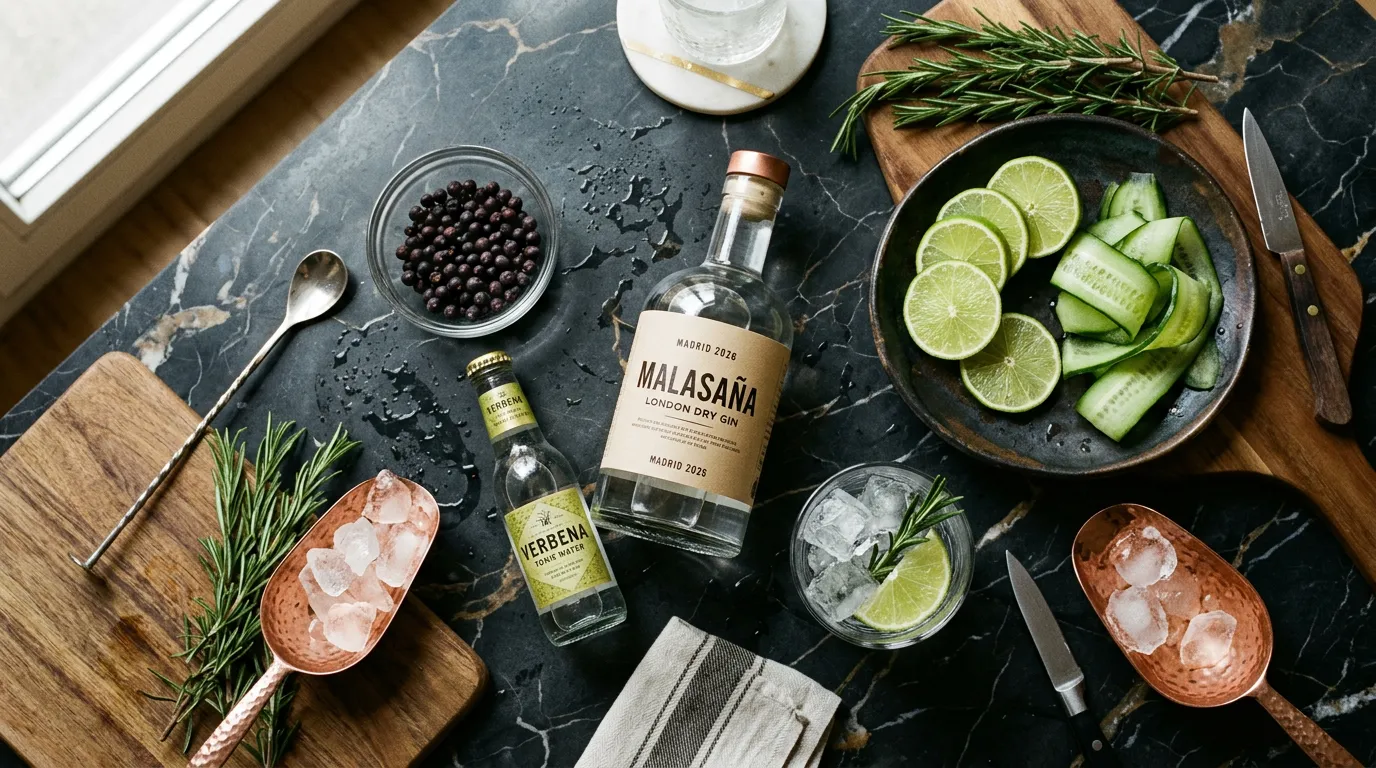
Ingredients
- 50 ml of premium London Dry gin
- 200 ml of cold premium tonic water
- High-density ice (ideally large spheres or good-sized cubes)
- 2 slices of lemon
- 1 sprig of juniper (juniper berries)
- Optional botanicals depending on the profile you want: pink grapefruit peel, fresh mint leaves, cardamom, pink peppercorn
Step-by-Step Preparation
- Chill the glass: Place the balloon glass in the freezer for at least 30 minutes, or chill it with ice and cold water. Temperature is essential so the drink does not dilute quickly. The balloon glass is not an aesthetic whim; its wide shape lets the botanicals’ aromas develop and reach the nose properly.
- Prepare the ice: Use high-density ice, ideally made with filtered water. Large spheres melt more slowly and reduce dilution. If you use cubes, make sure they are fully frozen and free of internal cracks that speed up melting.
- Chill the gin: Pour the 50 ml of gin into a mixing glass with ice and stir gently for 10-15 seconds. This step, known as “chilling”, lowers the drink’s temperature before adding the tonic and prevents the thermal shock that could cloud the mix.
- Build the glass: Remove any excess water from the balloon glass and add the ice spheres or large cubes until it is three-quarters full. Do not press the ice down; there must be room for the liquid to circulate.
- Pour the gin: Pour the chilled gin over the ice with a smooth, controlled motion, avoiding letting it fall directly onto the ice so as not to create excessive bubbles.
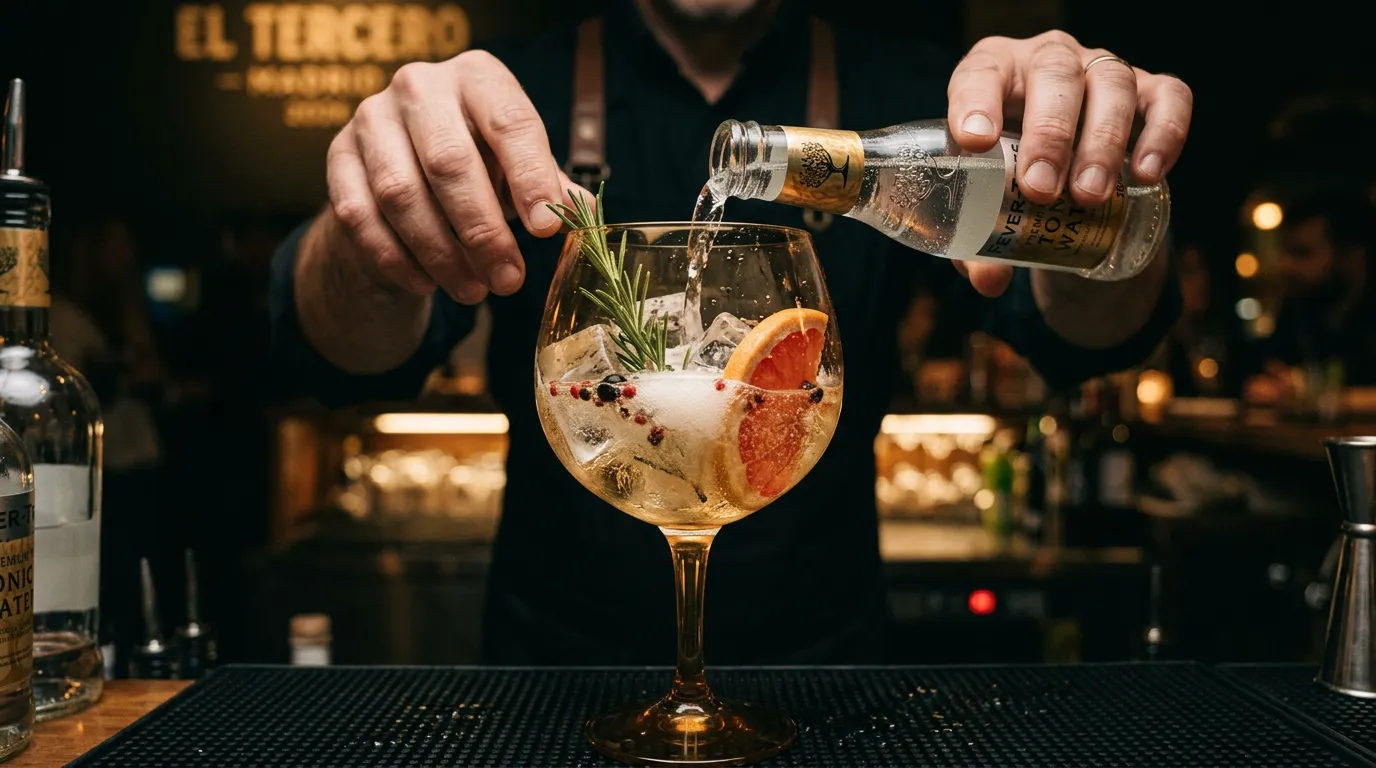
- Add the tonic: Open the cold premium tonic and pour it slowly down the inner wall of the glass, holding it at a 45-degree angle. This gentle pour preserves the bubbles and lets the carbonation blend properly with the gin. The ideal ratio is 1:4 (50 ml of gin to 200 ml of tonic).
- Garnish: Add the lemon slices and the juniper berries. For any extra botanicals, drop them into the glass just before serving to preserve their essential oils and aromas.
The Secrets of a Perfect Gin and Tonic
The difference between a correct gin and tonic and an exceptional one lies in details that seem minor but transform the experience. The first secret is temperature: both the glass and the tonic must be as cold as possible. A tonic at room temperature destroys any chance of a balanced gin and tonic.
The second secret is the ice. Artisan ice, made with filtered water and large shapes, not only lasts longer but adds no off-flavours and does not chip easily. Bags of commercial ice can contain impurities that affect the gin’s aromatic profile.
The third secret is the ratio. Although many recipes call for a larger amount of gin, the 1:4 ratio allows the gin’s botanical complexity to express itself without being overshadowed by the tonic, and vice versa. At STILLROOM we recommend this ratio as a starting point, adjustable to the profile of each gin.
The fourth secret is the moment the botanicals are added. Citrus peels should be added just before serving to release their essential oils. If you leave them in the drink too long, they can bring bitter notes. Botanicals like mint should be lightly pressed between your fingers to activate their aromatic compounds.
The Stillroom Version
At STILLROOM we have developed an interpretation of the gin and tonic that reflects our signature-cocktail philosophy. For our standard version we use a gin with a complex profile, preferably distilled with botanicals that include juniper, coriander seed, angelica root and lemon peel. The selection varies according to season and availability.
The tonic we use is of premium origin, with a slightly bitter profile and medium carbonation that does not overshadow the gin’s flavours. At STILLROOM we apply what we call “invisible technique”: a meticulous preparation where every step is calculated to maximise the sensory experience without unnecessary flourishes.
We add special botanicals according to the intended pairing: pink grapefruit peel for citrus creations, toasted juniper berries for deeper profiles, or a sprig of rosemary for herbaceous notes. Every gin and tonic we serve is prepared in front of the guest, so we can explain the components and adjust the intensity to personal preference.
Food Pairing
Gin and tonic is a versatile companion for Spanish gastronomy. Its herbal character and citrus notes make it the ideal partner for traditional tapas and signature-cuisine creations. Olives dressed with lemon and mint perfectly complement the drink’s citrus profile, while battered calamari lets the richness of the coating contrast with the gin’s freshness.
For a more sophisticated experience, we recommend our signature small plates, which you can see on the small plates menu. Dishes like the bluefin tuna tartare with avocado cream or the Santoña gildas harmonise with the gin and tonic’s botanical complexity, creating a complete gastronomic experience that elevates both elements.
Spiced roasted nuts also work exceptionally well, especially salted pistachios and lightly toasted almonds, whose terpenic flavours align with the gin’s aromatic profiles.
Come and Try Our Gin and Tonic at Calle Moreto 9
At STILLROOM, every gin and tonic is an experience prepared with pinpoint precision and the finest ingredients available. Our team of bartenders has trained in the most demanding techniques of contemporary mixology, blending tradition with innovation. Visit us at Calle Moreto 9, in the heart of the Los Jerónimos neighbourhood, and discover why gin and tonic remains one of our specialities. We look forward to sharing a signature-cocktail experience with you in a warm, sophisticated setting.
Frequently asked questions
How do you make the perfect gin and tonic?
The key lies in temperature and order. We chill the balloon glass and the gin separately, and the tonic must be very cold. We use high-density ice, ideally one large sphere, and pour the gin first (50 ml) and then the tonic (200 ml), slowly and down the side of the glass to preserve the fizz. The botanicals go in just before serving, never before, so they release their essential oils. One gentle stir and straight to the table: balanced, aromatic and with the bubble still alive.
What is the correct gin-to-tonic ratio?
The one we use at STILLROOM is 1:4: 50 ml of gin to 200 ml of tonic. This measure lets the gin’s botanicals express themselves without the tonic masking them. It is not a fixed rule: highly aromatic or aged gins call for a slightly more generous share of tonic, while a classic London Dry can handle a 1:3 if you are after more intensity. What matters is adjusting to the profile of each bottle and the taste of whoever is drinking it.
Which tonic goes best with each gin?
There is no single answer, but there are clear guidelines. London Dry gins, with juniper up front, call for classic tonics, lightly bitter and finely carbonated, that respect their structure. Citrus or floral gins pair better with softer tonics, with restrained bitterness and a citrus backbone. And for aged or spiced gins, a tonic with hints of cardamom or pink peppercorn boosts those notes. We choose the tonic based on the gin in each creation: the pairing between the two defines the final character of the gin and tonic.
Why is gin and tonic served in a balloon glass?
The balloon glass is not an aesthetic whim: its wide, rounded shape serves an aromatic function. With a broad surface area, it concentrates the essential oils of the gin and the botanicals towards the top and carries them straight to the nose. Its generous base also allows for large ice and leaves room for the tonic to circulate without losing carbonation. Finally, it invites you to hold it by the stem, so your hand does not warm the drink. That is why we have adopted it as the standard at our bar.
Which botanicals should you add to a gin and tonic?
It depends on the profile you are after. The classics are juniper berries, which reinforce the gin’s original character, and lemon or grapefruit peel, which adds citrus freshness. For herbaceous notes, a sprig of rosemary or thyme works very well; mint, lightly pressed between your fingers, adds a fresh touch. Cardamom and pink peppercorn give a spiced edge, ideal for complex gins. The golden rule is to add them at the end and not let them steep, so they do not turn bitter. If you want to fine-tune the presentation, we cover the art of the garnish and the twist in its own guide.
How much ice goes in a gin and tonic?
Size and quality matter more than quantity. We fill a balloon glass three-quarters full with high-density ice: ideally one large sphere, or three or four good-sized cubes made with filtered water. The reason is twofold: large ice melts more slowly and stops the drink turning watery, and because it does not pack together tightly, it lets the tonic circulate and keep its fizz. Avoid small or crushed ice, which dilutes within minutes and breaks the balance. You can try the result on our cocktail menu.