Carbonating cocktails: bubbles made with technique
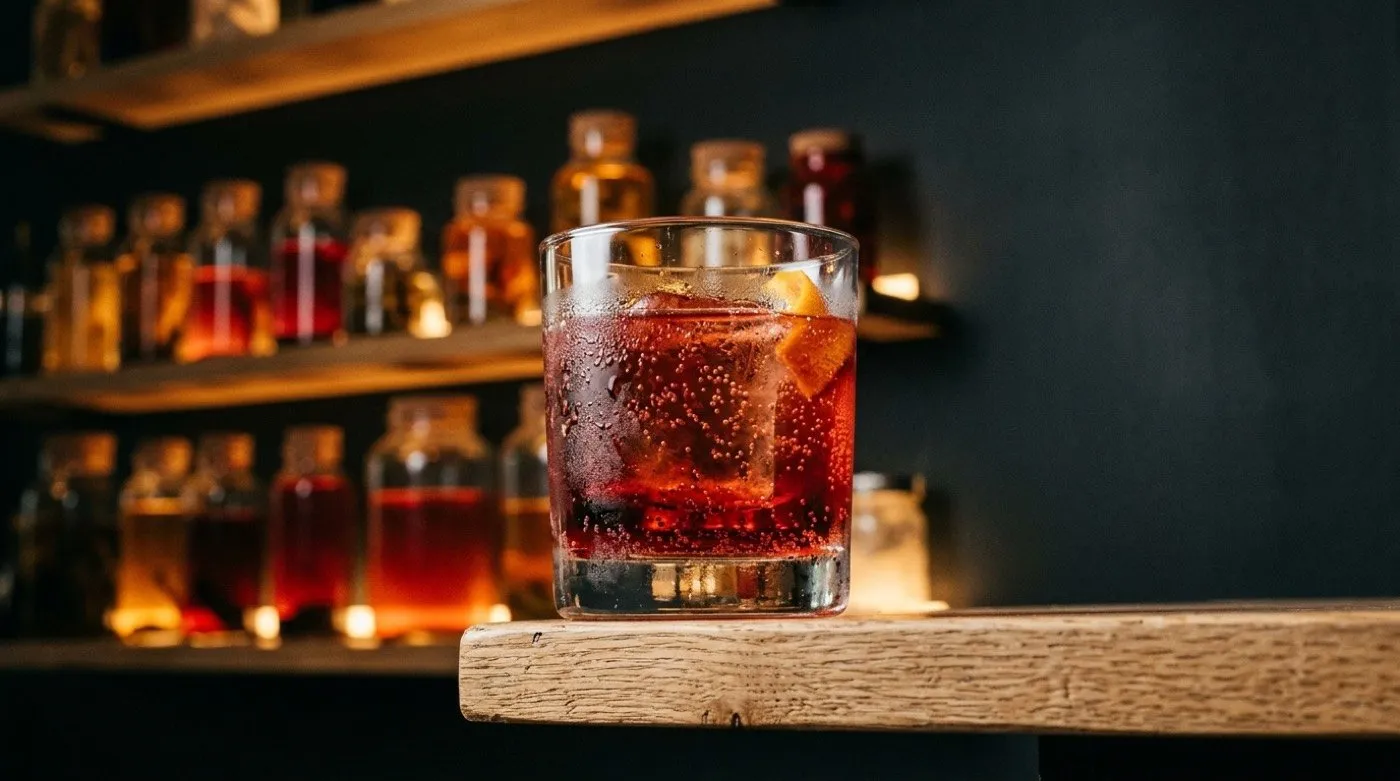
At STILLROOM we understand carbonation as a laboratory technique that dissolves carbon dioxide (CO₂) directly into the cocktail’s liquid, creating tiny bubbles, a silky texture and a spark that is born from within the mixture, not from adding a soft drink at the end. Carbonating a cocktail means gasifying the whole recipe — spirit, cordial, water, acids — cold and under pressure so the CO₂ stays stably trapped, completely transforming the mouthfeel without diluting the flavour one bit.
What carbonation is and how it works in cocktail making
Carbonating is neither shaking nor aerating: it is forcing CO₂ to dissolve in a liquid until it reaches equilibrium under pressure. When we serve that liquid, the drop in pressure releases the gas as fine bubbles that travel across the whole tongue, heightening the acidity, the volatile aromas and that sense of freshness we associate with champagne or a perfectly poured highball. The big difference from simply adding soda or tonic is that, by carbonating the entire cocktail pre-batch, we do not split the recipe: every sip carries the exact proportion, the gas is part of the drink, and the texture gains a creaminess that bottled soda never achieves.
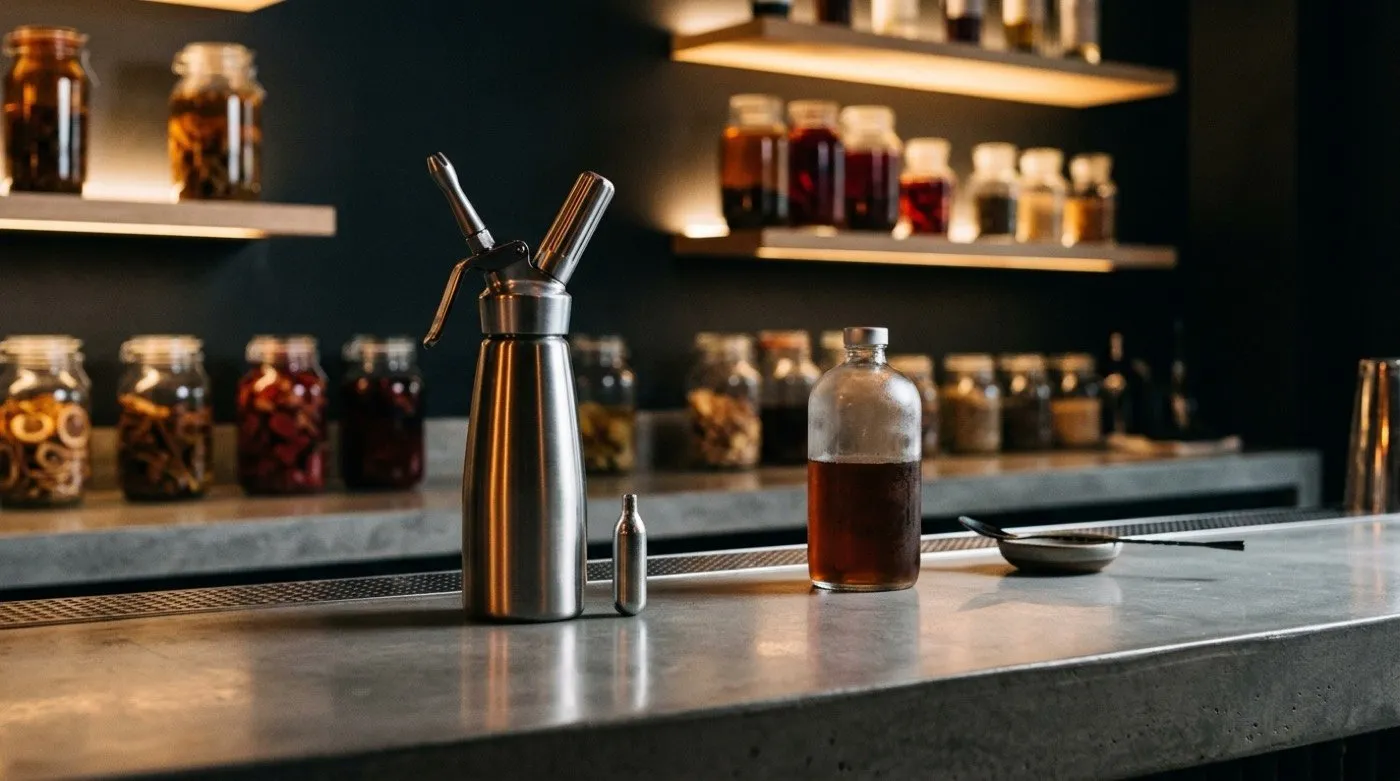
On the physical level, carbonation follows three rules that we work with daily in our laboratory at Moreto 9, Madrid. The first is temperature: a very cold liquid (between 0°C and 4°C) can hold up to twice as much dissolved CO₂ as one at room temperature, because the gas’s solubility increases as the temperature drops. The second is the purity of the medium: any particle in suspension — fruit pulp, sediment from an infusion, unfiltered proteins — acts as a nucleation point and causes the gas to escape all at once, leaving the cocktail flat within seconds. The third is pressure: we need to apply and maintain a constant CO₂ pressure (usually between 2 and 4 bar, depending on the method) for long enough for the gas to integrate, and then keep the liquid cold and under pressure until the moment of service.
Methods for carbonating a cocktail: from the siphon to the bottle carbonator
In contemporary cocktail making we work with four main routes for gasifying a drink. Each has its own advantages, its specific equipment and a different result in the mouth. Choosing between them depends on the volume we want to produce, the type of bubble we are after and whether we need to serve the cocktail immediately or keep it stable throughout a whole service.
| Method | Equipment | Result | Difficulty |
|---|---|---|---|
| ISI siphon | 0.5L or 1L kitchen siphon, pure CO₂ chargers | Fine, immediate bubble; ideal for short runs and serving on the spot | Medium: requires temperature control and prior filtering |
| Pressurised-bottle carbonator | Reinforced PET bottle with injection cap, CO₂ chargers | Intense, adjustable carbonation; allows several hours of cold storage | Medium-high: requires purging the oxygen and adjusting the pressure manually |
| Craft soda | Home carbonating machine (SodaStream-type) with a glass or PET bottle | Medium, fast bubble; limited to non-alcoholic liquids or very light mixes | Low, but it cannot handle full-bodied recipes or dense sugars |
| CO₂ pearls | Food-grade dry ice pearls or pellets (solid CO₂) | Intense, short-lived effervescence; used for showmanship or simultaneous cold extraction | High: risk of over-carbonation and partial freezing if not dosed correctly |
In our day-to-day work at STILLROOM, the ISI siphon and the pressurised-bottle carbonator are our two great workhorses. The siphon gives us a silky bubble, almost like a natural sparkling wine, as long as we work with the liquid below 2°C and filter it until it is impeccable. The bottle carbonator lets us prepare batches of a litre or more of the same cocktail, gasify it at exactly the pressure we want and keep it stable in the cold room throughout the whole shift, ready to serve in a chilled glass without losing a single bubble.
The keys to good carbonation
If there is one thing we learned early on in our laboratory, it is that carbonating well is not just about plugging in a CO₂ charger and shaking. It is a chain of small technical details that make the difference between a memorable sparkling cocktail and one that goes flat before it reaches the table.
| Key to good carbonation | Why it matters |
|---|---|
| Very cold temperature (0°C-4°C) | CO₂ is almost twice as soluble in the cold; if the liquid is lukewarm, the gas escapes as soon as the bottle is opened |
| Clean liquid, free of particles | Solid particles (pulp, spices, sediment) act as escape points for the gas; fine filtering or prior clarification is essential |
| Sufficient, constant pressure | We need between 2 and 4 bar of CO₂ maintained for at least 1-2 hours in the cold for the gas to truly integrate; a quick shake is not enough |
| Cold rest under pressure | After carbonating, the liquid must rest in the fridge inside the closed bottle or siphon; if we open it too soon, the balance breaks and the gas is lost |
These keys explain why at STILLROOM we almost never carbonate direct juices or cloudy mixes without first putting them through a clarification process — centrifuging, filtering or even a lacto-fermentation that rounds out and stabilises the liquid. A fine, persistent bubble is a reward that is only earned when the liquid is impeccably clean.
How we use it at STILLROOM: carbonation with a laboratory eye
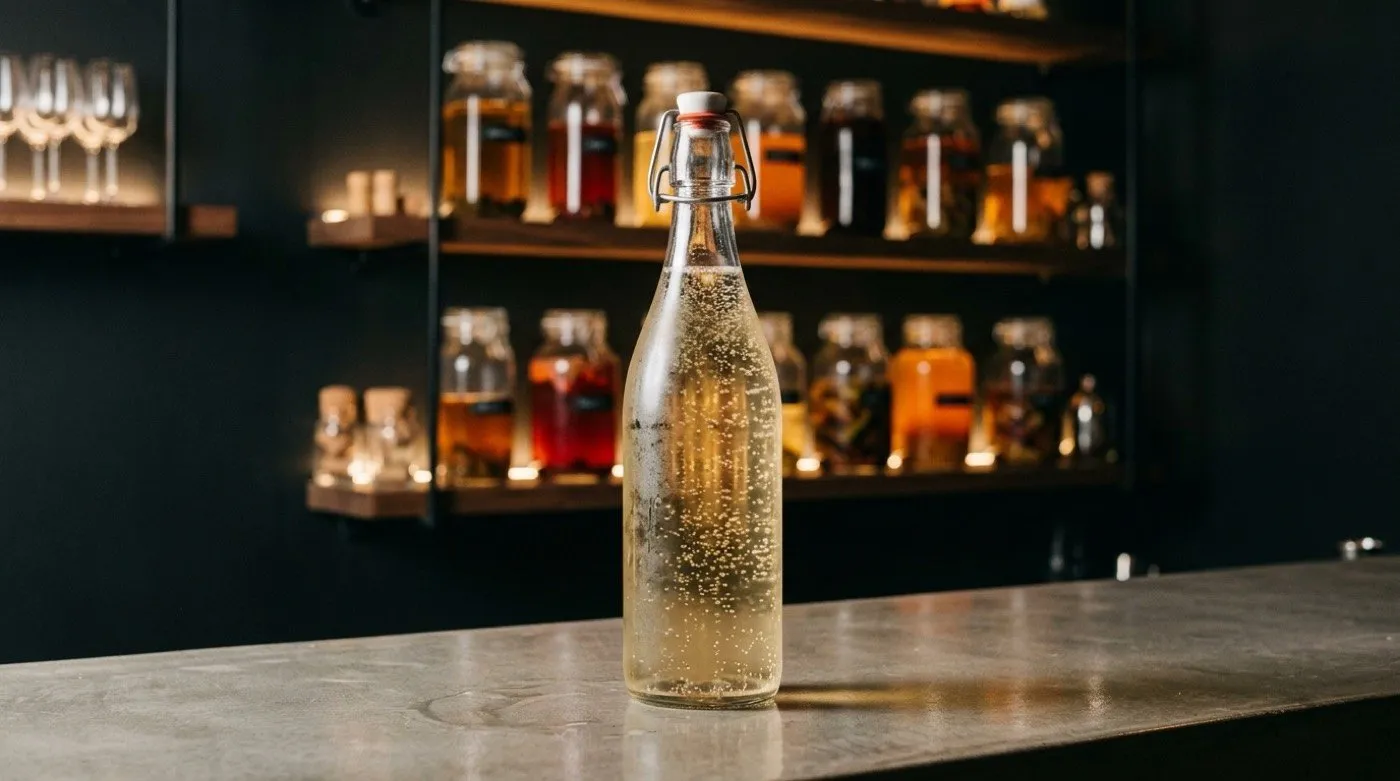
At our bar on Moreto 9, in the Los Jerónimos neighbourhood, carbonation is a precision resource that connects directly with other cutting-edge techniques we practise every day. We do not use it just to “add fizz”, but to rewrite the texture of classic and contemporary cocktails, taking them into territory where the bubble is part of the flavour. A carbonated Negroni, for example, is not a Negroni with soda: it is the same Negroni — gin, red vermouth, Campari — worked cold, filtered until translucent and gasified at 2.5 bar so that, served in a low glass, a fine effervescence bursts out that stretches the bitterness, wakes up the vermouth’s herbs and turns every sip into something lighter and more vibrant. If you would like the base recipe for this classic, here is our Negroni recipe.
We apply that same logic when we design a citrus highball with its own gas: instead of stretching a cordial with soda, we carbonate the whole mixture — yuzu and lemon cordial, a touch of citric acid and just enough water — so the bubble is born from the acidic heart and the acidity hits cleaner. We also play with carbonation to create house sparkling drinks from gentle fermentations or botanical infusions, which we then gasify and serve as a dry aperitif, with a bubble reminiscent of a pét-nat but with the DNA of our own pantry.
Carbonation dialogues naturally with other techniques we have mastered. Where siphon foam whips the liquid with nitrous oxide (N₂O) to create an airy, creamy layer, carbonation traps CO₂ to generate effervescence inside the liquid. They are close cousins, but not the same. And when we want an extreme thermal effect or a lightning-fast extraction, we turn to liquid nitrogen, which chills to an extreme degree and adds a fleeting effervescence as it evaporates, without adding any CO₂. This whole range is part of our advanced cocktail techniques, an ecosystem where every tool has its moment and its reason.
Three ideas for starting to carbonate at home
If you fancy trying carbonation without setting up a laboratory, here are three entry points that work with a half-litre ISI siphon and a few CO₂ chargers:
1. Pre-batch carbonated Negroni
Prepare a litre of classic Negroni (equal parts gin, red vermouth and Campari), chill it to 0°C, pass it through a coffee filter or a fine-mesh strainer to remove any sediment, and pour it into a clean, cold siphon. Charge one CO₂ charger, shake gently for 30 seconds and leave to rest in the fridge for at least an hour. Serve in a chilled low glass, without ice, and watch the bitterness turn effervescent.
2. Citrus highball with its own fizz
Mix 120ml of lemon-and-yuzu cordial (or lime-and-ginger), 80ml of filtered water and a pinch of salt. Chill, filter and carbonate in the siphon with two chargers for a more assertive bubble. Serve in a tall glass with a thin lemon slice and discover a highball that needs no soda, because the gas is already built into its acidic structure.
3. Low-pressure house sparkling drink
Choose a light infusion — chamomile, elderflower, citrus peel — sweeten it just slightly with honey or sugar syrup, chill it and carbonate at 1.5 bar (a single charger, shaken very briefly). The result is a dry aperitif with a fine bubble, which you can serve in a cava glass with a drop of lemon essential oil on the surface.
Frequently asked questions
What is carbonation in cocktail making?
It is the technique of dissolving carbon dioxide (CO₂) directly into an already-mixed cocktail, applying cold and pressure so the gas stays trapped in the liquid. The result is a drink with its own bubble, a silky texture and an amplified perception of freshness and acidity, without adding soft drinks or diluting the recipe.
How do you carbonate a cocktail at home?
The most accessible method is to use a half-litre kitchen siphon (ISI-type) and pure CO₂ chargers. You need to chill the cocktail below 4°C, make sure it is perfectly filtered with no particles, charge it with gas, shake it gently and leave it to rest in the fridge for at least an hour before serving.
What equipment do I need to carbonate cocktails?
Depending on the volume and ambition: an ISI siphon (0.5L or 1L) with CO₂ chargers, a pressurised-bottle carbonator with an injection cap, or a home carbonating machine such as a SodaStream. For professional or high-volume use, CO₂ tanks with a pressure regulator and stainless-steel bottles are also used.
Why does my cocktail lose its fizz so fast?
The most common causes are: a working temperature that is too high (the liquid was not cold enough), particles or pulp acting as escape points for the gas, insufficient pressure, or too short a resting time. If the cocktail is not kept cold and under pressure until the moment of service, the CO₂ escapes within seconds.
Is carbonating the same as making a foam?
No. Carbonating means dissolving CO₂ inside the liquid to create bubbles and effervescence. Making a foam with a siphon involves charging nitrous oxide (N₂O) over a stabilised base so the gas expands as it is released and forms an airy, creamy layer on top of the drink. They are sister techniques, but with completely different results and mouthfeel. If you would like to see how we apply these ideas to real glasses, we are waiting for you at STILLROOM, Calle Moreto 9, Madrid. Take a look at our cocktail menu and, if you want to secure a spot at the bar, book your table. And if you are still hungry for more precise, no-nonsense definitions, drop by our cocktail and mixology glossary, where every term is explained with the same laboratory rigour we apply to every service.