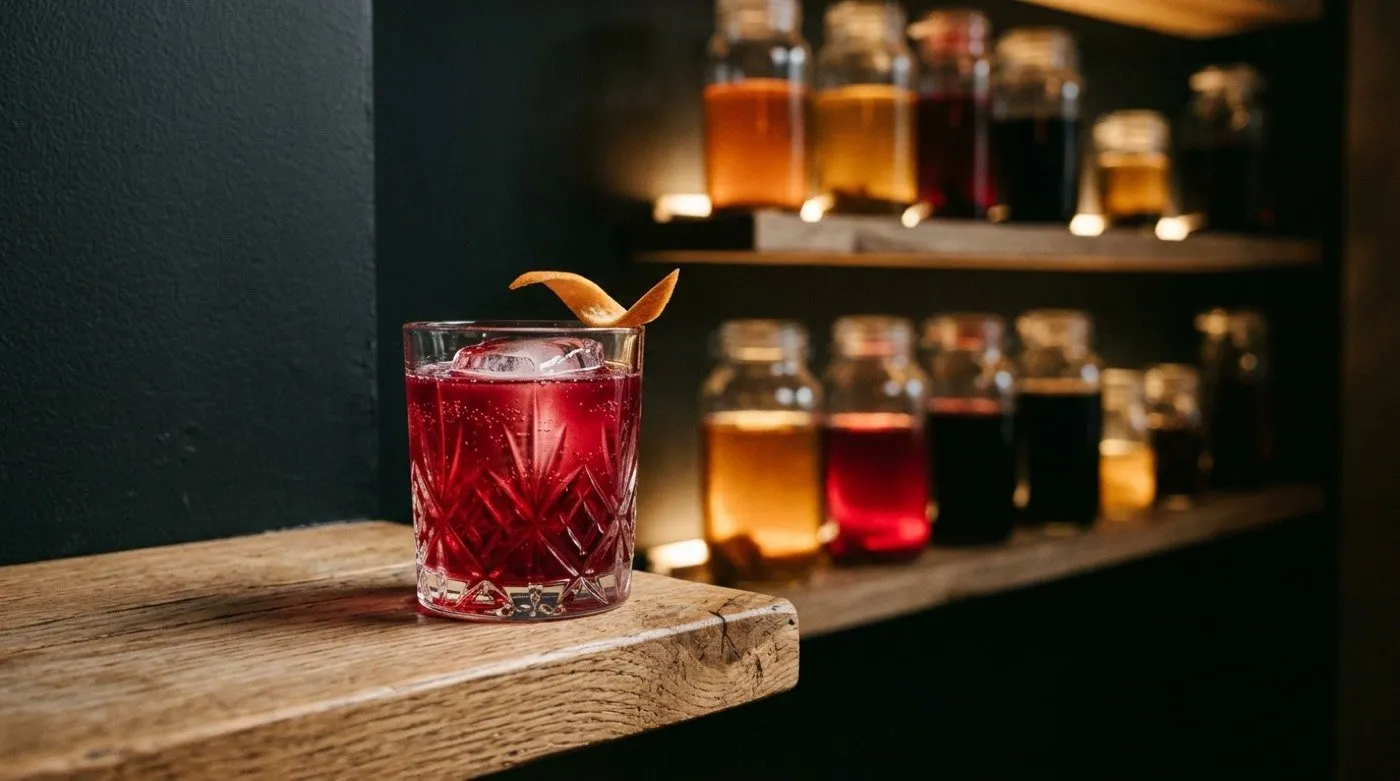
When we talk about a shrub in cocktail making, we mean a concentrated syrup that we make from fruit, sugar and vinegar. At STILLROOM we work with it as an acidulant with body that brings a complex acidity and a depth of flavour that citrus alone cannot achieve. It is, moreover, a preservation technique that extends the life of seasonal fruit and lets us bring highly gastronomic sweet-and-sour notes into our signature cocktails.
A little history: from preservation method to the bar
The shrub is not a modern invention. Its etymological root takes us back to classical Arabic sharbah (شربة), meaning “drink”, which then passed into Persian and Hindi before landing in colonial English. During the seventeenth and eighteenth centuries, before refrigeration existed, the combination of vinegar and sugar worked as a formidable natural preservative for seasonal fruit. British sailors and American colonists prepared shrubs to prevent scurvy and, along the way, to enjoy a tart refreshment diluted in water.
The shrub disappeared from bars with the arrival of industrial soft drinks and domestic refrigeration, but contemporary cocktail making has brought it firmly back. Today, in any bar that treats acidity as a creative ingredient rather than merely a corrector of sweetness, the shrub is an indispensable tool. It fits perfectly with the philosophy of using every part of an ingredient, fermentation and the pursuit of complex organoleptic profiles that defines today’s signature cocktail making.
How to make a shrub: cold versus hot
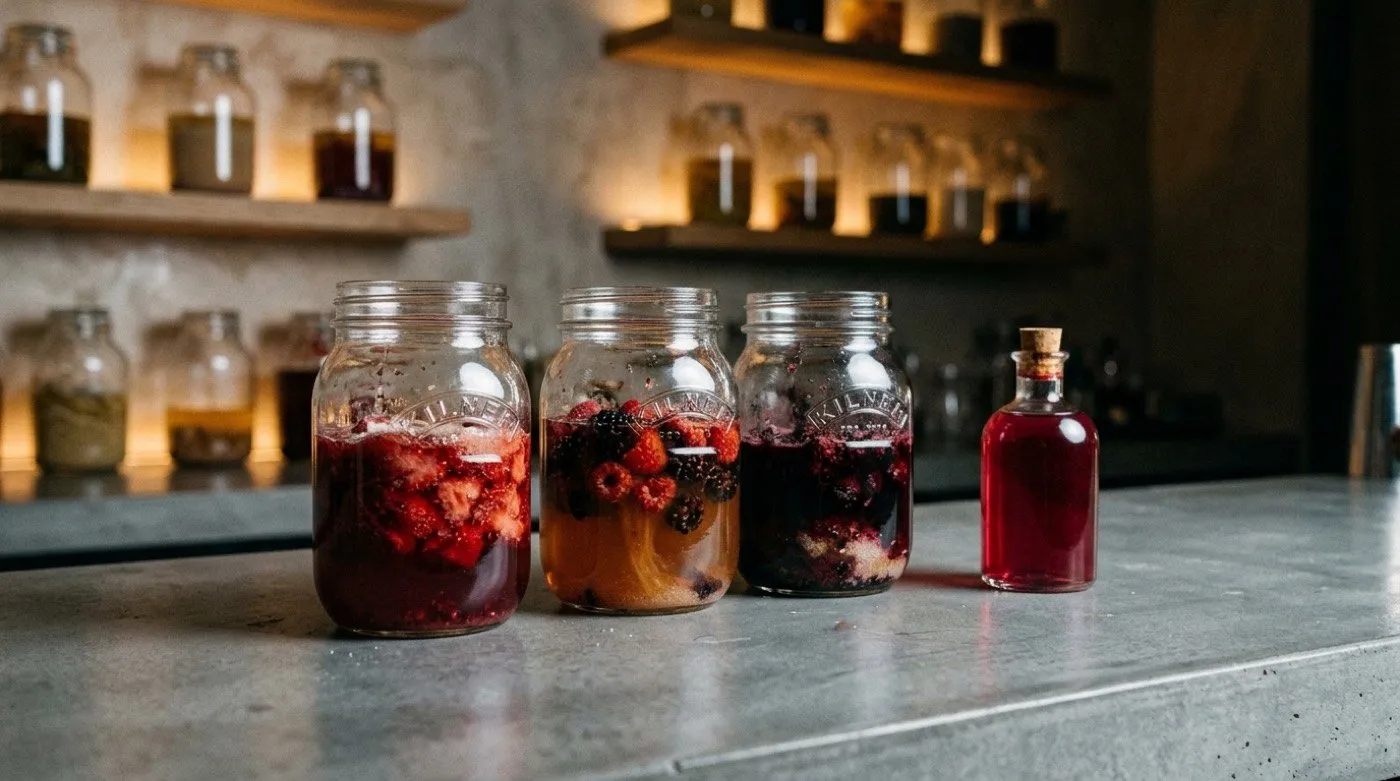
There are two ways to make a shrub, and each one leads to a different sensory profile. The ratio we use as a starting point is 1:1:1 (one part fruit, one part sugar and one part vinegar), but we adjust it depending on the fruit, its ripeness and the result we are after. Very sweet strawberries call for less sugar; very acidic citrus or berries, perhaps a touch more. The key lies in tasting and balancing.
Here is a comparison of the two main methods:
| Method | Process | Time | Result |
|---|---|---|---|
| Cold (maceration) | Mix chopped fruit with sugar, macerate in the fridge for 1-2 days until it releases its juices and forms a dense syrup. Strain, add the vinegar, bottle and rest for 1-2 weeks before use. | 10-15 days | Fresher, livelier aromas true to the raw fruit. Brighter, more defined nuances. Our preferred method at STILLROOM for delicate fruit such as strawberries, raspberries or peach. |
| Hot (gentle cooking) | Heat the fruit with the sugar and a minimal amount of water over low heat until you obtain a syrup. Remove from the heat, add the vinegar, leave to cool, strain and bottle. | 2-3 hours | More cooked, candied aromas, with notes of compote or jam. The vinegar’s acidity integrates more smoothly. Ideal for firm-fleshed fruit such as apple, pear or rhubarb. |
At our bar we almost always prefer the cold method. We respect the aromatic integrity of the fruit and avoid letting heat volatilise the more delicate compounds. That said, the hot method is a wonderful resource when we need a shrub with more of an autumnal character or when we are working with spices we want to infuse.
Vinegars and fruit: how to choose
Vinegar is not merely a source of acidity; it is an ingredient with a personality of its own that converses with the fruit and the spirit. Choosing the right vinegar makes the difference between a decent shrub and a memorable one.
| Vinegar type | Acidity profile | Recommended fruits and pairings | Tasting notes |
|---|---|---|---|
| Apple cider vinegar | Medium, rounded, fruity acidity | Strawberries, raspberries, blueberries, peach, mango | The most versatile. Adds a slightly sweet background and an acidity that does not overwhelm. Perfect for beginners. |
| White wine vinegar | High, clean, sharp acidity | Citrus (grapefruit, lemon, orange), tropical fruit, fresh herbs | Ideal for light, refreshing shrubs. Respects the fruit’s volatile aromas without masking them. |
| Sherry vinegar | Complex acidity, notes of wood and nuts | Figs, grapes, cherries, plums, dark berries | Gastronomic and elegant. Adds depth and a saline note that works beautifully in cocktails with aged spirits. |
| Rice vinegar | Mild acidity, subtle sweetness | Asian pear, lychee, watermelon, cucumber, ginger | Very delicate. Perfect for Japanese-profile shrubs or ultra-light highballs. |
| Balsamic vinegar | Dense acidity, caramelised sweetness | Strawberries, cherries, tomato, beetroot | Use sparingly. Adds an umami punch and a dark colour. Best aged, in small proportions. |
The sweet-sour balance is the soul of the shrub. At STILLROOM we always taste the fruit before deciding on the final ratio. Very ripe fruit needs less sugar; early-season or very acidic fruit welcomes an extra touch. We add the vinegar gradually, tasting as we go until we find the point where the acidity lifts the fruit without hiding it.
How we use it at STILLROOM
The shrub fits naturally into the ecosystem of techniques we work with daily at our bar on Calle Moreto 9, in the Los Jerónimos neighbourhood. If there is one thing that defines our style, it is the pursuit of complex acidity, and the shrub is one more tool within that obsession.
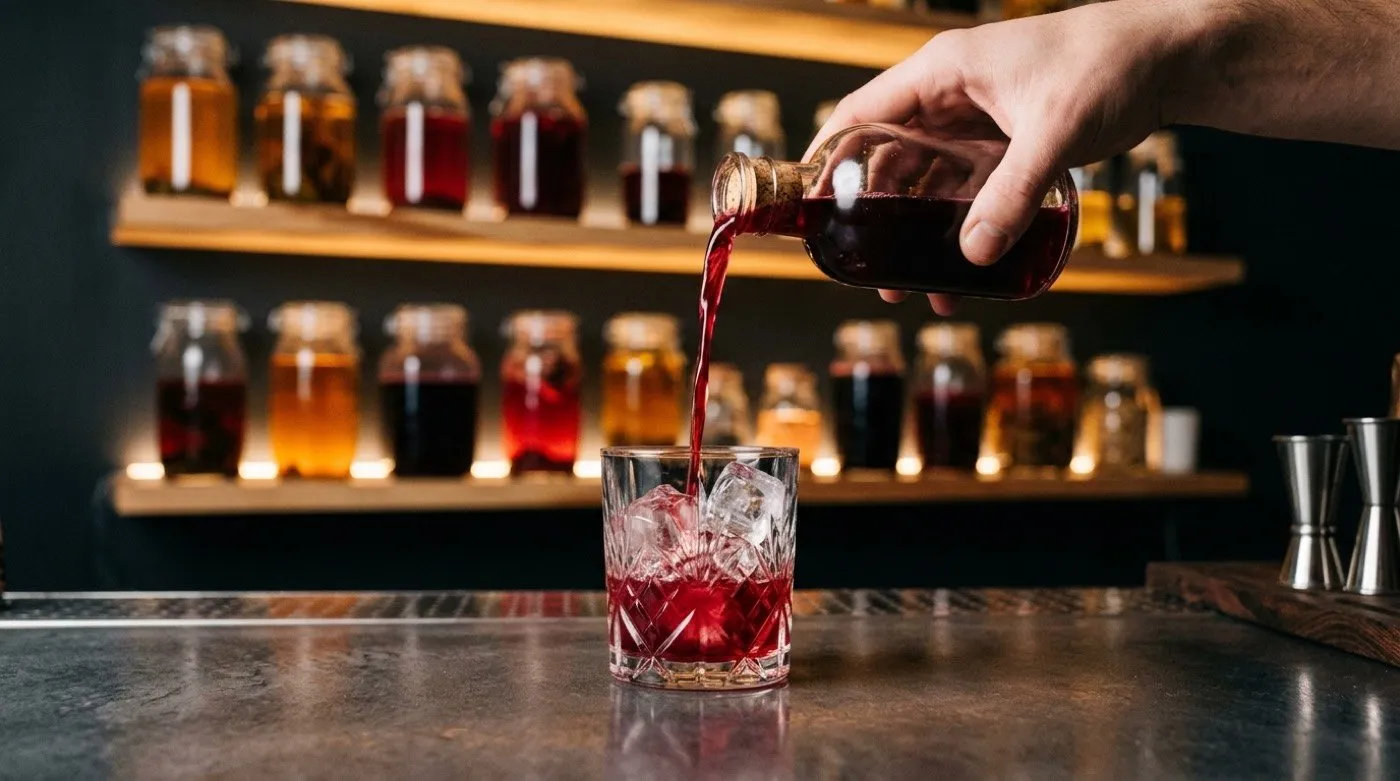
While lacto-fermentation gives us a lactic acidity, alive and with probiotic nuances, the shrub offers us an acetic acidity, more direct but equally versatile. Both worlds coexist at our bar without treading on each other. In fact, in cocktails such as our Garibaldi Fermentado, the acidity comes from a controlled fermentation process, but a blood orange and sherry vinegar shrub could work as a spectacular counterpoint in an alternative version.
The shrub also converses with other advanced cocktail techniques that we apply daily. We use it in combination with clarification to obtain transparent cocktails with an ultra-clean acidity, or we infuse it under vacuum with sous-vide to speed up aroma extraction without losing freshness. The precision of the laboratory lets us control every variable: temperature, time, ratio and pH.
On our seasonal menu, the shrub appears when the fruit reaches its optimum peak. We do not force its presence; we let the market and the orchard dictate when it is time to make a Jerte Valley strawberry shrub, a Jerte cherry one or a late-summer fig one. It is our way of capturing the moment and serving it in a glass.
Three ideas to get you started
If you want to experiment with shrubs at home, these three combinations are a foolproof starting point. They require no special equipment and work with spirits you probably already have at home.
Strawberry and balsamic vinegar shrub for a spritz
A classic combination that never fails. Cold-macerate 200 g of chopped ripe strawberries with 200 g of white sugar for 24 hours. Strain the resulting syrup, add 180 ml of apple cider vinegar and 20 ml of aged balsamic vinegar, mix and leave to rest for a week in the fridge. For the spritz, pour 45 ml of shrub over ice, add 60 ml of prosecco or brut cava and top up with soda. The result is a bubbly, indulgent drink with a dark acidity reminiscent of grandma’s macerated strawberries.
Mixed berry shrub for a sour
Blueberries, raspberries and redcurrants (150 g in total) macerated with 150 g of sugar and, after 48 hours, mixed with 150 ml of white wine vinegar. Rest for ten days and filter. For the cocktail, dry-shake 50 ml of bourbon or rye whiskey, 25 ml of shrub, 20 ml of freshly squeezed lemon juice and an egg white (or aquafaba), then shake again with ice. Strain into a rocks glass over a large ice cube. The shrub’s acidity stretches the whiskey’s sweetness, and the berries add a soft tannin that rounds out the drink.
Citrus shrub for a refreshing highball
Peel of two grapefruits, one orange and one lemon (with absolutely no pith) hot-macerated with 150 g of sugar and 100 ml of water. Once the sugar has dissolved, remove from the heat, add 150 ml of rice vinegar and leave to infuse for an hour. Strain, chill and bottle. For the highball, fill a Collins glass with ice, pour in 40 ml of London Dry gin, 25 ml of citrus shrub and top up with neutral tonic water. Stir gently and garnish with a slice of grapefruit. The result is citrusy, light and dangerously drinkable.
Frequently asked questions
What is a shrub in cocktail making?
A shrub is a concentrated syrup made from fruit, sugar and vinegar. In cocktail making it is used as an alternative acidulant to citrus, contributing a complex acidity, body and gastronomic nuance. It is not a ferment, but a maceration or gentle cooking process that combines the sweetness of sugar with the acetic acidity of vinegar to create a long-lasting sweet-and-sour syrup.
What vinegar is used to make a shrub?
Apple cider vinegar is the most versatile and the best choice to start with, thanks to its rounded, fruity acidity. White wine vinegar works very well for light, citrus-driven shrubs; sherry vinegar adds complexity and woody notes; rice vinegar is ideal for delicate profiles; and balsamic vinegar, used sparingly, adds depth and umami. The choice depends on the fruit and the cocktail profile you are after.
How long does a homemade shrub keep?
A well-made homemade shrub, with the right ratio of sugar to vinegar and stored in an airtight glass jar in the fridge, can keep for 6 to 12 months without losing quality. Sugar and vinegar act as natural preservatives. Over time the flavours integrate and round out, so a shrub that has rested for a few weeks is usually better balanced than one made fresh.
Is a shrub the same as a ferment or a kombucha?
No. A shrub is a sweet-and-sour syrup that combines fruit, sugar and vinegar, and does not involve fermentation by yeasts or bacteria (the vinegar is already fermented beforehand). A kombucha, a water kefir or a lacto-ferment like the ones we work with at STILLROOM do involve an active fermentation process with live micro-organisms that transform sugars into acids, gas or alcohol. They are different techniques, with different results and acidity profiles.
What cocktails work well with shrub?
Shrubs work particularly well in cocktails with body, such as sours, fizzes, spritzes and highballs. They bring a gentler acidity than lemon or lime juice and add an extra layer of fruit flavour. They pair beautifully with spirits such as gin, whiskey, aged rum, reposado tequila and brandy. They are also an excellent resource for alcohol-free cocktails, simply lengthened with soda, tonic or sparkling water. If you would like to see how we apply this and other techniques in our signature glasses, we invite you to explore our cocktail menu and book a table at STILLROOM. And if you would like to keep exploring the language of contemporary cocktail making, do not miss our cocktail glossary, where we break down every technique and ingredient with the same approach we use behind the bar.