Dry shake: how to get silky foam in your cocktails
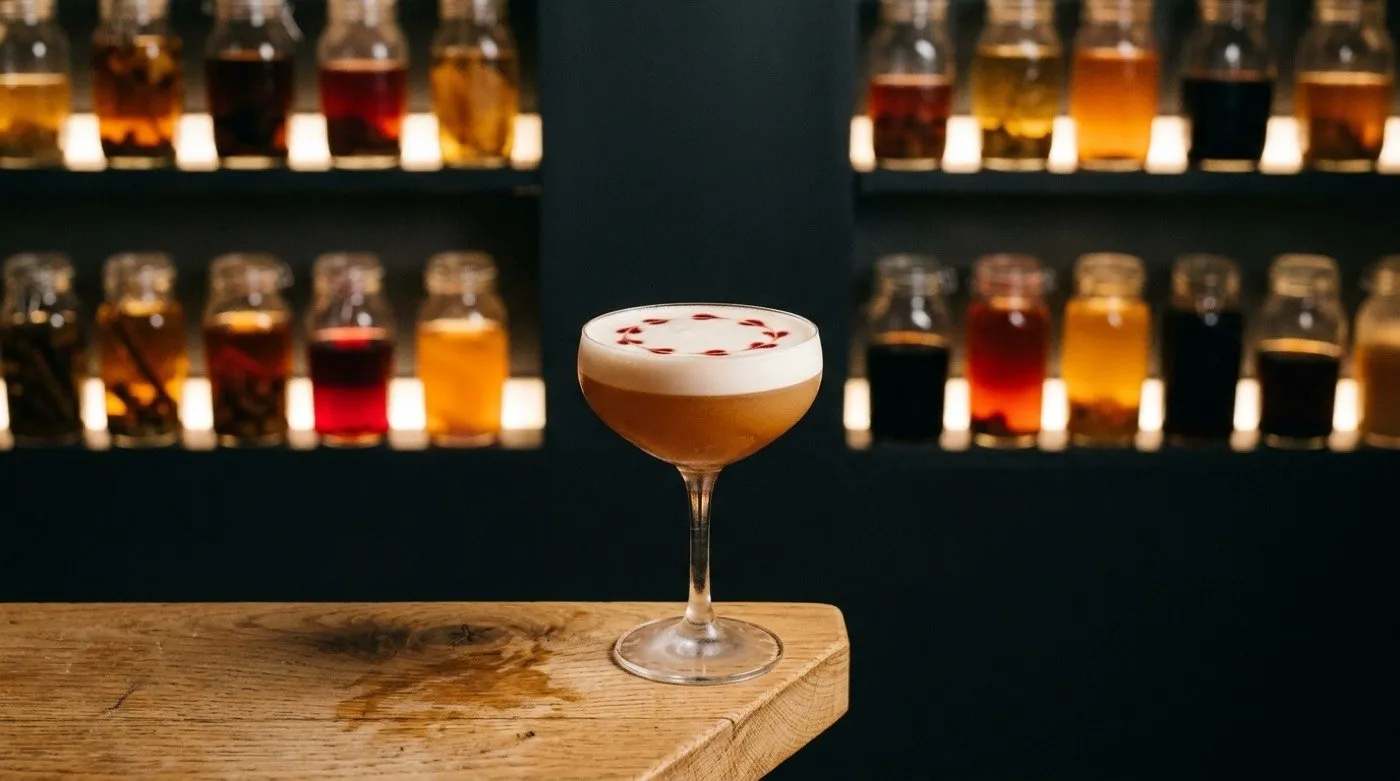
The dry shake — or shaking without ice — is the technique of shaking a cocktail’s ingredients without ice during the first shake, before adding the ice and repeating the process. At STILLROOM we use it every day because it is the only way to achieve that dense, silky, long-lasting layer of foam that crowns a great sour. If you have ever wondered how we get that almost liquid-meringue texture in our glasses, the answer lies in this double shake, which we explain in full detail below.
What the dry shake is and how it works
When we make a cocktail with egg white, aquafaba or another foaming agent, the goal is not just to mix, but to emulsify protein and air to generate a stable foam. The problem is that ice works against that emulsion: the cold slows down protein denaturation, and early dilution makes it harder for the air bubbles to stay trapped in a firm structure. That is why we need a first shake without ice, the dry shake, which allows the proteins to unfold, trap air and form an elastic network without interference.
The full process is simple in theory, but it has its knack. First, we pour all the ingredients into the shaker — including the egg white or aquafaba — and close it without adding ice. We shake hard for about 10 to 15 seconds. You will notice that the shaker offers less resistance than usual and that, once opened, the liquid already looks more integrated and slightly foamy. That is the moment to add the ice and carry out the second shake, this time energetic and with just the right dilution we need to balance the drink. Finally, a double strain makes sure no bits of ice or unwanted residue fall into the glass.
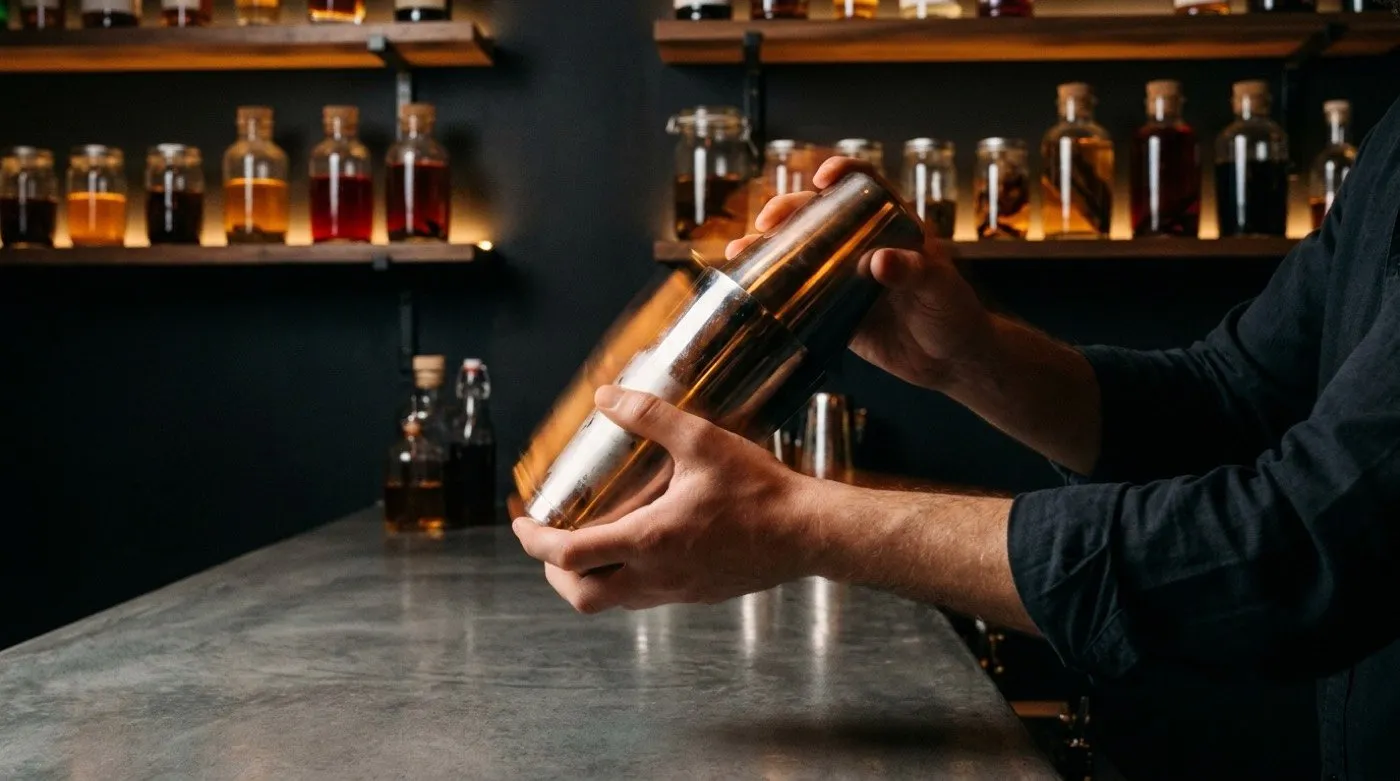
There is a variant that has gained a following in recent years: the reverse dry shake. Here the order is reversed: we shake first with ice, strain it out, and then shake without ice, with only the already-chilled liquid. The main advantage is that the shaker seals better and there is less risk of splashes, since the internal pressure is lower when you are not starting from room temperature. The resulting foam tends to be a little lighter and airier, while the classic dry shake tends to produce a denser, creamier texture. At our bar we use both, depending on the profile of the cocktail and the foaming agent we are working with.
Foaming agents: egg white, aquafaba and alternatives
Not all foams are created equal. The choice of foaming agent shapes the final texture, the flavour and, of course, whether the cocktail is suitable for vegans. This table sums up the essentials:
| Foaming agent | Source | Notes | Vegan? |
|---|---|---|---|
| Egg white | Fresh egg (whites only) | Dense, creamy and very stable foam. Gives a silky texture without altering the flavour. It is the classic standard in cocktail making. | No |
| Aquafaba | Chickpea cooking water (fresh or tinned) | A vegan alternative with excellent performance. The foam is slightly lighter and can bring a very subtle vegetal note if not balanced well. We recommend reducing it a little to concentrate the protein. | Yes |
| Commercial foamer | Products based on saponins or isolated proteins (such as Fee Foam or Ms. Better’s Miraculous Foamer) | Practical and consistent, though they lack the textural complexity of the two above. Useful for high-volume production, but at STILLROOM we prefer real pantry ingredients. | Yes (most) |
At STILLROOM we work mainly with fresh egg white and with aquafaba that we prepare ourselves from cooked chickpeas. We like to control the concentration and avoid the preservatives that tinned versions usually contain. The difference on the palate is noticeable: a well-made foam with either of these two ingredients should feel like a veil, never like a heavy froth.
Dry shake vs reverse dry shake: a comparison
If you are taking your first steps in home laboratory cocktail making, you might be wondering which one to start with. Here is a direct comparison so you can choose according to your priorities:
| Criterion | Dry shake | Reverse dry shake |
|---|---|---|
| Order of steps | 1. Shake without ice 2. Shake with ice 3. Double strain |
1. Shake with ice 2. Strain and remove the ice 3. Shake without ice 4. Double strain |
| Resulting foam | Dense, creamy, with very fine, long-lasting bubbles | More airy and voluminous, but a little less stable as the minutes pass |
| Ease | Requires strength because the ingredients are at room temperature and the shaker tends to pop open under pressure | Mechanically simpler; the shaker is already cold and seals better |
| Risk of splashing | High if not held firmly; internal pressure can pop the lid off | Low; the cold temperature reduces gas expansion |
Our advice: if you are after the silkiest, most long-lasting foam for a whisky sour or a pisco sour that leaves an impeccable white moustache, stick with the traditional dry shake. If you are just starting out, or making several cocktails at once and would rather avoid surprises with the shaker, the reverse dry shake is a fantastic ally.
How we use it at STILLROOM
In our laboratory on Calle Moreto, the dry shake is not an occasional trick: it is part of the technical muscle behind our menu. Every sour that leaves our bar goes through a meticulous double shake, but we also combine this technique with others that boost the final result. For example, the classic shake, which we apply in the second stage, determines the exact dilution and serving temperature — two variables we never leave to chance. Then the double strain takes care of holding back any ice particles or citrus residue that could break the visual and flavour harmony of the drink.
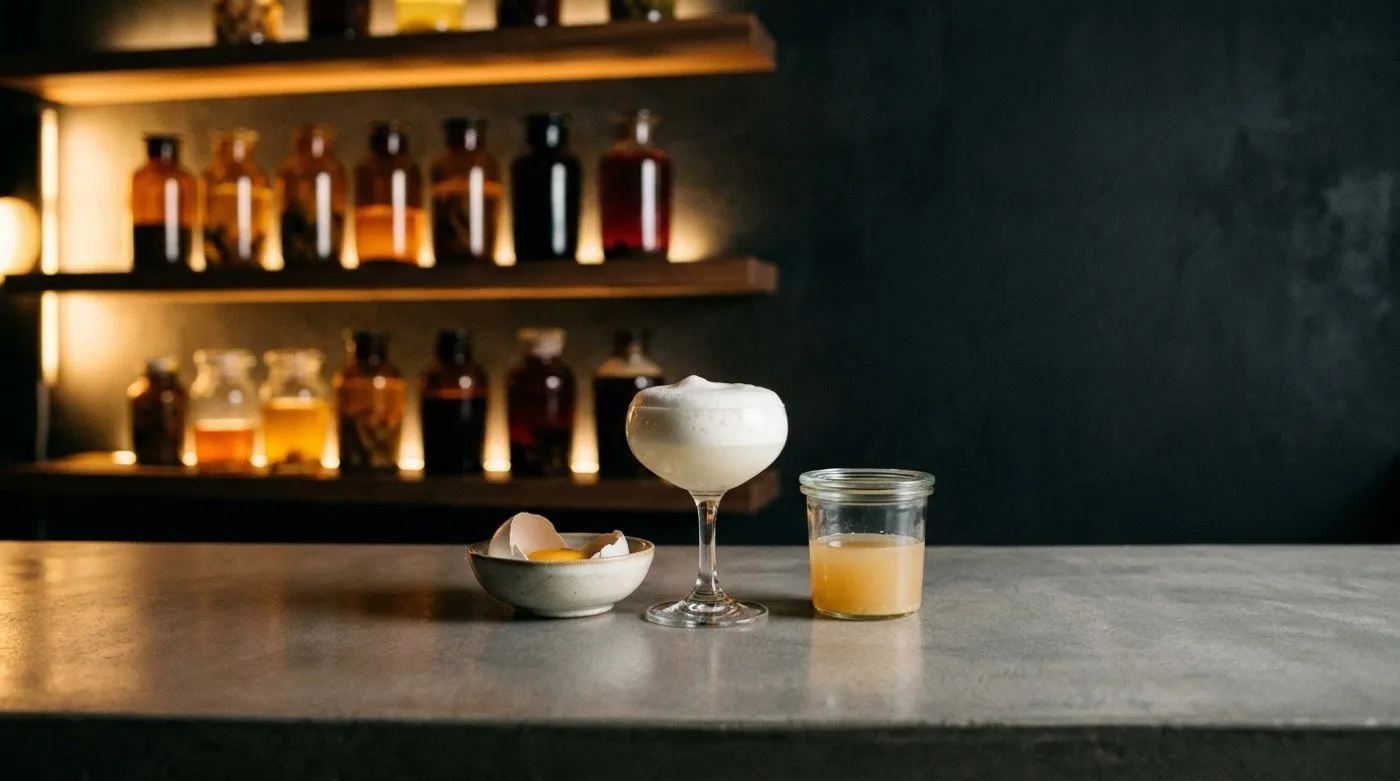
But we go further still. As a signature cocktail bar with a laboratory foundation, we also apply the dry shake to our own creations, which include ferments, cordials and clarifications. Picture a sour where the acidity comes not from freshly squeezed lemon, but from a fermented citrus cordial we have developed over weeks. The foam that crowns that glass is not decoration: it is the signature of a well-executed technique. If you want to dig deeper into this world, we invite you to explore our advanced cocktail techniques, where we explain how we bring together fermentation, fat washing and other cutting-edge tools.
Three ideas to get started
Textbook whisky sour
The classic that never fails, and the best training ground for the dry shake. Mix 60 ml bourbon, 30 ml fresh lemon juice, 15 ml simple syrup and one egg white. Dry shake for 12 seconds, add ice, shake for another 10 seconds and double strain into a chilled glass. A few drops of Angostura bitters on the foam and you have an impeccable drink.
Raspberry Clover Club
A pre-Prohibition cocktail that deserves more attention. Combine 45 ml London Dry gin, 15 ml dry vermouth, 20 ml lemon juice, 15 ml raspberry syrup (homemade if possible) and one egg white. The dry shake here is essential so the pink colour comes out even and the foam traps the fruity aroma. Serve in a coupe glass with no ice and garnish with a fresh raspberry.
Vegan sour with aquafaba
For anyone who prefers to skip the egg without giving up a silky foam. Use 60 ml pisco, 25 ml lime juice, 20 ml agave syrup and 20 ml reduced aquafaba (we simmer it for a few minutes to concentrate it). The dry shake with aquafaba needs a few extra seconds: shake without ice for at least 15 seconds, then with ice, then double strain. The result is a white, firm foam with a beautiful sheen.
Come and taste the difference
Reading about the dry shake is one thing, but feeling that silky foam dissolve on your palate is quite another. At STILLROOM every cocktail is a small demonstration that technique, when executed with care and knowledge, turns a drink into an experience. We invite you to take a look at our cocktail menu, where you will find everything from impeccable sours to signature creations that take the dry shake to another level. If you want to experience it first-hand, you can book a table and come to our space on Calle Moreto 9, next to Retiro Park. And if you are hungry for more distilled knowledge, do not miss our cocktail glossary, where we break down every technique and term with the same passion we bring to every shake.
Frequently asked questions
What is the dry shake?
The dry shake is a cocktail-making technique that involves shaking a cocktail’s ingredients without ice during the first stage of shaking. It is used mainly in cocktails made with egg white or aquafaba to generate a dense, stable foam before chilling and diluting the mixture with a second shake with ice.
What is the point of shaking without ice?
Shaking without ice allows the proteins in egg white or aquafaba to unfold and emulsify with air without cold or dilution getting in the way. This produces a much more abundant, creamy and long-lasting foam than the one you would get with a conventional single-stage shake.
Which is better, egg white or aquafaba?
There is no single answer: it depends on the profile you are after and whether you need a vegan option. Egg white produces a slightly denser, silkier foam, and is the classic choice. Aquafaba gives an excellent result, with a very similar foam and no ingredients of animal origin, although it can need a small adjustment to the shaking time and proportion to avoid vegetal notes.
What is the difference between a dry shake and a reverse dry shake?
The main difference is the order. In the traditional dry shake you shake first without ice and then with ice. In the reverse dry shake the process is reversed: you shake first with ice, strain it out, and then shake without ice. The reverse dry shake tends to produce a more airy foam and minimises the risk of splashes, while the classic dry shake tends to produce a creamier, more compact texture.
Why is my foam not coming out firm?
The most common causes are a dry shake that is too short or not energetic enough, an insufficient proportion of foaming agent, or too much dilution from a second, overly long shake with ice. The freshness of the egg also matters (very old egg whites lose foaming power), and in the case of aquafaba, the protein concentration of the liquid. Make sure you shake hard, use fresh ingredients and respect the timings.