Cocktail foams: aerated textures with a siphon
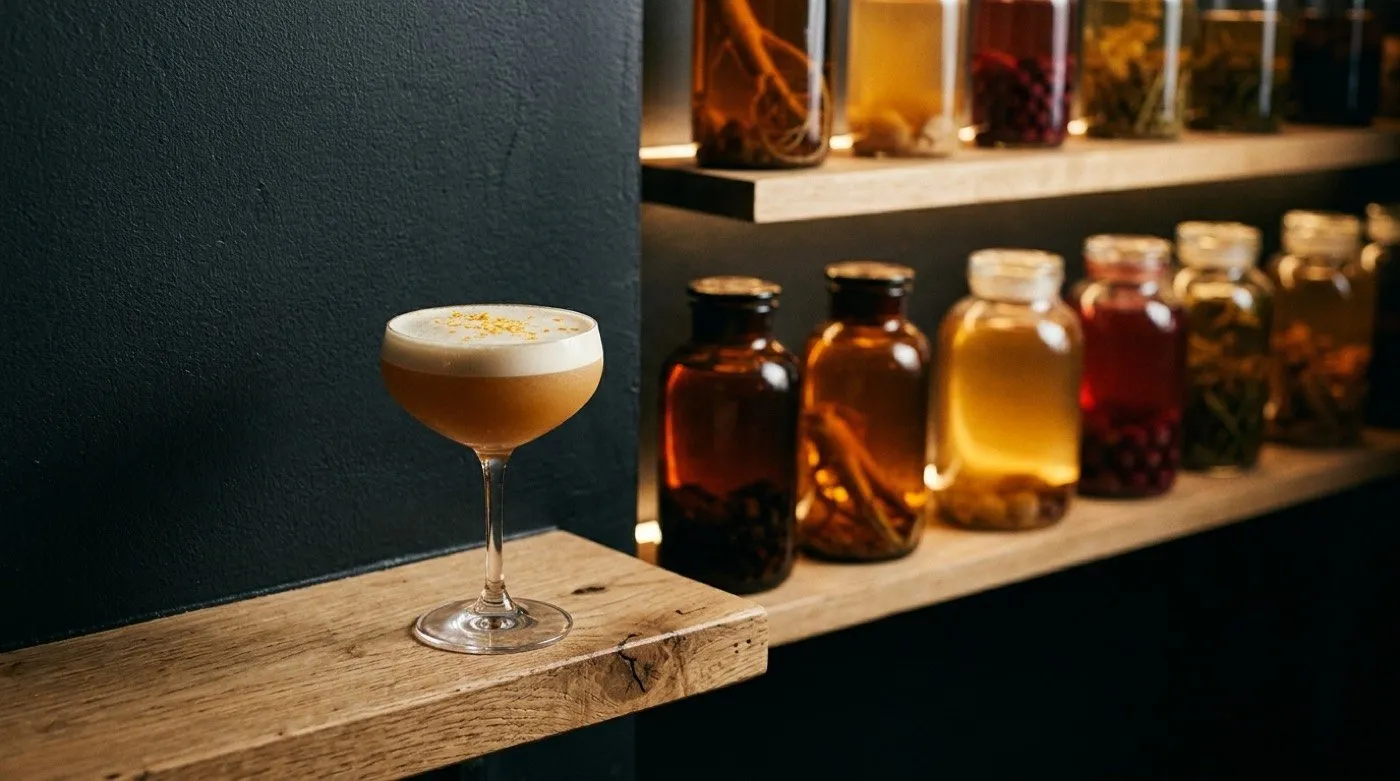
A cocktail foam is a flavoured liquid that, once a stabiliser is added and it is whipped in an ISI siphon with nitrous oxide chargers, takes on a light, silky, aerated texture. At STILLROOM we think of it as an extension of the drink’s liquid flavour that crowns the glass with a unique mouthfeel, quite different from the creaminess achieved by shaking egg white in a shaker. The key is to treat the foam as an ingredient in its own right, not as simple decoration.
What a cocktail foam is and how it works
A foam in cocktail making is nothing more than a liquid base — a juice, a diluted spirit, an infusion or even a dairy mixture — to which we add a stabilising agent and which, held under pressure inside a siphon, expands as it is released thanks to the nitrous oxide. Served on top of the cocktail, it forms a stable crown that can last anywhere from a few seconds to several minutes, depending on the density of the base and the stabiliser chosen. It should not be confused with an air (more fleeting, and made with soy lecithin and a stick blender) or with the mousse that appears when you do a dry shake with egg white, since siphon foam is far more controlled, reproducible and, above all, independent of any shaking.
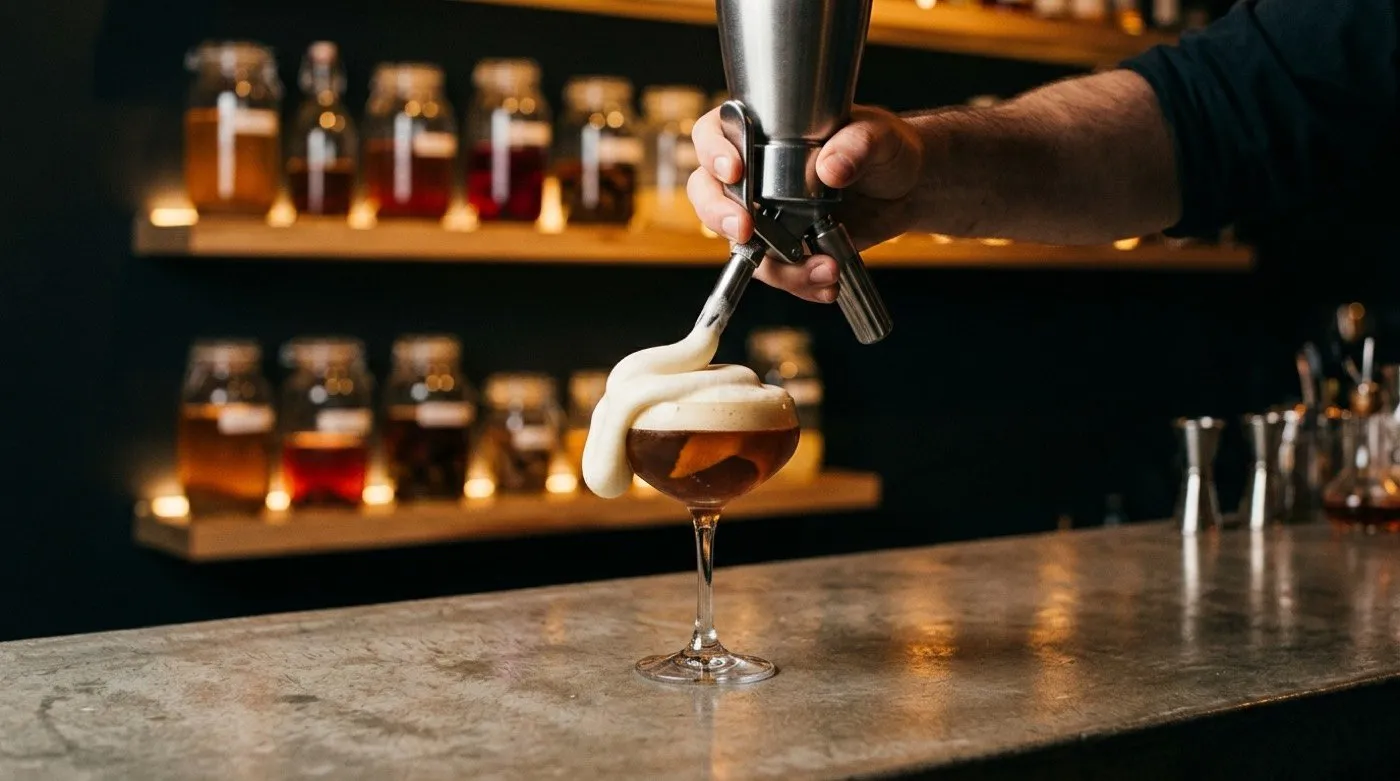
The ISI siphon works like a pressure chamber: you pour in the cold liquid, close it, add one or two N₂O chargers, shake and leave it to rest in the fridge. The gas dissolves into the aqueous phase, and when you pull the lever the sudden depressurisation expands the bubbles trapped by the stabiliser’s network, generating the texture. The three most common stabilisers in our laboratory are neutral gelatine (powder or leaf), pasteurised egg white or albumen, and soy lecithin. Each delivers a different density and persistence, which lets us play with the mouthfeel and how it integrates with the rest of the cocktail’s liquid. To dose it, we simply tilt the siphon slightly over the surface of the already-served drink and press gently: the foam slides out, forming an even layer.
Stabilisers for foams: texture and use
| Stabiliser | Texture and density | Notes |
|---|---|---|
| Neutral gelatine | Creamy, firm, long-lasting | Ideal for water-based or citrus bases. Needs prior hydration and chilling to set slightly. |
| Egg white / albumen | Silky, airy, less dense | Adds unctuousness with no extra flavour. Perfect for foams we want to melt quickly on the palate. |
| Soy lecithin | Very light, large bubble, fleeting | In practice used more for airs with a stick blender than for siphon foams. Adds body without altering the flavour. |
Types of foam by base
| Foam type | Typical base | Cocktail where it shines |
|---|---|---|
| Citrus foam | Lemon, lime or grapefruit juice with light syrup and gelatine | On a Gin Sour, a Pisco Punch or a Daiquiri |
| Spirit foam | Campari, Aperol or orange liqueur diluted with water and stabilised with gelatine | Crowning a Spritz, Negroni Sbagliato or a Boulevardier |
| Dairy foam | Milk, light cream or yoghurt whipped with albumen | On flips, White Russians or chocolate dessert cocktails |
| Spiced foam | Cinnamon, cardamom or chai infusion with honey and gelatine | On a Hot Buttered Rum or a winter Old Fashioned |
How we use foam at STILLROOM
At our bar on Calle Moreto, foam is never an aesthetic whim: it always answers to an intention of flavour or temperature. We often build a warm citrus foam to contrast with the coldness of the cocktail, creating a double thermal impact without resorting to the extreme crystallisation we achieve with liquid nitrogen. Other times we prepare fermented dairy foams that bring in notes of yoghurt or kefir, and we pair them with macerated stone-fruit cordials. The siphon lets us encapsulate delicate ingredients, such as freshly pressed juices that, without stabilisation and pressure, would oxidise before reaching the table.
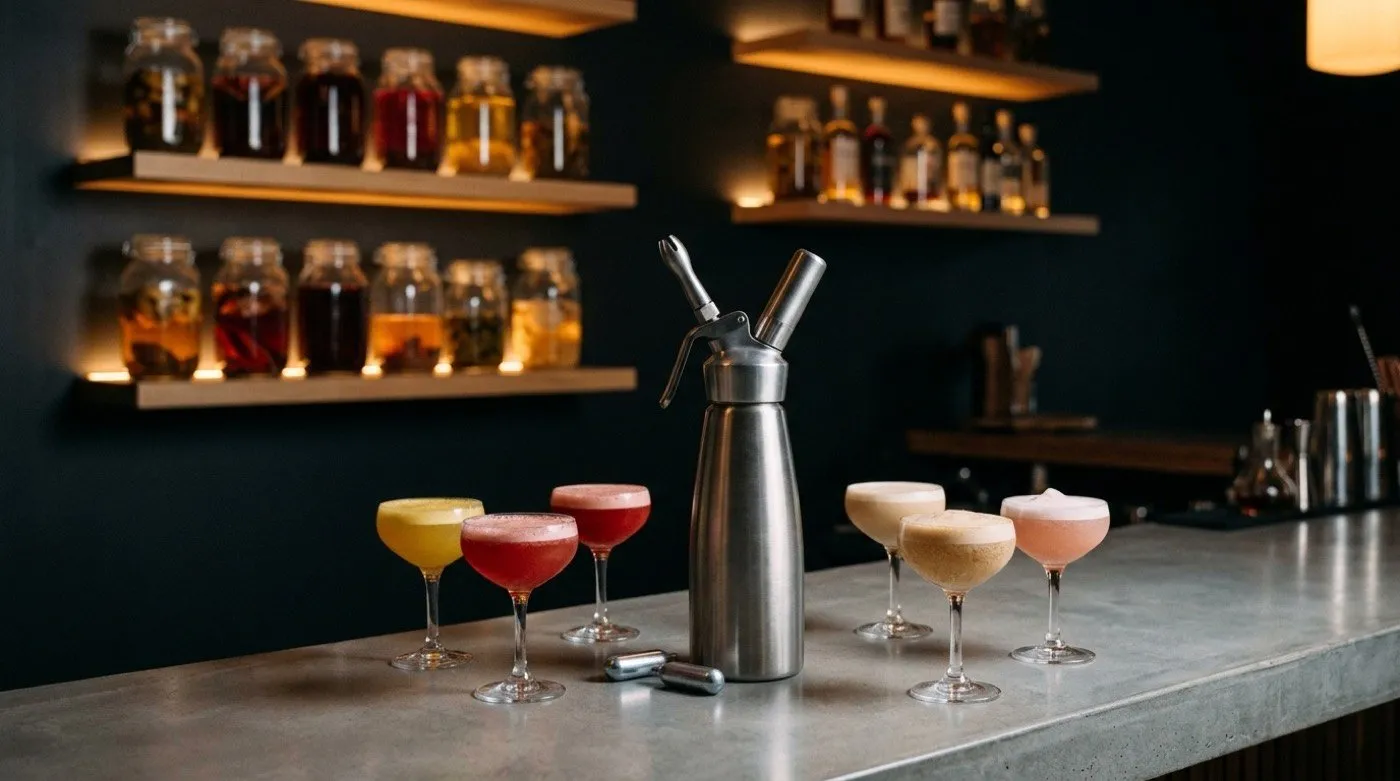
The siphon foam we work with in the laboratory is related to the foam achieved through the dry shake, but while the latter becomes part of the cocktail’s integrated body after vigorous shaking with egg white, siphon foam is an independent layer that plays to a different rhythm: it either melts into the drink gradually or holds as a stable crown throughout the tasting. Combining both resources lets us calibrate texture with great precision, and you can explore that technical depth in our section on advanced cocktail techniques.
Three ideas to get started
Citrus foam on a Gin Sour
Mix 150 ml of freshly squeezed lemon juice, 50 ml of 50% simple syrup, a pinch of salt and 2 gelatine leaves, previously hydrated and dissolved while hot. Chill the mixture, pour it into a half-litre siphon, add one N₂O charger and leave it to rest in the fridge for at least 2 hours. Crown your classic Gin Sour with a generous layer and enjoy the acidic, silky contrast from the very first sip.
Campari foam on a Spritz
Dilute 120 ml of Campari with 80 ml of filtered water and dissolve 2 leaves of neutral gelatine into the mixture. Leave it to cool, charge the siphon with one or two chargers and serve a bitter, vibrant crown over a well-chilled Spritz. The aroma reaches the nose before the liquid does, amplifying the experience without tipping into excessive artificial fizz.
Spiced foam on a bourbon Flip
Infuse 200 ml of whole milk with a cinnamon stick, two green cardamom pods and a clove over low heat for 15 minutes. Strain, sweeten with 20 ml of chestnut honey and add a pasteurised egg white. Charge the siphon, chill for a couple of hours and crown a bourbon Flip with this lightly whipped, warm foam. The result evokes a liquid dessert with the warmth of the spices and the silkiness of the dairy.
Frequently asked questions
What is a foam in cocktail making?
A cocktail foam is a stabilised liquid preparation — usually made with gelatine, egg white or lecithin — that is charged in a siphon with nitrous oxide to achieve a light, aerated texture. It is served as a surface layer over the drink and brings aroma, flavour and a very distinctive mouthfeel.
How do you make a cocktail foam?
You start with a liquid base (juice, infusion, diluted spirit or a dairy mixture), add a suitable stabiliser and pour it into a clean, cold siphon. Charge it with N₂O, shake vigorously and leave it to rest in the fridge for at least 1-2 hours. When you fire the siphon held upright or slightly tilted, the foam is released, forming a dense, even layer.
What is the difference between siphon foam and dry shake foam?
Dry shake foam is generated by shaking egg white together with the rest of the cocktail’s ingredients in a shaker; it is a mousse that is integrated into the liquid and tied to its dilution. Siphon foam is independent: it is made separately, crowned on top of the drink and involves no shaking or dilution, so its texture and temperature can be controlled with total precision.
Which stabiliser should I use for a foam?
It depends on the result you are after. Neutral gelatine gives firm, long-lasting foams, ideal for citrus or spirit-based mixtures; egg white or albumen produces a silky texture that melts faster on the palate; soy lecithin is better suited to light airs made with a stick blender, though it can also be used in a siphon if you are after a very ethereal foam.
Do I need a siphon to make foams?
Yes, the siphon is the standard tool for achieving stable, controlled foams in cocktail making. The most widely used models are half-litre ISI siphons, which work with nitrous oxide (N₂O) chargers. There are alternatives, such as whipping with a stick blender and lecithin to make airs, but the dense, long-lasting foam that crowns a cocktail calls for the constant pressure of the siphon. If you would like to try how all these textures translate into a glass, we invite you to take a look at our cocktail menu. To come and discover it live in the Los Jerónimos neighbourhood, you can book a table in advance. And if you fancy exploring more technical concepts and definitions, the full cocktail glossary is available to browse.