How to Frost a Glass Rim: Salt, Sugar and More
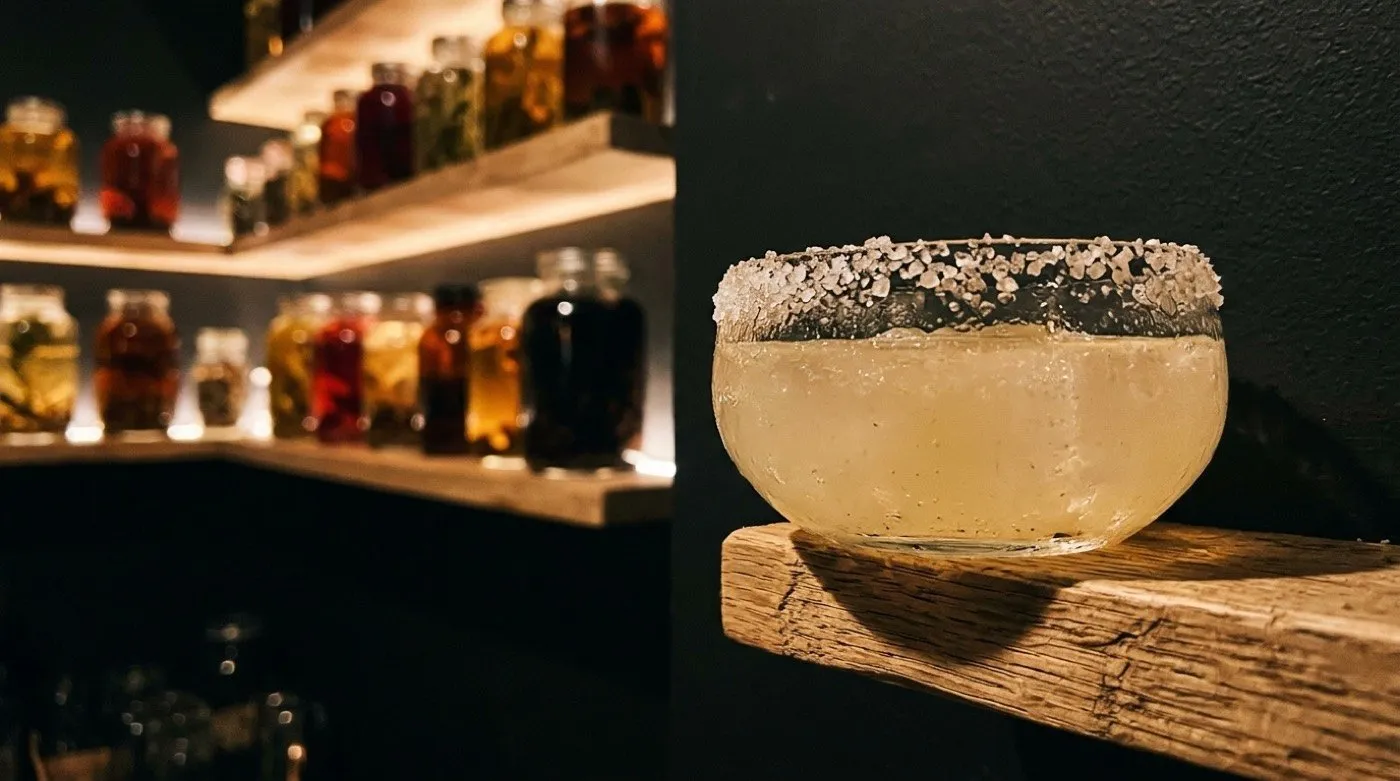
At STILLROOM, frosting a glass rim is far more than a decorative gesture: it is a bar technique that fixes a thin layer of salt, sugar or a spiced blend to the outer rim of the glass to create a contrast of flavour, texture and temperature in every sip. We always do it with laboratory precision, moistening only the rim with fresh citrus and turning the glass onto a plate holding the dry ingredient, and we recommend frosting only half the rim so every guest can decide how much of it they want in their drink.
What frosting a glass rim is and how it works
Frosting the rim of a glass — also known as rimming — is a cocktail-making technique that adheres a layer of solid particles (salt, sugar, ground spices, dehydrated flowers or even coloured powders) to the outer edge of the glass. The goal is not decoration: it is to change the sensory experience of the drink. When you sip, your lips touch the frosted rim first, and that first contact activates the taste buds before the liquid reaches the tongue. The result is a contrast that can lift acidity, tame bitterness, boost sweetness or bring in an unexpected aromatic note.
The mechanism is purely physical. We need two elements: a moistening agent that wets the rim (usually lime juice, lemon juice or a light syrup) and a dry bed to rest the glass on. Moisture acts as a natural adhesive; as the glass is turned upside down onto the plate, the particles fix to the glass by capillary action. At STILLROOM we apply this technique with the same precision with which we measure a lacto-fermentation or a fat wash: the thickness of the layer, the angle of rotation and the type of salt or sugar matter just as much as the cocktail recipe itself.
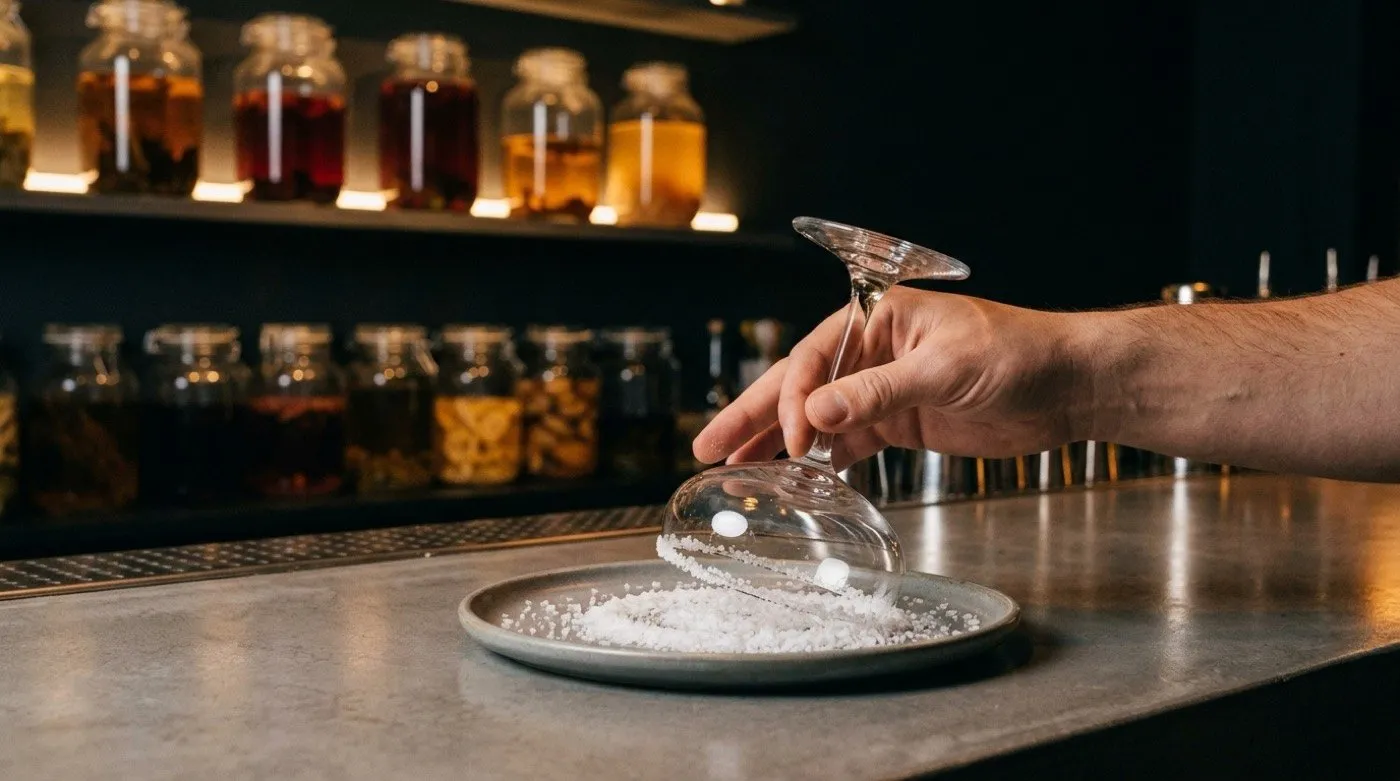
One detail that sets a professional bar apart is frosting only half the rim. If we cover the whole circumference, the guest is forced to drink with salt or sugar every time; if we leave half the glass clean, we hand them the control. They can choose to sip from the frosted side when they want that salty or sweet hit, and from the clean side when they prefer the pure profile of the spirit. It also stops the frosting from breaking off and falling into the cocktail, diluting or clouding the drink. The trick is simple: we moisten only half the rim with a finger or with a citrus wedge run precisely along it, and turn only that half onto the plate.
Types of frosting and which cocktails they work with
Not every frosting is table salt on a margarita. At STILLROOM we work with a pantry of salts, sugars and blends that open up endless possibilities. Each type has a chemical and sensory affinity with certain cocktail profiles. Here is a quick guide to the ones we use most at our laboratory bar.
| Frosting | Works well with | How we prepare it |
|---|---|---|
| Fine sea salt | Citrus and acidic cocktails (margarita, paloma, daiquiri) | We use unrefined sea salt, finely ground in a mortar. Never coarse salt: it falls off and scrapes the lip. |
| White or icing sugar | Sours and fruit-forward cocktails (whisky sour, sidecar, cosmopolitan) | Sifted icing sugar or white sugar run through a grinder. We look for a fine powder that sticks without clumping. |
| Celery salt | Bloody Mary, umami or savoury vegetable cocktails | We mix fine sea salt with dehydrated ground celery (4:1 ratio). It brings a green, briny hit. |
| Spiced sugar | Autumnal cocktails with whisky, aged rum or brandy | Whole cane sugar mixed with ground cinnamon, nutmeg and a touch of ground cardamom. We sift it to avoid lumps. |
| Coloured frosting | Signature cocktails where colour adds to the narrative (cocktails with beetroot, turmeric or red berries) | We infuse sugar or salt with natural pigments (freeze-dried beetroot powder, turmeric, blue spirulina) and dry them in a dehydrator. We never use artificial colouring. |
The technical step by step for a perfect frosted rim
At STILLROOM we treat frosting as a precision technique, not a decoration. We have seen too many badly frosted rims: lumps, salt fallen into the cocktail, half a lemon dripping down the glass. Here is our bar sequence, with the tricks we apply every day.
| Step | How it is done | Bar trick |
|---|---|---|
| 1. Moisten | We run a lime or lemon wedge along the outer rim of the glass, only over the half we want to frost. | Do not use a finger wetted with water: citrus juice brings acidity and an aroma that integrates with the frosting. If the cocktail has no citrus, we use a light syrup (1:1 sugar and water) applied with a clean pastry brush. |
| 2. Fix | We spread the dry ingredient on a flat plate, in an even layer about 2-3 mm thick. We turn the glass upside down, resting the moistened rim onto the dry bed, with a gentle turning motion. | Do not press: the weight of the glass is enough. Press too hard and the layer turns thick and cracks as it dries. A 90-180 degree turn is enough for half a rim. |
| 3. Half rim | We leave the other half of the glass clean, neither moistened nor frosted. | This is our house standard. It lets guests drink from the frosted side or the clean side. It also spares guests from having to lick the rim if they would rather not. |
| 4. Set | We let the glass rest upright for 30-60 seconds before pouring the cocktail. This lets the frosting dry and fix to the glass. | Pour the cocktail straight away and the liquid can drag particles inside. In a fast-paced bar this is the step most often skipped, and it is the one that decides whether a frosting lasts or crumbles. |
How we use it at STILLROOM
At our bar on Calle Moreto 9, frosting is not a shortcut we apply to everything. We choose it when it adds a layer of contrast that speaks to the rest of the recipe. If a cocktail already carries an acidic cordial with brine built in, it may not need a salty rim; if it carries a toasted-butter fat wash, a spiced sugar frosting can be the perfect counterpoint. Every decision is technical, not decorative.

The most classic example is our margarita recipe, where a fine sea salt frosting balances the acidity of the lime and the triple sec, and readies the palate for the earthy hit of the tequila. But we also bring it to cocktails where the rim tells a story: a celery salt frosting for a Bloody Mary with fermented tomato cordial, or a cinnamon sugar rim for a bourbon sour with roasted apple cordial. It all starts from the same base technique, but the choice of dry ingredient and moistening agent changes the result completely.
If you want to go deeper into how we fold frosting into a wider view of cocktail making, we recommend reading our guide on garnish and aromatic cocktail decoration, where we explain why every element in the glass should carry an aromatic or flavour function, and our tour through advanced cocktail techniques, where rimming sits alongside clarification, lacto-fermentation and sous-vide.
Three ideas to get started
Margarita with a fine sea salt frosting
The starting point for anyone who wants to understand rimming. We use a fine sea salt, ground in a mortar until it looks like powdered snow. We moisten half the rim with a lime wedge, turn it onto a plate of salt and leave it to set for 30 seconds. We pour the cold margarita and let the guest decide. The difference between coarse supermarket salt and well-ground fine salt is the difference between a frosting you enjoy and one that gets in the way.
Whisky sour with an icing sugar rim
A classic sour calls for a sweet contrast on the rim to tame the acidity of the lemon and the strength of the bourbon. We use sifted icing sugar, free of lumps. We moisten with a light syrup (1:1 sugar and water) applied with a brush, because this cocktail has no fresh citrus in contact with the rim. We frost half the rim and leave it to set. The result is a drink that opens sweet and silky, and finishes with the crisp, citrus hit of the sour.
Spiced frosting for an autumn drink
For a cocktail with aged rum, pear cordial and a touch of ginger, we prepare a frosting of whole cane sugar mixed with cinnamon, nutmeg and a pinch of ground allspice. We moisten with lemon juice, turn the glass and leave it to set. The rim brings spiced warmth before the cold liquid reaches the mouth. It is a frosting that speaks of a season.
Where to keep exploring
Frosting is one of those techniques that looks simple and turns out to be endless once you look at it with a laboratory eye. At STILLROOM we apply it with the same intent with which we ferment a cordial or clarify a citrus: we want every detail in the glass to have a reason behind it. If you want to see how we put it into practice, we invite you to explore our cocktail menu, where every drink has its own logic of rim, temperature and glassware. And if you want to experience it live, you can book a table at our bar in Los Jerónimos, Madrid. To keep learning, our cocktail and mixology glossary is full of definitions like this one, written from the bar and for anyone who drinks with curiosity.
Frequently asked questions
How do you frost the rim of a glass?
You moisten the outer rim of the glass with a citrus fruit (lime or lemon) or a light syrup, then turn the glass upside down onto a plate holding the dry ingredient (salt, sugar or ground spices) so the particles stick to it. Leave it to set for a few seconds before pouring the cocktail.
What do you moisten the rim with before frosting it?
Fresh lime or lemon juice is ideal: it brings acidity and an aroma that integrates with the frosted rim. If the cocktail contains no citrus, a light syrup (a 1:1 mix of sugar and water) applied with a clean brush works well. We do not recommend plain water, as it adds nothing aromatic and evaporates too quickly.
Do you frost the whole glass or just half the rim?
In professional cocktail making, the standard is to frost only half the rim. This lets the guest choose between sipping from the frosted side or the clean side, and stops the frosting from falling into the cocktail. Frosting the entire glass is a valid option, but it locks every sip into a single flavour profile.
What else can you use to frost a rim besides salt and sugar?
You can use spiced salts (celery salt, smoked salt, hibiscus salt), flavoured sugars (with cinnamon, cardamom, ground vanilla), freeze-dried fruit powders (raspberry, passion fruit, beetroot), ground dehydrated flowers and even natural pigments such as blue spirulina or turmeric. The limit is set by how well the flavour pairs with the cocktail.
Why does my frosting keep falling into the cocktail?
This usually happens for three reasons: the rim was moistened too generously and the liquid ran down inside, the frosting was not left to set before pouring the cocktail, or the salt or sugar used was too coarse to adhere properly. The fix is to moisten with precision, use fine particles and respect the 30-60 second setting time.