Kombucha in cocktail making: the fermented tea that brings drinks to life
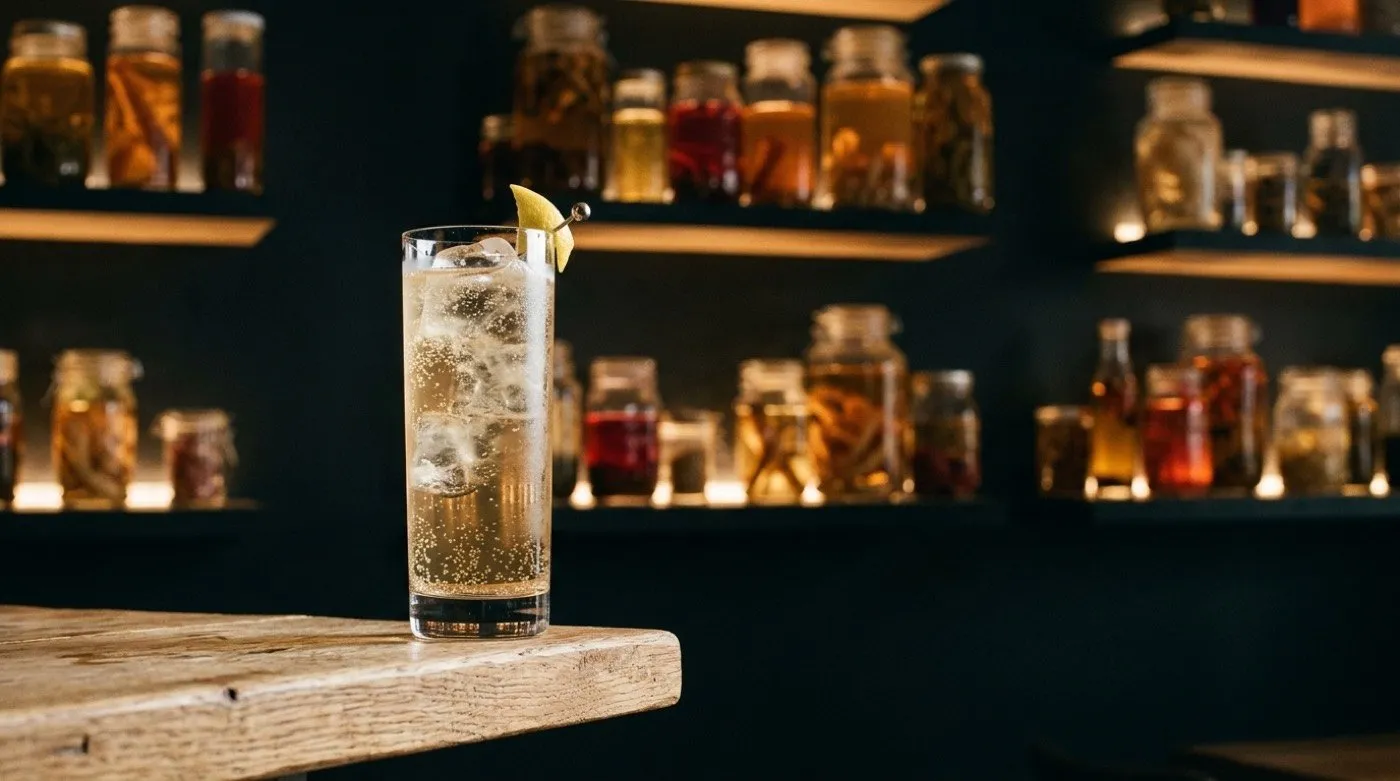
At STILLROOM we see kombucha as far more than a health trend: it is a luxury non-alcoholic modifier born from the controlled fermentation of sweetened tea. That live acidity, its natural effervescence and the nuances it brings depending on the tea and botanicals chosen make it a bar tool as versatile as it is elegant. In cocktail making, we use it to add depth and complexity to low-alcohol cocktails, refresh classic drinks or build mocktails that need not imitate anything.
What kombucha is and how its magic works
Kombucha is the result of a symbiotic fermentation between yeasts and acetic bacteria that organise themselves into a gelatinous structure called a SCOBY (Symbiotic Culture Of Bacteria and Yeast). When we submerge that culture in an infusion of tea sweetened with sugar, a fascinating process of transformation begins. The yeasts metabolise the sugars and release CO₂ and a slight trace of alcohol, while the bacteria oxidise that alcohol and produce organic acids such as acetic, gluconic or lactic acid. The result is a drink with a vibrant acidity, fine bubbles and an aromatic profile that dances between the original tea and the fermentation notes.
Behind the bar, that balance between residual sugar, acidity and endogenous carbon dioxide is a gift. It lets us do without industrial soft drinks, adjust a cocktail’s sweetness without adding more spirit, and play with textures reminiscent of a dry sparkling wine but with far more layers. What is more, its low alcohol content (usually under 0.5% vol.) makes it a perfect ally for low-ABV cocktail making and mocktails with personality.
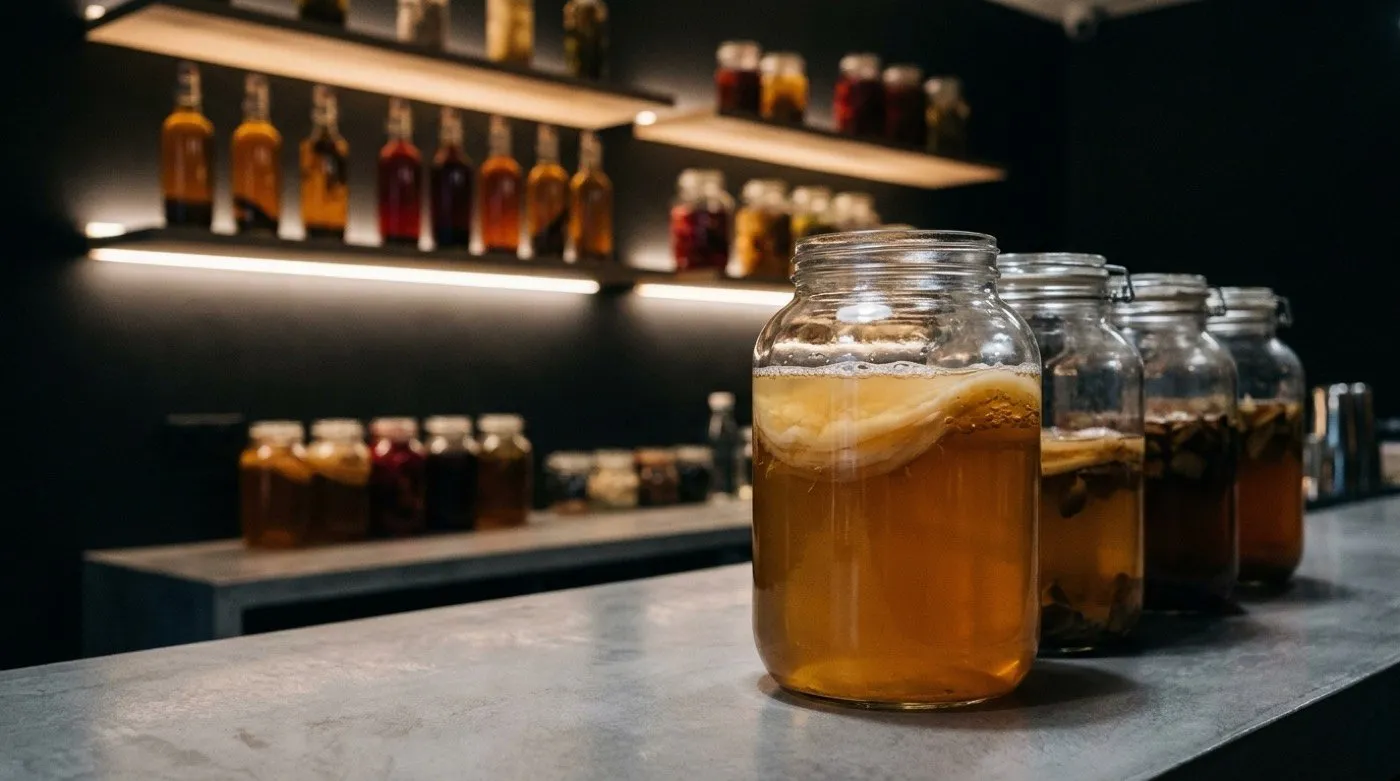
| Step | Detail | Time |
|---|---|---|
| Preparing the sweet tea | Steep 5-8 g of black or green tea per litre of water, dissolve 70-100 g of sugar (sucrose) and cool to room temperature. | 30 min |
| Inoculating with the SCOBY | Add the symbiotic culture together with at least 10% of previously fermented liquid (starter) to acidify the medium. | 5 min |
| First fermentation | Cover with a breathable cloth and leave at a stable temperature (22-26°C) away from direct light. The yeasts consume the sugar and acids and CO₂ are generated. | 7-10 days |
| Second fermentation (carbonation) | Bottle the base kombucha with fresh fruit, juice, spices or purées (roughly a 10-15% addition) and seal it airtight to trap the gas. | 2-4 days |
| Chilling and refining | Chill to stop the fermentation, filter if desired, and keep it cold to preserve the effervescence and acidic profile. | Indefinite (max. 2-3 weeks behind the bar) |
Kombucha, tepache and shrub: three ferments, three worlds
At our bar we work with all three, but each occupies a very different place. While kombucha is built on tea, tepache is born from pineapple peel, and the shrub is a preservation technique using vinegar, with no spontaneous fermentation. Understanding their differences avoids confusion and opens up the creative range.
| Drink | Base | How it ferments | Use behind the bar |
|---|---|---|---|
| Kombucha | Tea (black, green, oolong) + sugar + SCOBY | Controlled acetic and alcoholic fermentation, driven by a symbiotic culture. Naturally produces organic acids and CO₂. | Effervescent modifier, substitute for soda or cava in spritzes, base for complex, low-alcohol mocktails. |
| Tepache | Pineapple peel, piloncillo or brown sugar, spices | Wild fermentation driven by the yeasts present on the pineapple skin. Produces intense fruity notes and a characteristic residual sweetness. | Fermented soft drink served straight, mixed with rum or mezcal, ideal for tropical cocktails and punches. |
| Shrub | Fruit or vegetable + sugar + vinegar (apple, wine or similar) | Not an active fermentation: it is a maceration of fruit in sugar preserved with vinegar. Fixed acidity and no alcohol. | Adds acidity and sweetness at once, with no fizz. Perfect for sours, fizzes and mocktails with body. |
If you want to master these techniques, we recommend reading how we prepare our shrub and the differences with lacto-fermentation in our dedicated articles.
How we use kombucha at STILLROOM
In our laboratory on Calle Moreto 9, right in the heart of the Los Jerónimos neighbourhood, kombucha is not just a trendy ingredient: it is a tool we apply with a technical mindset. We produce it in-house from selected teas (we love oolong with orange blossom honey and smoky lapsang souchong black tea) and use it in a second fermentation with seasonal fruit, herbs from our own urban garden or infused spices. This house kombucha lets us control the acidity, the carbonation and the aromatic profile for every cocktail, something a commercial bottle could never give us. The result is drinks with a silky effervescence, where the acidity lifts agave spirits, vermouths or Italian bitters without masking them.
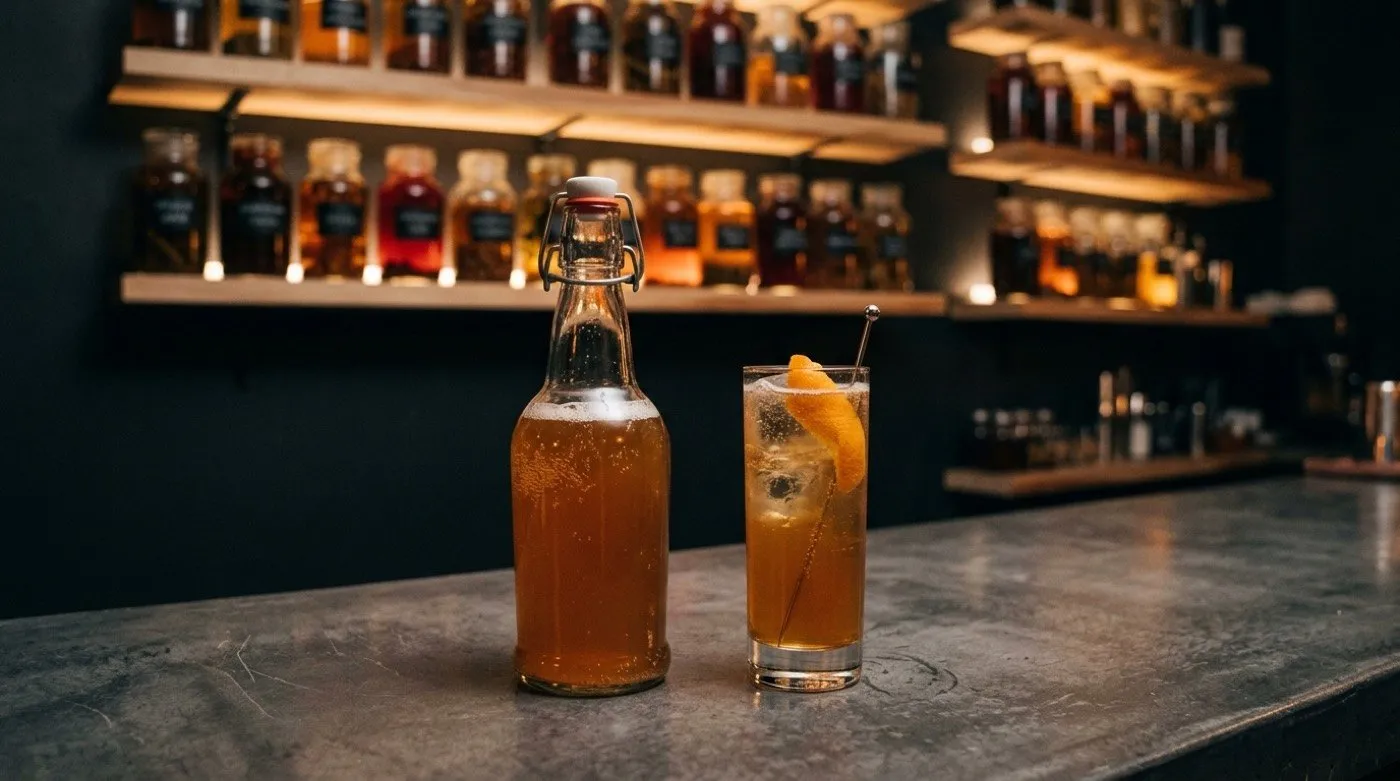
We apply that philosophy of in-house fermentation to reformulated classics and original creations alike. A good example is our Garibaldi Fermentado, where citrus kombucha replaces part of the juice to gain complexity and a touch of fizz that lightens the drink. If you are curious about the thinking behind everything we make, we invite you to explore the advanced cocktail techniques we work with every day.
Three ideas to get started with kombucha at home
You do not need a laboratory to make the most of kombucha in your cocktails. With a good-quality bottle or your own homemade fermentation, you can take the leap. Here are three simple ideas that always work.
1. Kombucha and fresh herb spritz
Fill a wine glass with ice, add 90 ml of green tea kombucha with a lychee or lime second fermentation, 30 ml of bianco vermouth and a splash of sparkling water if you want more fizz. Garnish with fresh rosemary and a slice of grapefruit. Refreshing acidity, just the right sweetness and a herbal nose that makes it a pleasure to drink all year round.
2. Effervescent mixed berry mocktail
In a shaker with no ice, mix 40 ml of hibiscus kombucha, 30 ml of unsweetened cranberry juice, 15 ml of agave syrup and 10 ml of lemon juice. Shake gently and pour into a flute. Top up with a splash of plain kombucha when serving to keep the carbonation. It is tart, fruity and with no added alcohol.
3. Low-ABV whisky sour with kombucha
Replace half the lemon juice in a classic whisky sour with black tea and ginger kombucha. Mix in a shaker: 45 ml of bourbon, 20 ml of kombucha, 15 ml of fresh lemon juice and 10 ml of sugar syrup. Shake with ice, strain into an old fashioned glass over a large ice cube and express orange peel over the top. The kombucha brings vibrant acidity, a slight spiciness and a less aggressive texture that lowers the perceived alcohol without losing the soul of the drink.
Frequently asked questions
What is kombucha?
Kombucha is a fermented drink made from sweetened tea and a culture of bacteria and yeast (SCOBY). During fermentation, organic acids, carbon dioxide and aromatic compounds are produced, giving it its characteristic flavour: tart, lightly sweet and effervescent.
Does kombucha contain alcohol?
Yes, but in very small amounts. During fermentation the yeasts generate a small quantity of ethanol, usually below 0.5% in commercial versions, which classifies it as a non-alcoholic drink in most countries. In cocktails, that trace is irrelevant to the final ABV.
What is the difference between kombucha and tepache?
Kombucha starts from tea and sugar and ferments thanks to a symbiotic culture (SCOBY); its profile is more acidic and complex, with notes of tea and fruit. Tepache is made with pineapple peel and piloncillo, and ferments with the fruit’s wild yeasts; it turns out sweeter, more tropical and less acidic. Both are effervescent, but with very different personalities.
How is kombucha used in cocktail making?
It is used as an effervescent, acidic modifier or lengthener. It can fully or partially replace soda, tonic or sparkling wine in spritzes, collinses, mules or mimosas. It is also a perfect base for alcohol-free or low-ABV cocktails, as it brings body, acidity and fizz without the need for processed soft drinks.
Can you make kombucha at home for cocktails?
Yes, and it is simpler than it sounds. All you need is an active SCOBY (available from specialist shops or through donation), good-quality tea, sugar, a glass vessel and time. The key for cocktail making lies in the second fermentation, where you can flavour it with fruit, herbs or spices to get a bespoke profile. If you would like to see how kombucha and other ferments come together in signature cocktails made with laboratory precision, we are waiting for you at STILLROOM. Check out our cocktail menu, where every drink has a technical story, and book your table to experience it up close. To keep exploring terms and techniques, be sure to visit our cocktail glossary, where we break down every concept with the same rigour we bring to the bar.