Garnish and twist: the art of aromatic cocktail decoration
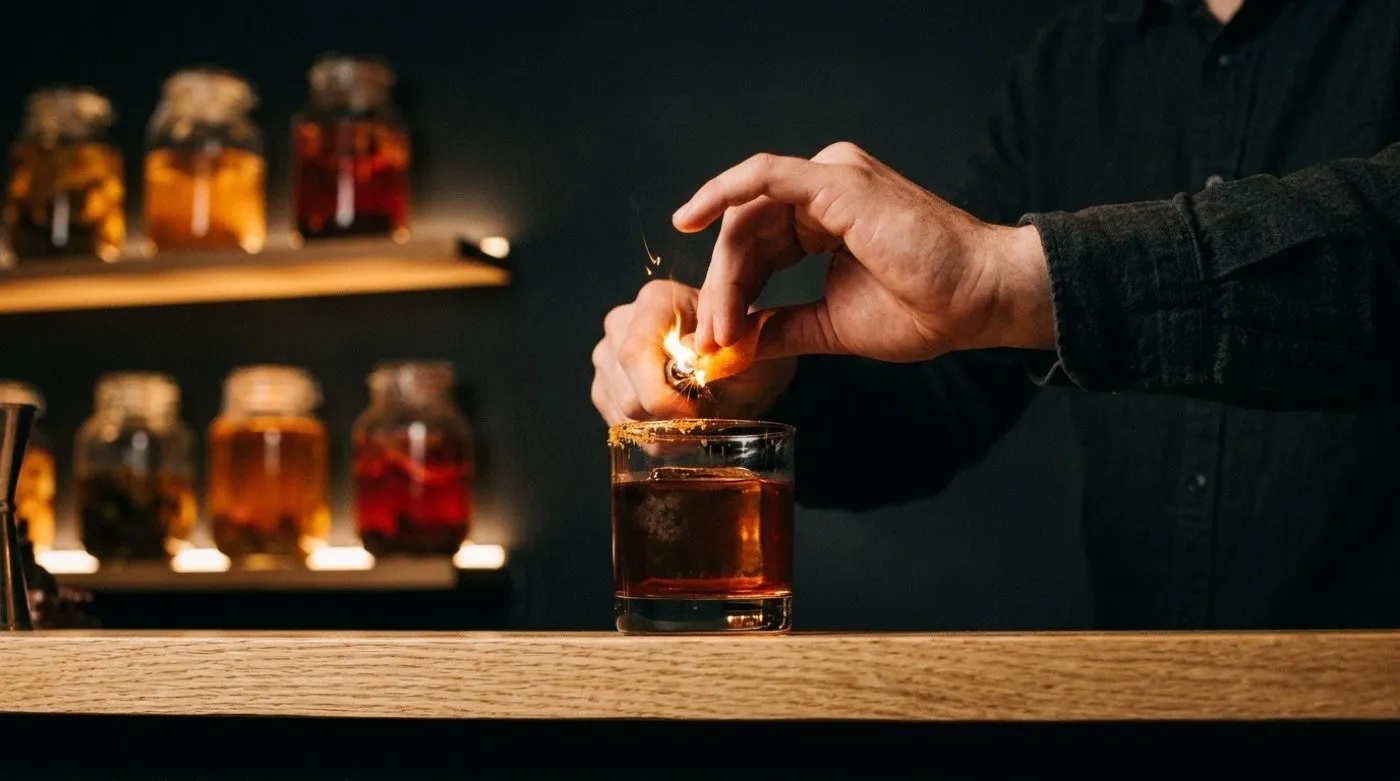
At STILLROOM we see garnish as much more than decoration: it is the cocktail’s final aromatic layer, a technical gesture that transforms the experience from the very first aroma. A twist — that thin strip of citrus peel — is “expressed” over the glass to release its essential oils just before drinking, and if we flame it too, we caramelise those oils and add a subtle smoky note without any wood smoke. In this post we explain how to master these three techniques — garnish, twist and flaming — and why they make all the difference.
What it is and how it works: aromatic cocktail decoration
Garnish is the last element we add to a drink before serving it, but its role goes far beyond the visual. It works as a genuine sensory welcome: it shapes the guest’s first olfactory contact and, when well chosen, enhances or contrasts with the mix’s main notes. At our bar we treat every garnish with the same precision as any other laboratory technique — from a fermentation to a clarification — because we know a single gesture can completely change how a cocktail is perceived.
For a proper understanding, it helps to break down the three gestures that usually appear together in most recipes: garnish itself (the piece we place on or in the glass), the act of expressing the peel of the citrus fruit (pinching the skin over the surface of the liquid so the essential oils disperse as fine droplets), and flaming that same peel (holding a flame close while pinching it to caramelise the oils and generate toasted aromas). In this article we treat them as a single flow of knowledge, because they rarely appear apart.
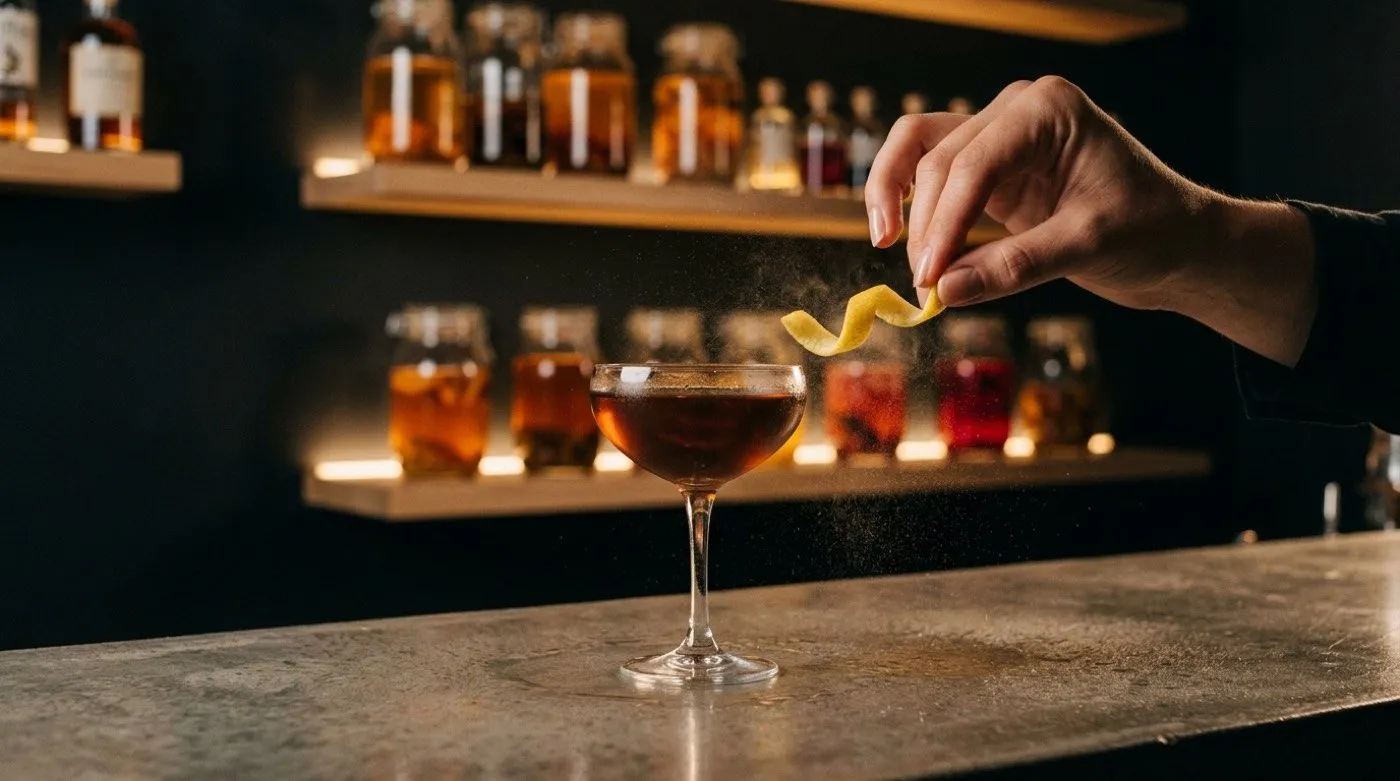
Expressing a twist is a simple movement that still takes some skill. We cut a strip about 5–7 centimetres long by 1–2 centimetres wide from the peel of a citrus fruit — orange, lemon, grapefruit — avoiding the white pith, which brings bitterness. We hold the strip with both hands, skin facing down a few centimetres above the surface of the cocktail, and fold it in half with a firm pinch. Doing so bursts the peel’s oil cells and sends out a fine spray of essential oils that lands on the liquid, creating an immediate aromatic layer. We can then drop it in, rest it on the rim or discard it, depending on the recipe. This same gesture is the basis for flaming: when we hold a flame — a lighter or a match — between the peel and the glass right at the moment of the pinch, the oils ignite lightly, caramelise and leave the cocktail with notes reminiscent of caramel, roasted fruit and even a faint smoky echo, quite different from the wood smoke of traditional smoking.
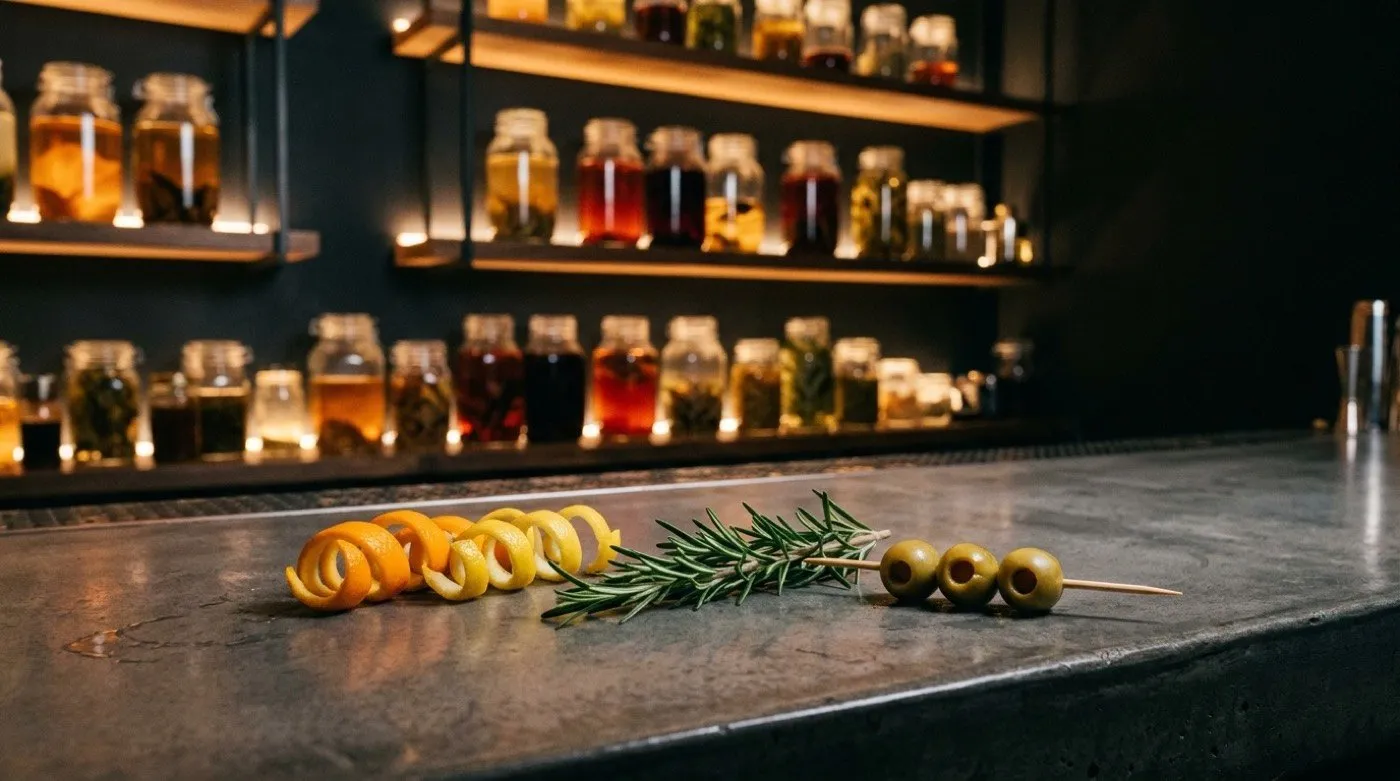
In signature cocktail making, the types of garnish have expanded enormously, although the essence remains the same: choosing an element that adds aroma, texture or flavour without overshadowing the drink. We can group them into three main families. Citrus: twists, wheels, half-moons or even dehydrated peel. Aromatic herbs: sprigs of rosemary, thyme, mint or basil, often clapped between the hands to wake up their oils. And edible garnish: olives, cocktail cherries, pickled onions, fresh flowers or small pickles that, besides decorating, add a bite that contrasts with the liquid. At STILLROOM we also use powders from our dehydrator, live flowers from the garden, or even solidified cordials that dissolve slowly in the mouth.
| Garnish type | What it adds | Example |
|---|---|---|
| Citrus twist | Fresh essential oils, immediate aromatic burst | Negroni with an orange twist |
| Expressed peel | Concentrated aroma without leaving the peel in the glass | Dry Martini with lemon expressed and discarded |
| Flamed peel | Caramelised oils, toasted notes and a light smokiness | Old Fashioned with a flamed orange twist |
| Aromatic herb | Herbaceous or resinous aroma that wraps the glass | Gin and tonic with a lightly toasted rosemary sprig |
| Edible garnish | Texture, extra flavour and taste contrast | Olive in a Martini or cherry in a Manhattan |
Citrus and other aromatic elements in action
Every citrus fruit and every herb has a distinct aromatic profile, and knowing how to pair them with the right cocktail is part of the craft. A sweet orange twist is not the same as a grapefruit one with a bitter, floral edge, nor is earthy rosemary the same as refreshing mint. In this table we sum up the combinations that work best for us after years of testing in our laboratory-style cocktail making.
| Citrus or element | Aroma it adds | Cocktail where it shines |
|---|---|---|
| Orange twist | Sweet, fresh, enveloping citrus | Negroni, Old Fashioned, Boulevardier |
| Lemon twist | Bright, vibrant acidity, very clean | Dry Martini, Tom Collins, Gin Fizz |
| Grapefruit twist | Floral bitterness, lively, slightly herbaceous notes | Paloma, Hemingway Daiquiri, Grapefruit Margarita |
| Rosemary | Resinous, earthy and balsamic | Gin and tonic with neutral tonic, Rosemary’s Baby |
| Olive | Saline, umami and fatty character | Classic Dry Martini, Dirty Martini |
An important nuance: when we express or flame a twist, the oil does not simply float on the surface — its volatile compounds are the first thing to reach the nose, and that initial impact shapes everything that follows. That is why at STILLROOM we pay as much attention to choosing the garnish as to the recipe itself.
How we use it at STILLROOM
In our gastro cocktail bar on Calle Moreto 9, in the Los Jerónimos neighbourhood, every garnish answers to a technical decision and a flavour intention. We work with laboratory techniques such as fermentation, fat washing, clarification, sous-vide or cordials, and garnish is not an improvised extra but the final flourish of a process that begins in the kitchen. A flamed orange twist over a classic Negroni — whose recipe you can find in our Negroni recipe — becomes an almost ritual gesture, just like a Martini with its thin film of lemon oil floating on top.
It is easy to confuse flaming a peel with wood smoking, but they are different worlds. Flaming caramelises the citrus fruit’s own oils; smoking adds external smoke — from oak, apple or cherry wood — that permeates the glass and the liquid. At STILLROOM we master both techniques and tell them apart with precision. If you would like to go deeper into the world of smoke in cocktail making, we recommend our article on smoked cocktails. And if you are curious about everything we do beyond garnish, in our advanced cocktail techniques section we break down every process.
Three ideas to get started
1. Flamed orange twist over a Negroni
The father of bitter cocktails cries out for that contrast between the sweetness of Carpano Antica and the bitterness of Campari. Cut a wide strip of orange peel (free of pith), hold it firmly and spark a lighter just in front of it; as you pinch the peel, the flame will caramelise the oils that fall onto the ice and the glass. The aroma released is pure theatre.
2. Lemon twist over a Dry Martini
Here subtlety rules. Rather than leaving the peel in the glass, many purists prefer to express it and then discard it, so only the oils remain. If you choose this version, cut a thin strip of lemon, express it firmly over the surface and run it around the rim of the glass. That invisible film of oil will perfume every sip without disturbing the purity of the gin.
3. Smoked rosemary garnish
This is a gesture that often causes confusion, because the rosemary is not flamed as such: we lightly toast it with a kitchen blowtorch until it releases a white, aromatic smoke. We then rest the sprig on the cocktail and cover the glass with a smoking cloche for a few seconds so the resinous vapour permeates the liquid. Do not confuse this with wood smoking: here it is the plant itself that provides the aroma, with no external smoke. If you want to master the full technique, see our guide on smoked cocktails.
Frequently asked questions
What is garnish in cocktail making?
Garnish is the decorative, aromatic element added to a cocktail just before it is served. It can be a strip of citrus peel, a fresh herb, a flower or a foodstuff such as an olive. Its main function is not aesthetic: it acts on the sense of smell and, in some cases, on taste, to round off the drinking experience.
What is a twist?
A twist is a thin strip of citrus peel — usually orange, lemon or grapefruit — that is twisted over the glass to release its essential oils. It is used both as decoration and to perfume the cocktail with fresh, intense aromas.
How do you express citrus peel?
To express citrus peel, we cut a strip free of pith, hold it over the glass with the outer face pointing down, and fold it with a firm pinch. The movement bursts the peel’s oil cells and sends out a fine spray of oils that lands on the surface of the cocktail, boosting its aroma instantly.
How do you flame orange peel?
Orange peel is flamed by holding a flame — a lighter or a match — just in front of the strip as we pinch it over the glass. The heat caramelises the expelled oils and creates toasted, sweet notes with a faint smoky echo, quite different from wood smoke. It is often used in cocktails such as the Old Fashioned or the Negroni.
Does garnish just decorate, or does it add flavour too?
Although many people think it is pure decoration, garnish mainly contributes aroma, and that aroma shapes the flavour we perceive. Some garnishes, such as olives, cherries or pickles, do add a direct flavour in the mouth. Even a simple citrus twist changes the overall experience of the drink. We hope this tour through the art of garnish has whetted your appetite (and your nose). If you would like to see how we apply all these techniques live, take a look at our cocktail menu, where every drink is a statement of aromatic intent. And if you would rather experience it unhurried, book a table at STILLROOM and let yourself be surprised. Still curious? Drop by our cocktail glossary to keep learning the language of craft cocktails with us.