Muddle: how to muddle properly in cocktail making (without bitterness)
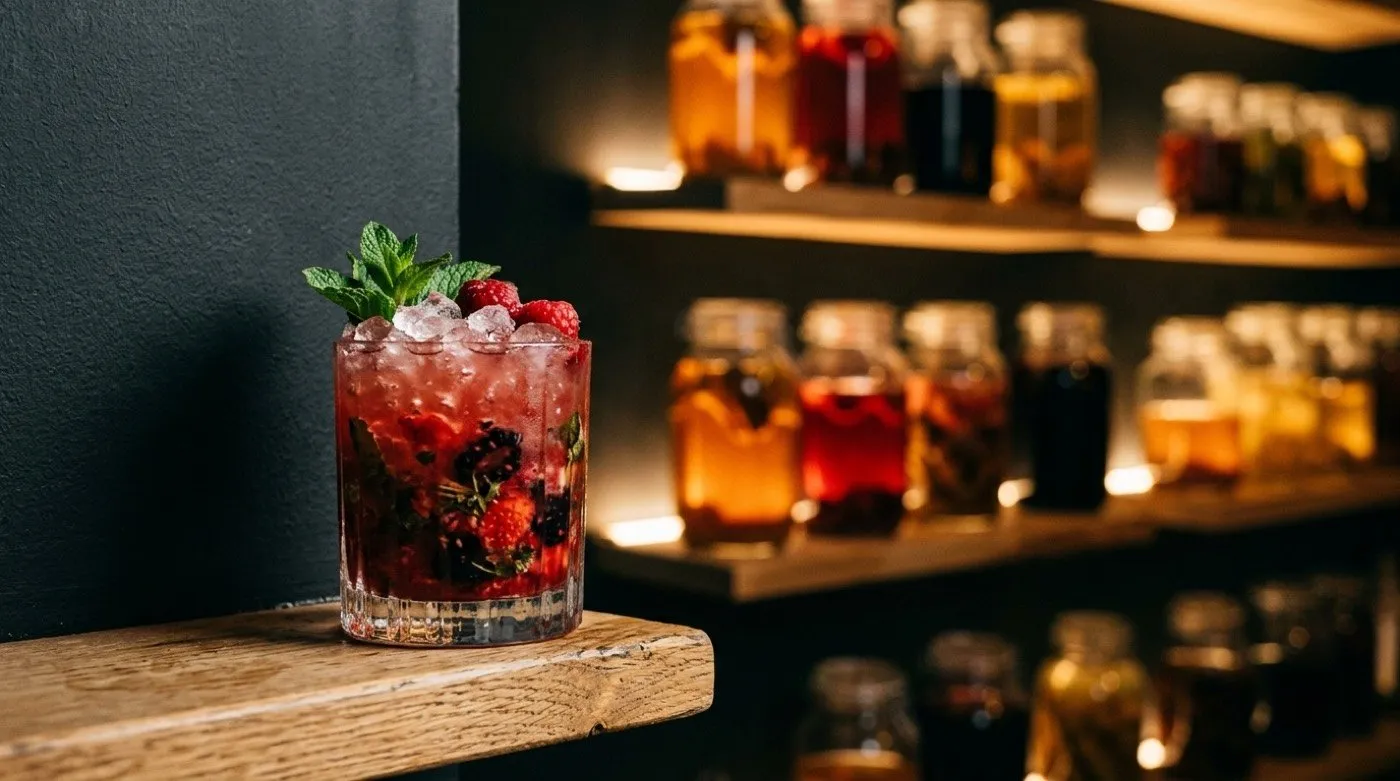
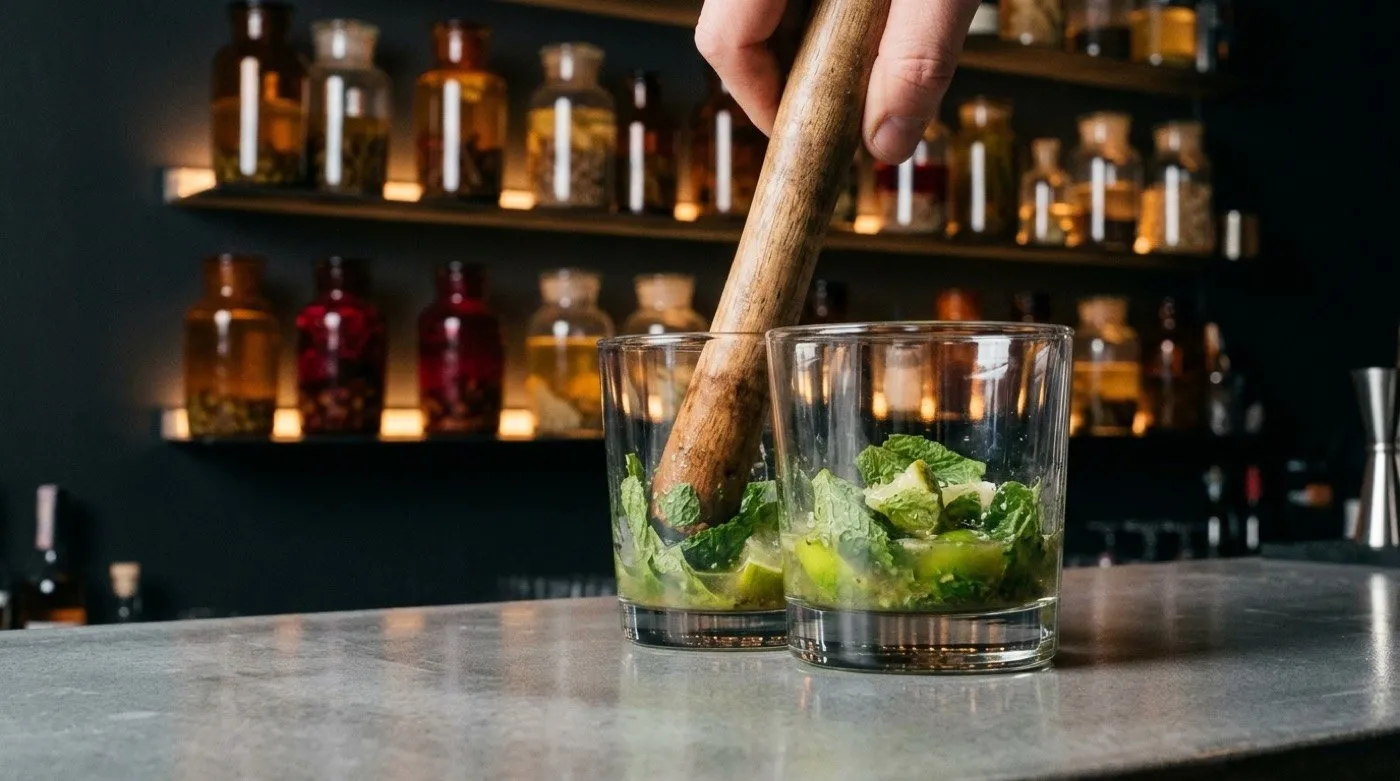
Muddling in cocktail making is the technique of gently pressing fruit, herbs or sugar into the bottom of the glass with a bar muddler to release juices, essential oils and aromas without breaking the plant structures that turn bitter. At STILLROOM we apply it with the precision of our laboratory: just enough pressure and a turn of the wrist, never crushing, because over-muddling extracts bitter compounds that ruin the cocktail’s balance.
What muddling is and how it works: the science of muddling without bitterness
Muddling an ingredient in cocktail making does not mean destroying it. The aim is to release the essential oils from herbs — such as peppermint or spearmint — and to extract the juice from fresh fruit — lime, red berries, pineapple — without bursting the membranes that contain chlorophyll, tannins and other bitter compounds. The difference between a vibrant cocktail and an unpleasant one lies in the pressure and the movement you apply with the muddler.
When you press a mint leaf gently and turn your wrist slightly, you break just enough cells for the essential oils (menthol, carvone) to pass into the liquid. But if you keep going, muddle too hard or use a striking motion, you break the central veins and the stems, releasing chlorophyll and plant tannins that add a herbaceous bitterness that is hard to disguise. Something similar happens with citrus: the white pith of the lime or lemon is loaded with limonin and naringin, bitter compounds that are only released if you press the peel too hard against the glass.
In short: pressing and turning extracts the good; crushing or striking extracts the bad as well. It is a matter of precision, not force.
| Ingredient | Pressure | Goal | Mistake to avoid |
|---|---|---|---|
| Peppermint / spearmint | Very gentle, just press and turn once | Release essential oils (fresh aroma) | Crushing the leaves or muddling the stems (herbaceous bitterness) |
| Lime wedges | Medium, press the flesh without crushing the peel | Extract juice and a little oil from the peel | Pressing the white pith against the glass (releases bitter limonin) |
| Red berries | Medium-high, depending on the fruit’s texture | Break the flesh to release juice and colour | Turning them into a purée (clouds the cocktail and adds excess acidity) |
| Sugar or ginger | High, to dissolve or break down fibres | Integrate the sweetness or extract the heat from the ginger | Not dissolving the sugar properly (leaves it gritty) or leaving ginger fibres unmuddled |
The muddler: types, materials and which one suits you
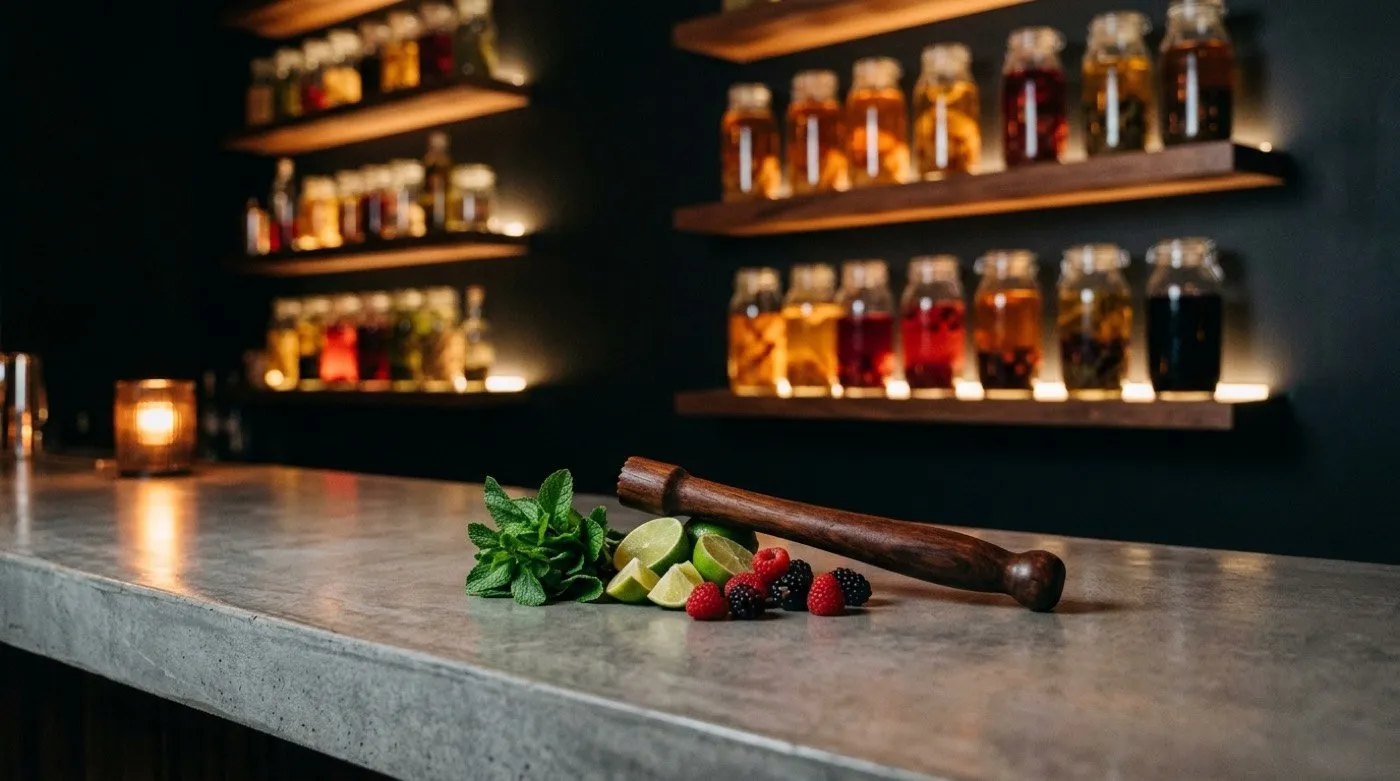
The muddler is the tool that defines the result of the muddling. Not all of them are alike, nor are they suited to the same job. The choice of material and the design of the head directly affect the pressure you apply and the damage you cause to the ingredients.
| Muddler | Material | Notes |
|---|---|---|
| Unvarnished wood | Natural wood (beech, maple) | The classic. Flat or slightly rounded head. Ideal for herbs because it lets you feel the pressure. Absorbs smells and flavours over time, so it is worth keeping one exclusively for mint and another for fruit. |
| Toothed nylon | High-density plastic with teeth | Perfect for fibrous fruit and sugar. The teeth help break down the flesh without needing to press too hard. Does not absorb flavours and is easy to clean. |
| Stainless steel | Steel with a flat or micro-toothed head | Heavier, muddles by its own weight. Useful for hard ingredients such as ginger or for making cordials in the same glass. Chills the material, which can be an advantage in precision cocktail making. |
| Silicone muddler | Food-grade silicone | An affordable option for home use. Grips better, but the head is often too soft for dense fruit. Acceptable for herbs if the pressure is controlled. |
How we use it at STILLROOM
At our bar on Calle Moreto 9, muddling is never an automatic gesture: it is a technique we adjust to the ingredient and to the result we are after in each signature cocktail. When we work with spearmint for a mojito twist, we use an unvarnished wooden muddler and apply minimal pressure, almost a pinch with a turn, to wake up the aroma without staining the liquid dark green. When we prepare a red berry smash with lacto-fermented ingredients, we reach for the toothed nylon to break down the fruit without overdoing it, and then integrate the cordial with the stir technique or a quick shake depending on the texture we want to achieve.
Muddling is often the first step of a more complex build. After muddling, we can integrate the ingredient with a vigorous shake, dilute it with a gentle stir or even pass it through a fine strain if we are after clarity. In our laboratory we apply many of the advanced cocktail techniques — such as clarification or fat washing — to bases that begin with a precise muddle. Because even the simplest gesture, well executed, is high-level cocktail making.
Three ideas for starting to muddle well
Muddling spearmint for a Mojito
Place the spearmint leaves in the palm of your hand, give them a sharp clap with the other hand to wake up the oils, then drop them into the glass. With the wooden muddler, press just once with a 45-degree turn. You will notice the aroma immediately. Add lime juice that has already been squeezed — never muddle the wedges together with the spearmint — and finish with rum, sugar and soda. The result: freshness without bitterness.
The lime and sugar of a Caipirinha
Cut half a lime into small wedges, removing the central white pith if it is thick. Place them in the glass with white or cane sugar. With a toothed nylon muddler, press using short, twisting movements until the sugar takes on the colour of the juice and starts to dissolve. Do not press the peel against the glass. Add cachaça and crushed ice, stir, and you will have a well-balanced Caipirinha, with no bitter aftertaste.
A red berry smash
Fresh strawberries, raspberries or blueberries go into the glass with a touch of simple syrup or diluted honey. With the nylon or steel muddler, press until the flesh breaks down, but without turning it into a purée. Aim for the liquid to take on colour and flavour while keeping small pieces that add texture. Finish with bourbon or gin, ice and a squeeze of citrus. A well-muddled smash is intense, fruity and never cloying.
Frequently asked questions
What does muddling (muddle) mean in cocktail making?
It is the technique of gently pressing solid ingredients — herbs, fruit, sugar — into the bottom of the glass with a bar muddler to release juices, essential oils and aromas. It differs from crushing because it aims to extract only the desired compounds without breaking the parts that turn bitter.
How do you muddle mint without it turning bitter?
The key is not to break the veins or the stems. Place the leaves in the glass and press just once with a gentle turn of the muddler, without striking or rubbing. If the recipe also calls for lime juice, squeeze it separately and never muddle the lime wedges together with the mint, because the friction between the citrus peel and the leaves intensifies the bitterness.
Which muddler is best?
It depends on the use. Unvarnished wood is the most versatile and gentlest on herbs; toothed nylon works better for fruit and sugar because it breaks down the pulp with less effort; steel is ideal for hard ingredients such as ginger or for precision cocktail making. In a professional bar it is worth having at least two types.
Do you need to muddle hard?
No. Force does not improve the result; if anything, it usually ruins it. Muddling works through controlled pressure, not percussion. If you feel you need to use a lot of force, you are probably using the wrong muddler or the ingredient is too whole (cut it into smaller pieces first).
Which cocktails involve muddling?
Many classics and signature drinks: the Mojito (spearmint), the Caipirinha (lime and sugar), the Old Fashioned (sugar and Angostura), the Mint Julep (mint), fruit smashes, the Bramble (blackberries) or the Moscow Mule (lime and ginger). In modern cocktail making, muddling is also used to integrate spices, flowers or ferments in the same glass. Muddling is one of those techniques that seem minor but make the difference between a correct cocktail and a memorable one. At STILLROOM we treat it with the respect it deserves: that of a precision tool which, used with knowledge, awakens aromas and flavours without harshness. If you would like to try how we apply this and other techniques in our signature cocktails, we invite you to explore our cocktail menu and, if you fancy experiencing it in person, you can book a table at our bar in the Los Jerónimos neighbourhood. And to keep learning, be sure to visit our cocktail glossary, where we break down every technique and concept with the same passion we bring to working behind the bar.