Sous-vide in cocktail making: precision infusions at STILLROOM
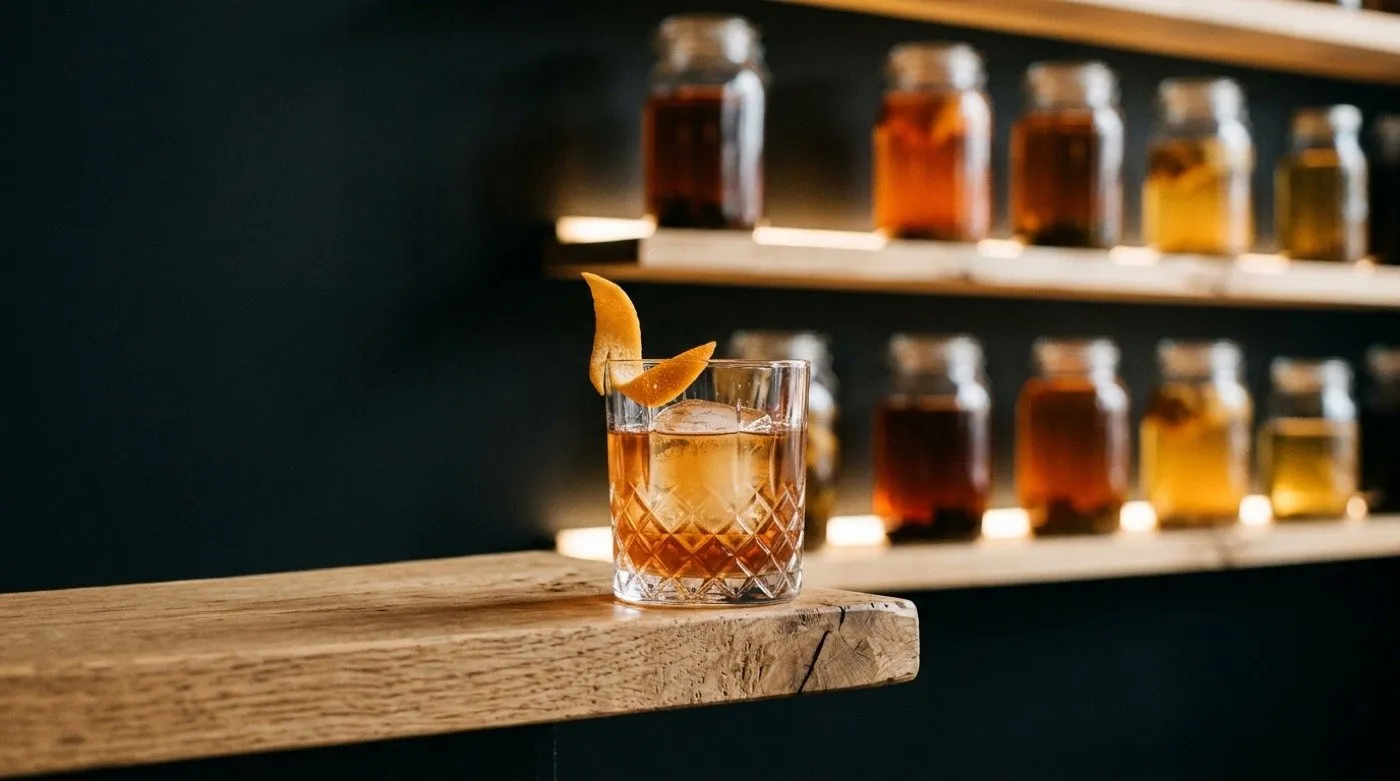
Sous-vide in cocktail making is a precision technique that lets us infuse spirits under vacuum with absolute control over temperature and time, achieving intense, clean, oxidation-free extractions within hours. At STILLROOM, our signature gastro cocktail bar in the Los Jerónimos neighbourhood (Madrid), we use it daily to create cocktail bases with a repeatability and an aromatic purity that traditional maceration cannot match.
How sous-vide works behind the bar
The idea is simple but powerful: we put the spirit together with the aromatic ingredients (peels, spices, herbs, fruit) into a vacuum bag or an airtight glass jar, remove the air and submerge it in a constant-temperature water bath. An immersion circulator keeps the water precise to tenths of a degree, usually between 55°C and 60°C, for a time ranging from one to three hours. Working under vacuum, the alcohol penetrates plant structures faster and draws out aromatic compounds without the need for aggressive heat. This avoids cooking the ingredients, preserves the most volatile notes and eliminates the oxidation that an open-air maceration suffers.
Behind the bar, that thermal precision translates into absolute control over the final profile. If we infuse lemon peel at 55°C for two hours, we get a bright, citrusy spirit, without the bitterness that would appear if we left it macerating for several days at room temperature. It is a tool that lets us play with the chemistry of aromas without losing a single drop of freshness.
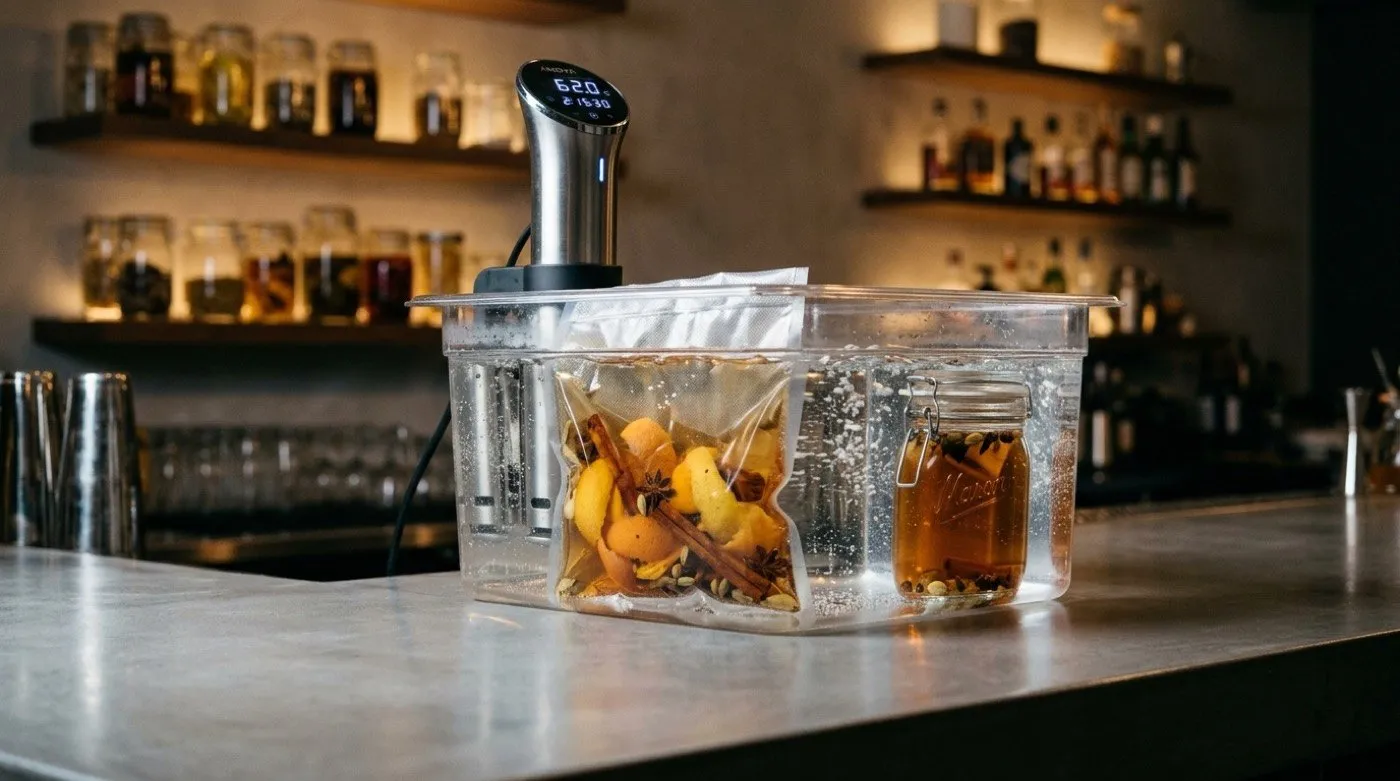
Table: approximate times and temperatures by ingredient
Although every combination of spirit and ingredient calls for its own fine-tuning, these approximate ranges will help you start out safely. Remember that quantities, the type of alcohol and the power of your equipment can slightly alter the results, so take them as a starting guide.
| Ingredient | Approx. temperature | Approx. time | Notes |
|---|---|---|---|
| Citrus (lemon, orange, grapefruit peel) | 55°C | 2 hours | Use only the peel with no pith to avoid bitterness; the result is bright and free of cloudiness. |
| Spices (cinnamon stick, cardamom, vanilla) | 60°C | 2-3 hours | Whole spices release their oils better; split the vanilla pod open and scrape out the seeds. |
| Fresh herbs (basil, mint, tarragon) | 55°C | 1-1.5 hours | Short times to preserve freshness; chill the container in iced water as soon as it comes out of the bath. |
| Coffee beans | 55°C | 2 hours | Clean infusion, no sediment or cloudiness; ideal for roasted-profile cocktails. |
| Red berries (raspberries, strawberries, blueberries) | 60°C | 1.5-2 hours | Lightly crush the fruit before bagging; strain afterwards to remove solids. |
Sous-vide versus traditional infusion
To understand why sous-vide has revolutionised signature cocktail making, there is nothing like comparing it with classic maceration. While the latter depends on time and ambient conditions, the vacuum and controlled temperature give us an almost laboratory-level power over every batch.
| Criterion | Traditional infusion | Sous-vide |
|---|---|---|
| Time | Days or weeks | 1-3 hours |
| Temperature control | Ambient, fluctuating | Constant precision (±0.1°C) |
| Clarity of the result | Often cloudy, with particles in suspension | Crystal-clear liquid, no sediment |
| Repeatability | Hard to replicate exactly | Very high; every batch is identical |
| Preservation of delicate aromas | Oxidation and loss of volatiles | Minimal oxidation, intact aromas |
How we use it at STILLROOM
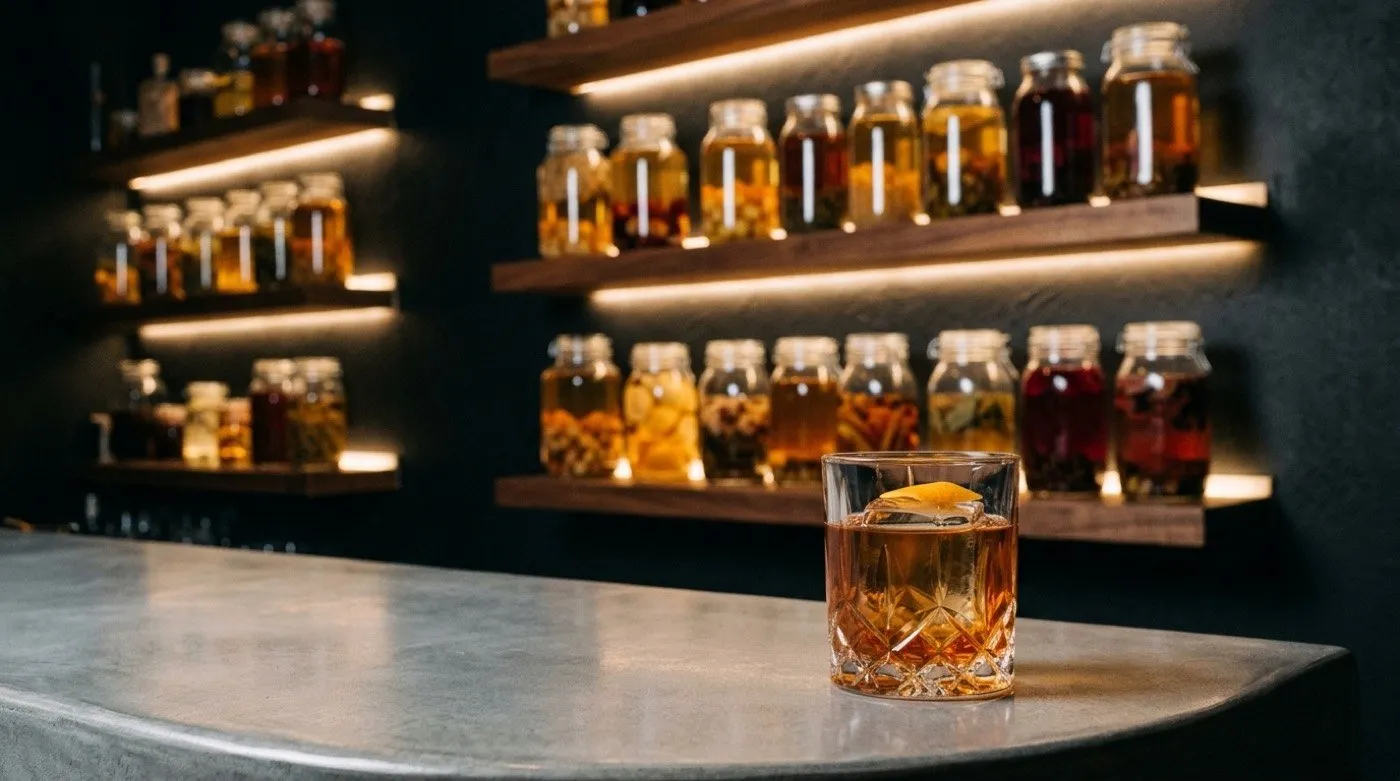
At our bar, sous-vide does not work alone. It is part of an ecosystem of techniques that turn every cocktail into a small sensory experiment. We combine it with fat washing to infuse fats and then clarify, with milk clarification to obtain silky transparencies, and with lacto-fermentation to bring complex acidities. All of this forms the core of our advanced cocktail techniques, where sous-vide provides the precision in the base infusions. A gin enriched with botanicals under vacuum can become the heart of a cocktail that we then ferment or fat-wash with butter; the layers of flavour multiply without losing sharpness.
Three ideas to get you started
Pineapple and vanilla infused rum
A white or lightly golden rum is transformed into a tropical bomb with pieces of fresh pineapple and a split vanilla pod. We infuse at 57°C for two hours. The result is an indulgent spirit, with just the right acidity from the fruit and a creamy vanilla background. Perfect for a Daiquiri that strays off script or for an Old Cuban with sparkle.
Gin with citrus and extra juniper
We start with a classic-profile gin and reinforce it with lemon peel, orange peel and a couple of lightly crushed juniper berries. At 55°C for an hour and a half, the citrus releases its essential oils without cooking, and the juniper boosts the gin’s backbone. Ideal for a Gin & Tonic with character or a dry, aromatic Martini.
Whisky with coffee and cacao
A bourbon-style whisky or a smooth Scotch is infused with roasted coffee beans and cacao nibs at 60°C for two and a half hours. The toasted notes and the elegant bitterness of the coffee integrate without astringency, creating a base for cocktails such as a Boulevardier or an Old Fashioned with a new depth. We strain through a fine filter and the liquid comes out impeccable.
Frequently asked questions
What is sous-vide in cocktail making?
It is the technique of infusing spirits that have been vacuum-sealed and submerged in a temperature-controlled water bath. It lets us extract flavours and aromas within hours, with a precision and an organoleptic cleanliness that traditional maceration cannot match. At STILLROOM we use it to create the bases of many of our signature cocktails.
At what temperature and for how long is a spirit infused under vacuum?
It depends on the ingredient, but as a general rule we work between 55°C and 60°C, with times of one to three hours. Fresh herbs and citrus call for lower temperatures and less time to avoid losing freshness; spices and fruit can tolerate a little more heat and duration. It is always advisable to start with conservative values and adjust from there.
Is it safe to infuse alcohol with sous-vide?
Absolutely, as long as suitable equipment is used and the stated temperatures are respected. Alcohol does not boil at these ranges (its boiling point is above 78°C), and the vacuum minimises the risk of outside contamination. At STILLROOM we apply strict food safety protocols in all our preparations.
Can I do sous-vide at home without professional equipment?
You can achieve a more than decent result with a domestic immersion circulator, vacuum bags or airtight jars and careful temperature control. It will not be identical to a professional laboratory’s, but you will be surprised by the quality of homemade infusions. That said, never improvise with direct heat or uncontrolled temperatures.
Which STILLROOM cocktails use sous-vide infusions?
Our menu changes by season, but many of the bases of our signature cocktails are born from sous-vide infusions. From citrus spirits for fresh proposals to spiced spirits for bolder drinks. The best thing to do is visit us and let yourself be surprised by the creations of the moment. If you have got the itch and want to try the result of these techniques in a glass, we invite you to explore our cocktail menu and book a table at STILLROOM. And if your technical curiosity is piqued, do not miss our cocktail glossary to keep discovering the most precise side of mixology.