Shake in cocktail making: how and when to shake a cocktail
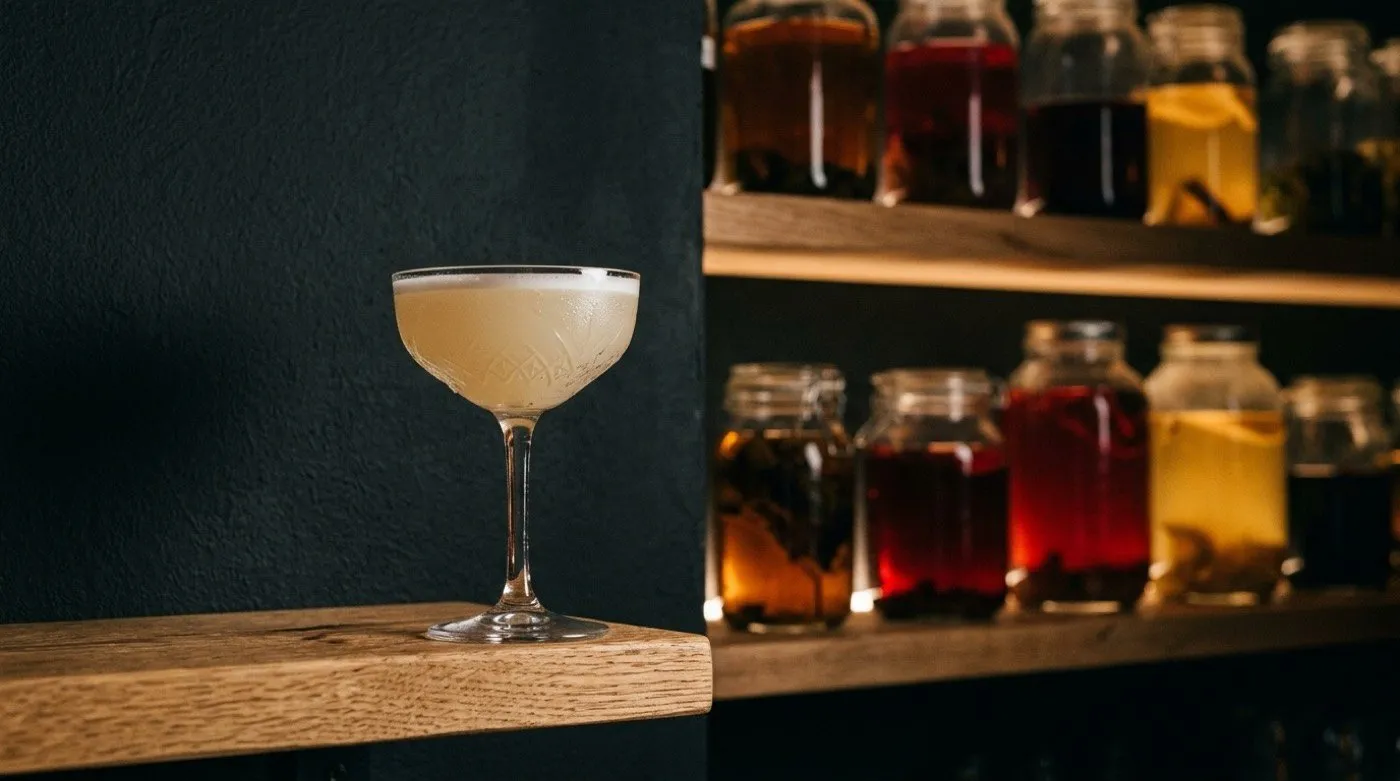
Shaking in cocktail making is the technique of agitating ingredients with ice inside a shaker to mix them, chill them at high speed and dilute them in a controlled way. It is used whenever a recipe includes components that are hard to integrate — fruit juices, dairy, egg white or dense syrups — because the energetic shaking creates a silky, aerated texture and a chill that a simple stir never achieves. At STILLROOM we apply it daily with a laboratory mindset: we do not shake just to chill, we shake to sculpt the exact texture of every drink.
What shaking is and how it works in a cocktail
The shake is one of the two great mixing techniques in cocktail making — alongside the stir — and probably the most spectacular. But behind the gesture there is pure applied physics. When you pour the ingredients into a shaker with ice and shake it, four simultaneous phenomena take place that transform the liquid.
The first and most obvious is mixing. Ingredients with very different densities — a light spirit, a viscous syrup, a juice loaded with pulp — resist coming together with a simple stir of a spoon. The controlled violence of the shake forces them to homogenise within seconds. The second is thermal shock: the icy surface of the cubes transfers cold to the liquid much faster than in stirring, because the movement multiplies the points of contact. That is why a good shake chills a room-temperature cocktail down to around -5°C or -6°C in barely 10 or 12 seconds. The third is dilution — the melting ice that adds water and softens the alcoholic bite — and here the shake offers a huge advantage: you can fine-tune it by adjusting the shaking time down to the second. The fourth phenomenon, and the one that makes the biggest sensory difference, is aeration. When we shake, we introduce microbubbles into the liquid that change its mouthfeel, making it lighter, creamier and — if there is egg white or aquafaba — generating that dense foam that crowns a good sour.
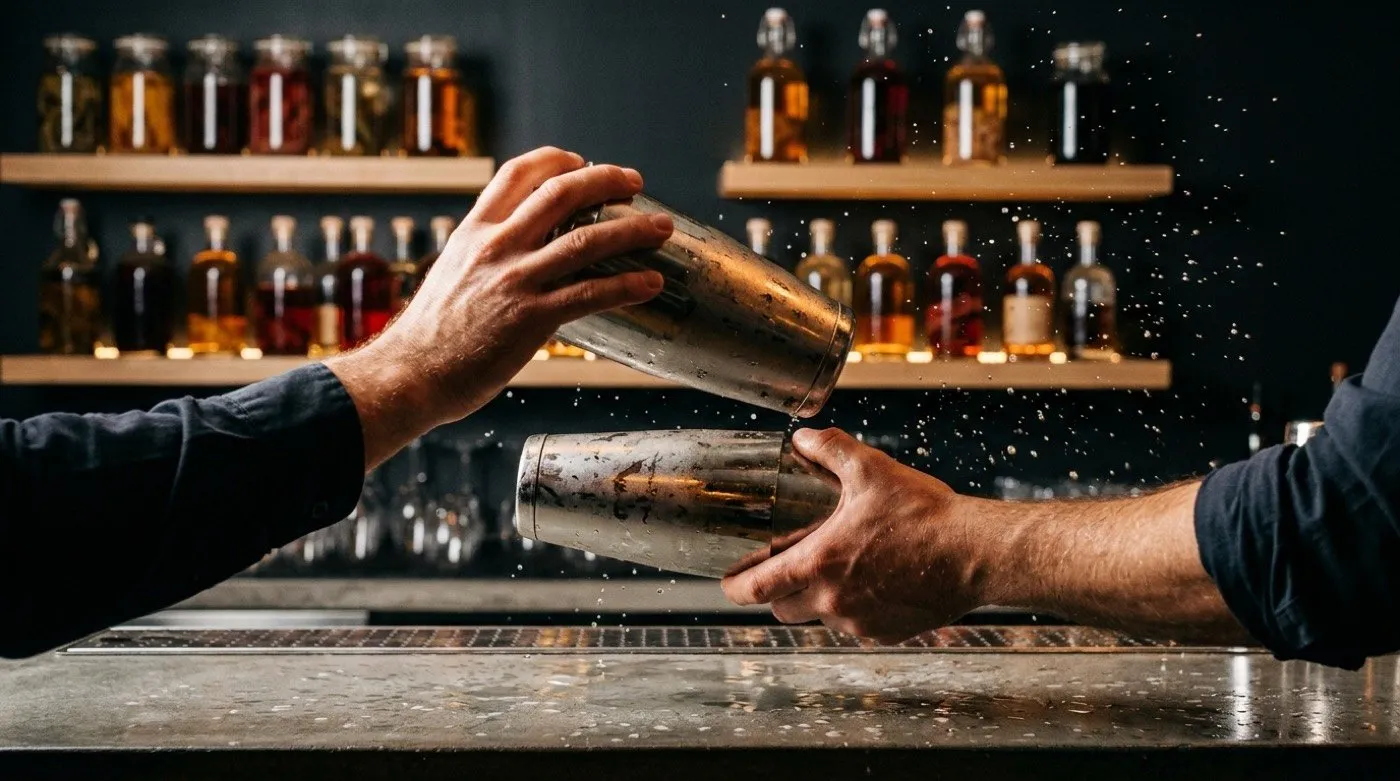
The rough duration of a standard shake is around 10 to 15 seconds with plenty of ice in the shaker (roughly two-thirds of the tin). Less time leaves the cocktail lukewarm and unstructured; any more and it will over-dilute the drink. The exception is the dry shake — shaking without ice — which we use only when the recipe has egg white or another emulsifier, to build the foam before the cold shake. We explain that in detail further below.
Types of shaker: which to use for each shaking style
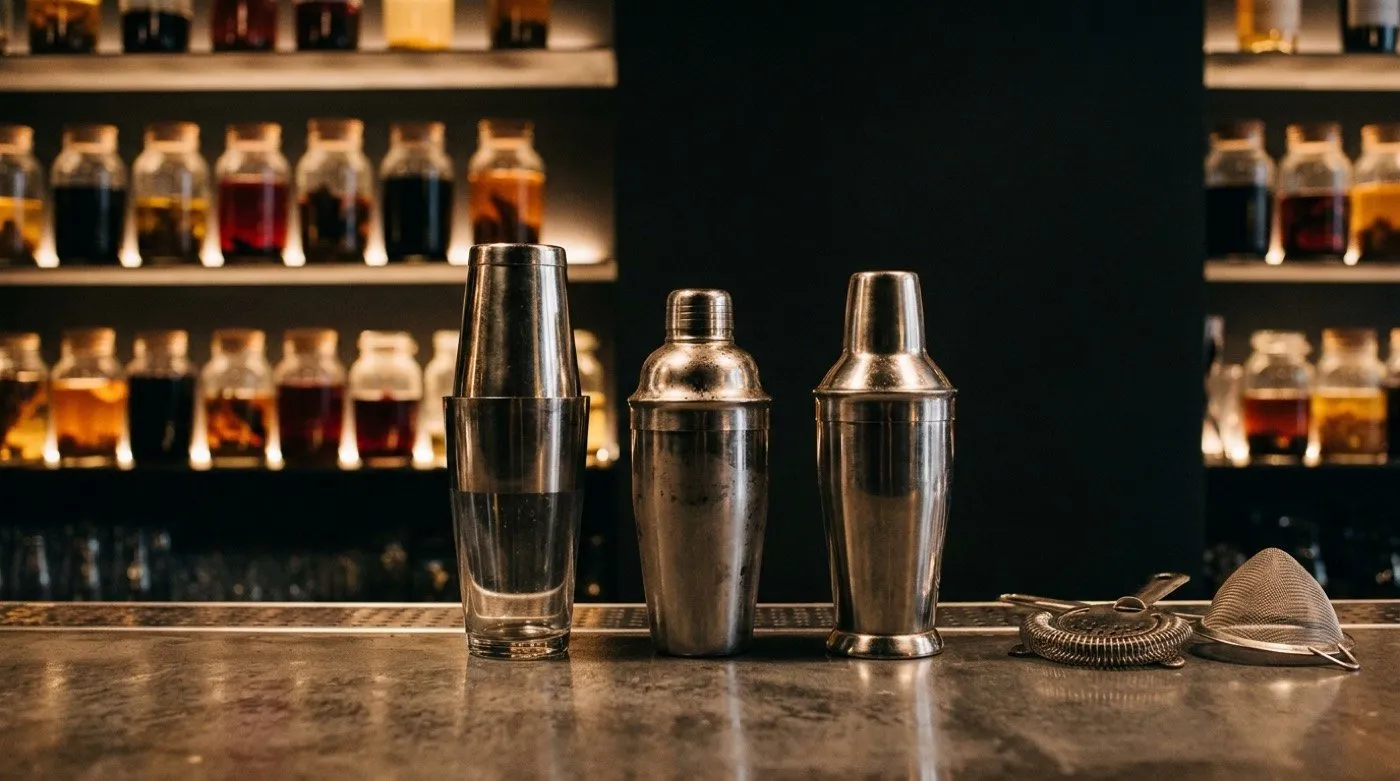
Not all shakers shake the same way, and choosing one or another affects the result, the chilling speed and even how comfortable service behind the bar is. In our day-to-day work we use several models depending on the cocktail and the volume of work.
| Shaker type | Pieces | Advantages | Who it’s for |
|---|---|---|---|
| Boston | 2 (metal tin + glass or two metal tins) | Chills very quickly, easy to open thanks to contraction, and fits large-volume cocktails | Professional bartenders, high turnover behind the bar |
| Cobbler (three-piece) | 3 (body, built-in strainer and lid) | Self-contained: needs no external strainer, ideal for home use or beginners | Hobbyists, home cocktail making |
| Parisian or French | 2 (metal body + conical lid, no strainer) | Elegant, simple seal, pour control with an external strainer | Classic bartenders, low-dilution cocktails |
At STILLROOM we mostly use the Boston because it lets us work quickly, chill instantly and control the opening for straining down to the millimetre. But we recognise that for anyone starting out at home, a well-made Cobbler saves a lot of headaches.
Shake vs stir: the golden rule every bar respects
There is a very clear line between what gets shaken and what gets stirred, and respecting it is what separates an impeccable cocktail from a mistreated one. The mnemonic rule we repeat within the team is: shake what is cloudy, citrusy or dairy; stir what is spirit-forward and translucent. In other words: when the recipe has particles in suspension, juices, fats or very dense syrups, shaking is mandatory. If the cocktail contains only spirits, vermouths, bitters and the odd light liqueur, stirring preserves its clarity and silkiness.
This table sums up the decision at a glance:
| Shake vs stir rule | SHAKE | STIR |
|---|---|---|
| Ingredients with pulp, juice or dairy | Yes: daiquiri, whisky sour, piña colada, bloody mary | No |
| Egg white or aquafaba | Yes: dry shake + shake with ice | Does not apply |
| Dense syrups, honey, purées | Yes: need shaking to integrate | No: they would stick to the bottom |
| Only spirits and vermouths | No: they cloud up and lose their silkiness | Yes: martini, negroni, manhattan, old fashioned |
| Sodas or sparkling drinks | Never: they would lose their fizz | Never: added at the end with a gentle turn |
How we use it at STILLROOM
At our bar on Calle Moreto 9, the shake is not just a technique, it is a statement of principles. We work with ingredients we often prepare in house using laboratory methods — citrus super juice to make use of the peel and reduce waste, homemade cordials that dial in the acidity and sweetness to the exact point, or fermentations that add layers of complexity — and the shake is the moment when all those hours of preparation show up in the glass. We control timing, ice type and shaking force according to the desired texture, and we often apply knowledge from advanced cocktail techniques to adjust the drink’s profile right before serving it.
One example: when we prepare a sour with a lacto-fermented pineapple cordial, the shake does not just mix; the aeration heightens the live notes of the ferment and the resulting foam acts as an aromatic vehicle. Cold, fast bar-style cocktail making gives way here to laboratory cocktail making where every shake has intent.
Three ideas for starting to understand the shake
Daiquiri: the classic shake manual
If there is one cocktail that teaches you how to shake, it is the daiquiri. Rum, lime juice and sugar: three ingredients that, without shaking, come out harsh, and with it turn into an icy, balanced, bright block. It is the thermometer with which we measure any bartender’s technique. About 12 seconds of shaking is enough for the lime to lose its harshness and the rum to round out.
Whisky sour with a dry shake
Here is where egg white comes in, requiring a first shake without ice — the dry shake — to emulsify the protein and build a silky foam. Afterwards, a second shake with ice chills and sets the texture. The result is a creamy cocktail, with a dense white crown that cushions the alcoholic punch of the whisky. At our bar we sometimes swap the egg white for aquafaba for vegan options; the principle is the same.
House citrus sour: our nod to the signature shake
With our citrus cordial — made from citric acid, peels and a touch of invert sugar syrup — we build a sour that changes with the season: lime and grapefruit in winter, blood orange in spring. The shake here is short, around 8 seconds, because the cordial is already perfectly integrated from the start, and we are only after intense cold and a light oxygenation that lifts the aromas.
Frequently asked questions
What does it mean to shake a cocktail?
Shaking a cocktail means putting the ingredients into a shaker together with ice and shaking it hard for about 10 to 15 seconds. The aim is to mix, chill through thermal shock, dilute slightly and aerate the mixture to give it texture. It is one of the fundamental techniques in cocktail making, alongside stirring.
When do you shake and when do you stir a cocktail?
You shake when the recipe contains ingredients that do not integrate easily by stirring alone: juices, dairy, egg white, very dense syrups or purées. You stir when the cocktail is made up exclusively of spirits, vermouths and translucent bitters, because that keeps its clarity and silky texture without introducing bubbles. The classic rule: if it is cloudy or citrusy, you shake it; if it is clear and spirit-forward, you stir it.
How long should you shake a cocktail?
The standard shake time is around 10 to 15 seconds with plenty of ice. Less than 8 seconds does not chill enough or integrate the ingredients properly; more than 20 seconds causes excessive dilution that will water down the drink. The exception is the dry shake for cocktails with egg white, where you shake without ice for about 10 seconds before the cold shake.
Which shaker is best for beginners?
For anyone starting out at home, the three-piece Cobbler shaker is the most recommended, because it has the strainer built in and needs no extra kit. For anyone with some practice already, or who wants to learn the professional technique, the Boston offers a faster chilling speed and more control over dilution. Both are valid once you have mastered how to use them.
Why do some cocktails have a dry shake?
The dry shake — shaking without ice — is used when the recipe includes egg white, aquafaba or another emulsifier. Shaking without ice unfolds the protein and traps air, forming a stable foam. Afterwards, a second shake with ice chills the mix without breaking the emulsion. The result is a creamy texture impossible to achieve with a single cold shake. If you would like to see how we apply all this in real glasses, we invite you to explore our cocktail menu or to book a table at STILLROOM and see it live, at that bar where every shake has a reason behind it. And if you are curious about other terms, drop by our cocktail glossary: there you will find dozens of concepts explained with the same technical depth and warmth.