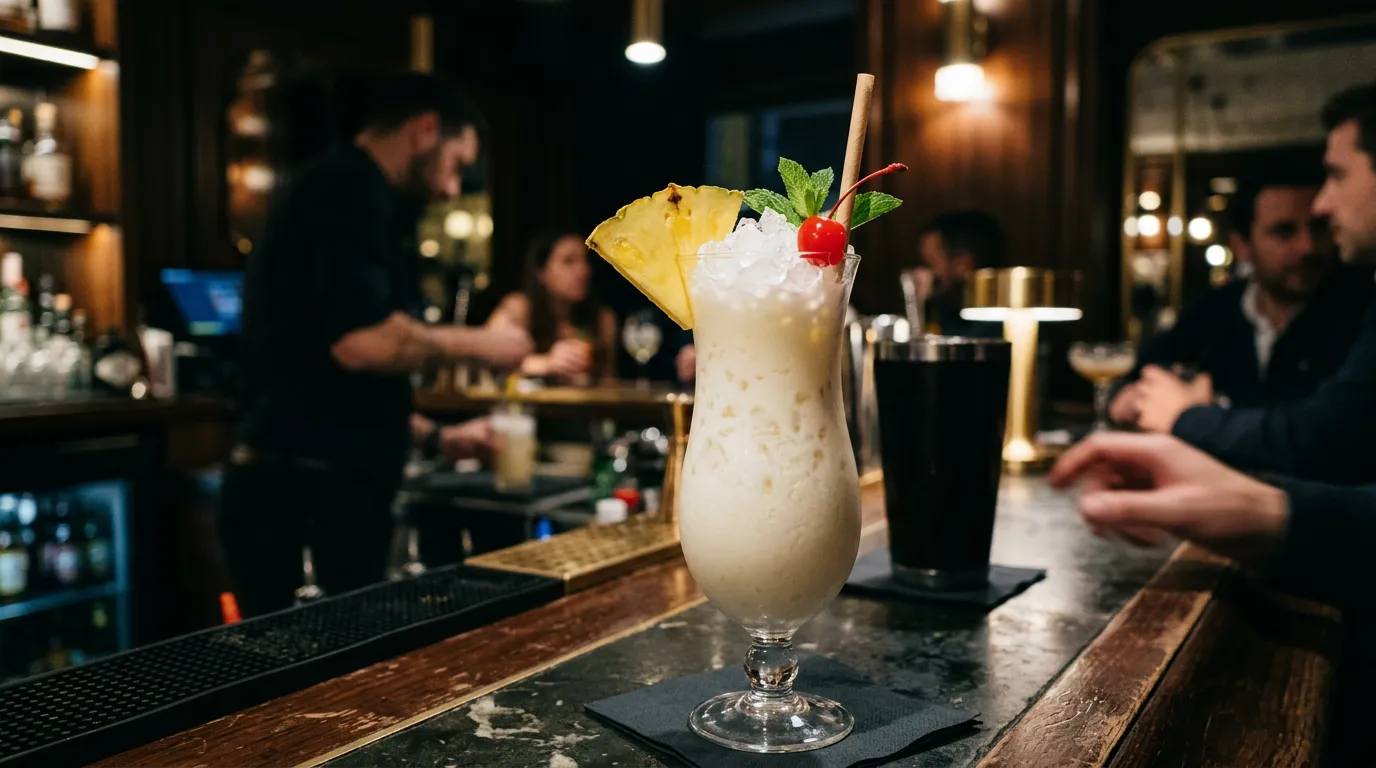
Piña colada is one of the most iconic cocktails of the Caribbean and the symbol of the tropical drink par excellence. Its name comes from the Spanish words “piña” and “colada”, which refer to the way the coconut mixture is prepared, though in its modern form it has become a refreshing cocktail that combines the sweetness of coconut cream with the acidity of pineapple juice and the smoothness of white rum. This piña colada recipe has won over bars all around the world, from the beaches of Puerto Rico to the most select venues in Madrid. At Stillroom, our gastro cocktail bar in the heart of Los Jerónimos, we wanted to pay tribute to this classic by adding our own personal touch, keeping the original essence while elevating it with contemporary mixology techniques.
Ingredients
- White rum, good quality: 60 ml
- Coconut cream (preferably natural, no additives): 40 ml
- Fresh pineapple juice, squeezed just before serving: 90 ml
- Crushed ice: enough to fill the mixing glass
- Fresh pineapple slices to garnish (optional)
- Cocktail cherry to garnish (optional)
- A splash of extra coconut cream for the final touch (optional)
Step-by-Step Preparation
Making the perfect piña colada requires attention to detail and respect for the proportions. Below are the steps to achieve a balanced, full-flavoured result:
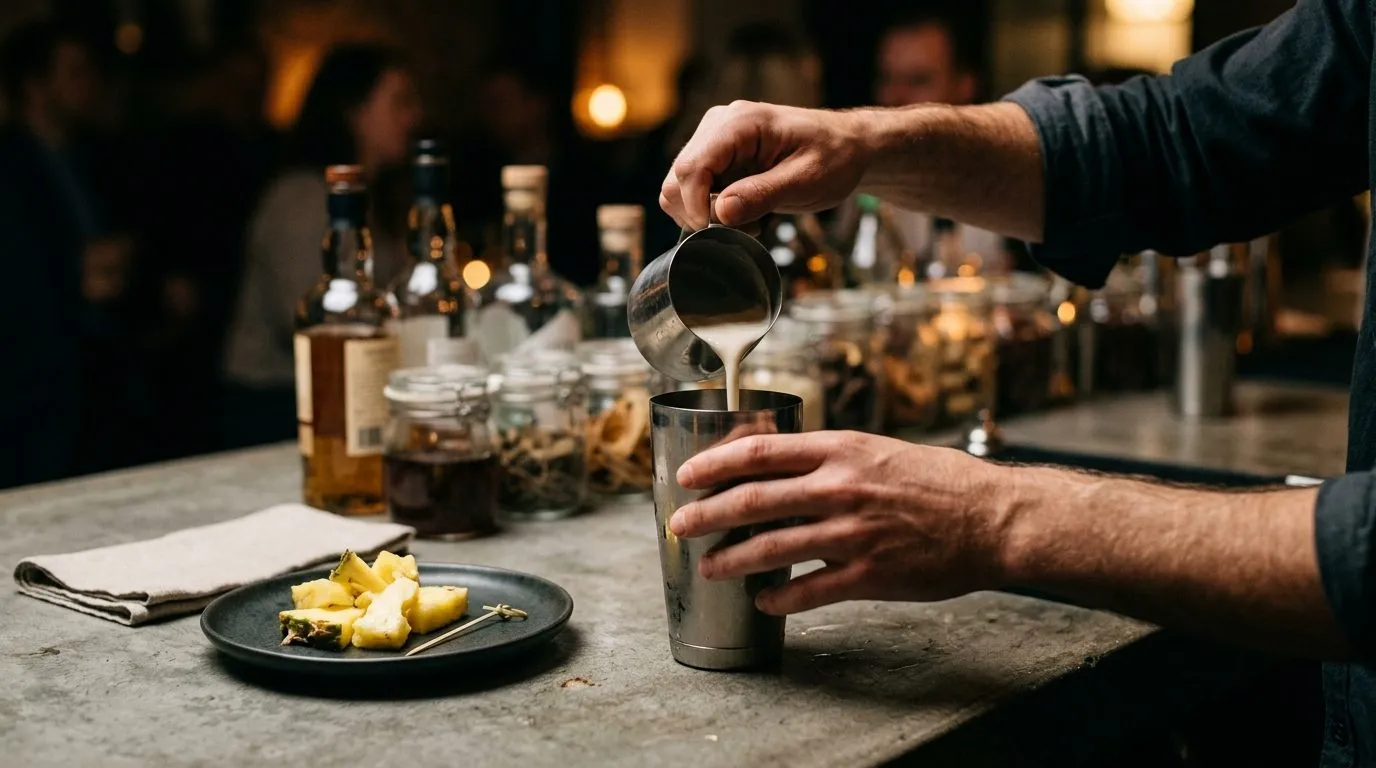
- Chill the equipment: Before you start, it’s essential to chill the mixing glass or shaker. You can do this by adding crushed ice and letting it sit for a few minutes, or simply by storing the equipment in the freezer beforehand. A cold glass stops the cocktail from diluting too quickly.
- Prepare the ice: Crushed ice is preferable to ice cubes because it breaks down evenly and gives the cocktail the right texture. If you have an ice crusher, now’s the time to use it; if not, you can crush the ice in a clean cloth with the help of a kitchen mallet.
- Mix the ingredients: In the mixing glass or shaker, add the white rum, the coconut cream and the pineapple juice. The exact proportions are 60 ml of rum, 40 ml of coconut cream and 90 ml of pineapple juice. These quantities guarantee an optimal balance between the alcohol, the creaminess and the fruit’s acidity.
- Add the ice: Add a generous amount of crushed ice until the glass is full. This will not only chill the mixture, but it will also provide the dilution needed to soften the rum and bring the flavours together.
- Shake vigorously: Close the glass or shaker and shake for about 15-20 seconds. The shaking should be vigorous to ensure all the ingredients combine completely and the ice breaks down partially, creating a smooth, even texture.
- Strain and serve: If you have used a mixing glass, strain the contents with a cocktail strainer to remove the ice and any fruit fragments. Pour the mixture into a tall, pre-chilled glass, preferably a Hurricane glass or a fine crystal glass.
- Garnish: For an attractive finish, garnish with a slice of fresh pineapple on the rim of the glass and, if you like, add a cocktail cherry. Optionally, pour a small splash of coconut cream over the surface to create a layered visual effect.
- Serve immediately: The piña colada should be served the moment it’s made to enjoy its fresh texture and vivid flavours. It’s best not to let it sit, as the ice will keep melting and throwing off the cocktail’s balance.
Professional Tips for the Perfect Piña Colada
- Rum quality: White rum is the alcoholic base of the piña colada. Choosing a good-quality rum, preferably one that has been briefly aged in oak barrels and then filtered to remove the colour, guarantees a more refined flavour. Avoid very cheap rums, as they can bring sharp, astringent notes that break the cocktail’s harmony.
- Coconut cream: Coconut cream is the ingredient that gives the drink its creamy texture and characteristic flavour. We recommend using natural coconut cream, with no preservatives or artificial flavourings. Some commercial brands add unnecessary sugar, which can make the cocktail overly sweet. If you want a lighter profile, you can opt for coconut milk, although the texture will be less dense.
- Pineapple juice: Fresh pineapple juice is irreplaceable. Carton juice, while convenient, usually contains additives and lacks the acidity and freshness of the fresh fruit. Squeezing the pineapple at the time of preparing the cocktail is the best option. To make the task easier, you can use an electric juicer or simply blend the flesh and strain it.
- Controlling the dilution: Crushed ice is essential, but it’s important not to overdo the quantity. Too much ice can dilute the mixture, making the flavour watery. On the other hand, too little ice won’t bring the temperature down enough. The key is finding the middle ground: enough ice to chill it, but not so much that the cocktail turns into water.
- Serving temperature: The glass should be cold before pouring the mixture. A glass at room temperature will cause the cocktail to warm up quickly. Also, chilling the glass in the freezer for a few minutes before use can make a real difference to the tasting experience.
- Texture and consistency: To achieve a smoother, more even texture, some bartenders use a blender instead of a shaker. This completely crushes the ice, creating a slushie-like consistency. However, this method can add too much water, so it’s best used in moderation.
- Flavour balance: The perfect piña colada should balance three main notes: the sweetness of the coconut cream, the acidity of the pineapple juice and the warmth of the rum. If the cocktail turns out too sweet, you can add a splash of lime or lemon to balance it. If it’s too sour, a little more coconut cream will correct it.
- Garnish: The garnish isn’t just decorative; it can also influence the sensory experience. A slice of fresh pineapple gives off a fruity aroma that intensifies as you bring it close to your nose. The cocktail cherry adds a touch of colour and a subtle sweet note.
The Stillroom Signature Version
At Stillroom, we wanted to give our own interpretation of the piña colada, keeping the main ingredients but adding nuances that elevate the tasting experience. Our Stillroom signature version incorporates several tweaks that set it apart from the traditional recipe.
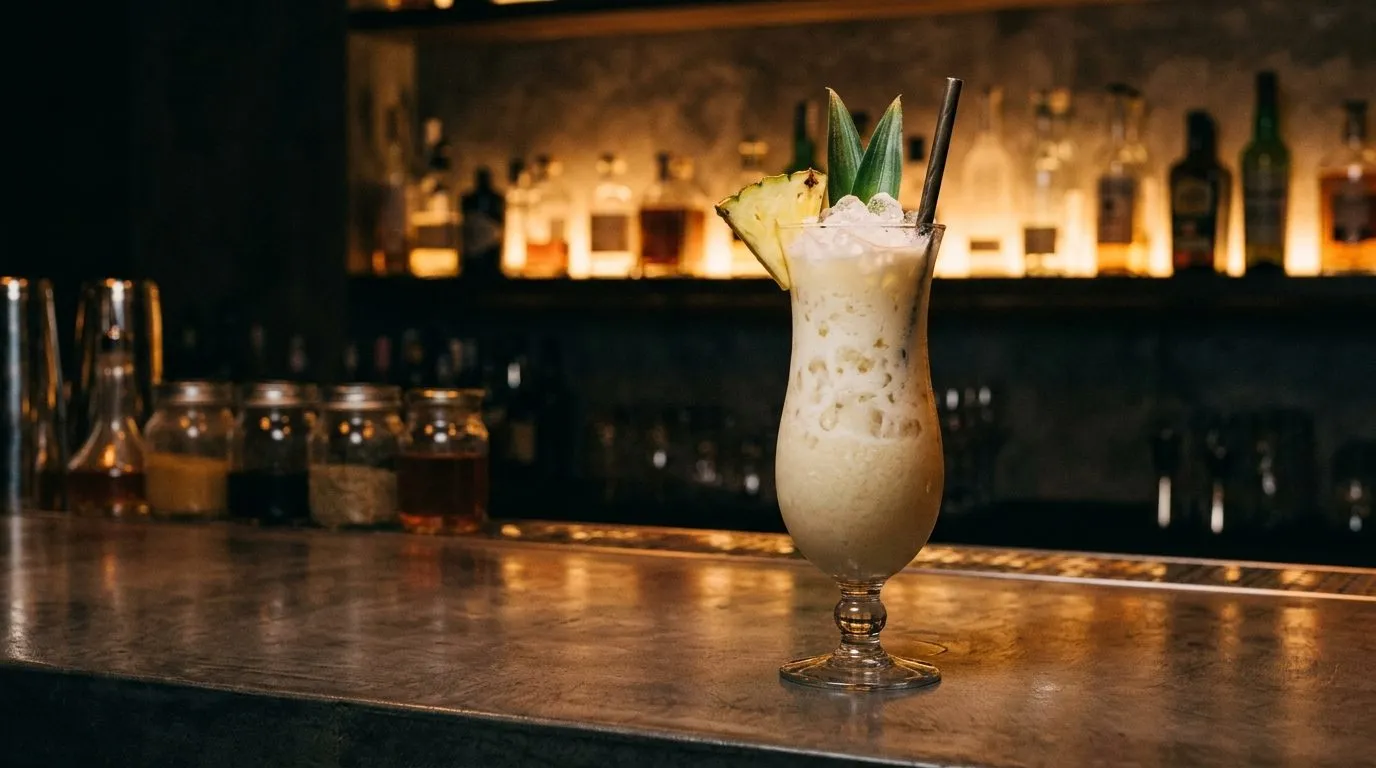
First of all, we’ve adjusted the white rum ratio to 70 ml instead of 60 ml, to give the cocktail a little more body and structure. The coconut cream stays at 40 ml, but we use a homemade coconut cream that we infuse with natural vanilla for 24 hours. This process brings subtle vanilla notes that complement the sweetness of the coconut without overwhelming the whole.
We prepare the pineapple juice daily by extracting the juice from ripe MD-2 variety pineapples, known for their sweetness and low acidity. This juice is mixed with a small amount of pineapple purée (approximately 10 ml) to give a denser texture and a more intense fruit flavour.
We also add a touch of Angostura bitters (two dashes) to balance the sweetness and bring aromatic complexity. This element is common in many classic cocktails, but its inclusion in the piña colada is less usual and adds a surprising dimension.
As for the preparation method, at Stillroom we use a shaker (rather than a blender, because crushing the ice over-dilutes the mixture and blurs the fruit’s nuances). We shake vigorously with ice for fifteen to twenty seconds to achieve a silky emulsion, with that light creaminess only shaking can produce, and serve it in a tall, pre-chilled glass. That way the pineapple and the rum keep their identity without losing their unctuousness.
Go ahead and make it at home: the ritual of measuring, shaking and pouring is part of the pleasure. And if you’re ever strolling through the Los Jerónimos neighbourhood, come up to the bar: we’d love to chat about this tropical classic and show you what we’re shaking today on our cocktail menu.
Frequently asked questions
What are the exact ratios for a well-balanced piña colada?
For a generous glass: 60 ml of white rum, 40 ml of coconut cream and 90 ml of fresh pineapple juice. That base holds the balance between the alcohol, the creaminess and the acidity. If you prefer more of a rum presence, you can raise it to 70 ml — as we do in our signature version — without touching the other measures. The important thing is always to measure with a jigger: by eye, too much juice or cream throws the whole thing off balance. With these quantities the result is silky, fresh and just sweet enough.
What’s the difference between coconut cream and coconut milk? Which one should I use?
They are not interchangeable. Coconut cream is dense, sweet and concentrated: it gives the piña colada its velvety texture and characteristic flavour. Coconut milk is lighter and more watery, giving a finer but less unctuous result. For this recipe we recommend natural coconut cream, with no additives or added sugars. If you only have coconut milk, you can reduce it briefly over heat to concentrate it, although the nuance changes. At Stillroom we work with a coconut cream we make in-house and infuse with vanilla.
Can you make a piña colada without a blender? Which method is best?
Yes, and in fact at Stillroom we prefer the shaker. Shaking with ice for 15-20 seconds emulsifies the ingredients and achieves a creamy texture without over-diluting. A blender pulverises the ice completely and gives a slushie-like consistency, but it’s easy for the cocktail to end up watery and lose its nuances. If you use a blender, do it with crushed ice and short pulses, without over-blending. For a more refined version, shake and serve in a tall glass that has been pre-chilled: the result is cleaner and better balanced.
Which rum is best suited for a piña colada?
White rum is the classic choice. Look for one of medium-to-high quality, preferably barrel-aged and then filtered to remove the colour: this keeps its body and subtle notes of vanilla or spice without turning harsh. Avoid very cheap rums, which bring rough alcoholic edges and astringent notes. A golden rum also works, though it shifts the profile towards something sweeter and heavier. In our signature version we raise the white rum to 70 ml, slightly above the standard measure, to give more structure without breaking the tropical harmony.
How do you make an alcohol-free piña colada?
Replace the rum with a little extra pineapple juice (up to 120 ml) and add a splash of lime to balance out the sweetness. The essential thing is to keep the coconut cream and the ice to achieve the creamy texture: shake it just like the classic version and serve it very cold, in a tall glass. If you’re after something more complex, a few drops of natural vanilla or a little pineapple purée round things off. For other alcohol-free options, take a look at our cocktail menu.
Why does my piña colada turn out watery and bland?
There are usually three culprits: too much ice, low-quality pineapple juice or not enough coconut cream. Crushed ice melts quickly; if you blend it or let the cocktail sit, the water dilutes the flavours. Squeeze fresh pineapple just before serving and avoid carton juice, which is much flatter. Also stick to the 40 ml of coconut cream: if you cut it back, you lose the unctuousness that holds everything together. Serve it immediately in a chilled glass and, if it tastes too sweet, a splash of lime will rebalance it.