The Neighbourhood · 2026 Guide
Cocktail bars in Los Jerónimos (Madrid): 2026 guide to the Prado neighbourhood
Los Jerónimos is one of Madrid's most singular neighbourhoods: a cultural enclave where the silence of museum halls becomes the murmur of terraces at dusk. Nestled between the Museo del Prado (see also our guide to what to do after the Prado) and the Parque del Retiro, this district of cobbled streets and historic palaces has for decades been a refuge for art lovers, diplomats and Madrilenians seeking calm away from the bustle of the centre. Yet until very recently, anyone looking for signature cocktails in Los Jerónimos found a limited offering: long-standing breweries, classic vermouth bars and restaurants where cocktails played second fiddle. The technical cocktail revolution has now reached the neighbourhood, bringing with it spaces that apply to drink the same principles that haute cuisine applies to the plate.
This guide was born to fill that gap: a journey through the current cocktail offering in Los Jerónimos, from the neighbourhood's institutions to the new speakeasies redefining the night-time experience beside the Golden Triangle of Art. Here you'll find what to look for in a signature cocktail bar, how to get there from the museums, when is the best time to visit and, above all, why STILLROOM represents a unique proposition in a neighbourhood still discovering its potential as a cocktail destination.
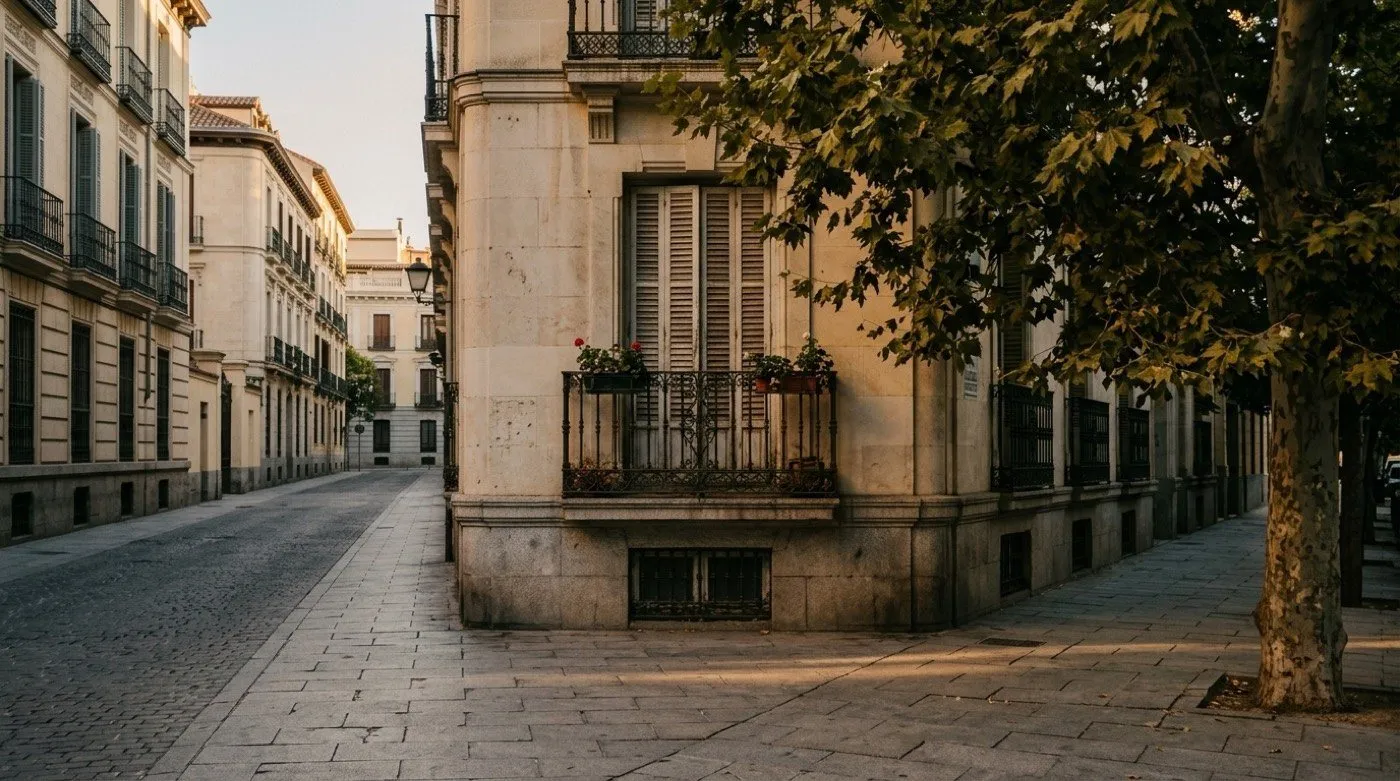
Los Jerónimos: a museum-culture neighbourhood with little technical cocktail craft (so far)
The Los Jerónimos neighbourhood occupies a privileged position on Madrid's map. Bounded by the Museo del Prado to the west, the Parque del Retiro to the east and the Carrera de San Jerónimo to the north, this enclave combines historic heritage with a residential atmosphere few central areas can offer. The presence of the Golden Triangle of Art —formed by the Museo del Prado, the Museo Reina Sofía and the Museo Thyssen-Bornemisza— makes Los Jerónimos a mandatory meeting point for visitors from around the world. The Real Academia Española, located on Calle Felipe IV, adds an intellectual component that sets this neighbourhood apart from other tourist areas of the capital.
The visitor demographic in Los Jerónimos is particularly interesting for understanding its gastronomic evolution. On one hand, there's the cultural tourist, typically concentrated in the museums during the day and looking for dining options afterwards. On the other, established Madrilenians: art-world professionals, diplomats (the ministerial district and the Congreso de los Diputados are nearby), and residents who value the neighbourhood's tranquillity over the chaos of Gran Vía or Chueca. This combination has historically produced a hospitality offering geared towards early lunches, traditional aperitifs and formal dinners at Spanish-cuisine restaurants.
However, the neighbourhood has a notable gap: technical signature cocktails were practically non-existent until 2022. While neighbourhoods like Malasaña, Chueca or the Gran Vía area have seen an explosion of gastro-bars and speakeasies, Los Jerónimos has kept its traditional character. That doesn't mean there are no places to grab a drink: the offering includes century-old breweries, neighbourhood vermouth bars and well-regarded wine bars. But anyone seeking a cocktail made with advanced techniques —fermentations, clarifications, controlled infusions— had to travel elsewhere. That void is precisely what the new wave of cocktail craft is beginning to fill.
The neighbourhood's historic offering: breweries, vermouth bars and wine bars
To understand where Los Jerónimos' cocktail scene stands today, you have to look back. The neighbourhood's historic offering has been solid but conservative. Cervecería Los Jerónimos, on the street of the same name, is a neighbourhood institution: a place where generations of Madrilenians have enjoyed a small beer with a tortilla or prawn tapa before heading to the cinema or theatre. These establishments operate on a clear business model: quick turnover, moderate prices and a loyal clientele that seeks familiarity rather than innovation.
The neighbourhood's vermouth bars follow the same pattern. Establishments like La Casa del Vermú or Bar del Museo (near the Prado entrance) offer quality vermouth with olives and patatas bravas, in an atmosphere that prioritises conversation over drink. Wine bars, such as the Vinoteca de la Calle Moreto, have grown in parallel, offering a selection of wines by the glass with a cheese and charcuterie menu to accompany. In these places, the cocktail exists but as a side note: it rarely becomes the star of the visit. The customer comes for the food or the wine, and orders a mixed drink as an afterthought.
This configuration makes historical sense. Los Jerónimos has never been a nightlife neighbourhood: its cultural and residential personality has favoured slow food, long dinners and intellectual encounters. Technical cocktail craft, as understood in spaces like specialist magazines, requires an audience willing to pay for an experience centred on the drink. That audience exists now, but it didn't a decade ago with the same force.
The new wave: signature cocktails arrive at the Golden Triangle of Art
The shift in trend began between 2022 and 2026, driven by several factors. First, the normalisation of cocktail culture after the pandemic: Madrilenians have become more discerning and seek experiences where the drink is the protagonist, not an accompaniment. Second, cultural tourism has evolved: the visitor leaving the Museo del Prado no longer just wants a tapa, they want an experience that completes the museum visit. And third, the evolution of Spanish cocktail craft itself, which has moved from copying Anglo-Saxon models to developing its own identity based on culinary techniques.
In this context, two models have emerged in Los Jerónimos. The first is La Azucarera, located in the Hotel Mercer Madrid, on Calle Ruiz de Alarcón. This space represents hotel cocktail craft: a menu signed by recognised professionals (Javier de las Muelas), a formal atmosphere, premium prices and a clientele that includes hotel guests and visitors seeking a structured experience. La Azucarera is a legitimate competitor: it brings sophistication to the neighbourhood and attracts an audience that previously would have had to travel to Recoletos or Serrano.
The second model is STILLROOM, at Calle Moreto 9. Unlike La Azucarera, STILLROOM is an independent speakeasy: it doesn't depend on a hotel, has no hospitality brand behind it and its atmosphere is more intimate. The technical ambition is similar —lactofermentation, fat washing, sous-vide, milk clarification, infusions— but the context is radically different. While hotel cocktail bars attract those seeking structure and formal service, STILLROOM attracts those seeking discovery: the detail of technique that disappears into flavour, the bar where the bartender explains the process, the feeling of being in a space created by passion rather than corporate strategy.
STILLROOM: the neighbourhood's technical cocktail bar
STILLROOM occupies a niche that didn't exist in Los Jerónimos: it's the neighbourhood's only independent modern speakeasy applying advanced culinary techniques to cocktails. The central concept is "the art of the invisible": cocktails where technique —however complex— doesn't read as artifice, but as flavour. A lactofermented cocktail doesn't taste of fermentation; it tastes of depth, of complexity. A fat washing leaves no greasy residue; it adds body and texture that the palate perceives as richness.
The techniques STILLROOM employs are the same ones used in haute cuisine: lactofermentation (applied to fruits and vegetables to add complex acidity), fat washing (infusing fats into spirits to create stable emulsions), sous-vide (low-temperature cooking of ingredients to extract flavours without oxidation), milk clarification (to create crystal-clear cocktails with a silky texture) and cold infusions of herbs and spices. Each of these processes requires time, equipment and knowledge: they are not techniques to be improvised.
Technical mixology applies to the cocktail the same principles that haute cuisine applies to the plate: temperature control, fermentation, infusion, clarification. The result is not a drink: it is a piece with its own narrative.
The offering is completed with a small plates kitchen with no direct fire or traditional oven. At STILLROOM there is no direct fire or traditional oven: the kitchen uses express techniques such as sous-vide, radiation, blowtorch and induction to prepare dishes that accompany the cocktails without competing with them. This is relevant because many gastro bars fail by trying to make the food the protagonist: at STILLROOM, the cocktail leads and the food accompanies.
The atmosphere of the venue reinforces this concept. With limited capacity, no blaring music and a décor that prioritises conversation over noise, STILLROOM is aimed at a specific audience: the museum visitor who wants to end the day with a memorable experience, the Madrilenian looking for an intimate space for a serious conversation, the art professional who wants networking in an environment that is not a conventional bar.
What to look for (and what to avoid) in a signature cocktail bar in 2026
Not all cocktail bars that promise "technique" offer the same thing. Here are the criteria for distinguishing a serious proposition from one that uses the word technique as a marketing gimmick:
- Visible technique on the menu: if the menu mentions fermentations, washes, clarifications or specific infusions, that is a good sign. Serious cocktail bars explain what they do, even in understandable words.
- Specified ingredients: avoid menus that say "vodka mix" or "rum blend". A signature cocktail bar mentions the brand, the origin and sometimes the batch of the spirit. If you don't know what you're drinking, it's not signature cocktails.
- The bartender explains the cocktail: at STILLROOM, when you order a cocktail, the bartender explains what it contains and how it has been prepared. That dialogue is part of the experience. If they serve you in silence and nothing more, you are in a mixed-drinks bar.
- Limited capacity: serious speakeasies do not try to maximise covers. If a venue has more than forty seats, it is probably a gastro bar that uses cocktails as a gimmick.
- Non-invasive music: the music should be present but never above the conversation. If you have to shout to talk to your companion, the atmosphere is not designed for enjoying the cocktail.
- Quality table or bar: materials such as fine wood, marble or stainless steel indicate investment. PVC or plastic are signs that the venue prioritises profit over experience.
- Small plates menu designed to accompany: not a generic cheese board, but dishes that complement the profiles of the cocktails. At STILLROOM, for example, the sous-vide octopus is designed to accompany cocktails with marine notes.
- What to avoid: "Instagram" cocktails that prioritise the photo over the flavour, industrial ice without shape or clarity, music at disco volume, menus that copy models from other cities without adapting to the neighbourhood.
How to get to STILLROOM from the three museums
STILLROOM is at 9 Moreto Street, less than a ten-minute walk from the three museums of the Golden Triangle of Art. From the Prado Museum, the most direct route is to leave by the Velázquez entrance (Felipe IV Street) and walk east. It takes five to seven minutes: you pass the Royal Spanish Academy and turn right at the first street after the church of Los Jerónimos. The route is urban and safe, with wide pavements and good lighting.
From the Reina Sofía Museum, the walk is longer (twelve minutes) but just as pleasant. The prettiest route goes through the Las Letras street, where the literary murals are, and then through Los Jerónimos up to Moreto. It is a walk that crosses the neighbourhood and allows you to discover it before you reach the venue.
From the Thyssen-Bornemisza Museum, it is eight to ten minutes away. You leave the Paseo del Prado, head south along Carrera de San Jerónimo and turn left on Moreto Street. This route goes past some of the area’s historic spots and is ideal for those arriving from the Thyssen who want a more traditional experience before getting to STILLROOM.
By public transport, the options are: Cercanías to Atocha (a ten-minute walk from the station), Metro line 2 to Banco de España (eight minutes on foot), or Metro line 1 to Antón Martín (seven minutes on foot). All stations are within a reasonable distance, and the neighbourhood is compact enough that no walk exceeds fifteen minutes from any of the main sights.
When to visit: the rhythm of Madrid’s aperitivo and after dark in the neighbourhood
STILLROOM’s opening hours are designed to fit the rhythm of the neighbourhood, and the venue lives in two times: by day as a gastronomic laboratory, and on weekend nights as a cocktail sanctuary. It opens Wednesday and Thursday from 11:00 to 19:00; Friday and Saturday from 11:00 to 15:00 and from 19:00 to 01:30; and Sunday from 11:00 to 23:00. It is closed on Mondays and Tuesdays, a decision that respects the area’s residential side and allows the team to rest.
The morning and brunch (Wednesday to Sunday from 11:00; the brunch menu is served until 17:00 on Wednesday and Thursday, until 15:00 on Friday and Saturday and until 16:00 on Sunday) is the favourite slot for museum visitors: coffee, brunch and a relaxed rest of the meal on the way out of the first galleries, or before taking on the afternoon visit.
The aperitif (Friday and Saturday from 11:00 to 15:00; on Sunday from 11:00, with no mid-day break) is the time for the vermouth bar and small plates: the light is good, the cocktails are designed to open the appetite and the menu works as light food to share.
The midweek afternoon (Wednesday and Thursday, right through to closing at 19:00) is the quietest gap in the neighbourhood: the sweet side of the brunch menu runs until 17:00 and, from then on, the desserts from the small-plates menu keep the first cocktail of the afternoon company.
The evening (Friday and Saturday from 19:00 to 01:30, and on Sunday until 23:00) is the time for true aficionados: the music gets lower, the bar becomes the protagonist and the bartender has more time to explain the most complex cocktails. On Friday and Saturday there is room to spare for the after-dinner drink and for the last cocktail of the small hours.
Less busy weekdays are Wednesday and Thursday. If you’re after quiet conversation and personal attention, those days are ideal. Friday and Saturday nights the atmosphere turns more lively and tables are in short supply, so booking is recommended.
Mini-map of cocktail spots in Los Jerónimos and the immediate surroundings
- STILLROOM (9 Moreto Street) — Independent Speakeasy — technical signature cocktails + small plates — For: arts enthusiasts, technique lovers, those looking for intimacy
- La Azucarera (Hotel Mercer) — Hotel cocktail bar — quality hotel cocktail list with a clear house signature — For: hotel guests, formal drinkers, those who like structure
- Cervecería Los Jerónimos — Traditional beer & tapas bar — Estuary, beer, tapas, neighbourhood atmosphere — For: local regulars, those looking for homely simplicity and authentic prices
- Vinoteca de la Calle Moreto — Wine shop and wine bar — wines by the glass, typically and cured meats — For: wine lovers, looking for pairing suggestions
- La Casa del Vermú — Classic vermouth bar — vermouth, olives, classic neighbourhood atmosphere — For: travellers seeking an authentic Madrid experience
Cocktails in the neighbourhoods around Los Jerónimos
Los Jerónimos is not an island: it is part of a network of neighbourhoods in south-central Madrid where cocktail culture has its own character in each one. If you're moving around the area, these guides complete the map: cocktail bars in Recoletos, the most stately axis between Cibeles and Colón; cocktail bars in the Atocha area, the city's southern gateway next to the Reina Sofía; and cocktail bars in Lavapiés, the most traditional and bohemian neighbourhood in the centre. From any of them, STILLROOM is a short walk away.
Frequently asked questions
Do you need a reservation to have a cocktail in Los Jerónimos?
In most establishments in the neighbourhood it is not necessary, but at STILLROOM it is recommended. As a speakeasy with limited capacity, tables fill up especially on weekends. You can book through the STILLROOM website or call 619 21 36 16. In traditional beer and vermouth bars you can walk in, but note that they do not accept reservations.
What is the difference between a hotel cocktail bar and an independent speakeasy?
A hotel cocktail bar (such as La Azucarera at Hotel Mercer) offers a structured experience: a fixed menu, formal atmosphere, full food and beverage service. An independent speakeasy (like STILLROOM) prioritizes intimacy, flexibility and a direct relationship with the bartender. At a speakeasy, the menu can change more frequently, the atmosphere is more relaxed and the experience depends more on the team than on the corporate concept.
Can you have dinner while having cocktails?
At STILLROOM you don't dine as in a restaurant, but the small plates menu is designed to work as a full dinner if you share several dishes. It's not a place for a formal meal, but rather for a gastronomic experience where the cocktail leads and the food accompanies. In the neighbourhood's beer and vermouth bars you can have dinner, although the cocktail offering is limited.
Is it an expensive neighbourhood?
Los Jerónimos has options for all budgets. Traditional beer and vermouth bars offer an average bill that is affordable for the area. Signature cocktail bars have a higher price, justified by technique and ingredients. At STILLROOM, as at any technical cocktail bar, the bill reflects the complexity of each preparation and the quality of the ingredients used. Check the updated menu on stillroom.co before you come.
What is the best time to visit the cocktail bar in the neighbourhood?
The ideal moment depends on what you're looking for. If you want peace and personalised attention, Wednesdays and Thursdays — the venue operates from 11:00 to 19:00 as a daytime laboratory — are perfect. If you want atmosphere and energy, the weekend aperitif (from 11:00 to 15:00) and Friday and Saturday nights (from 19:00 to 01:30) are better. Many people leave the museum and go straight to the after-meal or the aperitif: it's the period when the neighbourhood is most alive and the cocktails are designed to whet the appetite.
Do you have non-alcoholic cocktails?
Yes. STILLROOM offers a selection of non-alcoholic cocktails that use the same techniques as alcoholic ones: infusions, fruit and vegetable fermentations, and clarifications. They contain no liquor, yet they retain the flavour complexity that defines the menu. If you're looking for non-alcoholic options, ask the bartender when you arrive: they will be delighted to explain them to you.
The neighbourhood & the method:
Signature cocktails: the methodNear the Prado MuseumRecoletosAtochaLavapiésThe bar · Moreto 9Stillroom · The Art of the Invisible. Calle Moreto 9, five minutes from the Prado.
Book a table