Throwing in cocktail making: the pour that aerates without over-diluting
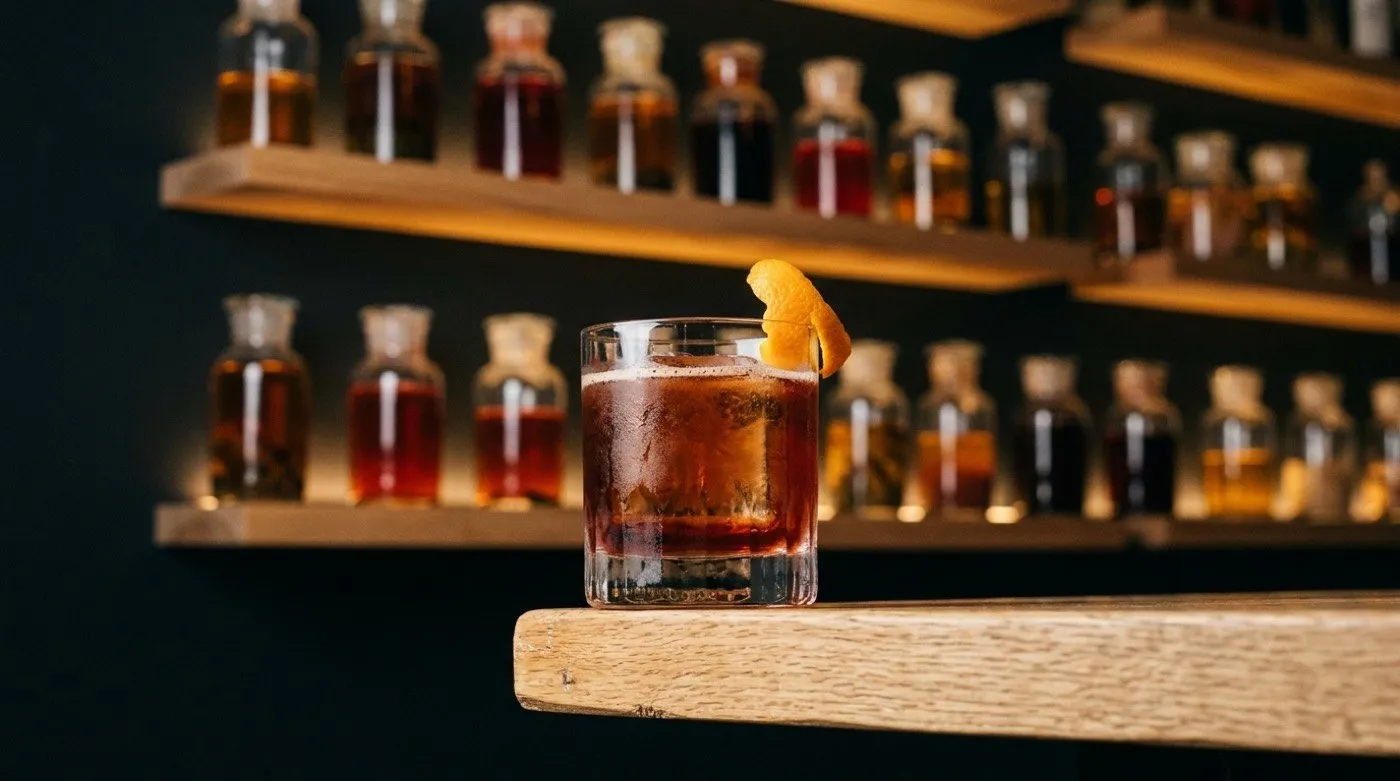
At STILLROOM, throwing (or the pour) is a cocktail-making technique that involves pouring the liquid in a long arc between two vessels — one holding ice and a strainer, the other empty — to aerate and integrate it as shaking would, but with less dilution and a silkier texture. Ideal for cocktails that need oxygenation without becoming too watered down, such as a Bloody Mary or a Bamboo.
What throwing is and how it works
Throwing is one of those cocktail-making techniques that, seen live, looks like a high-precision bartending trick. In essence, it involves pouring the mixture from one vessel to another in a thin, elongated stream, letting the air wrap around it as it falls. The aim is to oxygenate, integrate the ingredients and chill them, but with a much finer control over dilution than classic shaking offers.
To do it correctly you need two reasonably tall vessels (a mixing glass, a cider tumbler, or even two parts of a lidless three-piece shaker), good-quality ice and a Hawthorne strainer. In the source vessel you put the ice and pour in the ingredients; on top you place the Hawthorne strainer. The receiving vessel stays empty. You raise the source vessel to about mid-height and let the liquid fall in a controlled arc towards the other vessel, gradually increasing the distance between them to lengthen the pour. The process is repeated several times — usually between three and five passes — until you reach the desired temperature, integration and aeration. As with the precision cocktail making we practise at STILLROOM, every movement matters.
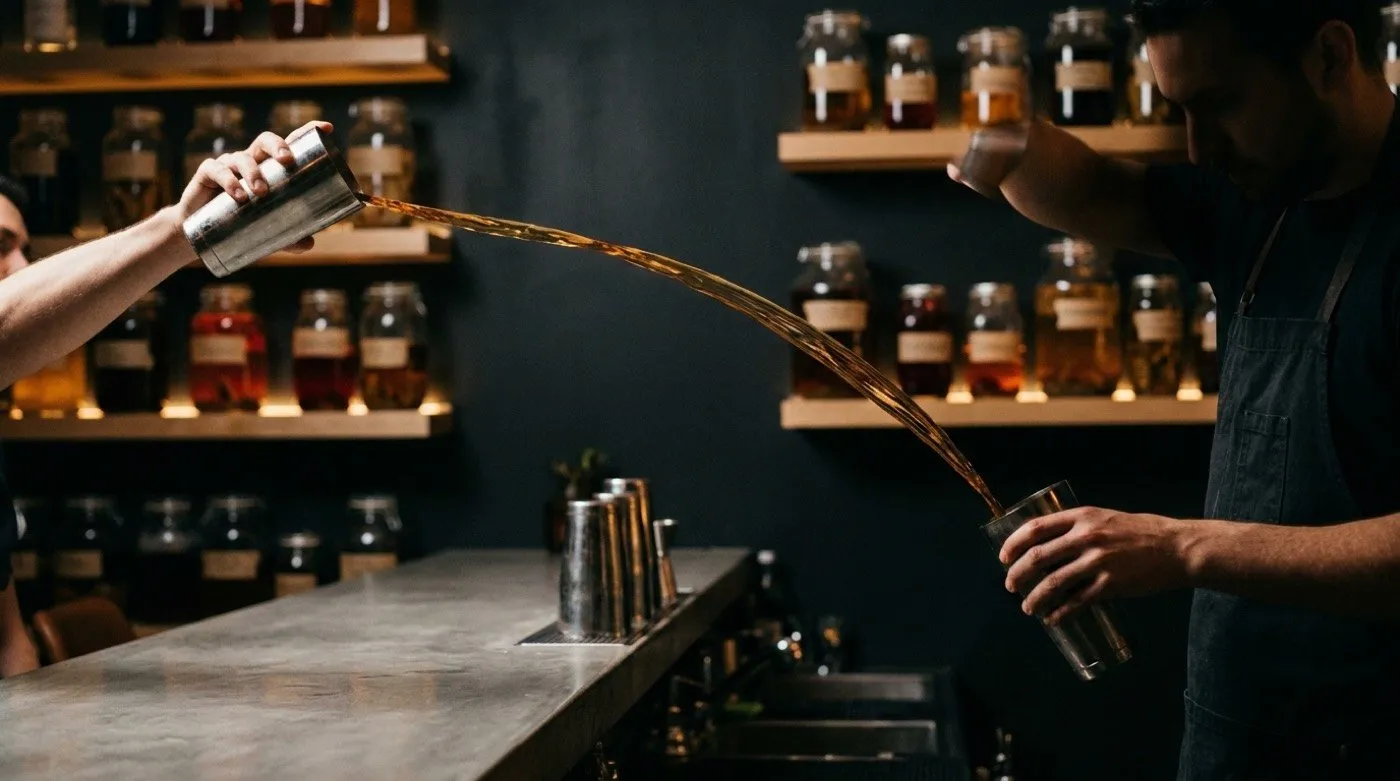
Unlike the shake, which introduces air violently and creates a lot of friction with the ice, throwing respects the alcoholic strength and delicate textures. It is the surface of the stream that gets oxygenated, while the inside barely loses structure. Put graphically, it is like decanting a wine translated into the world of cocktail making: it opens up the aromas without denaturing the liquid. And yes, it requires more skill than shaking; you have to control the height, the angle and the speed of the pour so as not to splash or lose temperature at the wrong moment. But once you master it, you get a cocktail with a velvety mouthfeel that shaking often breaks.
Comparison: throwing vs shake vs stir
Many guests ask us at the bar when we use each technique. The answer is not only in the recipe, but in the sensation we want to create on the palate. Here is a table with the key differences between the three most important mixing-and-chilling methods:
| Criterion | Throwing (the pour) | Shake | Stir |
|---|---|---|---|
| Aeration | High but controlled; oxygenates at the surface | Very high, introduces bubbles and cloudiness | None; no air is incorporated |
| Dilution | Medium-low; less contact with the ice | High; intense friction = more water | Controlled; even and gentle |
| Resulting texture | Silky, velvety, respects viscosity | Foamy, aerated, sometimes aggressive | Fine silk, crystal-clear, very elegant |
| Technical difficulty | High; requires practice and coordination | Medium; achievable with basic technique | Medium-low; requires consistency and rhythm |
| Typical cocktails | Bloody Mary, Bamboo, Adonis, vermouths | Margarita, Daiquiri, Whisky Sour | Martini, Negroni, Manhattan |
As you can see, throwing occupies a space of its own between the strength of the shake and the delicacy of the stir. It is not simply a “gentle shake”: it is an independent category chasing a different sensory profile.
Cocktails that benefit from the pour
Not every mixed drink takes well to throwing. This technique shines above all with recipes where the raw material has a personality that too much water would dull, or where oxygenation improves the aromatic perception. Here is a table with classic and contemporary examples:
| Cocktail | Why it’s made with throwing |
|---|---|
| Bloody Mary | Oxygenates the tomato juice without over-diluting it; wakes up its vegetal notes and the spices |
| Bamboo | Bringing together sherry and dry vermouth, throwing integrates their nuances without masking them with extra water |
| Adonis | Similar to the Bamboo, with fino sherry and red vermouth; the silky texture enhances its seductive character |
| Vermouth on its own or with a splash | Imitates the effect of oxygenated “tap vermouth”; opens up the aromas and rounds out the palate |
| Soft sours | Variations with egg white or aquafaba come out silkier, with a fine, even foam |
At STILLROOM, whenever we work with quality vermouths or low-dilution cordials, we ask ourselves whether throwing can add that extra touch of elegance without letting the ice take over the conversation.
How we use it at STILLROOM
At our bar on Calle Moreto, throwing is part of the technical repertoire alongside the shake technique, the stir and other precision tools we work with every day. We do not use it for show — although watching the stream fall from one mixing glass to another has its own magnetism — but because in certain signature cocktails it lets us draw out aromas and textures that would otherwise stay silent.

When we design a new drink in the STILLROOM laboratory, we ask ourselves how much water, air and temperature each ingredient can best handle. If a pineapple ferment or a chamomile cordial needs to open up without “breaking”, throwing is usually the answer. And if a guest asks us for a Bloody Mary on vermouth Sunday, they already know the pour makes the tomato and spice flavours dance rather than fight. This technical decision is part of what turns a recipe into an experience. To better understand the context, you can read our article on advanced cocktail techniques, where we explain how we combine all these methods into a coherent service.
Three ideas to get started
If you fancy trying throwing at home or at your next event, we recommend starting with recipes that forgive small errors of height or speed. Practice makes the perfect arc.
Bloody Mary with the pour
The classic version with fresh tomato juice, vodka, Worcestershire sauce, Tabasco and lemon gains an enveloping texture when you throw the mixture four times between two vessels with good ice in the source glass. You will notice the tomato tasting sweeter and the spices more integrated. At STILLROOM we sometimes add a touch of lacto-fermented beetroot, and throwing helps the lactic acid blend in without any rough edges.
Bamboo with sherry and vermouth
The classic Bamboo is made with equal parts of fino or manzanilla sherry and dry vermouth, plus a dash of Angostura. The vermouth’s botanicals unfold with the pour, and the sherry keeps its salinity without becoming watery. Serve it well chilled in a cocktail glass with no garnish so as not to distract. It is pure liquid silk.
House vermouth served with throwing
If you have a quality red vermouth (or even a homemade infused one), pour it directly over ice in the source glass and throw it three times into another mixing glass. Then serve it in a low glass with an orange slice. You will notice the wormwood and citrus much more expressive, almost as if it had spent a year in a barrel. We have tried it with the vermouths from our vermouth menu and the result is addictive.
Frequently asked questions
What is throwing (the pour) in cocktail making?
Throwing is a mixing and chilling technique that involves pouring the liquid through the air in a long stream between two vessels, with ice only in the source glass. The aim is to oxygenate and integrate the ingredients while keeping dilution to a minimum, unlike classic shaking. At STILLROOM we often call it “escanciado”, the Spanish word for the high cider pour, for its clear kinship with the Asturian cider tradition.
How is throwing different from shaking?
The main difference lies in dilution and texture. Shaking breaks up the ice, creates turbulence and adds a lot of water and air violently; throwing, on the other hand, aerates in a controlled way and barely increases dilution, because contact with the ice is brief and without direct friction. The final result is silkier and better respects delicate ingredients such as vermouths or vegetable juices.
Which cocktails are made using throwing?
Classics such as the Bloody Mary, the Bamboo or the Adonis are the most cited examples, but it is also applied to any cocktail that needs aeration without losing body: sours with egg white, sherry-based drinks or dirty martinis in some interpretations. In general, any recipe where silkiness and aromatic expression matter more than sheer strength.
Where does the throwing technique come from?
Its roots lie in late-19th-century cocktail making, when bartenders were looking for alternatives to shaking for cocktails with delicate ingredients. In Spain, however, throwing is naturally linked to the Asturian tradition of pouring cider from a height, and it gained international fame thanks to the historic Boadas bar in Barcelona (1933), where it was used to make the iconic Bamboo. Miguel Boadas and his team turned the gesture into a ritual, and today it is part of the heritage of classic cocktail making.
Is throwing difficult to do at home?
Yes, it takes practice, but it is not impossible. What matters is having two tall vessels, a spring (Hawthorne) strainer and good-quality ice. Start with short distances, use water to practise the arc and gradually gain height. The biggest challenge is keeping the stream thin and centred without splashing; once you master it, you will notice your cocktails gain a texture that a shaker cannot achieve. At STILLROOM we always recommend starting with a Bloody Mary, because its viscosity forgives beginner mistakes more easily. Throwing is one of those gestures that democratise good drinking: it needs no expensive gadgets, just an understanding of how air sculpts flavour. If you want to see it in action with cocktails that speak of authorship, academy and produce, we are waiting for you at our cocktail menu. And if you would rather experience it live at the bar in Los Jerónimos, you can book a table and decide with us whether your next drink wants a shake, a stir or a high-arc pour. To keep exploring the vocabulary of cocktail making, do not miss our cocktail glossary, where we define every technique with laboratory-level care.