What traditional catering is and when it makes sense
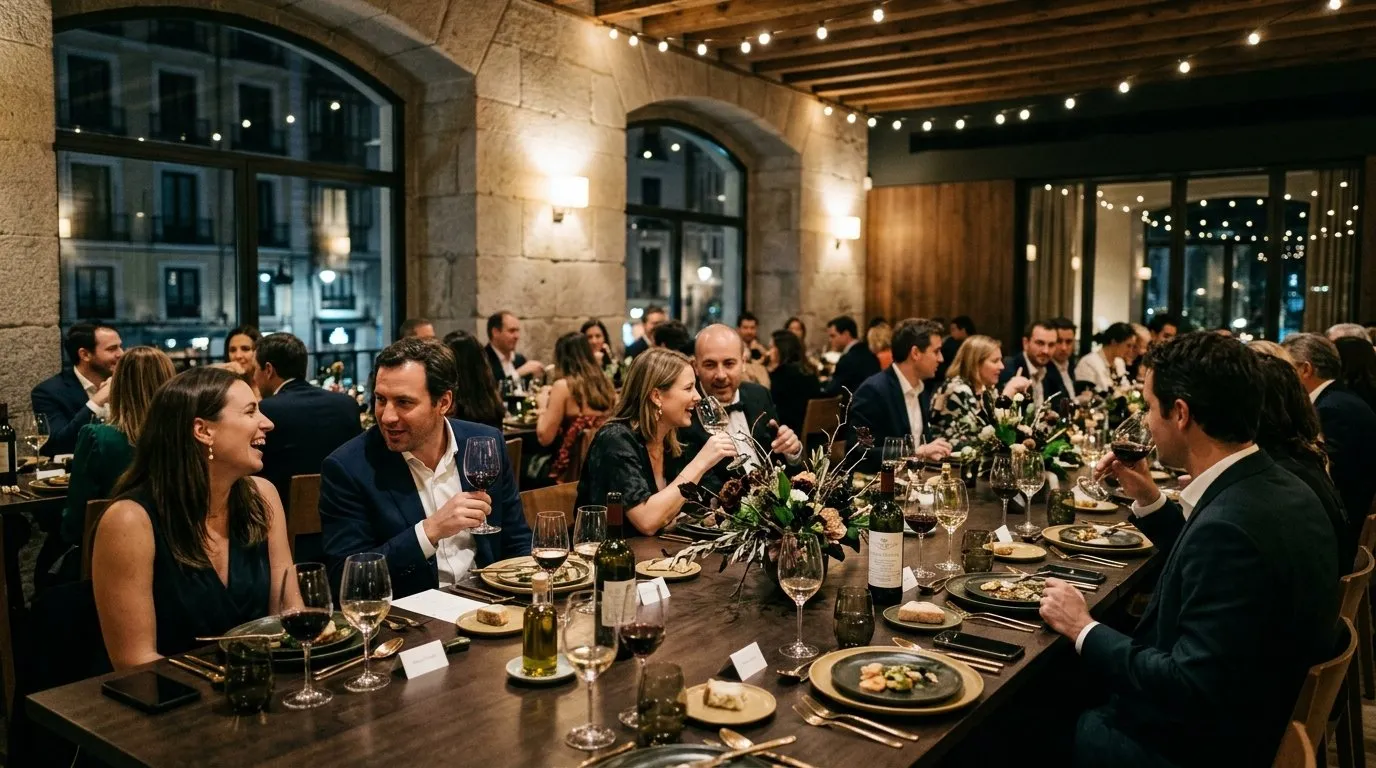
Traditional catering represents the gold standard of event catering. It is a format in which guests take assigned seats at decorated tables and are attended by waiting staff who serve the dishes directly, following a set menu from start to finish.
This format calls for a structural commitment to space and logistics. Guests remain seated for an extended period, usually between two and three hours, which requires a table layout that allows for both comfort and the flow of service. Floor staff work in coordination with the kitchen to ensure each dish reaches the table at its optimal point. The usual staffing ratio ranges from one waiter for every eight to twelve diners.
The value proposition of traditional catering lies in the complete gastronomic experience: a coherent culinary narrative in which each dish complements the one before it. A typical menu might include a tuna and avocado tartare, followed by lobster ravioli, a sirloin with a red wine reduction and a chocolate mousseline dessert. This structure allows the chef to develop a complex, considered culinary proposal.
The sit-down format makes structured social interaction easier. Guests can hold extended conversations without the interruption of constant movement. This is especially valuable at weddings, gala dinners and formal family celebrations.
In Madrid, the cost per head for a sit-down catering service ranges from sixty to one hundred and twenty euros, depending on how bespoke the menu is and the quality of the produce. It also requires considerable space: roughly 1.5 to 2 square metres per person.
What cocktail catering is and why it is booming
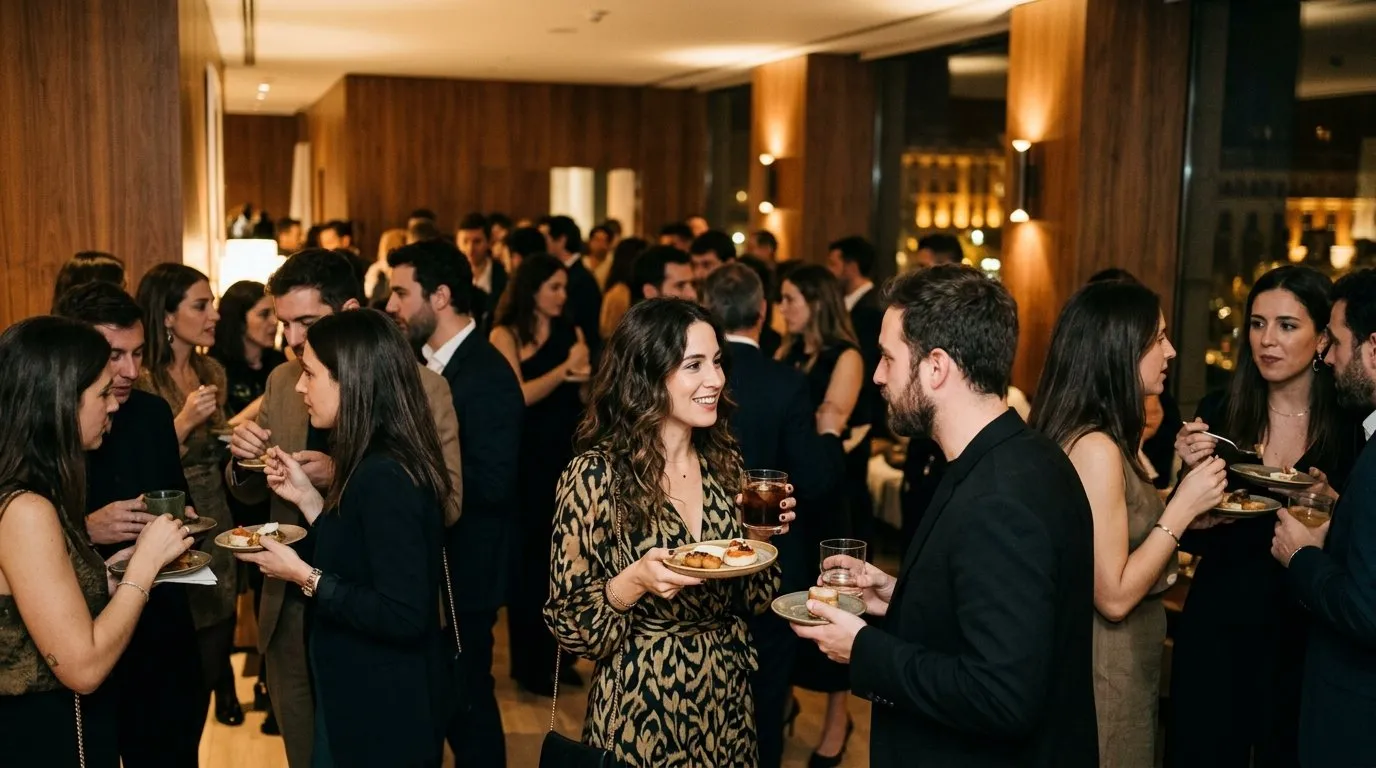
Cocktail catering represents a radically different philosophy. Rather than structuring the experience around a formal meal, this format proposes a dynamic event in which guests move around freely, combine small gastronomic bites with craft cocktails made to order, and network in a more fluid, spontaneous way.
The evolution of cocktail catering is closely tied to the transformation of consumption habits. The rise of signature cocktails, driven by the revival of classic techniques with a contemporary approach, has raised the mixed drink to the status of a complex sensory experience. In cities such as Madrid, cocktail bars have proliferated, educating the public to appreciate drinks made with quality ingredients and precise technique.
Stillroom, for example, has developed a cocktail catering proposal that draws on techniques from high-end signature cocktail craft. Its bartenders master procedures such as lacto-fermenting fruit to create syrups with unique profiles, fat washing to infuse drinks with fatty flavours, and natural carbonation via siphon to achieve sparkling textures. These preparations can be brought into a private event through a portable bar service staffed by professionals.
Projections for 2026 indicate that around sixty per cent of corporate events in Madrid will opt for cocktail or walking dinner formats. This trend reflects the fact that the generations now in decision-making positions value experiences that are more informal, flexible and geared towards networking.
The cost per head for cocktail catering ranges from twenty-five to forty-five euros, and requires roughly thirty per cent less floor space than the sit-down format.
Head-to-head: 7 key differences between the two formats
| Aspect | Traditional Catering | Cocktail Catering |
|---|---|---|
| Format | Seated service with plated dishes | Standing service with finger food and a cocktail bar |
| Social interaction | Limited to diners at the same table | Favours movement and interaction with multiple groups (+30%) |
| Space needed | 1.5-2 m² per person | 1-1.2 m² per person (30% less) |
| Cost per person | €60-120 | €25-45 |
| Customisation | High in the menu, limited in format | High in cocktails and overall experience |
| Typical duration | 2-4 hours (pace set by courses) | 2-4 hours (flexible pace) |
| Ideal event | Weddings, galas, formal family celebrations | Corporate events, networking, presentations, after-work drinks |
The most significant difference for many organisers is social interaction. Event behaviour studies show that the cocktail format boosts interaction between guests by roughly thirty per cent. The cocktail bar works as a natural meeting point where attendees cross paths, chat while they wait for their drink and make connections organically.
This space advantage is especially relevant in central Madrid, where function rooms are often on the small side. Stillroom has designed a portable bar that can be set up in spaces of just four square metres, making it possible to offer professional cocktails on terraces, patios or smaller function rooms.
When to choose traditional catering
Traditional catering remains the best option when the gastronomic experience is the central focus of the event. Weddings where the couple want to offer a ceremonial meal, gala dinners with award ceremonies that require guests to stay seated, and formal family events all find their best expression in this format.
It is also preferable when the guest profile includes older people who may feel more comfortable seated, or when the event runs for several hours and attendees need moments of rest between activities.
When to choose cocktail catering
The cocktail format is best suited to events where the main goal is to facilitate social interaction: corporate networking events, product presentations, brand launches, team celebrations or after-work drinks. It also works exceptionally well in spaces with limited floor area or in unconventional locations such as rooftops, art galleries or interior courtyards.
It is the preferred choice when the budget needs to be optimised without sacrificing quality, or when the aim is to create a contemporary, relaxed atmosphere that connects with a younger, more urban audience.
The hybrid format: walking dinner with a cocktail bar
The walking dinner combines the best of both worlds. Guests move around freely as at a cocktail event, but the food offering is elevated to more elaborate dishes than traditional canapés, served on small plates that can be eaten standing up. The cocktail bar rounds out the experience, and the result is a format that allows for fluid networking alongside a more sophisticated culinary proposal.
This hybrid format, costing between thirty-five and fifty-five euros per person, has become the most in-demand option in 2026 for mid-sized corporate events. It combines the sophistication of sit-down catering with the flexibility and dynamism of the cocktail format.
The key to a successful walking dinner lies in the coordination between kitchen and bar. Dishes need to be designed to be eaten standing up and one-handed, while the cocktails need to complement the flavours of the food. A professional bartender who understands the pairing between signature cocktails and food can lift this experience to a level that few catering formats reach.
Comparative prices in Madrid 2026
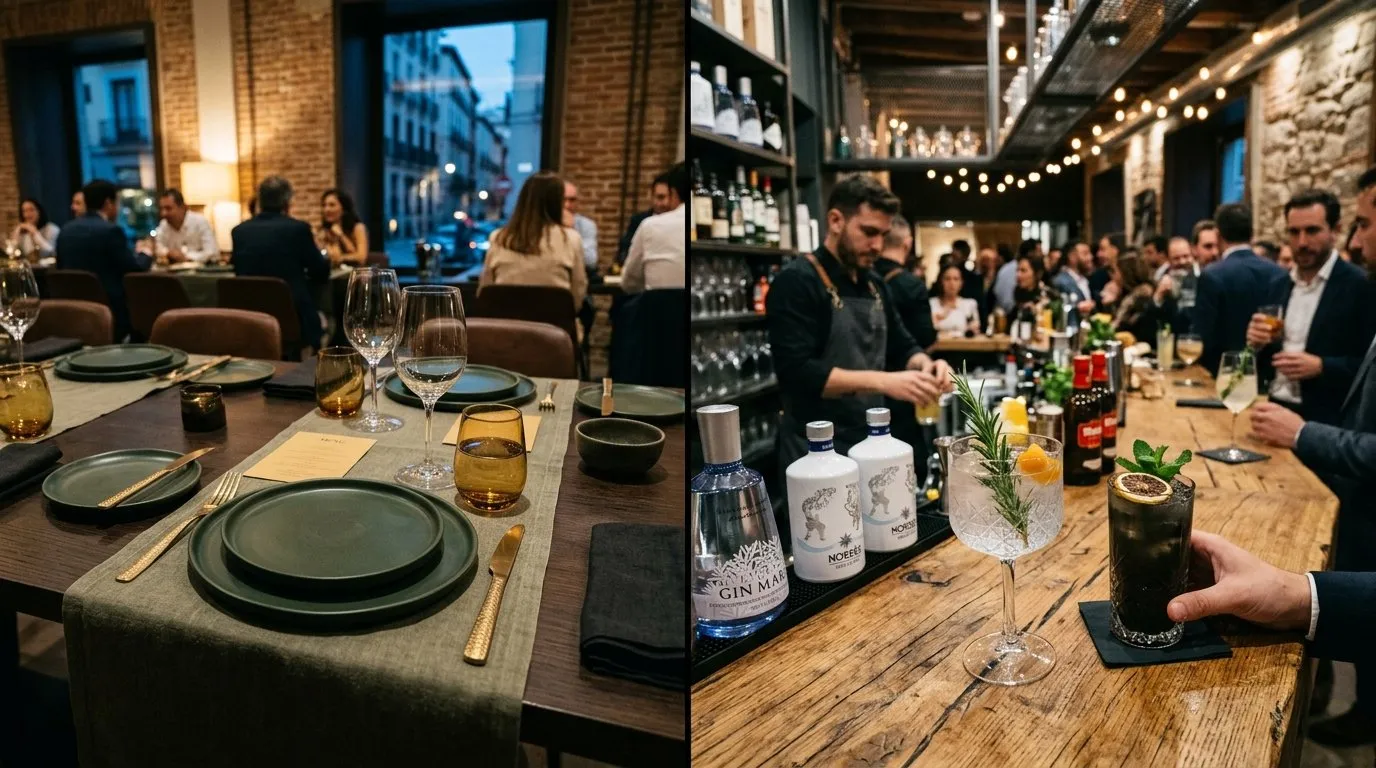
To make planning any event easier, it helps to be clear on the price ranges the Madrid market is working with in 2026:
Formal sit-down catering ranges from 60 to 120 euros per person, including full table service, a multi-course menu and floor staff.
Cocktail catering runs from 25 to 45 euros per person, with finger food, drinks service and bar staff.
The walking dinner with a cocktail bar, as an in-between format, costs 35 to 55 euros per person, combining more elaborate dishes with signature cocktails.
These prices are indicative and can vary depending on the supplier, the season, the ingredients chosen and any additional services required. Our recommendation is to request detailed quotes from several suppliers, comparing not just the final price but what each proposal includes: staff, length of service, ingredients, glassware and logistics.
Keep reading
Frequently asked questions
Which is better for my event, traditional catering or cocktail catering?
There is no universal answer: it depends on the goal. If the event revolves around a ceremonial meal and guests are expected to stay seated, the traditional format is the right one. If the priority is networking, interaction and a contemporary atmosphere, cocktail catering offers more fluidity and makes better use of distinctive spaces. There is also the walking dinner, which combines more elaborate dishes with freedom of movement. Our advice: define the guest profile and the purpose of the event first; the format then chooses itself.
How much space do I need for cocktail catering compared with traditional catering?
The sit-down format demands considerable floor space: tables, chairs and service aisles dictate the layout of the room. Cocktail catering frees up that space, because guests stand and move around freely; it also makes it possible to use terraces, patios or irregularly shaped rooms where fitting tables would be unfeasible. A well-designed portable bar takes up very little room and becomes the nerve centre of the event. If your space is limited or unconventional, the cocktail format is almost always the most practical choice.
What is a walking dinner and what type of event does it suit?
A walking dinner is a hybrid format: guests stay on their feet and move around freely, as at a cocktail event, but the food offering is stepped up with more elaborate dishes that can be eaten one-handed, on small plates. It fits perfectly with product launches, team celebrations or corporate events looking for networking without giving up a considered culinary proposal. The cocktail bar is the natural complement, and its success depends on coordination between kitchen and bar so that drink and food speak to each other.
Do you offer catering for events in Madrid?
Yes. At Stillroom we offer cocktail catering service across the whole Community of Madrid: Salamanca, Retiro, Chamberí, central Madrid, Las Letras, Pozuelo de Alarcón, La Moraleja, Las Rozas, Majadahonda and Boadilla del Monte. We work out of our base in Los Jerónimos, next to the Prado Museum, and we have served at country estates, rooftops, hotels and private venues. Our packages combine La Barra, with a senior bartender and our own glassware, with the Iberian ham and cheese trolleys and the option of a master ham carver (maestro cortador). Everything can be booked separately or combined.
How do I book a catering service for an event in Madrid?
The process is simple: fill in the form on our catering page and within 48 hours you will receive a proposal with an indicative budget. We then run a joint briefing to fine-tune the space, the timings and the menu, where we can create exclusive cocktails for your celebration. On the day of the event we take care of everything: mise en place, ice, botanicals, decoration and travel within the Community of Madrid. All you have to do is enjoy it.