Yuzu cordial: step-by-step recipe for cocktails
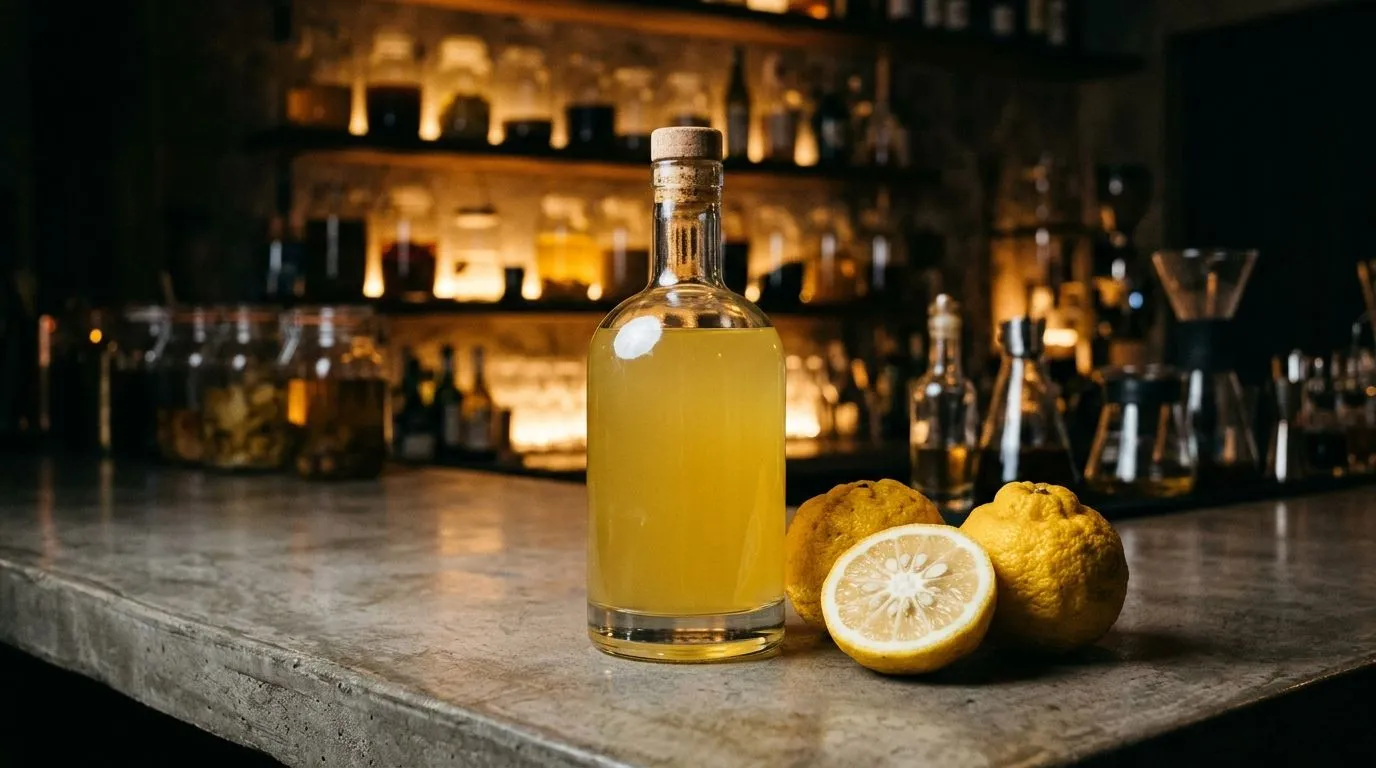
Some citrus fruits are used, and some are pursued. Yuzu belongs to the second group: scarce, expensive and with a perfume so intense that opening a bottle of its juice is enough to make the whole bar smell different. At STILLROOM it is almost an obsession, and yuzu cordial is our way of always having it to hand, stable and precise, ready to give any drink that floral character you cannot get any other way.
If this is your first encounter with this family of preparations, it is worth starting with our guide to what a cordial is in cocktail making. Here we go straight to the recipe, with its weights and with the great lesson of yuzu: a citrus this powerful can be stretched without losing its authority.
What yuzu cordial is and why we use bottled juice
A cordial is a concentrate of juice, sugar and acids that brings the sweetness and acidity of a cocktail in a single ingredient. Yuzu (Citrus junos) is a Japanese and Korean citrus fruit with a unique aromatic profile: halfway between grapefruit, mandarin and lime, with a floral intensity that no other citrus can match. In cocktail making it appears as juice, syrup, bitters or liqueur, and the cordial is one of its most versatile versions.
The challenge is getting hold of it. Fresh yuzu hardly reaches Spain: its season is short, in the depths of winter, and domestic cultivation is still in its infancy. That is why the realistic route, and the standard one in professional bars, is 100% bottled yuzu juice, with no added sugars or additives. It is a scarce and expensive product, but it has an enormous advantage: its aroma is so concentrated that, diluted to 50% with water, it still commands the glass.
That is the key to our formula. Instead of using juice alone, as in the lemon cordial or the lime one, we stretch it with the same amount of filtered water and use acids to restore the tension the water takes away. The result is a more balanced and more generous cordial, with no trace of wateriness.
Bottled or fresh: what changes
| Criterion | Bottled yuzu juice | Fresh yuzu |
|---|---|---|
| Aroma | Intense and consistent from bottle to bottle | Very intense, concentrated above all in the peel |
| Acidity | High and stable | High, varies by fruit |
| Availability | All year round | Short winter season, hard to find |
| Yield | Ready to use | About 25-30 ml of juice per fruit, with plenty of seeds |
| How it is used | Direct base for the cordial | Oleo saccharum with the peel, and juice topped up with water |
Ingredients for yuzu cordial
We keep the skeleton of the family: a 1:1 ratio between liquid and sugar. The difference is that here the liquid is split equally between yuzu juice and water.
| Ingredient | Amount | Role |
|---|---|---|
| 100% yuzu juice (bottled) | 250 ml | Aroma and acidity of the Japanese citrus |
| Filtered water | 250 ml | Stretches a scarce juice without dulling it |
| White sugar | 500 g | The family’s 1:1 ratio over the total liquid |
| Citric acid | 3 g | Restores part of the tension that water dilutes |
| Lactic acid | 1 g (optional) | Soft, creamy acidity that rounds out the profile |
You will also need a glass bowl, a whisk or long spoon, precision scales for the acids, a fine strainer and sterilised glass bottles.
How to make yuzu cordial step by step
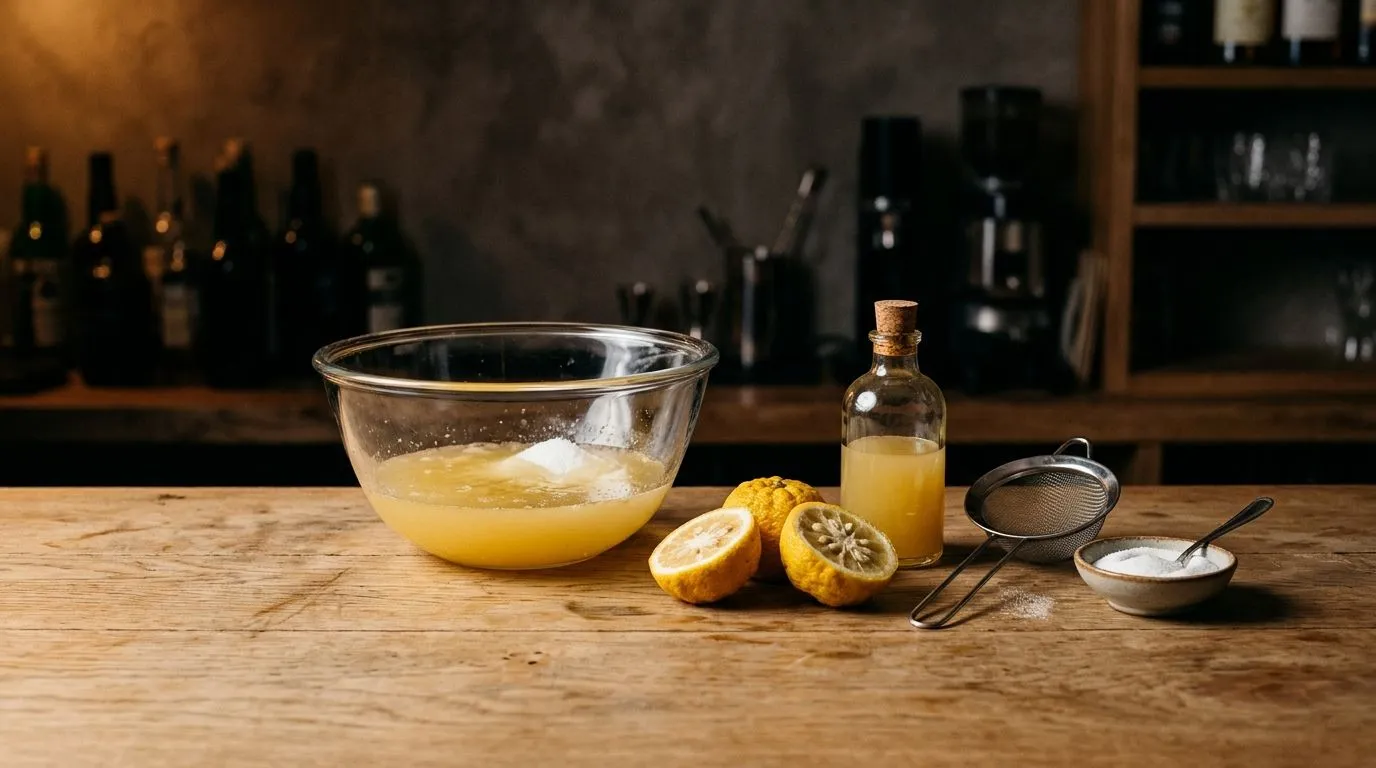
- Mix the liquids cold. Pour the 250 ml of yuzu juice and the 250 ml of filtered water into the bowl, both at room temperature or straight from the fridge.
- Dissolve the sugar. Add the 500 g of sugar and stir patiently until not a single grain is left at the bottom. It will take a few minutes longer than with heat, and it is worth it: fire dulls the floral perfume of yuzu in seconds.
- Adjust the acids. Weigh exactly 3 g of citric acid and, if you are using it, 1 g of lactic acid. Add them and stir until dissolved.
- Taste. Dip the tip of a spoon: it should be sweet at first, with a bright, lively acidic centre and a long, floral finish. If you want it sharper, raise the citric acid half a gram at a time.
- Strain. Pass the cordial through a fine strainer to remove any pulp or sediment from the juice.
- Bottle. Fill sterilised glass bottles, close them tightly and keep them in the fridge.
Fresh yuzu variation, acids and tricks
If you find the fruit: the peel is the treasure
If in the depths of winter you come across fresh yuzus, do not waste them by simply squeezing them. As with the grapefruit cordial, with which it shares that second level of complexity in the family, the most valuable part is in the peel. Peel them, removing only the yellow layer with no pith at all, and prepare an oleo saccharum: mix the peels with the 500 g of sugar and leave them to macerate for at least 2 hours — the longer, the more intense the aroma — until the sugar turns into a damp, fragrant sand.
Yuzu yields very little juice, about 25-30 ml per fruit and with plenty of seeds: you will need some 8-10 fruits to gather the 250 ml in the recipe. If you fall short, scale the whole recipe down in proportion rather than topping up with water. Then add the formula’s 250 ml of water and follow the same step-by-step, with one nuance: here the sugar is already in the oleo saccharum, so pour it in with its peels, dissolve and remove them when you strain.
At our bar, for thick-skinned citrus such as yuzu, we speed up that extraction by vacuum-sealing peels and sugar and applying sous-vide at 40 °C for an hour: a temperature gentler than the one we use for spirit infusions, which helps release the oils without cooking them.
Why lactic acid
When you dilute the juice with water, the acidity drops by half, and citric acid brings part of that tension back. Lactic acid is optional, but with yuzu it makes complete sense: it brings a soft, milky, almost creamy acidity that cushions the peaks without taking away freshness. It is the acid we recommend in our guide precisely for orange or yuzu cordials. Avoid malic acid in this recipe: its green, juicy profile would mask the floral character of yuzu.
Uses of yuzu cordial in cocktails
Like all its siblings, yuzu cordial replaces juice and sugar in a single pour and gives you the same drink every time. Its aromatic intensity makes it shine especially in long drinks. A few ideas for home:
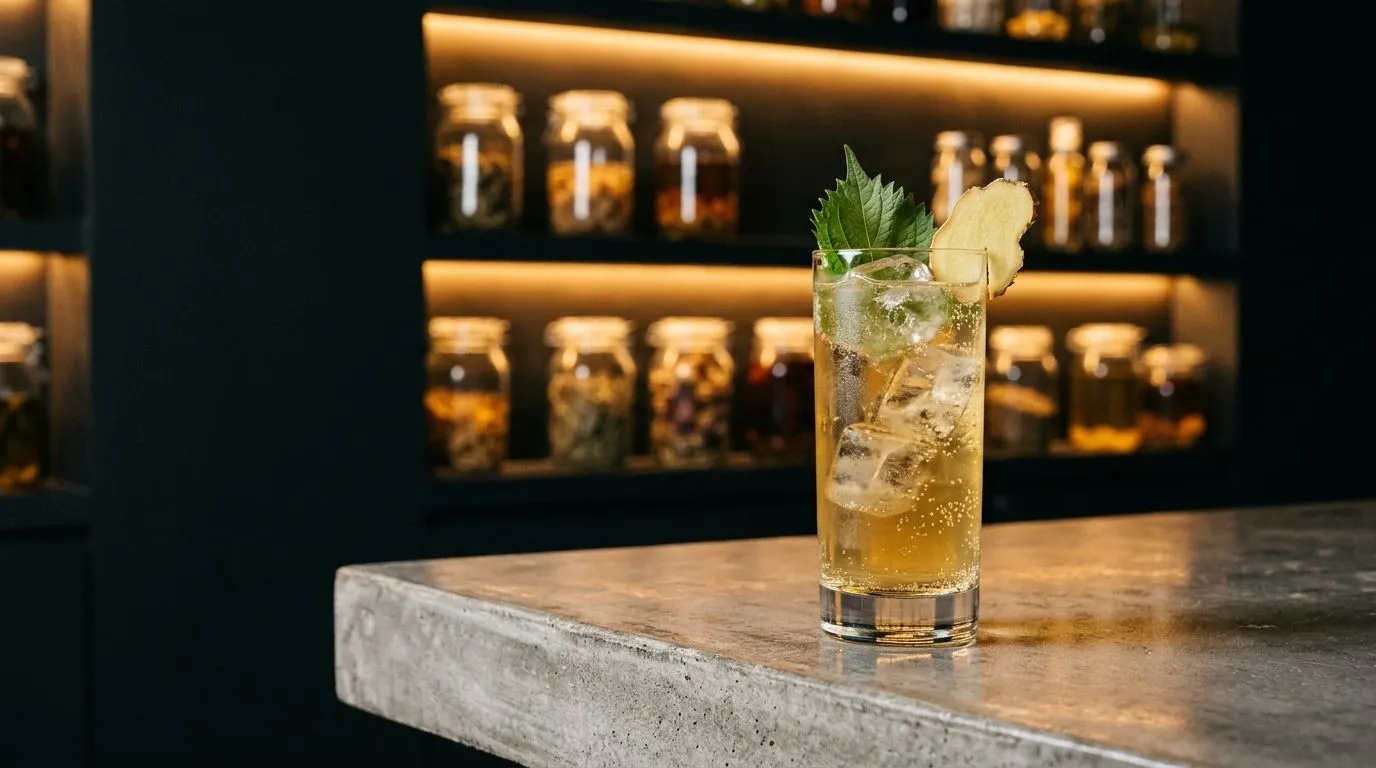
- Yuzu citrus highball: 45 ml of cordial and 15 ml of mild sake in a highball glass with ice, topped with very cold soda. Finish with a slice of fresh ginger or a shiso leaf. If you want to understand why this format works so well, read our article on the highball.
- Yuzu gimlet: 60 ml of London Dry gin and 30 ml of cordial, shaken with ice and strained into a chilled glass. It is the 2:1 ratio of our gimlet, with yuzu in place of lime.
- Alcohol-free: 40 ml of cordial and 140 ml of cold soda or tonic, in a tall glass with ice.
At the bar we also carbonate yuzu and lemon cordial to make highballs with their own fizz; if the technique interests you, we explain it in our article on cocktail carbonation.
Yuzu at STILLROOM
Yuzu runs through the house from end to end. On our cocktail menu it appears in two creations: Floreal, with flower-infused sake and maraschino cherry, yuzu and a sparkling wine top, and Arcano, which brings together gin, Midori, apple cordial, sake, house herbal liqueur and yuzu. Arcano, in fact, brings two flavours of this family together in a single glass: yuzu and an apple cordial, a close relative of the green apple cordial we teach you to make.
And it does not stop at the bar. In our small plates kitchen, yuzu brightens the tahini hummus, the ras el hanout cauliflower and the Yuzu/Passion Fruit Cheesecake. The menu formulas belong to the house; what we invite you to do is try them.
Storage
Bottled in sterilised glass and kept in the fridge, yuzu cordial keeps for 3 to 4 weeks, like the rest of the family. Sugar and acidity act as natural preservatives, but the floral perfume of yuzu is the first thing to fade with time: when you notice the aroma losing strength as you open the bottle, it is time to make a fresh batch.
If you make more than you will use in a month, freeze it in portions of 250 ml or in ice cube trays. When thawing, shake the bottle well before using.
A perfume that lingers
Yuzu takes the cordial family to its most aromatic register. If you want to compare it with its siblings, the orange cordial offers the friendliest version and the grapefruit one the most bitter; in the guide to homemade cordials: all the recipes you have the complete map. For any technical term, see our cocktail and mixology glossary.
At our bar, cordials are a daily tool for bringing precision to every drink, and yuzu is one of the flavours that defines us best. When you fancy trying it in the Floreal or the Arcano, book a table at STILLROOM: Calle Moreto 9, in Los Jerónimos, a step from the Prado.
Frequently asked questions
How do you make yuzu cordial?
Mix 250 ml of 100% yuzu juice with 250 ml of filtered water, cold, and dissolve 500 g of white sugar in it. Then adjust the acidity with 3 g of citric acid and, if you like, 1 g of lactic acid, strain and bottle in sterilised glass. No stove at any point: direct heat dulls the aroma of the yuzu.
How long does yuzu cordial last?
In the fridge, in a well-sterilised glass bottle, it keeps for 3 to 4 weeks, just like the rest of our cordials. Over time, the first thing to fade is the yuzu’s floral perfume. If you make more than you will use in a month, freeze it in 250 ml portions and shake well after thawing.
Is it better to use bottled yuzu juice or fresh fruit?
Fresh yuzu barely reaches Spain: its season is short and wintery, and domestic cultivation is still in its infancy. That is why 100% bottled yuzu juice is the realistic route and the professional standard. If you do get hold of the fruit, make the most of the peel above all with an oleo saccharum: that is where its most intense aroma lives.
What does yuzu taste like, and why is it so prized?
Yuzu (Citrus junos) is a citrus fruit native to China and emblematic of Japan and Korea, with a unique profile: it recalls grapefruit, mandarin and lime all at once, with a floral intensity that no other citrus can match. It is scarce and expensive, but so aromatic that a few drops transform a drink. You will find it defined in our cocktail glossary.
Which cocktails suit yuzu cordial?
It shines in highballs with soda and sake, in a yuzu gimlet with London Dry gin, and in alcohol-free drinks with soda or tonic. It brings juice, sugar and aroma in a single pour. You will find more ideas in our guide to homemade cordials and in the article on the highball.